
Donald Trump has issued a series of threats to other countries following a large scale strike against Venezuela, in a sign he is far from finished.
ANALYSIS
It’s not war. It’s not regime change. It’s not international law. It’s about the United States creating a “sphere of influence”.
China’s President Xi Jinping wants Asia.
Russia’s President Vladimir Putin wants Europe.
United States President Donald Trump wants the Americas.
“American dominance in the western hemisphere will never be questioned again,” President Trump proclaimed amid the elation of a successful military operation to overthrow President Maduro of Venezuela at the weekend.
Who gets Australia and Africa is anybody’s guess.
As is who will move next.
For the moment, President Trump has his sights set close to home.
“Something’s going to have to be done with Mexico,” he exclaimed.
Mexico is a treaty ally of the United States.
“He’s making cocaine,” Trump then accused Colombian President Gustavo Petro.
“They’re sending it into the United States, so he does have to watch his ass.”
It’s the exact same justification Trump used to attack Venezuela.

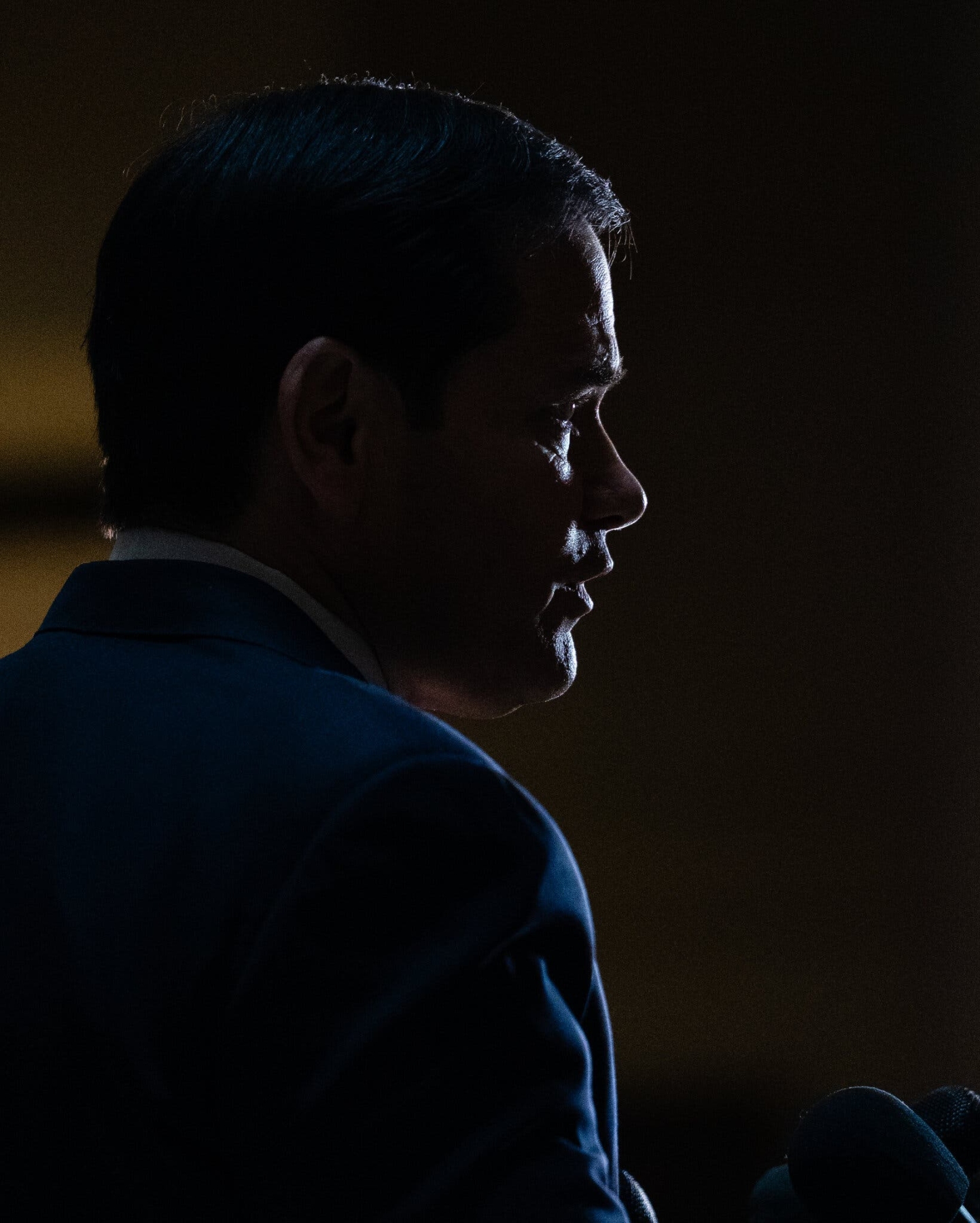
“If I lived in Havana and I was in the government, I’d be concerned at least a little bit,” Secretary of State Marco Rubio chipped in.
Trump agreed.
“I think Cuba is something that we’ll end up talking about, because they’re a badly failing nation,” he added.
There’s Greenland.
“We do need Greenland, absolutely. We need it for defence,” the 79-year-old insisted, adding the Arctic province of Denmark was “surrounded by Russian and Chinese ships”.
And lurking in the background is Canada’s future.
“The only thing that makes sense is for Canada to become our cherished Fifty First State,” Trump pronounced in May. Though he admitted this “would be a long shot”.
It’s a hit list that would throw the world into chaos.
And the United States.
The US Constitution reserves the power to declare war for the democratically elected House of Representatives and Senate. The Commander in Chief is there to turn their policy into action. Not dictate it.
Congress was not consulted over the Venezuela assault.
Rubio, also Trump’s acting National Security Advisor, defined the turn of events while sitting next to his Make America Great Again (MAGA) President: “When he tells you that he’s going to do something, when he tells you he’s going to address a problem, he means it.”
Meet the ‘Donroe Doctrine’
“The United States will once again consider itself a growing nation — one that increases our wealth, expands our territory, builds our cities, raises our expectations, and carries our flag into new and beautiful horizons,” the 47th President of the United States proclaimed during his February inauguration address.
The 79-year-old former real estate developer is determined to turn that dream into reality.
“Maduro’s capture is no regional anomaly; it is a signal event,” argue European Council on Foreign Relations (ECFR) analysts Asli Aydintasbas and Chris Hermann.
“It highlights the volatility of Trump’s foreign policy, his comfort with military solutions and his apparent openness to a world governed by spheres of influence rather than rules.”


The Trump Administration issued a new National Defence Policy in November.
It’s a policy that dismisses Europe as facing “civilisational erasure”, and doesn’t even mention the ongoing defence of South Korea. Instead, it focuses all attention on the Americas (North and South).
Now, Trump is doubling down on what he calls the “Donroe Doctrine”, a throwback to the 1823 “Monroe Doctrine” that declared North and South America “off limits” from the rest of the world.
It was a vision of US dominance backed by military power.
It failed.
Two World Wars later, a new and far more successful “World Order” was championed by a victorious United States. One based on internationally agreed standards and regulations established through the United Nations.
More than 80 years of unprecedented global economic, technological and societal growth later – that era is at an end. And the “Donroe Doctrine” is putting “America First” by embracing the “Spheres of Influence” being unilaterally pursued by China and Russia.
The world is once again being carved into power blocs.
“The world is approaching an inflection point, where discontinuity — war, financial crisis, or natural disaster — buries the post-Cold War era and ushers in a new, unknowable order,” warn Stimson Centre threat assessment think-tank analysts Robert Manning and Matthew Burrows.
Spheres of influence
“We are reasserting American power,” President Trump declared hours after the raid.
But the weekend’s snatch-and-grab on Venezuela’s strongman and his wife cannot be called regime change. President Maduro’s brutal regime is still in control.
And President Trump has dismissed the prospects of Venezuelan opposition leader, and 2025 Nobel Peace Prize winner, Maria Corina Machado taking up the reins.
“I think it would be very tough for her to be the leader,” Trump said.
“She doesn’t have the support within or the respect within the country.”
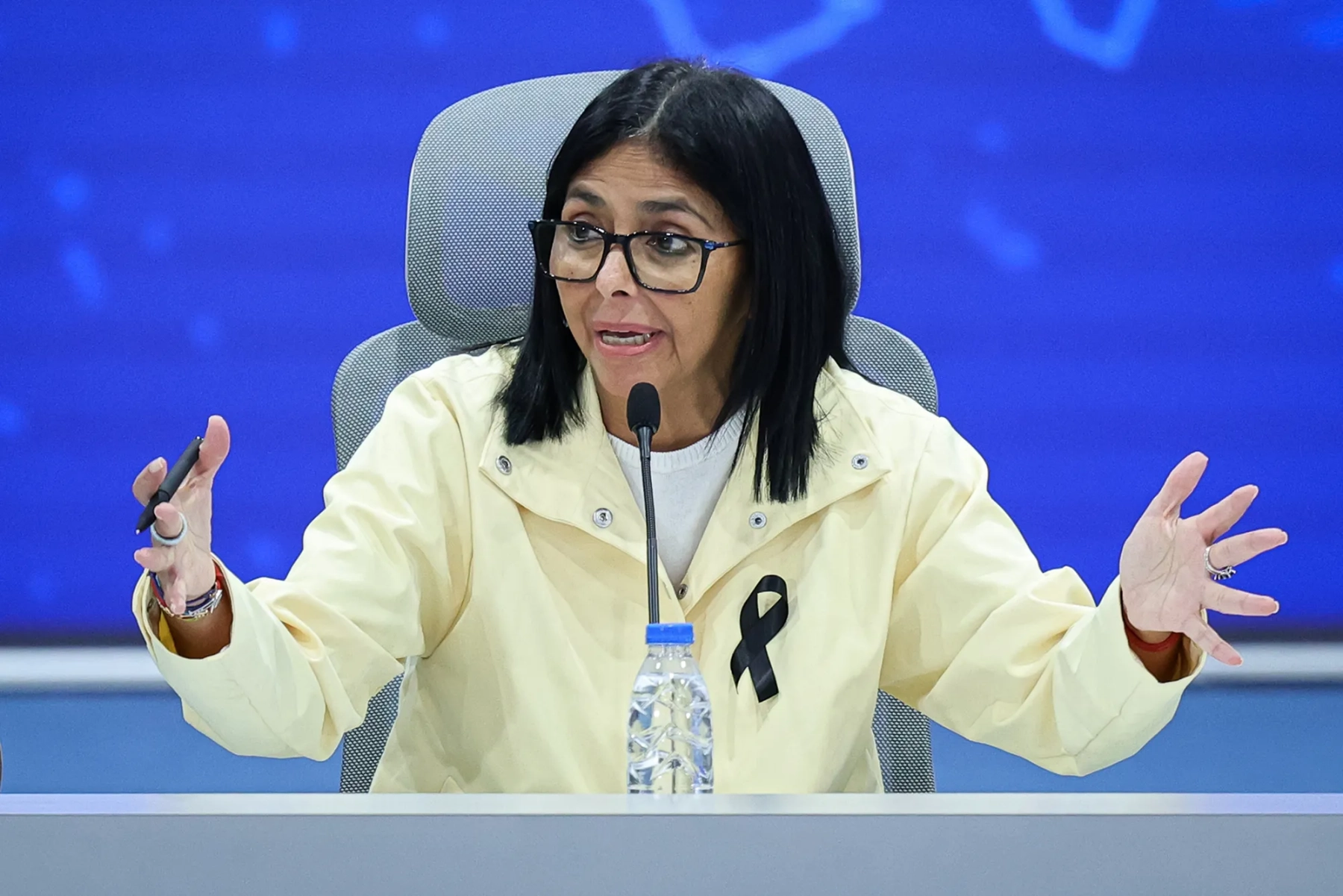
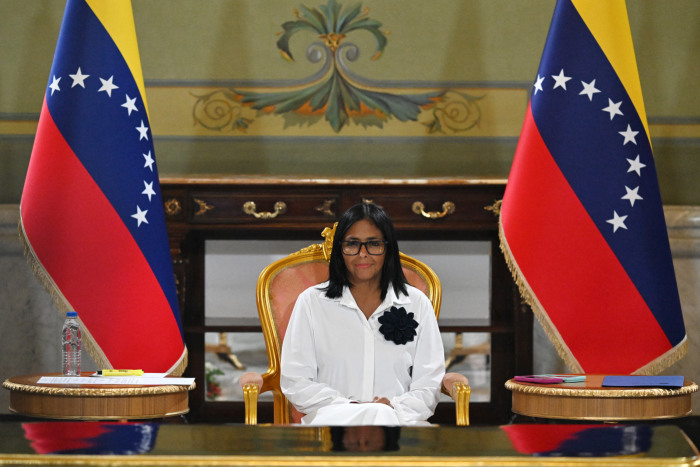
Trump does like Maduro’s Vice President.
“She’s essentially willing to do what we think is necessary to make Venezuela great again,” he explained.

Heads of state are immune from prosecution under international law. But the Trump Administration is arguing that Maduro was not a recognised legitimate head of state, and that makes him fair game.
“While the Trump administration has framed the operation as a law enforcement action linked to narco-terrorism charges, its willingness to violate another state’s sovereignty reinforces fears that Washington is increasingly open to reordering the international system along great-power lines,” Hermann and Aydintasbas argue.
It’s a signal to Beijing, Moscow, Pyongyang, Tel Aviv, Tehran and Brussels.
It says “might makes right”.
“Seeking to establish a dominant sphere of influence in the Western Hemisphere, while sidelining the United States’ other regional commitments, has most Washington strategists scratching their heads,” the Stimson Centre analysts argue.
“Certainly, the US has ignored its neighbours for too long, but a mix of tariffs, threats, handouts to friendly leaders, and gunboat diplomacy can’t turn the clock back to the 19th century.”
But a new precedent has been set.
“Beyond Latin America, the [Maduro] operation carries far-reaching implications for European security, the future of Greenland and the Arctic and the stability of the Taiwan Strait,” the ECFR analysts warn.
“The normalisation of unilateral force could lower inhibitions around economic pressure, grey-zone operations or military intimidation”.


Who’s next?
“Europe’s most immediate concern lies in the Arctic,” Hermann and Aydintasbas warn. “Trump’s self-congratulatory tone and his readiness to deploy military force in pursuit of domestic political goals and narrowly defined economic interests will heighten fears of a renewed US push in the high north — with Greenland at its centre.”
Soon, Europe may once again face a dilemma.
Appease.
Or resist.
“The question is not whether Europe can avoid friction with the US, but whether it is willing to defend its own interests when the challenge comes from its most powerful ally,” the ECFR analysts argue.
The wife of White House Deputy Chief of Staff for Policy Stephen Miller, Katie Miller, posted a picture of Greenland coloured with the United States flag. Underneath, she wrote: SOON.
SOON pic.twitter.com/XU6VmZxph3
— Katie Miller (@KatieMiller) January 3, 2026
Greenland’s elected Premier retorted: “Our country is not for sale, and our future is not decided by social media posts. That said, the image is disrespectful.”
But President Trump’s next moves may be Mexico, Colombia, and Cuba.
“All nations of the region must remain alert, as the threat hangs over all,” the Cuban government in Havana warned yesterday.
And while President Trump has formally pardoned Juan Orlando Hernández (the former President of Honduras) for drug trafficking, he has no such plans for Colombia’s President Gustavo Petro.
And he reportedly issued a secret directive authorising military action against Mexico as far back as August.
“President Trump’s top priority is protecting the homeland, which is why he took the bold step to designate several cartels and gangs as foreign terrorist organisations,” White House spokesperson Anna Kelly said at the time.
At the weekend, President Trump dismissed Mexican President Claudia Sheinbaum as powerless.
“She’s a good woman, but the cartels are running Mexico,” Trump said.
“And we could be politically correct and be nice and say, ‘Oh yes, she is’ …
“No, no. She’s very, you know, she’s very frightened of the cartels. And I’ve asked her numerous times, ‘would you like us to take out the cartels?’
“She says; No, no, no, Mr President. No, no, no, please.”