As Trump promises more strikes in the Middle East, there is one looming question that remains as the carnage unfolds. What does he really want from all this?
What next for Iran?
That depends on what US President Donald Trump wants.
The initial ‘shock and awe’ strikes are over.
Supreme Leader Ayatollah Ali Khamenei and most of his inner circle of commanders are dead.
Iran’s ballistic missile force - still years from fielding a weapon capable of reaching the United States - is being pummeled.
Its ability to sink oil and gas shipping in the Arabian Gulf is being hit on an hourly basis.
And its nuclear program had already been ‘obliterated’ in May last year.
For the immediate future, at least, military analysts anticipate an uneven slogging match.
And then comes the day after.
“I think what we have seen is the US and the Israelis already, in the span of two days or so, gain air dominance in Iran. That is an enormous feat,” says Centre for Strategic and International Studies (CSIS) analyst Dr Seth Jones.
It’s something that the Russians, over four years in Ukraine, do not have.
What can be achieved with this advantage, however, remains unclear.

“The United States has demonstrated, once again, that it can destroy what it can find and strike what it can target,” says former US National Security Council director of strategic planning, Dr Joe Funderburke.
“The harder demonstration, that it can translate military success into sustainable strategic outcomes, remains unmade.”
It’s a challenge that has repeatedly defeated US military power in recent decades.
Operation Desert Storm swept aside Iraqi President Saddam’s invading forces inside Kuwait. But the dictator remained in power.
A decade later, Operation Iraqi Freedom was needed to finish the job. Hussein, his government and military were smashed. But a series of regional militias - and eventually Islamic State - moved into the vacuum.

Libyan dictator Muammar Gaddafi was killed in a “surgical strike” on his tent. But his nation is now a failed state, with no single party gaining a position of strength in its longstanding civil war.
Afghanistan was bombed and occupied as part of the global “War on Terror” after the surprise September 11, 2001, attacks on the World Trade Centre and Pentagon. But extremist religious Taliban jihadists seized control as soon as troops withdrew two decades later.
Will the outcome for Iran be any better?
US Secretary of War Peter Hegseth insisted overnight that he just wants to win: “No stupid rules of engagement. No nation-building quagmire. No democracy-building exercise. No politically correct wars. We fight to win, and we don’t waste time or lives.”

Moving fast and breaking things
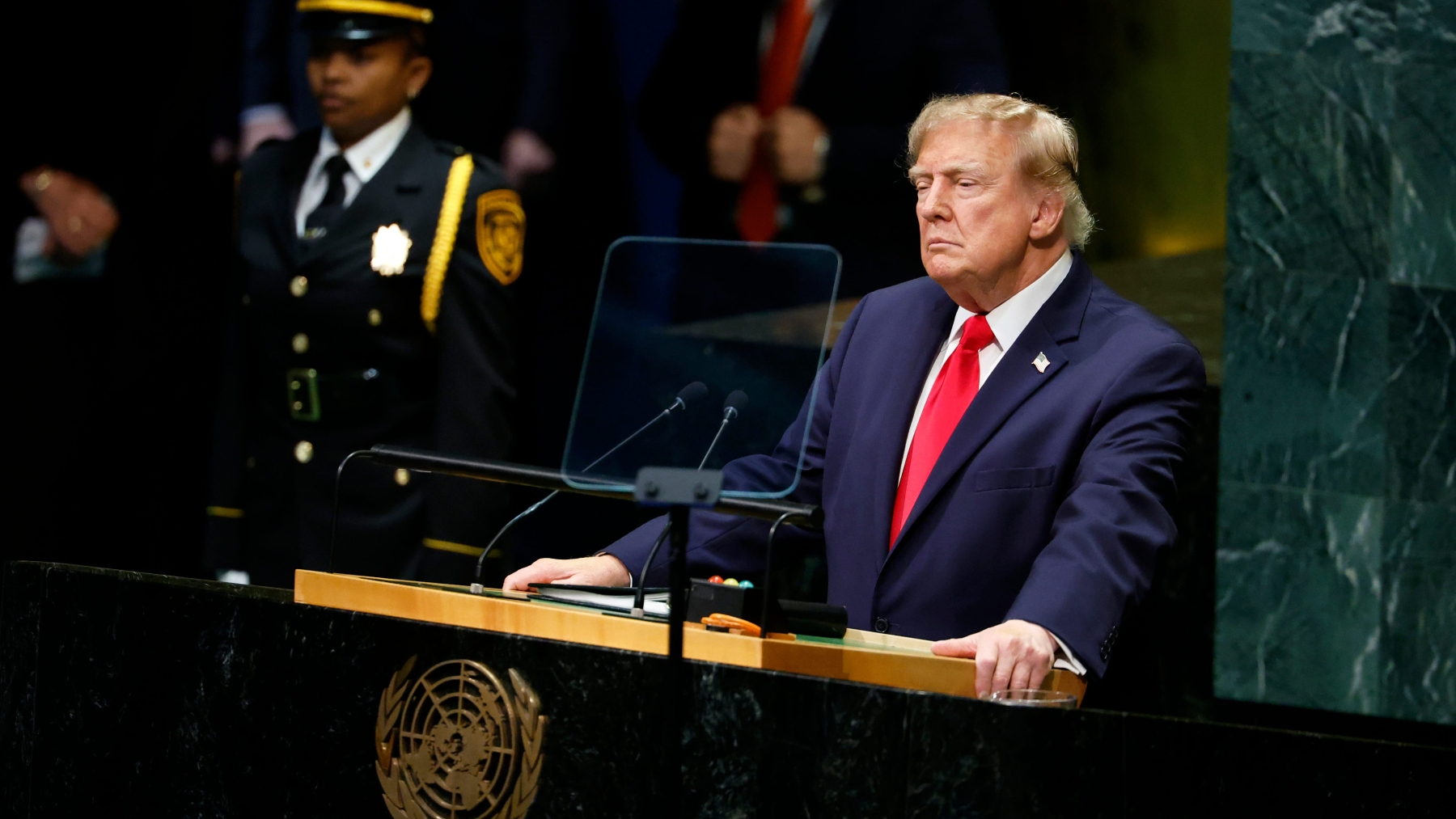
“We’re right on schedule, way ahead of schedule in terms of leadership — 49 killed — and that was, you know, going to take, we figured, at least four weeks, and we did it in one day,” President Trump told media overnight.
US Secretary of War Hegseth later outlined what his war goals were: “Destroy the missile threats. Destroy the navy. No nukes.”
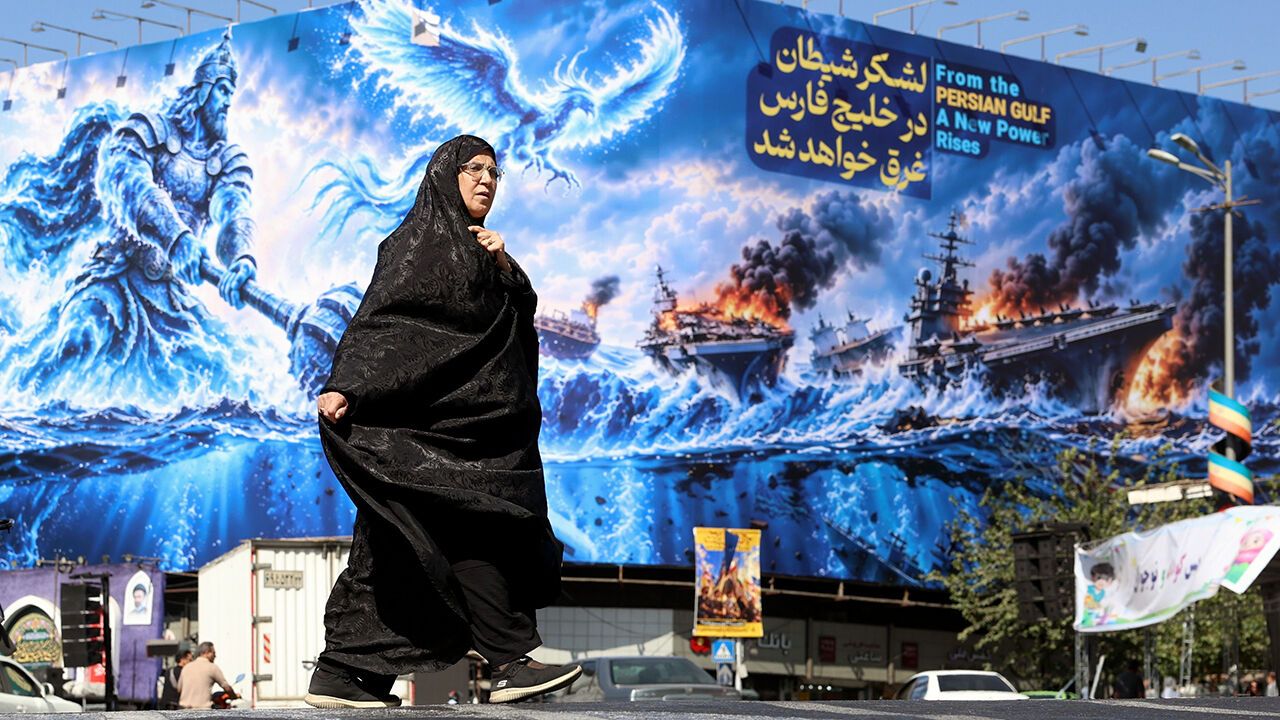
At least nine Iranian warships have so far been destroyed or disabled. Most while still tied up in port.
Hardened combat aircraft hangars have been smashed. Buried missile bunkers obliterated.
But Iranian combat aircraft are still reportedly in the skies.
Its force of suicide and drone speedboats appears active. And its missiles and drones are falling across the Middle East.

Airports, hotels and oil infrastructure have been hit. And an Amazon data centre has reportedly been set on fire.
Oil and gas shipping has halted attempts to run the narrow Strait of Hormuz. Iran had placed great significance on its ability to close this internationally significant chokepoint.
But neither side has yet been dealt a knockout blow.
Chairman of the Joint Chiefs of Staff General Dan Caine is not as optimistic as his political leaders as to the immediacy of success.
He told reporters at the same presentation as Secretary Hegseth that the objectives he had been set “will be difficult to achieve and, in some cases, will be difficult and gritty work.”
He then went on to define that mission as “to protect and defend ourselves and, together with our regional partners, prevent Iran from the ability to project power outside of its borders.”
Such sweeping scope allows goals to be declared after the fact, argues Centre for a New American Security (CNAS) CEO Richard Fontaine.

“Trump’s approach … has been to use ambiguity as a source of advantage, to catch his opponents off guard; the 2025 and 2026 US attacks on Iran, for instance, took place as negotiations were ongoing,” he writes.
“By claiming multiple and often vague objectives, the President retains the ability to stop the fighting without admitting defeat. This, rather than obvious victory, is his exit strategy.”
Obscure objectives
“We are not going into the exercise of [saying] what we will or will not do,” Secretary Hegseth insisted.
“President Trump ensures that our enemies understand we’ll go as far as we need to go to advance American interests.”

“But we’re not dumb about it,” Hegseth added. “You don’t have to roll 200,000 people in there and stay 20 years.”
Notably, both he and President Trump have now walked back previous promises of “no boots on the ground”.
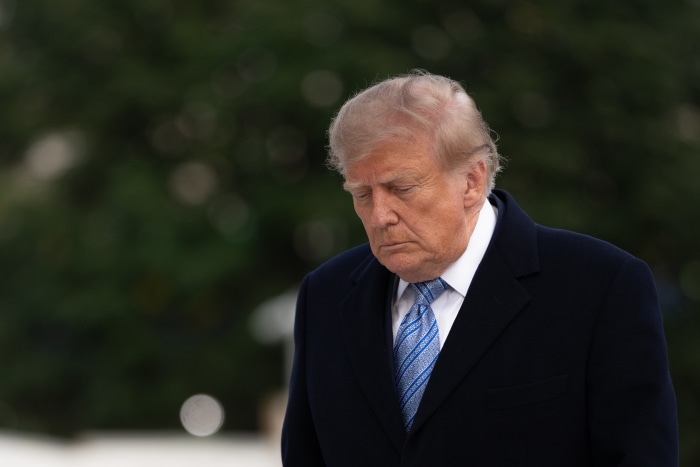
“I don’t have the yips with respect to boots on the ground,” the President told the New York Post overnight. “Like every president says, ‘There will be no boots on the ground.’ I don’t say it. I say ‘probably don’t need them,’ [or] ‘if they were necessary.’”

It depends upon what his objectives are.
And what his military needs to do to achieve them.
Former US government Iran analyst Jesse Ramsdell writes in the Small Wars Journal that such expansive, poorly defined military objectives have rarely turned out well.
“US rhetoric on pre-emptive action against Iran has included everything from Iran’s ballistic missile program and nuclear program to regime change,” Ramsdell points out.
“If the US truly wants regime change, as is becoming clearer with each hour, the President needs to make this case to the American and Iranian people with a defined strategy and exit plan in place.
“The US cannot afford to pull back or fail in its promises to the Iranian people. Doing so will undermine US credibility.”
But Secretary of War Hegseth has also walked back the significance of overthrowing Iran’s government.
“This is not a so-called regime change war. But the regime sure did change,” he boasted this morning. “And the world is better off for it.”
Part of the reason may be the success of the Israeli and US bombing campaign.
At the weekend, President Trump said his administration had “three very good choices” to take control of Tehran.
Now he doesn’t.

“The attack was so successful it knocked out most of the candidates,” Trump told the US ABC.
“It’s not going to be anybody that we were thinking of. They are all dead. Second or third place is dead.”
The day after
“Trump has already telegraphed that the United States will not own the aftermath,” says former US National Security Council analyst Fontaine.
“Should it collapse, the Iranian people will need to pick up the pieces. If it endures, Washington will wrap up the fight and move on to other priorities.”
Like Afghanistan, Libya, Iraq and Venezuela — the future is in the hands of Iran’s people. And their deeply entrenched power structures.
“The range of nightmare scenarios — from an IRGC-led (Iranian Revolutionary Guard) military dictatorship to a descent into domestic chaos—is wider than the happy possibility of a democratic uprising,” warns Fontaine.
And then there’s what is left of Iran’s international network of resistance fighters and terrorists.

“What the bombin has not destroyed, and what no air campaign alone can destroy, is Iran’s forty-year strategic investment in a distributed proxy architecture spanning Lebanon, Yemen, Iraq, Syria, and Gaza,” adds Dr Funderburk.
The Houthis can still attack shipping passing through the Red Sea’s Gate of Tears.
Hezbollah cells in Lebanon, Syria and Iraq still threaten US and Israeli facilities.
Cells of Shia jihadists still operate across the Middle East and the world.
“The morning after Operation Epic Fury reveals a strategic truth that American planners have long resisted: when you remove a state’s conventional deterrent, you do not produce a compliant state, you produce a state with every incentive to fight asymmetrically, indefinitely, and below the threshold of direct confrontation,” Dr Funderburke warns.
“This is not a defeated adversary. This is an adversary whose primary strategic instrument, the proxy network, was never the target of Operation Epic Fury at all.”

President Trump has promised “waves” of fresh air strikes to come.
Bombing can destroy military equipment and infrastructure. But it doesn’t build responsible governments.
Bombing campaigns can be completed in weeks. Rebuilding societies takes decades.
“The limits of Trump’s way of war may soon be clear,” concludes Fontaine. “The attack on Iran represents the most ambitious of Trump’s foreign policy gambits to date.”
And we don’t yet know for sure what he’s gambling upon.
“By claiming that the objective was, from the beginning, to simply weaken Iran and to ensure that it does not obtain a nuclear weapon, the president could, and likely would, declare victory,” he concludes. “However, it does not pave the way for long-term peace but postpones conflict to another day.”
Jamie Seidel is a freelance writer