
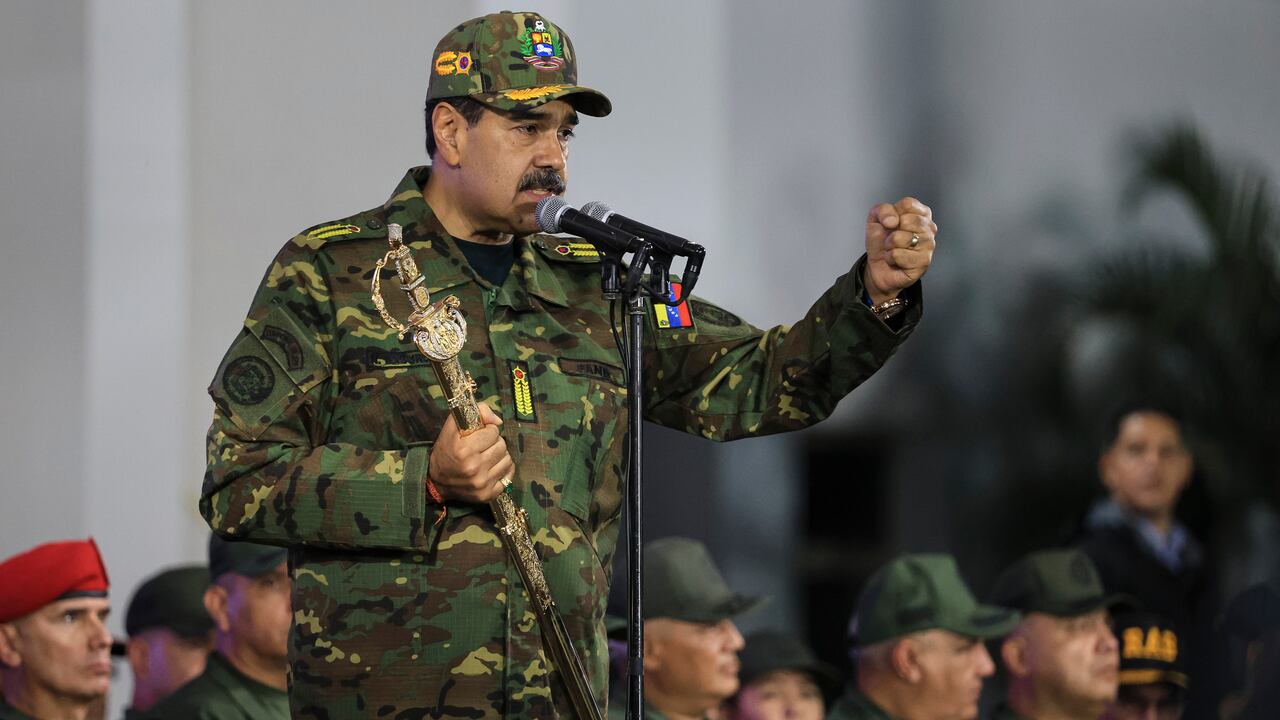
U.S. forces captured the president and his wife on Saturday after striking Caracas
· CBC News
On Saturday, the U.S. announced it launched a "large-scale strike" in Venezuela and captured the oil-rich nation's president, Nicolás Maduro, along with his wife, Cilia Flores.
The pair were "flown out of the country," U.S. President Donald Trump said on his Truth Social platform.
"This operation was done in conjunction with U.S. Law Enforcement," he added.
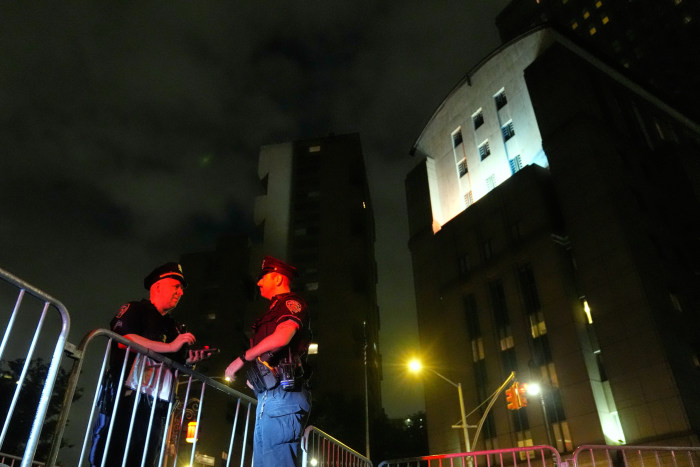
Maduro and his wife have been indicted in New York, U.S. Attorney General Pam Bondi said on social media platform X.
Venezuelans are reportedly waiting with bated breath to learn what happens next, while several world leaders have confirmed they're in touch with embassies to monitor the aftermath of the attack — which marks the largest intervention of its kind by the U.S. in Latin America since 1989.
As new information continues to surface, here are some key facts about Maduro, who has been accused by the Trump administration of running drug cartels and other crimes.
From bus driver to Chávez ally
Maduro, whose father was a trade union leader, was born on Nov. 23, 1962, into a working-class family.
The 63-year-old was working as a bus driver in the early 1990s when army officer Hugo Chávez led an unsuccessful coup against the Venezuelan government and was imprisoned. Maduro then campaigned for his release, supporting Chávez's left-wing agenda.
WATCH | Why a U.S. invasion in Venezuela spells disaster:
Maduro ultimately won a seat in the legislature following Chávez's 1998 election victory, quickly climbing the government ranks.
Chávez, himself controversial, eventually picked Maduro as his successor before Maduro was narrowly elected president in 2013 following Chávez's death.
Maduro becomes president
Maduro's administration oversaw a spectacular economic collapse characterized by hyperinflation and chronic shortages.
His rule became best known for allegedly rigged elections, food shortages and rights abuses, including harsh crackdowns on protests in 2014 and 2017.
Millions of Venezuelans emigrated abroad, including to Canada.
Maduro was sworn in for a third term in January 2025, following a 2024 election that was widely condemned by international observers and the opposition as fraudulent. His victory was supported by Russia, Turkey and China.
Thousands of people who protested the government's declaration of victory were jailed.
Attacks on government opponents are not new, according to reports. A recent United Nations fact-finding mission found evidence of serious human rights violations and crimes against humanity in Venezuela, committed by the Bolivarian National Guard (GNB), part of the country's armed forces.
“The facts we have documented show the role of the GNB in a pattern of systematic and co-ordinated repression against opponents or those perceived as such, which has continued for more than a decade,” said Marta Valiñas, who led the mission.
“The persistence of these crimes and the absence of adequate justice require a determined response from national and international accountability mechanisms."
The Maduro government's repressive actions came into the fore globally in 2025 after the Nobel Peace Prize was awarded to opposition leader Maria Corina Machado, who has voiced support for Trump's tactics.
Maduro captured by the U.S., world reacts
Maduro's government has been subject to aggressive sanctions by the U.S. and other powers. In 2020, Washington indicted him on corruption and other charges. Maduro rejected the accusations and instead has accused Trump of seeking Venezuelan oil. Maduro and his wife now face criminal charges in the U.S.
Still, politicians in the U.S. and around the world question the legality of Saturday attack.
“I look forward to learning what, if anything, might constitutionally justify this action in the absence of a declaration of war or authorization for the use of military force,” Utah Sen. Mike Lee, a Republican, said on X.