
Jacob Frey, of Minneapolis, is governing a city under siege by its own federal government.
By Ruby Cramer
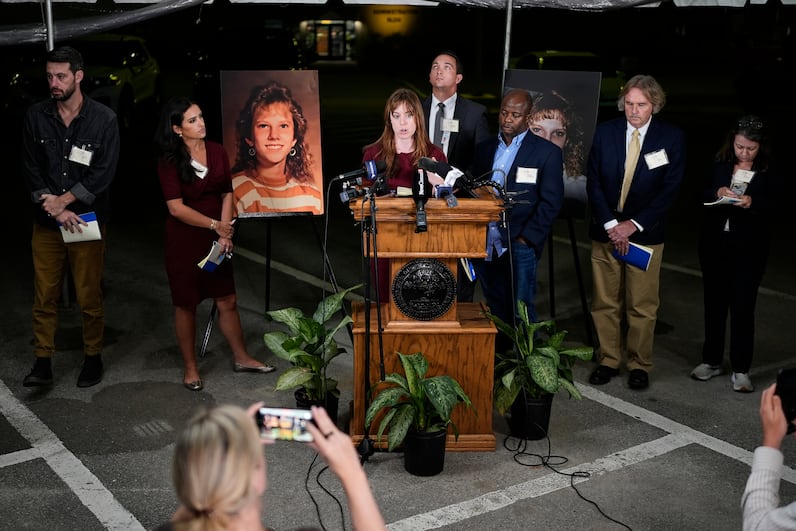
Shortly after 7 P.M. on Wednesday, January 14th, Jacob Frey, the mayor of Minneapolis, received a call at home from his police chief, Brian O’Hara. “ICE shot somebody again,” O’Hara said. Minneapolis was in the midst of an unprecedented influx of Immigration and Customs Enforcement agents. It had been a week since one of them, Jonathan Ross, shot and killed Renee Nicole Good, throwing the city into a state of fear and havoc. Frey had just changed into “soft pants,” thinking he might have a night at home with his wife and two daughters. Instead, he listened as O’Hara described the details of another shooting. Federal agents had pursued a man, later identified by ICE as a Venezuelan named Julio Cesar Sosa-Celis, in a highway chase on I-94. Sosa-Celis eventually crashed on a street in North Minneapolis, exited his vehicle, and, amid some kind of tussle with federal agents, was shot in the leg. He then ran into a nearby house, where a woman inside had what O’Hara described as “an anxiety attack.” “Get ICE out of there,” Frey told him. Federal agents were still outside the home. Sosa-Celis had not received medical attention, and was refusing to come out. “I was really frustrated,” Frey told me recently. “I mean, one, they just shot somebody. And, two, their presence will only further inflame the situation.”
O’Hara drove to the house. ICE agents were there, and a crowd was forming. At one point, people shot off fireworks and threw chunks of ice and rocks at police officers. ICE agents tear-gassed the crowd. One of the cannisters rolled beneath a car, filling it with gas. Children emerged, including a six-month-old baby, who was carried out with his eyes closed and apparently unconscious. “The cops had to go through this angry, pissed-off crowd to try to get the child to bring it to the ambulance,” O’Hara said. Frey put on a suit and returned to City Hall, where a now familiar emergency protocol was unfolding. Across Minneapolis, off-duty police were being called back to work. Later that night, in front of television cameras, Frey described what has become a surreal status quo for the city. “We cannot be at a place right now in America where we have two governmental entities that are literally fighting one another,” he said.
The Department of Homeland Security has described what is unfolding in Minneapolis as the largest operation in the agency’s history. About three thousand agents are now estimated to be in the area. They outnumber the city’s police officers by five to one. In a lawsuit filed against the Trump Administration, Minnesota officials describe a city overtaken by roving packs of ICE agents who approach “random people,” largely, it seems, “based on race and ethnicity.” D.H.S. has said that these actions target criminals, and that, if law enforcement and local officials collaborated with ICE, “the violent riots wouldn’t exist.” In response to protests, and to the “corrupt politicians” who support them, President Donald Trump has threatened to invoke the Insurrection Act. Immigrants in the area, including the mayor of St. Paul, are now carrying their passports whenever they leave their homes. According to Kristi Noem, the Secretary of Homeland Security, in a six-week span, agents have arrested three thousand people. There are reports that troops from Alaska’s 11th Airborne Division, who have been trained for cold-weather operations, are on standby to descend on Minneapolis. Protesters roam the streets, warning immigrants of ICE’s presence. They have been met with tear gas and rubber bullets. Agents have been recorded saying things like “This is your warning,” and “Have y’all not learned from the past couple of days?,” and, in the case of the agent who shot Good, “Fucking bitch.”
On the receiving end of the federal government’s effort is Frey, who governs Minneapolis with a staff of fifteen people. His office has no uniform way of tracking ICE, beyond 911 calls, documentation from activists, and messages from civilians. These messages include people saying, “ICE is outside my home,” and death threats against Frey and his staff, along with more mundane requests for trash pickup. The only way to separate the urgent from the non-urgent is by hand. The one aide who does so can get through about three hundred messages in a day, if he spends his entire day doing it. In the first ten days after Good’s death, the office received fifteen thousand messages. “We are underwater,” John Freude, the Mayor’s public-safety adviser, told me.
The Minneapolis Police Department is also at a breaking point. In the four days after Good’s shooting, the department tracked nearly fourteen thousand hours of overtime—which cost the city almost two million dollars. The department has recorded nine injuries to police officers as a result of D.H.S. activity. One officer’s eye was cut by a shard of glass from a broken window; two officers were hit with chunks of ice and concussed. O’Hara worries about his officers’ mental health, especially for those who worked in 2020, during the protests that followed the police killing of George Floyd in Minneapolis. “This is triggering for a lot of these officers,” O’Hara said. Meanwhile, federal agents have been wearing generic tactical gear, including vests displaying the word “POLICE,” causing confusion about which law-enforcement officers can be trusted. This is what Minneapolis has become: a city invaded by its own federal government, run by a mayor with no power to stop it.
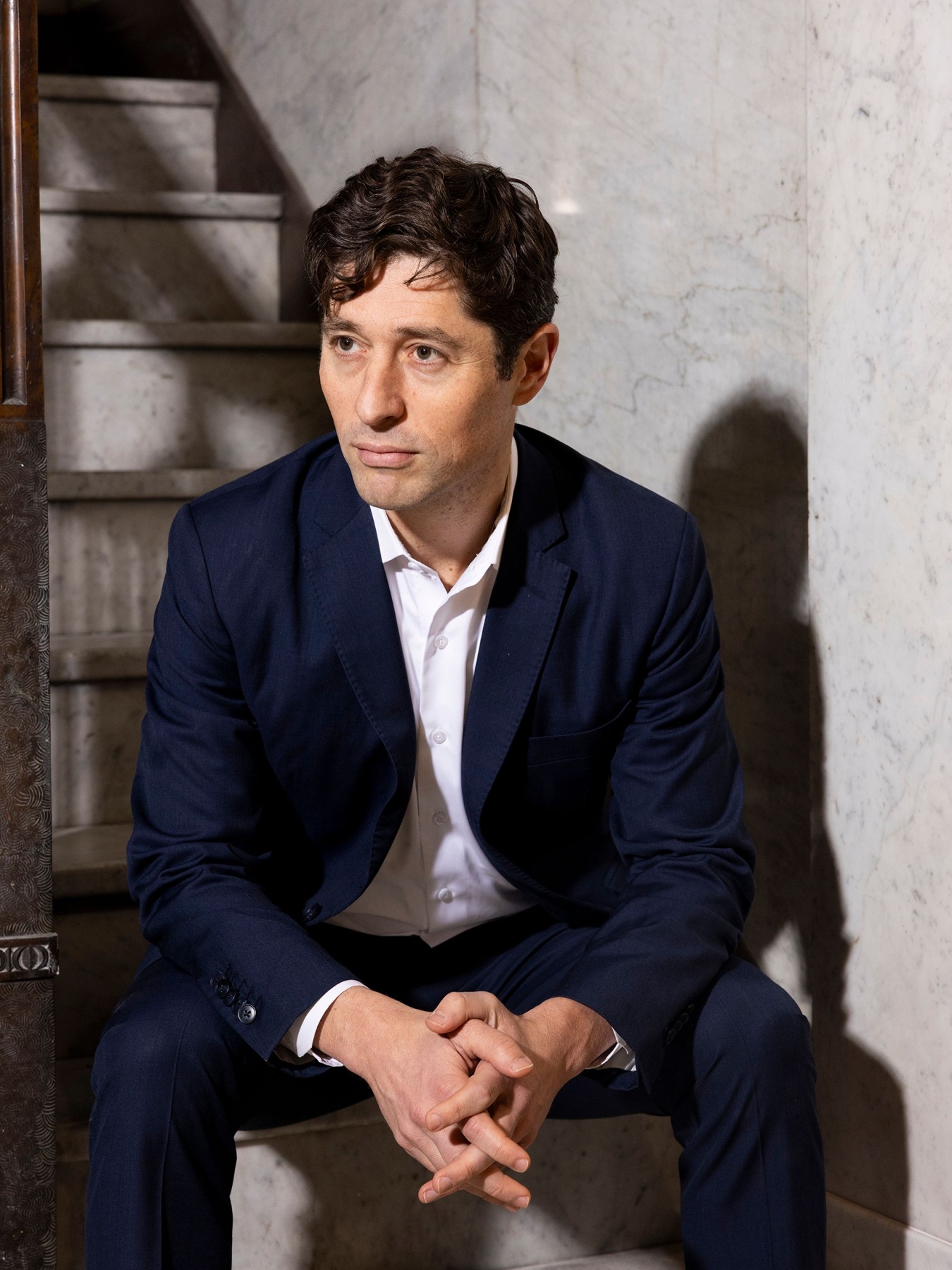
Two days after the shooting of Sosa-Celis, I met Frey at the day-care center where he drops off his daughters in the mornings. Frey is forty-four, with a compact, runner’s body. He has the look of a tailored politician, but his manner is more offbeat. He has run through the streets in jorts at a pride parade, done a goofy dance at a Somali festival, and, in a sudden burst of frustration, exclaimed, of what ICE is doing, “It’s so stupid!” Other times, he can be quite serious. At child-care centers around the city, “ICE watchers” now stand outside in neon vests, on the lookout for agents. At Frey’s day-care center, a woman watched the door closely. “See ya, bubs,” Frey told his five-year-old before he left.
Back in his car, Frey told me, “There’s multiple truths taking place in the city at the same time.” He described purchasing a scone at a café the day before, and then seeing a person who looked Latino emerge from the back of the shop, apparently crying. Another layer was playing out online, in the form of viral videos. “There’s thousands of them,” he said. That morning, Frey had seen a post about federal agents who had eaten at a Mexican restaurant a couple hours outside of Minneapolis, before returning later the same day to make arrests. “It’s so evil, I initially questioned whether it was true or not,” he said. “How can you do that?”
Frey drove to the state Senate building, across the Mississippi River in St. Paul, where Democratic members of Congress were hosting a shadow hearing about ICE activity in Minnesota. Frey was set to testify. Sitting outside, he learned that the hearing would begin only after several speeches, and the speeches wouldn’t begin for another thirty minutes. He became agitated at the thought of spending so long in St. Paul, ten miles from his city. “I don’t know, man,” he told an aide. “I don’t want to not be there. In Minneapolis.” The street outside was quiet. His team hadn’t yet heard of any ICE activity in the city that morning. “But yeah,” Frey said. “It’s happening. Right now. I’m certain.”
The latest version of Trump’s immigration enforcement began seven months ago, when he sent ICE into Los Angeles. Home Depots were raided, and people were disappeared off the streets. By the time agents arrived in Chicago, three months later, the country was accustomed to seeing images of protesters wearing gas masks. ICE actions began to take on more overt elements of stagecraft. Gregory Bovino, a commander-at-large of the Border Patrol, has toured cities on foot, followed by cameras and surrounded by masked agents. The operations were given names: Operation Midway Blitz, in Chicago; Operation Catahoula Crunch, in New Orleans; Operation Charlotte’s Web, in Charlotte. In Minneapolis, it’s Operation Metro Surge. D.H.S. routinely publishes the mug shots and names of those charged with a crime—“the worst of the worst.” The threat now hangs over other Democratic officials that Trump might, at any time, turn their cities into war zones. “It’s a blue state with a blue mayor, and a blue governor,” Frey told me. “It’s a performance. It’s a very dangerous performance.”
Frey grew up in a suburb of Washington, D.C. His parents were professional ballet dancers who later ran a chiropractor’s office together. Frey went to law school and became an employment and civil-rights attorney. He also spent time as a professional runner, and when he visited Minneapolis, in 2006, for a marathon, he has recalled thinking, “Yeah, I could live here.” He became the mayor in 2018, at thirty-six. Two and a half years later, a police officer killed George Floyd, prompting nationwide protests. “Then you had a global pandemic, and people had cabin fever, and everybody had masks, and so there’s the whole anonymity associated with that, and you had a hundred years in the making reckoning around social justice,” Frey said. Buildings burned to the ground; businesses were looted.
Frey found himself at the center of a fraught conversation about how to be a good white ally. In June, 2020, at Floyd’s memorial service, he knelt before the casket and wept. Two days later, at an outdoor rally, he was asked to commit to abolishing the police department. With hundreds of people standing around him, many filming on their phones, he said no. Video of the moment went viral. Frey, wearing a face mask printed with the words “I CAN’T BREATHE,” was booed out of the event. “Go home, Jacob. Go home,” people chanted as he walked out. “Shame.” In the weeks and months that followed, Frey found himself speaking from a place of fear. “I was very scripted, because I was worried I was gonna step on a land mine,” he told me. “You lose who you are. It’s literally not your words.”
Frey’s theory of how the operation in Minneapolis began goes like this: “I think somebody from pretty high up in the federal Administration said, ‘Go to Minneapolis and get a bunch of Somalis and deport them,’ and then nobody really pushed back, and then they get here only to figure out, They’re all citizens,” Frey said. “They’ve been here for longer than I’ve been here.” Trump became fixated on Minnesota after investigations into alleged social-services fraud in the state. Members of the Somali community have been charged as a result of the investigations. In December, Trump referred to the Somali community as “garbage.” Days later, D.H.S. announced a surge of agents to the city. But the vast majority of Somali people in Minnesota are citizens. Frey believes that agents have now diverted their attention to the Latino community. Minnesota’s estimated undocumented population, according to the latest available data from the Pew Research Center, ranks behind that of twenty-three other states, making it a small target for such a large operation.
The Minneapolis left also helped make the city a preoccupation of the Trump Administration. “The groups are a bit better organized. They’ve got some excellent communications,” Bovino, the commander-at-large, said during a press conference, almost admiringly. “It’s that collusion and corruption between elected officials and these anarchists.” This time around, Frey has been less timid. Speaking after Good’s death, Frey told ICE, “Get the fuck out of Minneapolis. We do not want you here.” When D.H.S. blamed Good for her own death, he said that that was “bullshit.”
Later in the day, I drove with Frey to Cedar-Riverside, one of the city’s Somali neighborhoods. At the center stand the concrete towers of the Riverside Plaza housing project, where many Somali families move when they first arrive. Normally, the area would be full of people, but the streets were empty. The cafés and restaurants were empty, too. Inside Sagal Restaurant & Coffee, Frey bought sambusas. The woman behind the counter said that she was carrying her U.S. passport. “Nobody has control,” she said. “We lost control.”
In another restaurant, four men sat in a booth, talking about ICE. They said that agents had already visited this restaurant, and others on the same block. Frey tried to say “hang tough” in Somali, with the help of a member of his protective detail, pronouncing it twice before giving up. “Yeah, whatever,” he said, laughing. He’d been trying to learn the same phrase in Spanish, though he said the translation he’d been using from Google was receiving confused looks in response. “Hang tough,” Frey said in English as he left. Out on the street, past graffiti that read “FUCK ICE,” a light snow was falling. Two ICE watchers in neon vests stood in the cold.
Frey has received almost no information from the federal government. He still hoped to set up a conversation with Trump, to negotiate an end to the siege. He was working “different channels.” When Frey returned to City Hall, he learned that Trump had tweeted about him. His chief of staff, Grace Waltz, began to read the post aloud. “ ‘The governor and the mayor don’t know what to do. They have totally lost control,’ ” she said. “ ‘And’—he says ‘our’; I think he meant a-r-e—‘our currently being rendered useless. If and when I’m forced to act, it will be solved quickly and effectively.’ ”
That afternoon, the Mayor sat down at a conference-room table where his team had been gathering daily—sometimes three times a day—for a “sitrep,” or situation report. Nine other officials sat around the table, and the police chief’s face appeared on a screen. O’Hara read the latest accounts of ICE activity. There were reports of ICE agents outside a Target on Lake Street, of a 911 caller saying he feared he was being followed by two suspicious vehicles, of federal agents on the property of a school at 6:45 A.M., of men wearing vests and masks, of two Dodge Durangos with tinted windows and no license plates circling a neighborhood, and of a bomb threat at a university in Cedar-Riverside that had been accused of “harboring illegals.” Agents seemed to be swarming the north side, where Julio Cesar Sosa-Celis had been shot in the leg two days earlier. “You can assume that it’s some sort of response to the incident this week,” O’Hara said, though, of course, that was only a guess.
Department heads took turns giving their own reports of a transformed city. One said that one of her team members “has had ICE camped outside of his house for the last two days.” Another said that the city was planning on releasing vehicles left in the street during arrests back to their owners at no cost. The head of Public Works said that the department was running trash pickup at the site of Good’s death three times a day, trying to keep it “tidy.” “Graffiti abatement” was under way. “But I did hear some of our crews are getting harassed,” the department head said. “We told them, ‘Just leave the site and come back.’ ” It wasn’t good washing weather, anyway, because of low temperatures. “We’re continuing to battle ice on the street,” he said.
“Frozen water,” someone clarified.
Most of the meeting was spent on plans for the following day. At 1 P.M., a right-wing influencer and live streamer named Jake Lang was promising to burn a Quran on the steps of City Hall, and then lead an “anti-fraud” march to Cedar-Riverside. Lang had been charged with assaulting police during the riot at the Capitol on January 6, 2021. He had since been pardoned by Trump. Late last year, Lang organized a large anti-Islam march in Dearborn, Michigan. O’Hara was reviewing the extensive planning that his office had completed. It had assembled a team of speciality police officers, dialogue officers, violence interrupters, attorneys, physicians, and civilians who had been asked to do “crowd calming” and to “dissuade people from coming out at all.” Police were preparing for the possibility of protesters from outside the Twin Cities who might “come in armed.” Another aide noted that the police seemed to be “on the front lines of trying to avoid a civil war.”
O’Hara came to Minneapolis from Newark, New Jersey, in 2022, to help reform the department after Floyd’s killing. With federal agents on the streets, he felt that the city’s immigrant community was more trusting than ever of the police department. But in other parts of the city the presence of ICE was aggravating existing antipathy for local law enforcement.
ICE agents were also calling 911 themselves. Some called with complaints about protesters. Others drove to the police precinct while being followed by ICE watchers, and then demanded that the activists be arrested. What O’Hara notices most when he watches videos of ICE activity is how undisciplined it is. In one, agents surround a car belonging to Aliya Rahman, a U.S. citizen. One agent opens the back-seat door as the car begins to move; another shatters her passenger-side window. At one point, an agent puts his entire upper body through the open driver’s-seat window, with Rahman still behind the wheel. Eventually, she is yanked from the car while still tangled in her seat belt. “I’m disabled,” she screams, as two agents take out knives and begin to saw through the seat belt from different directions. “I don’t know how anyone in charge can see that and think it is safe,” O’Hara said.
In Minneapolis, police-department policy prohibits officers from assisting in any federal immigration enforcement, including by providing crowd management solely at the request of D.H.S. But activists have asked why local law enforcement isn’t doing more to stop agents. “You’re gonna let them do this?” a man who’d just been exposed to tear gas yelled at a group of state troopers. “Are you not our people?” Frey has heard activists say that the local police should find ground to arrest ICE agents. Frey believes this would be legally difficult. And, in any case, all he could see were nightmare hypotheticals playing out. “You think they’re going to go willingly?” he asked.
By the next day, Frey had learned that he was being investigated by the Department of Justice for allegedly conspiring, along with Tim Walz, the Minnesota governor, to obstruct federal agents. With this news came a several-minute period of self-questioning. “You start spinning,” he said. “What could I have possibly done, unbeknownst to me? What can they twist? What could somebody, with less than just intentions, interpret here? But then you realize: no, this is just ridiculous.” It was another moment of dark unreality. For days, he had felt the Trump Administration coming after the city that he was in charge of keeping safe. Now he was being personally targeted by his own federal government. He began asking what sort of legal-defense fund he might need.
On the afternoon of the protest, I arrived early at City Hall to find a modest number of counter-protesters holding anti-ICE signs. Around noon, Lang arrived with a group of supporters carrying banners and flags. Lang wore a camouflage vest and, in a backpack slung over his shoulder, he carried a portable loudspeaker connected to a handheld microphone. “Send the Somalis back,” he said. “Do you not understand you’re being replaced?” He paced up the street, then retraced his steps, live-streaming as he walked and praising “white Christian men.”
Within moments, a small crowd of counter-protesters encircled him. A person concealed by a hood and gas mask grabbed one of the wires hanging from Lang’s bag. On the outskirts of the crowd, fights broke out between protesters and counter-protesters. “Fuck you!” a Lang supporter said. A counter-protester replied, “You support a fucking Nazi.” Through the speaker, Lang’s voice washed over the noise: “Send them back. ICE, ICE, baby.” A sudden, sharp crack sounded in the street. It was the sound of clapboard hitting the pavement, as counter-protesters smashed and kicked one of Lang’s banners. Another man reached through the crowd to push Lang. On the edge of the scrum, a counter-protester was trying to de-escalate. “Do not give him what he wants!” he yelled. He looked behind him. “Where are the fucking police?”
After an hour, the crowd of counter-protesters grew to several hundred. They pinned Lang against the wall of City Hall. He climbed into a recessed windowsill several feet above the ground and continued to live-stream from there. Counter-protesters threw water balloons at him over the heads of the crowd, soaking his clothes with cold water. A man with his own speaker played the soundtrack to Disney’s “Frozen.” I could no longer hear what Lang was saying. Several men climbed into the windowsill with him, blocking him from view. Video later showed Lang with a gash on the back of his head. “I was almost ripped LIMB FROM LIMB!!!” he tweeted.
Around 1:15 P.M., Lang toppled out of the window and hit the ground, perhaps pulled by the crowd. Then he was moving again, down the street to the Hotel Indigo. He ran inside and escaped out a back exit. Counter-protesters tried to follow, but most were locked out before they could enter. Inside, a worker in the lobby tried to assure them that the hotel did not serve Nazis. “We absolutely do not,” he said. “I would be out there with you, but I have to take care of my guests. Please leave.”
The march never made it to Cedar-Riverside, the Somali neighborhood. The area remained calm. No armed protesters. No reports of property damage. The only injury that Frey’s team was made aware of had been Lang’s own, but by the time they tried to see if he needed medical attention he had left town.
“This could have been a disaster,” Frey said, early the next morning. We were at a TV studio downtown, where Frey was taping a series of Sunday-show interviews. During the interviews, Frey spoke again about the “occupying force that has quite literally invaded our city.” He asked people to imagine how this might feel if it happened to their own town.
One of the eerie things about ICE’s presence in Minneapolis is the way it can be felt without being seen. Outside, more snow was falling. At City Hall, more e-mails were piling up. More 911 calls were being placed. Trash pickups would soon be under way again at the site of Good’s death. More people would be taken away. On the wall of the studio, footage of protests played on a monitor. On another, Frey was trying to put words to what it feels like to be in the city. As a mayor, maybe this was all he could do.
After his third television hit, Frey emerged from the studio. Grace Waltz, his chief of staff, said that the way he’d handled a question at the end of the interview was “really good.” “Was it?” Frey said, pleased. “What did I say?” Waltz scanned the notes she’d been taking on her phone. But Frey thought he remembered. “I said, ‘This is wild,’ ” he said. “ ‘This is wild.’ ”