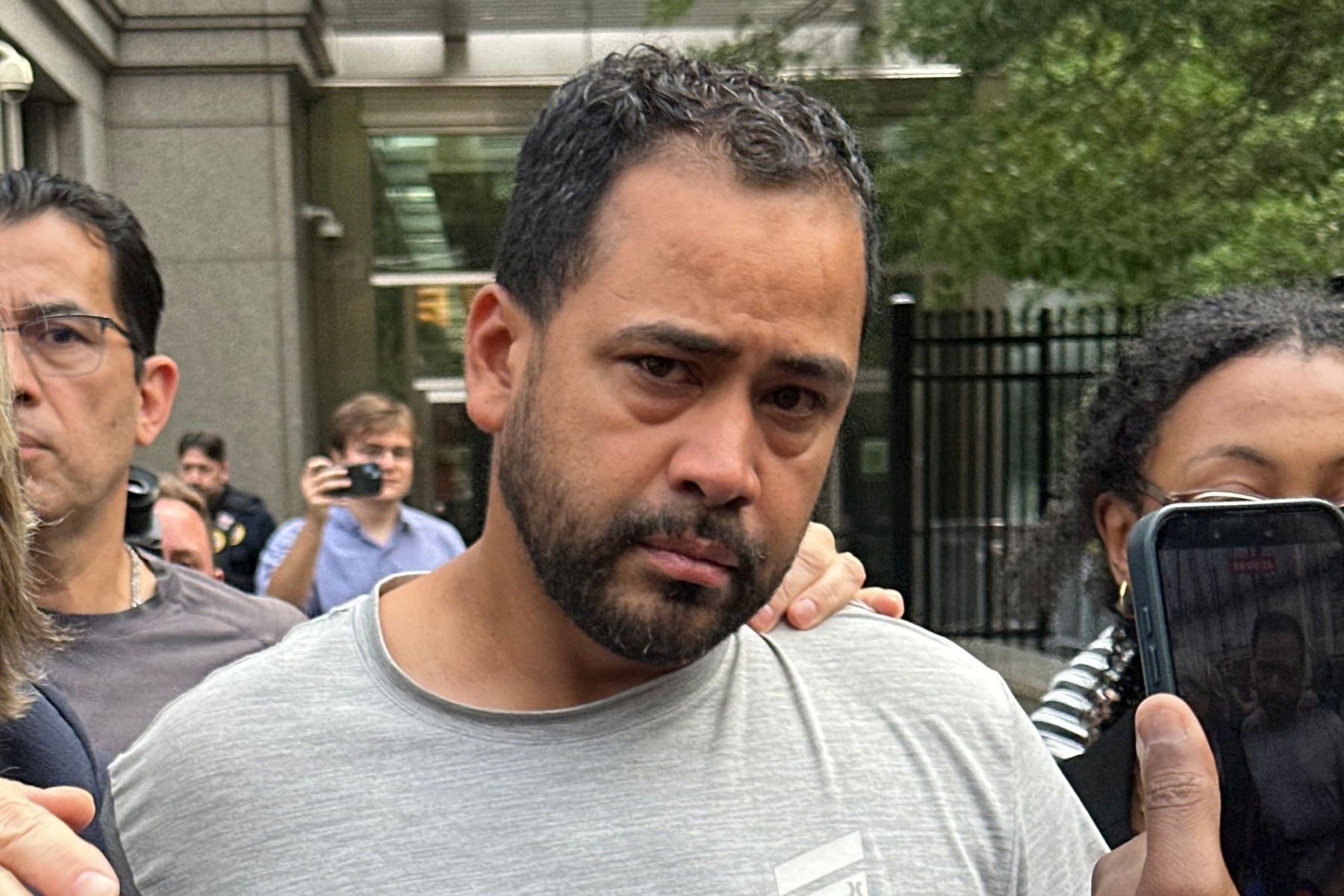

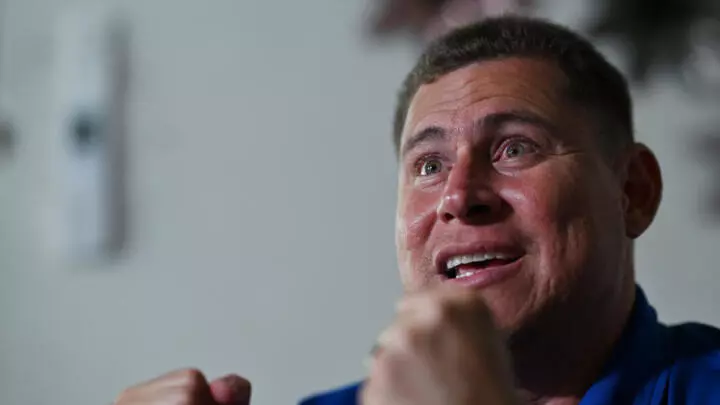
Arrested while reporting on an anti-Trump protest outside Atlanta, Salvadoran journalist Mario Guevara spent 112 days in ICE detention before being deported to El Salvador despite holding a valid US work permit and press credentials. He spoke to FRANCE 24 about press freedom under US President Donald Trump and the difficulty of reporting on ICE raids.
Mario Guevara is a Salvadoran journalist specialising in crime and police reporting who arrived in the United States in 2004. Known for his reporting on immigration enforcement and ICE raids, the Emmy Award-winner was arrested by US immigration authorities on June 14, 2025, while covering a “No Kings” protest against US President Donald Trump in the suburbs of Atlanta, Georgia.
At the time of his arrest, Guevara held a valid work permit and press credentials. The 48-year-old father of three – two of whom are US citizens – was separated from his family and transferred between six detention facilities before spending nearly four months in an ICE detention centre in Georgia.
Guevara says he was targeted because of his journalistic work and his prominence within Latino communities in the southern United States, where his reporting reaches more than one million followers on TikTok and Facebook combined. Placed in solitary confinement – officially, for his own safety – he says the move was intended to silence a reporter who closely monitors ICE operations.
After ICE convinced a judge to reopen his immigration case, on October 3 Guevara was deported without the possibility of appeal to El Salvador, where he remains today, separated from his family. His 112-day-long detention also made him one of the journalists to have spent the longest time behind bars in US history.
FRANCE 24 spoke with Guevara about press freedom in the United States since Trump’s return to the White House and the growing challenges of reporting on immigration enforcement, as ICE raids intensify nationwide and a day after the shooting death of a 37-year-old woman during an ICE raid in Minneapolis.
FRANCE 24: How did you get into journalism, and what led you to move to the United States?
Mario Guevara: I was drawn to journalism from a very young age. I studied the field in college and began my career in 2000 as a photojournalist for La Prensa Gráfica, one of El Salvador’s leading daily newspapers. Soon after, I was threatened by criminal gangs – they followed me and even threw rocks at me – forcing me to leave the country in 2004.
My mother had lived in Atlanta, Georgia, so it felt natural to move there when I applied for asylum in the United States. The process was long, and my case remained unresolved until 2012. In the meantime, I began working for El Mundo Hispánico, the Spanish-language version of the local Atlanta newspaper AJC (The Atlanta Journal-Constitution). Immigration authorities then denied my asylum request, and the judge granted me voluntary departure. I was planning to move to Canada with my family when immigration officials contacted my attorney to say the case had been put on hold and I was allowed to stay in the United States with a work permit.
In 2024, I launched my own media outlet, MG News, which now employs six full-time staff.
How have ICE raids evolved in recent years? Have you seen a difference between Trump’s first and second term?
I have been covering immigration and police stories for a long time. Topics related to ICE are particularly followed by the Latino community in the United States. I usually wake up around 4-5am, when followers alert me to suspicious activity in a neighbourhood. ICE officers often make arrests in the streets or at workplaces, frequently targeting work vans. They often appear to be civilians but wear bulletproof vests.
In the past, people had the right to go to court and be assisted by an attorney. Today, ICE arrests are much more immediate, and people have fewer due process rights. Deportations can now happen without a judge ever reviewing the case (a process known as “expedited removal”). I used to follow ICE officers during raids in Latino communities in Gwinnett County, Georgia, under the Obama administration. But now, immigration officers act more aggressively. During their operations they sometimes accuse people of obstruction, and press freedom is not respected. It’s also more and more common to see people hunting others for money, almost like bounty hunters.
During his first term, Trump’s approach was somewhat different. Under Biden, immigration policy was more open, with more work permits granted. But since Trump returned, his rhetoric and actions appear harsher toward the Latino community. He refers to some as "criminals" or "terrorists" and stepped up enforcement. It is a significant shift.
Many Latino voters supported Trump because of his promises to protect Christians and create job opportunities, messages that resonated in their communities. Today, many feel betrayed, as his focus seems to have shifted almost entirely to immigrants rather than the broader agenda he had promoted.
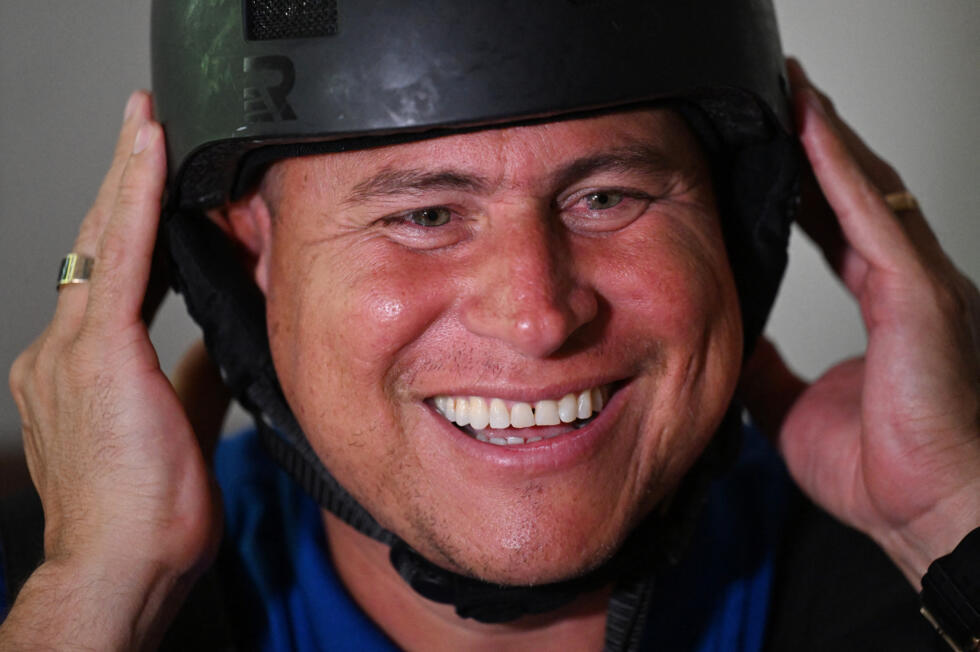
Can you tell us about the day you were arrested and the circumstances surrounding it?
It was a Saturday, and I was covering one of the “No Kings” protests in the suburbs of Atlanta. The participants did not have a permit to demonstrate, and the police arrested 30 people, including me. Although I am a journalist and had proper credentials, they ignored them and accused me of being part of the protest. I believe they recognised me – I was the only reporter broadcasting live in Spanish – but it is difficult to prove that I was specifically targeted.
I was placed in a police car, then a bus, and finally taken to a jail, where I was put in a small cell. My attorney visited me and was optimistic, saying I should be released the same day. However, the following day, the sheriff informed me that immigration had requested I be held. Despite my work permit being valid until 2030, they effectively moved to detain me.
I contacted my consulate, and initially they were supportive. But my work permit was immediately revoked, and I was placed into immigration proceedings for deportation.
What were the conditions like during your detention ?
I was initially transferred between six different jails, spending about a week in each. I was then placed in the Folkstone ICE detention centre, on the border between Georgia and Florida, where I remained for 112 days – almost four months. Most of the time, I was alone in a cell measuring roughly two by three metres. The lights were on constantly, and I could barely sleep. I spent 23 hours a day confined, with only about two hours outside to breathe and see the sun.
While I was never physically harmed, the experience felt like emotional torture. Authorities justified the solitary confinement as a protective measure, claiming it was because I was a public figure. I find that hard to believe. I was told it was standard procedure, yet I am convinced it was a strategy to pressure me into accepting voluntary deportation.
I was allowed to see my family on weekends, for an hour at a time, which was better than nothing. I filled my days with reading and sleeping. I was in contact with my attorney once a week but he consistently brought bad news, warning that immigration was preparing a strong case against me. My phone had been confiscated, and they monitored my social media, looking for anything that could be used against me. It felt as though my attorney had very little room for manoeuvre. From this experience, I realised that if you are not a US citizen, you do not have the same rights – even as a journalist.
How did your deportation unfold?
The immigration authorities’ strategy was to reopen my 2012 case, effectively cancelling the administrative closure that had previously allowed me to stay. A new judge ruled that I had to leave the country, and within less than 48 hours, I was ordered into immediate deportation.
On Thursday, October 2 at 4am, I was woken, handcuffed – hands and feet – and taken to an airport in Jacksonville, Florida. From there, I was transferred to another plane in Louisiana, where I remained for 24 hours. The following day, Friday, October 3 at 4am, I was placed on a flight to El Salvador. I was only able to bring what I had on me at the time of my arrest: a wallet, my original clothes and shoes, my watch, my jewellery, and my bulletproof vest and press credentials.
When I arrived at the airport, many reporters were there.
How are you and your family managing from a personal standpoint?
I want to return to the United States, to my family and my home. My only relatives in El Salvador are my grandmother and my aunt. Everything else is in Atlanta: my wife and three children, ages 14, 21 and 27. Two of them were born in the United States and are US citizens. One of them is being treated for a brain tumour by a specialist there. My media company is also based in Atlanta.