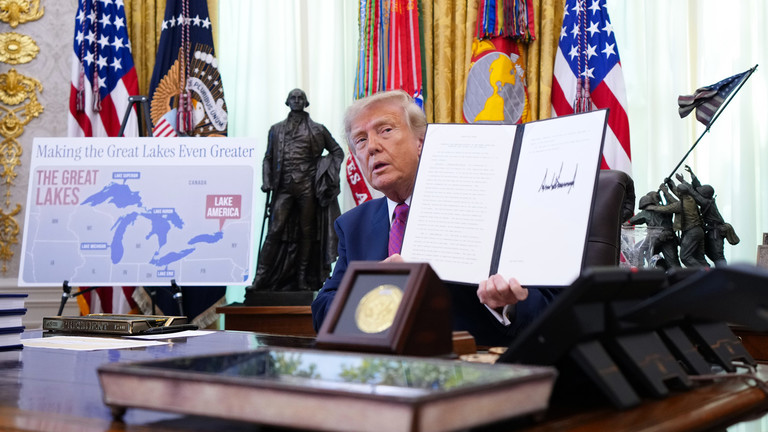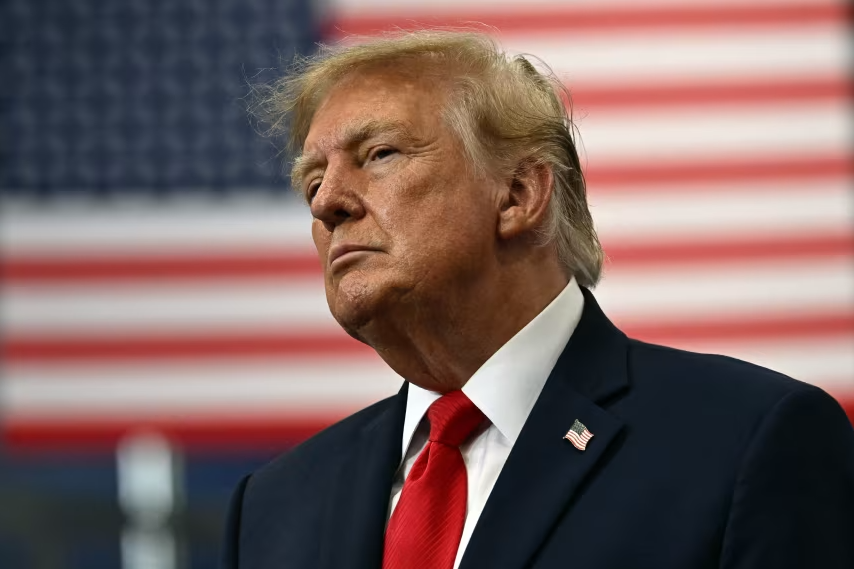

In an address heavy on patriotism, Trump said tariffs were “saving the country” while blaming Democrats for making the cost of living an issue.
WSJ Washington Coverage Chief Damian Paletta breaks down the key takeaways from President Trump’s State of the Union address. Photo: Nathan Howard/Reuters
WASHINGTON—President Trump delivered a State of the Union address to the nation, setting a record for the longest speech of its kind. Polls show him struggling to connect with the public on the economy and Republicans bracing for a challenging midterm election. In an address heavy on patriotism, Trump billed the past year as a “turnaround for the ages.”
Here’s a look at the main takeaways from Tuesday’s address before a joint session of Congress.
Doubled down on tariffs
Trump addressed the nation only days after the Supreme Court’s 6-3 ruling striking down his sweeping tariffs agenda and the president’s swift move to impose 10% tariffs on imports from all countries for 150 days. He said last Saturday that he would raise duties to 15% but hasn’t done so yet.
Trump said “everything was working well” and the U.S. was gaining revenue through tariffs. He bemoaned the Supreme Court’s ruling but said foreign countries and companies wanted to keep the tariffs in place.
The president said tariffs were “saving the country” through the “kind of money we’re taking in” and implausibly said tariff revenue could one day replace the nation’s income tax, “taking a great financial burden off the people that I love.” But Trump’s new tariff approach is premised on a legal authority never before used by a president for tariffs and is likely to be challenged in court.
In his State of the Union address, Trump spoke about tariffs and their role in driving economic success, saying they strengthen the U.S. economy. He added that tariffs would “substantially replace” income taxes. Photo: Alex Brandon/Associated Press
Pulled punches on the Supreme Court
The stage was set for a confrontation between Trump and the Supreme Court after the president vented his frustration over the court’s tariffs ruling last week. He previously said the families of justices Neil Gorsuch and Amy Coney Barrett—whom he nominated during his first term—should be “embarrassed” they voted with the majority opinion written by Chief Justice John Roberts.
But there were no major blows. When Trump arrived and walked past the area where the justices were seated, he shook hands with the four justices in attendance, including Roberts and Coney Barrett. Gorsuch didn’t attend. During his speech, the president referred to the tariffs decision as an “unfortunate ruling,” but avoided attacking the justices by name.
In his State of the Union address, President Trump said the Supreme Court made an ‘unfortunate ruling,’ after the court invalidated many of his second-term levies. Photo: Chip Somodevilla/Getty Images
A defense of the economy
Trump blamed Democrats for making the high cost of living an issue. “You caused that problem,” he said, eliciting a standing ovation from Republicans. “Their policies created high prices; our policies are rapidly ending them.”
Trump painted a rosy picture of declining costs on major goods—eggs, beef and fuel—though prices haven’t broadly fallen. He said he planned to address “the crushing cost of healthcare” by calling on Congress to codify the healthcare framework he released earlier in the year, which seeks to redirect federal subsidies from insurers to consumers. The plan hasn’t gained momentum in Congress.
President Trump said Democrats were to blame for making the high cost of living an issue, speaking in Washington during the State of the Union address. Photo: Will Oliver/EPA/Shutterstock
The president also highlighted his steps to reduce the cost of prescription drugs. He touted efforts to stop private investment firms from buying residential homes and asked Congress to codify the measures.
Polls show voters are frustrated with the economy and stock markets have displayed volatility in recent weeks, though the Dow has steadily climbed since he took office. The president’s advisers have urged him to focus on efforts to make Americans’ lives more affordable as Democrats emphasize economic hardship on the campaign trail. “The roaring economy is roaring like never before,” the president said.
Iran: diplomacy or conflict?
Trump said the U.S. is in negotiations with Iran to halt their nuclear program and his preference is to reach a resolution through diplomacy. But he said, “we haven’t heard those secret words, ‘we will never have a nuclear weapon.’”
Trump spoke on Iran at his State of the Union Address, alluding to his ongoing negotiations with the nation while emphasizing he had not yet come to an agreement with them about nuclear weapons. Photo: Kenny Holston/The New York Times/Associated Press/Pool
The president said the Iranian regime was the world’s largest sponsor of terrorism and had killed more than 30,000 protesters during recent unrest in the country.
The U.S. has moved a vast array of military equipment and aircraft into the Middle East in recent weeks and has been considering an attack against Iran. Trump said he has pursued a foreign policy underpinned by “peace through strength.”
Trump’s speech presented an unapologetic defense of his immigration policy. He attacked Democrats for allowing a “border invasion” and blamed them for cutting off funding to the Department of Homeland Security.
In one of the speech’s more heated moments, he asked everyone in the chamber to stand if they agreed with the proposition that the first duty of elected officials was to protect American citizens instead of immigrants that have entered the country illegally. The line drew silence from Democrats, most of whom remained seated, and elicited prolonged applause from Republicans who broke out in chants of “U.S.A.”
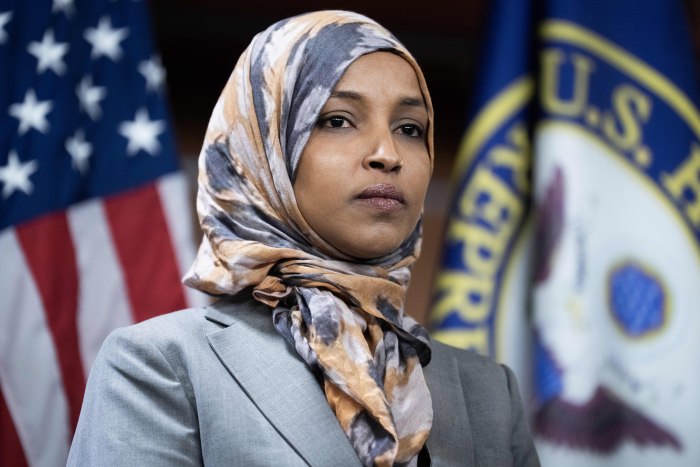
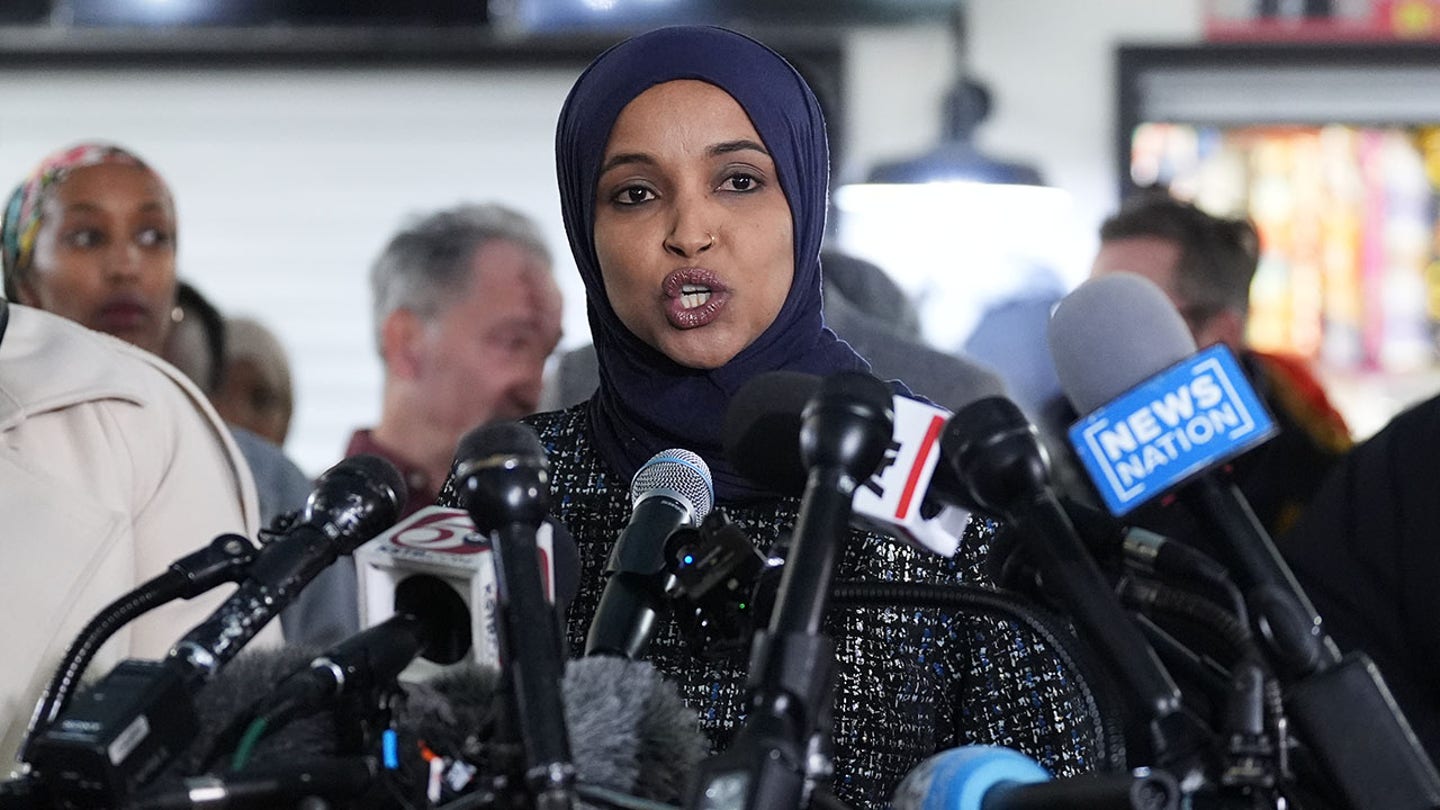
“You should be ashamed of yourself not standing up,” Trump told congressional Democrats. A camera showed Rep. Ilhan Omar (D., Minn.), a frequent Trump target who represents a Minneapolis area district, shouting at the president and responding at one point, “You should be ashamed.”
Trump called for laws requiring voter identification to vote, and claimed that Democrats opposed such measures because they “want to cheat” in elections.
War on fraud
Trump named Vice President JD Vance as the leader of the “war on fraud.” The vice president, who is seen as a likely candidate for president in 2028, has been a critic of Minnesota Gov. Tim Walz, over a welfare fraud scandal involving many residents of Somali descent, which the state and federal government is now investigating.
“He’ll get it done, and if we’re able to find enough of that fraud, we will actually have a balanced budget,” Trump claimed. Vance said last month he was assembling a major interagency task force to take on the issue.
Trump said he expects his administration will root out more fraud and mentioned several Democratic-led cities that would be scrutinized. Immigration and Customs Enforcement officers in December were deployed en masse to Minnesota on the heels the fraud scandal, touching off widespread protests.
Early in his speech, Trump introduced the gold-medal winning U.S. men’s Olympic hockey team, who emerged from the gallery of the House chamber to chants of “U.S.A.! U.S.A.!” after their overtime victory over Canada Sunday.
Trump basked in the glow of America’s first men’s hockey Olympic gold since the 1980 “Miracle on Ice” and announced that the team’s goaltender, Connor Hellebuyck, would receive the Presidential Medal of Freedom, the nation’s highest civilian honor. Trump said the women’s hockey team, which also defeated Canada to win gold, would soon be visiting the White House.
Ken Thomas is a national political reporter covering the Trump administration. He has worked for The Wall Street Journal since November 2018. Ken has covered the past four presidential campaigns and the White House under Presidents Biden, Trump and Obama. Ken previously covered national politics, presidential campaigns and the White House for the Associated Press, where he was based in Washington, D.C., Miami, and Des Moines, Iowa.
Natalie Andrews is a White House correspondent for The Wall Street Journal, covering domestic policy and President Trump's legislative agenda. She joined the Journal in 2014 and began covering Congress in 2017 and did so until 2024, covering two impeachments, the congressional response to the Covid pandemic and numerous election cycles. She focused particularly on House leadership and the dynamics around the speaker races.