
New York City’s mayor wants to dramatically expand construction, but also do so at a relatively high cost.
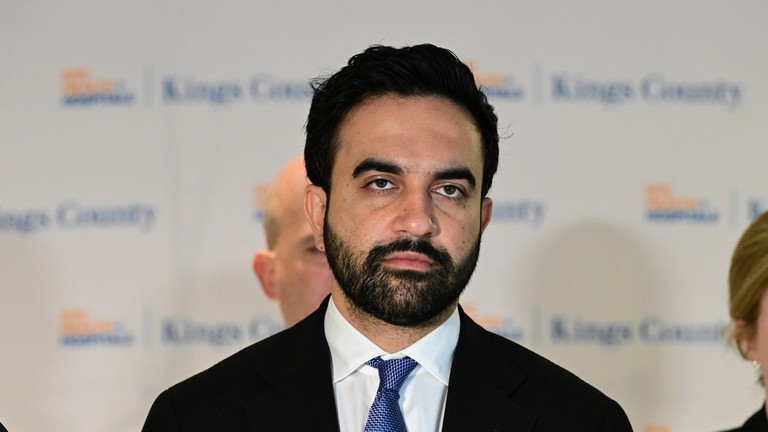
NEW YORK — Mayor Zohran Mamdani has vowed to dramatically expand affordable housing in New York City — and to do it with union labor. Accomplishing those two goals at once will not be easy.
Mamdani rode to victory in November on a pledge of affordability and intends to triple production of city-financed housing over the next decade. The 200,000 new homes, he claimed during his campaign, would be “union-built” and geared toward households making less than $70,000 per year. The total price tag? A whopping $100 billion.
His pledge to blow out the city’s affordable housing target — and produce those homes at a relatively high cost — will pose an early test of how he navigates competing priorities and difficult tradeoffs.
Achieving the goal will be extraordinarily difficult, if not impossible, according to more than a dozen former city officials, developers, affordable housing advocates and budget experts POLITICO interviewed. Mamdani will have to contend with already existing fiscal roadblocks, rising construction costs and imperiled federal resources. Building housing with union labor would add to those challenges, since funds aimed at massively expanding construction would not stretch as far. The policy would also mark a departure from the city’s longstanding approach.
“We took a strong stance on not requiring union labor for construction on affordable projects, and we were willing to take the political hit,” said Alicia Glen, who served as deputy mayor for housing and led an ambitious production plan under former Mayor Bill de Blasio. “We would rather spend less money, work with more diverse contractors and build more. It’s just math.”
Mamdani stood by the “union-built” commitment during his campaign even as construction unions backed former Gov. Andrew Cuomo, who has long had a close relationship with the building trades. Even after Mamdani trounced Cuomo in the Democratic primary, these unions stayed neutral in the general election. The pledge was an illustration of Mamdani’s ideological instincts as a politician, but also one that will likely bump up against practical realities now that he’s mayor.
“What I think everyone needs to appreciate is this is a mayor who came in promising to build with union labor even though the construction trades didn’t endorse him, and I think it speaks highly to his moral compass,” said Kevin Elkins, the political director of the District Council of Carpenters, who also worked on Cuomo’s campaign.
How Mamdani proceeds will be an important marker of his developing relationship with the trades, and he’ll have to strike a tricky balance. On one side are unions advocating for workers in an often-dangerous industry that have long pushed for a larger share of the construction market. On the other is a vast and urgent need for affordable housing — the lack of which continues to drive the cost of living crisis that propelled Mamdani to City Hall.
The city’s rental vacancy rate stands at less than 1 percent for apartments renting below $2,400 per month. Creating new, subsidized housing is one of the most direct ways a mayor can add lower-cost options to this strained market.
“Everyone is free to have their policy and legislative priority, but I don’t see how you can say your top priority is affordable housing if you’re prioritizing some other requirement before the ability to provide affordable housing,” said Howard Slatkin, executive director at the Citizens Housing & Planning Council.
The city is on track to spend about $3.75 billion on affordable housing projects this year, according to budget figures analyzed by the New York Housing Conference. That sum includes both newly-built housing and efforts to preserve existing units. If those projects were being developed with prevailing wages, which are based on union rates, the total would go up by roughly $1.75 billion.
“My experience in affordable housing in New York City and state and across the country is, there are not unlimited resources,” said Kirk Goodrich, president at Monadnock Development, an affordable housing builder. For an individual project, he estimated that the increase from building with union labor “on hard costs alone is probably somewhere between 25 to 35 percent.” Others pegged the increase as high as 50 percent.
Mamdani’s “union-built” pledge comes as his fledgling administration is already tasked with enacting — and finding the subsidy required for — a new law that mandates at least $40 per hour in wages and benefits for workers building city-financed housing. This change was relatively modest — at least compared to imposing union rates across the industry. But the city’s Department of Housing Preservation and Development still pegged the cost at some $425 million per year in additional subsidy, assuming the city maintains the same level of production.
Unions pushing the measure argue it would help protect some of the most vulnerable and exploited workers in the industry.
“For [workers] to get paid the minimum wage to build housing that they themselves cannot afford to live in, that had to change,” said Dave Bolger, business manager at the Mason Tenders’ District Council, which represents laborers. Mamdani’s platform, he added, “holds a lot of great promise and I really hope that he keeps that promise. He’s the only candidate that was running for mayor that ever said that.”
Mamdani has not addressed the “union-built” commitment yet as mayor, and his team in City Hall would not say whether they’re committed to requiring union-level wage rates on city-financed affordable housing construction.
“We are committed to delivering on the pledge to create 200,000 affordable homes and we are moving quickly to develop a housing plan that does just that, in partnership with leaders in Albany, the City Council, labor, tenants, and across the city,” Deputy Mayor for Housing and Planning Leila Bozorg said in a statement to POLITICO.
One affordable housing developer described the possible union requirement as a “huge concern” since it could slow down the pace of projects the city is able to finance if Mamdani is not able to expand funding. Builders often wait years to close on city financing.
“None of us want this to come in because we don’t want to build fewer projects,” said the developer, who was granted anonymity to speak freely about the new mayor.
Others are skeptical he will keep this campaign promise.
“There’s no way,” said another affordable housing developer who was granted anonymity to speak candidly. “Someone’s going to tell him that there’s a reason that for the past 40 years people have been building affordable housing non-union.”
Mamdani specifically promised during his mayoral campaign that New York City would once again become a “leader” in producing housing for families making below $70,000 per year, or the median income of renters.
The union labor commitment could bump up against that pledge to set aside more of this housing for New Yorkers with the fewest options on the private market.
“Some of the tradeoffs that he’s going to have to grapple with are, are you going to do deeper affordability or more units? Are you going to do union labor or more units?” said Jessica Katz, who served as chief housing officer under Mayor Eric Adams.
The lower the rent for one of these affordable apartments, the more subsidy the city typically has to put in. The need for more housing at the lower end of the market is immense: There are more than 86,000 people sleeping in municipal shelters, according to the city’s daily shelter census. But the affordability crisis is hitting middle-income households as well — and Mamdani drew support from many younger voters who feel squeezed despite making relatively comfortable salaries.
There are other choices involved in crafting a housing plan: How many resources should the city put toward constructing new buildings? How much should it focus on preserving existing housing that may need public subsidies to improve conditions or retain below-market rents? Older rent-regulated buildings and subsidized affordable housing properties are facing growing distress amid rising costs. This could heighten demands on how much money Mamdani needs to set aside for preservation.
Preservation has made up a significant portion of prior mayors’ affordable housing plans, but Mamdani’s 200,000-unit target is entirely new construction.
Mamdani said the platform would require an additional $70 billion on top of $30 billion the city is already planning to spend. To pay for this, he would push lawmakers in Albany to lift what he called “arbitrary caps” on how much the city can borrow.
Even if he’s able to get state lawmakers to agree to let the city take on more debt — an exceedingly tall order — he could still be constrained without more resources from Washington. Federal tax credits are often essential to affordable housing projects, but the city gets a limited supply each year. Once it maxes out those resources, each additional project needs much more city money to pencil out.
If the city is staying within its existing capital funds, there are other tradeoffs. How do you weigh housing production needs against planned resiliency projects? Upgrades to water and sewer infrastructure? Deteriorating public housing?
Union leaders appear to be open to compromise on what exactly “union-built” means. The construction trades are diverse in terms of average pay, and wage rates can vary considerably between different trades and different types of projects.
“We’re not expecting that since he switched the lights on in Gracie and City Hall that now everything is union labor, we understand this is a process,” Elkins said. “We’re not going to be extremist about this, this is going to be a collaborative relationship to get this done.”
Mamdani wouldn’t be the first mayor to have initiatives play out differently than as described on the campaign trail.
“In Bill de Blasio’s policy platform, he said that he was going to adopt a mandatory inclusionary housing policy that was going to generate 250,000 units,” Glen recalled. “And then I walked in the door and we all walked in the door and we said, who came up with this number? What is this number?
“When the harsh reality of all these ideas hits you,” she added, “you have to start making some choices.”