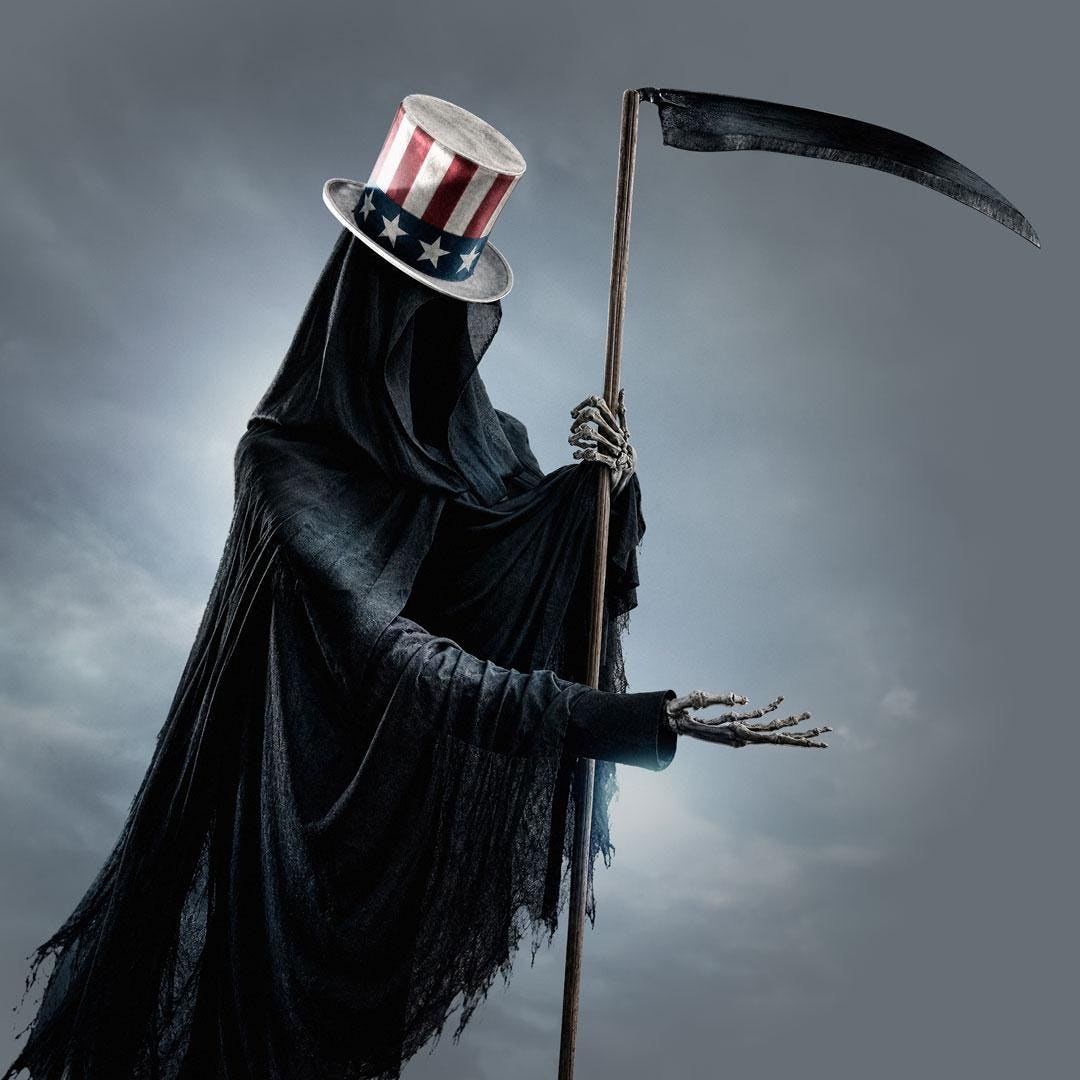
Puerto Rico’s residents typically don’t pay U.S. income taxes on income sourced to the island. That, and a special tax break for newcomers, has attracted some rich folks from the states.
By Kelly Phillips Erb, Forbes Staff.
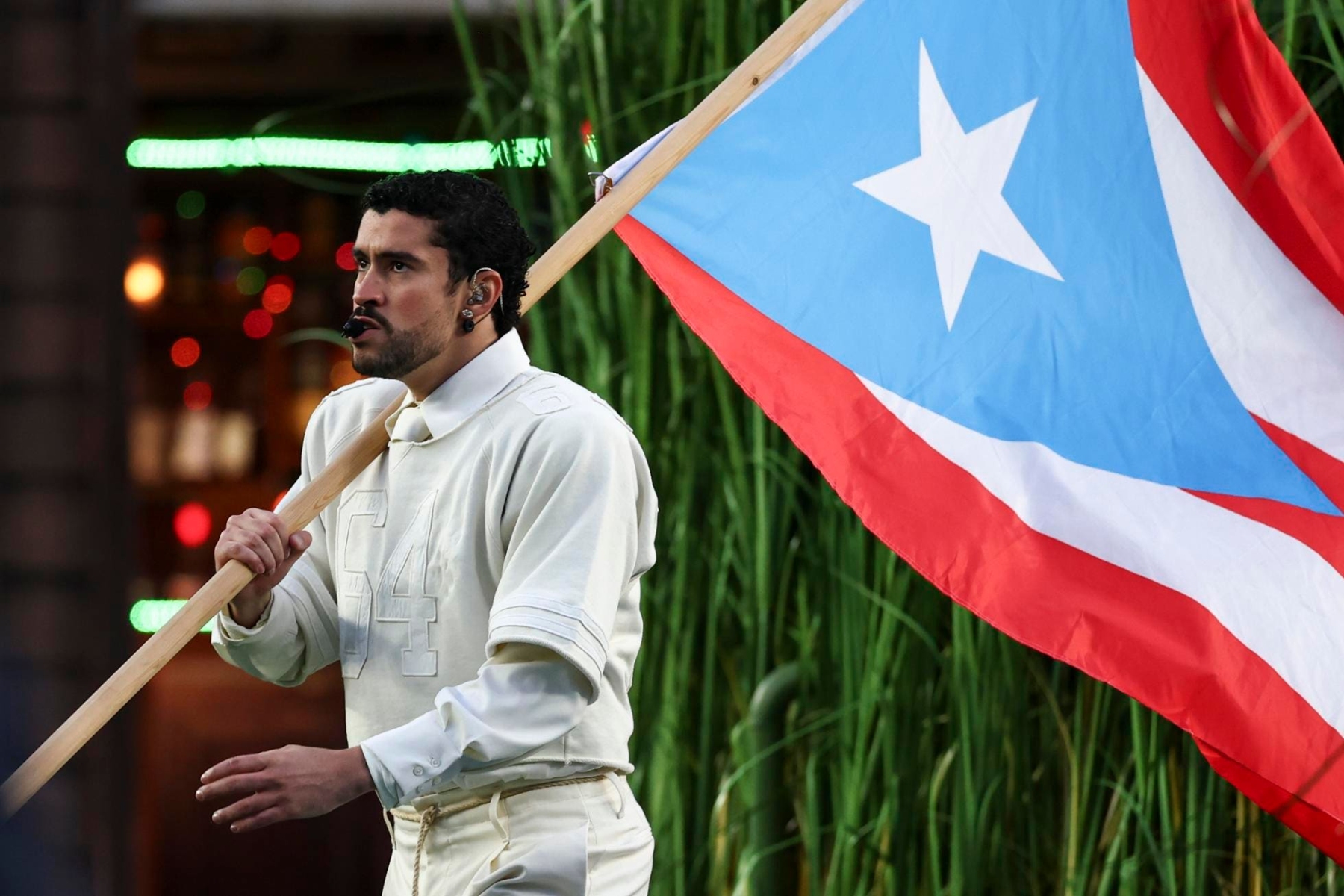
About 135 million viewers tuned in to watch Bad Bunny take the stage at the official Super Bowl LX halftime show on February 8, 2026. The 31-year-old performer, born Benito Antonio Martínez Ocasio, celebrated his Latino heritage in a show filled with cultural icons (shout-out to Ricky Martin) and performed mostly in Spanish.
The six-time Grammy Award winner (who also won Album of the Year in 2026 for Debí Tirar Más Fotos, the first Spanish-language album ever to win that honor) was considered a controversial choice given the state of American politics. Social media was filled with messages decrying the decision to have a “foreigner” headline the show and demanding that it feature a United States citizen.
One of those messages came from right-wing influencer Jake Paul (#3 on Forbes Top 2025 Creators list), who called Bad Bunny a “fake American citizen” during the halftime show, imploring his fans not to watch. Jake’s older brother, Logan, reminded his millions of followers that “Puerto Ricans are Americans,” writing, “I’m happy they were given the opportunity to showcase the talent that comes from the island.”
Logan, #15 on Forbes Top Creators list, is right: Bad Bunny is a U.S. citizen. He was born in a small coastal town on the northern coast of Puerto Rico and currently lives on the island. (Later, Jake insisted he was calling Bad Bunny “a fake American” because of the performer’s opposition to ICE.)
But here’s the ironic tax twist: Puerto Rico enjoys a special status when it comes to U.S. income taxes and the Paul brothers also live in Puerto Rico—for tax reasons. In 2021, Logan announced that he was moving there to escape high taxes in California. Last year, he appeared to cement intentions to stay after purchasing a mansion in Dorado he claimed cost $32.5 million.
Why Puerto Rico? When cryptocurrency prices exploded in the late 2010s, investors sitting on massive unrealized gains descended on Puerto Rico, hoping to take advantage of the favorable tax laws. That wasn’t accidental. Puerto Rico’s Act 22, passed in 2012, aimed to attract high-net-worth individuals to the island by offering preferential tax treatment for passive income—exactly the kind of income that makes crypto millionaires richer. For qualifying new residents, Puerto Rico agreed to tax certain categories of income, like capital gains, interest, and dividends, at zero or near-zero rates. The law was explicitly aimed at newcomers, which led to backlash from long-term residents.
In 2019, Puerto Rico folded Act 22 into a broader statute, Act 60. New applicants now apply under Act 60’s investor provisions, which are subject to greater scrutiny and take longer. There are now mandatory annual filings, additional compliance requirements, and reporting obligations. Act 60 also requires annual charitable contributions to Puerto Rico-based nonprofits, in an attempt to quell concerns that newcomers were taking from the island without giving back. The law is more stringent than before, but still offers enough opportunities for investors to attract some new billionaires.
While the U.S. has 50 states, Puerto Rico is an unincorporated U.S. territory. That means it belongs to the United States but is neither a state nor a foreign country (you don’t need a passport to visit). Importantly, since 1917, Puerto Rico residents have been U.S. citizens. But like residents of other U.S. territories, they cannot vote in presidential elections and have no voting members of Congress.
As a result—remember no taxation without representation?—Puerto Rico occupies a special niche in the U.S. tax system. Federal law applies there, but Congress has long treated Puerto Rico as a separate jurisdiction for income tax purposes. For residents, this means Puerto Rico—not the federal government—taxes their earned income.
A bona fide resident of Puerto Rico is generally exempt from U.S. federal income tax on Puerto Rico-source income under section 933 of the tax code. For U.S. tax purposes, a taxpayer must typically satisfy a three-part bona fide residency test:
(Moving to Puerto Rico in the middle of the year usually results in part-year residency, with income allocated between the U.S. and Puerto Rico tax systems.)
If you meet those tests, wages for work performed on the island, income from a Puerto Rico business, and most Puerto Rico-source investment income are taxed only by Puerto Rico. As a result, many bona fide residents do not file a U.S. Form 1040 at all and instead file with Puerto Rico’s Treasury Department, referred to as Hacienda.
Bad Bunny’s performance in the Super Bowl, held in San Francisco, wouldn’t have qualified for the exemption since the work was clearly performed on the mainland. In fact, the athletes playing in the Super Bowl got hit with California income taxes too. But that wasn’t a problem for Bad Bunny, not because he’s from Puerto Rico, but because like other Super Bowl headliners, he performed the show for free.
As for Bad Bunny’s sold-out residency in Puerto Rico? That would meet the criteria. (A residency is an arrangement where an artist performs in the same city over a period of time instead of touring. It was first popularized by Elvis Presley in Las Vegas and rebooted by Celine Dion, also in Las Vegas.)
A common mistake is assuming that living in Puerto Rico automatically confers bona fide resident status. It does not. You have to meet those tests—and missing just one means that you don’t qualify for the exemption. A common way to get tripped up? The same issue that snowbirds and other taxpayers in the U.S. have when keeping a toe in multiple jurisdictions: failing to prove a closer connection to Puerto Rico than other places. Taxpayers who keep a spouse, children, primary business operations, or a meaningful day-to-day life in the states often fail this test without realizing it.
Another potential trap is income sourcing. Wages are sourced to where work is physically performed, not where an employer is located or where a paycheck is issued. Performing remote work for a Puerto Rico employer while spending time on the mainland can generate U.S.-source income and a U.S. filing obligation. Short consulting projects, board meetings, speaking engagements, or deal work in the states are often dismissed by taxpayers as incidental, but the tax authorities may say different.
Because the rules can be confusing, taxpayers may fail to file a U.S. return when one is required. Even bona fide Puerto Rico residents must file with the IRS if they have U.S.-source income outside Puerto Rico. Some taxpayers stop filing U.S. returns altogether after moving to Puerto Rico, forgetting about non-Puerto Rico income. This can trigger failure-to-file and failure-to-pay penalties, even when most income is properly excluded.
The result of these rules? Those taxpayers who live in Puerto Rico still pay a lot of U.S. federal taxes. In 2023, the residents of Puerto Rico paid $5 billion in federal taxes, roughly the same as Vermont and Wyoming.
Most of those U.S. taxes are payroll taxes. Wages paid for services performed in Puerto Rico are generally subject to Social Security and Medicare taxes, some times collectively referred to as federal payroll taxes (FICA), even when federal income tax does not apply. This is true whether the worker is a bona fide Puerto Rico resident or employed by a Puerto Rico employer. The exemption that removes Puerto Rico-source income from U.S. income tax does not extend to FICA.
The most well-known payroll taxes, Social Security and Medicare, have a fixed rate. For 2026, the employer portion of the Social Security tax is 6.2% with a taxable wage base of $184,500 (wages over that amount are not subject to Social Security tax). The employer portion of the Medicare tax is 1.45%. There is no wage base limit for Medicare tax (in other words, all wages are subject to Medicare tax).
The rates are the same for employees (6.2% for Social Security tax and 1.45% for Medicare tax).
Retirement accounts are a frequent source of confusion. Many individuals move to Puerto Rico with U.S. IRAs, 401(k)s, or pensions and assume that distributions will be exempt once they establish residency. That’s not true. The taxation of retirement income depends on the timing of contributions, the plan type, and residency status at the time contributions were made. Contributions made before you become a bona fide Puerto Rico resident generally retain their U.S. tax characteristics and are taxable by the federal systems. The more confusing part? They may also be taxable by Puerto Rico, unless a local exclusion applies (there are, for example, age-based exemptions). Rolling a mainland plan into a Puerto Rican plan isn’t necessarily a cure-all.
The result? For retirees who move to the island from the mainland in particular, distributions can be taxable by the United States, Puerto Rico, or both.
Self-employed individuals and business owners face a different set of challenges. Some taxpayers pay U.S. self-employment tax when Puerto Rico treatment should apply, while others assume Puerto Rico treatment applies even when income is sourced to the states.
(When you work for yourself, there’s no employer to pay the employer portion of payroll taxes, so you have to pick up both sides of the cost through the self-employment tax.)
Under section 1402(a)(8) of the tax code, net earnings from self-employment do not include income earned by a bona fide resident of Puerto Rico from sources within Puerto Rico. Examples include a consultant working from Puerto Rico for mainland clients or an online professional who does not travel to the mainland.
However, travel or activities might kick you out of the exemption. Those include attending board meetings in the states, or professionals who “work from Puerto Rico” but travel regularly to meet with clients on the mainland. Again, the key is the source of income—not the company’s location or the nature of the work.
Having more money doesn’t change the rules, but it can change how they are enforced. High-net-worth individuals often attract more scrutiny and have more complex income streams. Without careful planning, large capital income, private equity interests, licensing structures, and intellectual property often default to U.S. sourcing. Maintaining multiple homes or businesses on the mainland, or leading a noticeably stateside-centered life (such as frequent travel), can weaken residency claims.
Beginning in 2024 (for the tax year 2023), the IRS officially replaced certain Puerto Rico specific tax forms, which created confusion. The worry was that the tax system had changed—that wasn’t the case. The switchover largely impacted Form 1040-PR, which was replaced by Form 1040-SS—used by residents of U.S. Virgin Islands (USVI), Guam, American Samoa, the Commonwealth of the Northern Mariana Islands (CNMI) to report self-employment tax when a Form 1040 isn’t required—was made to simplify processing. You can find a list of forms that were phased out, alongside their replacement, on the IRS website.
Puerto Rico is part of the United States but operates as its own jurisdiction for income tax purposes. Confusing the two systems can create problems for taxpayers, making careful planning and great recordkeeping extremely important. Before pulling up stakes and heading to La Isla del Encanto with visions of sugarcane and tax exemptions in their head, taxpayers should consult a trusted tax advisor.