Donald Trump commuted the prison sentence of a fraudster. Within months, he was back in business.
Chris Anderson once told Deirdre Virvo that he wouldn’t do business with a man who cheated on his wife. A cheat at home would cheat at work, he said. In the five years she’d known him, worked with him and invested hundreds of thousands of dollars with him, she’d never seen him drink or smoke, even in Las Vegas. So when a drunken Anderson asked for a divorce from his wife in front of his business associates on the second day of a Caribbean cruise, Virvo figured something had gone awry.
The reason for his meltdown would soon become clear. Anderson had been drawn into a $44 million Ponzi scheme that was on the verge of collapse. The mastermind behind the scam: Eliyahu “Eli” Weinstein, a twice-convicted fraudster who still owed his victims more than $200 million. He had been sent to prison for 24 years — only to be released early in January 2021, after US President Donald Trump commuted his sentence.
Anderson ran an investment firm called Tryon Management Group out of New Jersey, which mostly did ad hoc, quick turnaround deals for medical supplies like face masks, first-aid kits and baby formula. By the time of the cruise in January 2023, Virvo, a real estate investor and care home entrepreneur from Stamford, Connecticut, had invested around $300,000 with Anderson. “We just kept rolling it in and adding more money to it since they seemed like great deals,” Virvo said in an interview.
But now, Anderson seemed on the edge. He flirted openly with other women, drank heavily and told rambling anecdotes about a recent trip to the Middle East. “One story was about how he had to play catch with a dead horse’s head,” Virvo said. “I was so appalled.”
Five months earlier, Anderson had discovered that Tryon’s biggest business partner was secretly being run by Weinstein, who had been jailed for masterminding two previous scams. Rather than pull out, Tryon’s founders had let Weinstein convince them to keep the scheme running.
It was a remarkable play, but Weinstein was accustomed to being given second chances. Within six months of regaining his freedom, Weinstein had started up a whole new fraud.
Watch: The High Price of Clemency
Eliyahu “Eli” Weinstein grew up in Brooklyn, the son of a Jewish community leader and a school principal. He settled in Lakewood, New Jersey, where he worked as a used car salesman, before starting a business arranging real estate deals. A prominent figure in the Lakewood Orthodox Jewish community, he was known as devout, donating to religious organizations and charities, and spending millions of dollars on Judaica — devotional artwork and artifacts.
“He was the go-to person in Lakewood,” Samantha Weitzen, one of his victims, told a court in 2014. Weitzen went to Weinstein after she had trouble getting a black granite headstone and bench at a family cemetery plot. Weinstein sorted it out. “Everyone went to Eli when they needed something done.”
Weinstein mostly tapped members of the Orthodox community to raise money for his deals, often signing over large sums on a handshake. As far as they knew, he was buying and flipping property. They typically got small payouts on each deal, with the bulk of their supposed profits being reinvested into the next transaction. There were usually documents to show that the deals were above board. Some people put in substantial sums. A rabbi in London invested $28 million; a mortgage broker from Bronxville, New York, put up $92 million.
In reality, Weinstein was using some of the money to buy jewelry and gamble in Las Vegas.
Dream Big
For the aspiring investor in the US, there are thousands of investment forums, subscription newsletters and online communities, offering daring glimpses of the American dream, or just a quick buck for people trying to escape the drudgery of their day jobs and the gravity of the ever-rising cost of living. Chris Anderson was a member of several of them.
A college dropout from Westchester County, New York, Anderson worked in the lower ranks of the auto industry, ending up as the regional manager for a company that sold tires. On the side, he invested in real estate and construction, founding or co-founding a string of companies with cheery, suburban-sounding names: Happy Dad, Sand Castle, Dream Big.
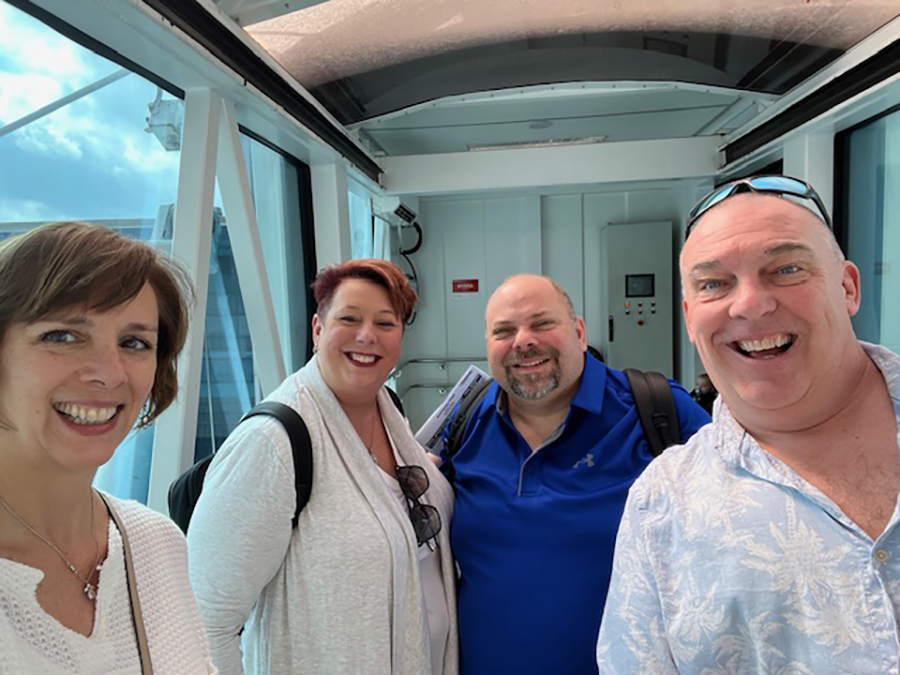
It was in one of these networks he met Virvo — the Millionaire Mastermind Group, a collection of aspiring entrepreneurs and business owners. Anderson wasn’t exactly a likeable guy, arrogant and “a know-it-all,” Virvo said. “But he really was pretty genius at things that he did.”
The Mastermind Group is run by Paul Finck, a colorful business coach whose Amazon author page says: “His untraditional methods have brought him not only personal success, it’s [sic] also brought success as an international trainer, Keynote Speaker, Best Selling Author, Radio Show host, Multi-level Marketing leader, Life Coach, and Business Consultant.”
He was gregarious, and often conspicuously generous, taking other members out for meals, Paul Brown, another Mastermind member, told Bloomberg in an interview. “He was the center of attention and gravity,” Brown said — although he sometimes felt that there might be an ulterior motive. “He wanted friends, he wanted influence, and he knew it would be better to spend money on food for influence and friends.”
In 2017, Anderson went to a real estate forum in New Brunswick, New Jersey, organized by the Financial Independence, Retire Early movement (FIRE), whose adherents try to reach their “Fire number” — 25 times their annual expenditure — and retire early. There, he met Richard Curry.
The basic mechanism of a Ponzi scheme is simple: create the appearance of a successful investment by using new investors to pay off earlier backers. It’s named after Charles Ponzi, who took in millions of dollars from victims in the 1920s by promising they could double their money in 90 days by investing in obscure postal certificates.
Curry was also scraping his way towards prosperity. After graduating with a degree in exercise science from a private university in Salem, Oregon, he worked retail while he waited for his wife, Mari, to finish her degree. He spent a couple of years volunteering in South Korea. Then, back in the US with Mari pregnant, he worked at a baby store, tutored college students and handed out juices for marketing companies.
Eventually, in the early 2010s, he landed a job at Sterling Distributors in Florida, selling medical supplies to pharmacies and wholesalers. In 2015, he started to do the same thing for Amexpo Medical, under a different name: Michael Henderson. Having two identities meant that he could approach medical wholesalers from both companies without them knowing he was moonlighting.
Curry and Mari were also active in the Unification Church, a fringe Christian group founded by Sun Myung Moon. In Florida, the pair were co-pastors to their community. Around 2015, Mari got a position with the church in New York.
Emails from Curry to business partners, as well as his later testimony in court, show that he operated in a world of traders making opportunistic, one-off deals. They weren’t always above board.
In 2020, Curry moved into selling prescription medication — mostly insulin and HIV treatments — via his own company, Keystone Medical Wholesale. This requires a license, which neither Curry nor “Henderson” had. That was illegal, but, he’d later tell a court in New Jersey, his customers didn’t seem to mind.
That was how Curry — still going by Henderson — met Joel Wittels, cofounder of Miracle Medical Supplies, an unlicensed supplier of prescription drugs to pharmacies. Wittels wanted an insulin supplier. Curry could help. Soon, they were doing hundreds of thousands of dollars worth of business together.
“I really liked Joel. He was a super nice guy,” Curry later testified. “I trusted him.”
The key to running a successful Ponzi scheme is building trust. That’s not as hard as it might sound, according to Dan Davies, an economist and author of Lying for Money: How Legendary Frauds Reveal the Workings of the World, because much of the legitimate economy runs on trust.
Greek shipowners do million-dollar deals on a handshake, companies and their investors trust auditors to sign off on accounts. To do credit checks on every interbank transfer would require “more qualified accountants than exist on the planet Earth,” Davies said. “Trusting people is an incredibly efficient technology for doing business.”
Circles of Trust
When Covid hit, Curry was inundated with calls from suppliers looking to offload masks, gloves and hand sanitizer, but he struggled to compete with larger players who were able to do deals with greater volume and velocity. Wittels offered Curry access to bigger transactions: first, a contract to supply the Red Cross in Texas with surgical masks, which promised a 25% return in a matter of weeks. Then another mask deal, in Israel, with a 35% return. Curry put in a total of $325,000.
In the fall of 2021, with more business coming through, Wittels told Curry that he and a colleague, Ari Bromberg, were starting a new company dedicated to pursuing and executing these deals for personal protective equipment. It was called Optimus Investments, Inc.
Optimus’ deals kept on growing — beyond what Curry could do on his own. So, he tapped his network. When Optimus needed $6 million to fulfill a contract to provide 23 million medical masks for an Israeli logistics company, Curry invested more than $1 million of his own cash into the deal, and reached out to friends and family to raise the rest. Kenny Wolfenberger, who’d been to summer camp with Curry as a child, invested $150,000, expecting to get $187,500 back. Kwansoo Lee, a dentist who had met Curry through a religious group at college, initially invested $100,000. Curry also approached Anderson, who put in $450,000.
Curry later emailed his investors to say that he’d raised $4.75 million, which was being sent to Optimus, then to an escrow account in Israel, and from there to a broker called Tariq in Turkey, where the masks would be produced. On January 8, 2022, Curry sent an email to investors with a video. “Just wanted to share with you this link of our masks being loaded on the plane,” it read. “5.4 million masks. By some serendipity, you are involved in this. It’s real. It’s happening. Isn’t that cool?”
Optimus offered Curry and Anderson a gateway into a beguiling world of international fixers, intermediaries and dealers who grease the wheels of international commerce. While Bromberg and Wittels were the company’s frontmen, its key figure was its “logistics coordinator and purchase order procurement officer,” Mike Konig. It was Konig who had the network of government agencies, Turkish factory owners, Israeli lawyers, brokers and middlemen that Optimus needed. He was always cagey about his counterparties on deals — if everyone knew who his contacts were, he told the others, they could reverse-engineer him out of the business. In Anderson’s phone, Konig was listed as “the fourth musketeer.” Anderson later testified that was a reference to D’Artagnan — who is not one of the Three Musketeers in Alexandre Dumas’ classic novel, but is instrumental in their missions.
In April 2022, Curry breathlessly told his investors that in just one month Konig brought them opportunities to buy into deals for 20 million test kits and 65 million masks. “And the deals…keep…coming,” he wrote.
“I have always been the guy who tries to pick up the bill at the restaurant by excusing myself from the table and pretending to go to the bathroom. I love the moment when my friends ask for the bill and the waiter says it’s already been paid. When I met with Optimus and saw the opportunity that existed, I saw this as a major chance to bring my friends along with me to share in this blessing.”
— Richard Curry, in an email to investors in March 2022
By then, Anderson and Curry had set up their own business together, Tryon Management Group. Operating out of a small red-brick office next to a dry cleaning service in Manville, New Jersey, Tryon was the main vehicle through which they raised money to invest in Optimus’ deals.
Curry tapped members of his church community, raising tens of millions of dollars. Anderson sourced investors from the Mastermind Group — people like Virvo, who came in on a mask deal in early 2022. She and her fiancé put in $200,000 each. When it paid back as promised, on time, they rolled over the profits into the next deal, and the next. “Not just us, but the rest of our group all invested with him,” she said.
Curry and Anderson gushed to their investors about the opportunities they were getting through Optimus. In early 2022, popular baby formula brands sold by manufacturer Abbott Laboratories had to be recalled after they detected Cronobacter bacteria in one of their factories in Michigan, leading to a nationwide shortage. Optimus said it found a supplier of baby formula in Turkey. Curry and Anderson offered their investors a 25% return within three to four months. “Act now, as it will fill up fast!” they wrote in an email to their investors.
Leslie Robertson, an entrepreneur from Virginia who knew Anderson from the Mastermind Group, said in an interview a big attraction for investing in Tryon was that the deals were focused on the public good. “They targeted the things that we were feeling. In my city in Richmond, I was seeing Facebook posts desperately looking for baby formula. These are the things that touch us in real life.”
On paper, there was no reason to doubt the deals. Each was accompanied by paperwork such as bills of lading, contracts and invoices. Often the Optimus team shared videos via email and WhatsApp, apparently showing goods in transit.
In March 2022, Curry flew to Turkey with Bromberg, sharing photos and videos of factories over email, showing machines stamping face masks out of sheets of blue fabric. Afterwards, Curry wrote to his investors: “I no longer look at this as a quick investment opportunity. This is something that potentially has MAJOR legs, the partnership with Optimus and the incredible, and I mean incredible connections we have here are building towards something amazing.”
A fraudster who gets inside “circles of trust” can bypass levels of due diligence simply by looking and sounding like they belong there. Bernard Madoff, whose $65 billion Ponzi scheme is probably the largest in history, duped sophisticated investors on Wall Street for years. When those circles go beyond simple business relationships, and include friends, families and religious communities, Davies said, “You’ve got a toxic combination where not only are people not inclined to check, but anyone who does start checking up starts finding themselves under really strong social and psychological pressure not to do so.”
High Stakes
In May 2022, Alaa Hattab lost $250,000 of Mike Konig’s money at the blackjack tables of the Hard Rock Casino in Atlantic City. It took less than two hours.
Hattab, a Canadian manufacturing entrepreneur, had been friends with Konig for a couple of years. They’d done a few deals together, and Konig had dispatched Hattab on a number of gambling trips, babysitting other contacts as they hit the tables, betting huge sums, often losing big. On some of the trips, Konig was putting up the stake in exchange for a split of any profits.
At one stage, days into a long Atlantic City spree, Hattab hand-delivered $300,000 in cash to Konig’s brother-in-law, after watching another of his friend’s associates playing his way through a $1 million stake.
Not long after his calamity at the Hard Rock, Konig wired Hattab another $950,000 to gamble. Hattab declined, but accepted just under half of the money as an investment in his company, Saniton Plastic, which had secured exclusive rights to manufacture a new type of bottle, with an interlocking design that he claimed would save space for companies shipping drinks in bulk.
Hattab was one of a recurring cast of secondary characters in Optimus’ orbit. He was first introduced to Curry and Anderson on a Zoom call in the second quarter of 2022, as one of the participants in the baby formula deal. In July, it was his company’s name that appeared on bank statements showing that payments for that transaction had gone through.
In the middle of 2022, Tryon raised several million dollars to procure three million first-aid kits for the US Agency for International Development, to be sent to Ukraine. It was Hattab who had the connections in Southeast Asia to get a production line started.
The first-aid kit deal was one of a couple of big transactions brokered by Optimus and Tryon in the middle of 2022. The other, according to investor documents, was to supply 100 million masks, sourced from a Turkish manufacturer, to a company called Harvard Medical Supplies (no relation to Harvard University), out of Haverstraw, New York, which was an early buyer of Covid test kits from Optimus. Konig brokered the deal, introducing Curry and Anderson to HMS’ manager, Gary Gershon.
One of Tryon’s investors first raised a red flag about Gershon, pointing out that his name was an oddity. Gershon is a Hebrew version of the name Gary — meaning that Gary Gershon was just Gary Gary. Another investor dug deeper. No one they knew had heard of Gary Gershon. But someone had his phone number, stored under another name: Gershon Barkany, who pleaded guilty in 2013 to orchestrating a $62 million real estate Ponzi scheme, and was sentenced to 56 months in prison.
“We were buying millions of dollars in product on the say-so of a convicted fraudster,” Anderson testified. “So, yeah, initially, we were very concerned.”
Quite a few of Madoff’s investors did see red flags in the returns that he was promising. But once a victim is inside a Ponzi scheme, they often seem to suspend their disbelief. Some “thought he must be doing something else that’s really profitable that he doesn’t want to tell us about. A few of them thought he’s probably using his brokerage to gain insider trading returns, which we are gaining the benefit of,” Davies said. “Not many people made the leap to: ‘Oh, he’s actually just writing down the numbers in a spreadsheet and he’s defrauding us.’”
Konig reassured Tryon’s founders. Barkany was just trying to get back on his feet, and he wasn’t handling money at HMS. And, Konig said, Barkany had contacts within federal agencies such as the General Services Administration, which was how he was able to pull in so many purchase orders. A handful of Tryon’s investors knew about Barkany’s past. Anderson and Curry decided not to tell the rest.
Harvard Medical Supplies and Barkany didn’t respond to requests for comment. Barkany wasn’t charged in relation to the Optimus Ponzi scheme.
Between 2009 and 2013, Gershon Barkany operated a real estate Ponzi scheme in New York and New Jersey, offering investors access to quick profits at low risk. Barkany faked documents to make it look like the transactions were real, but instead used some of the millions of dollars to fund his personal expenses and gambling. He pleaded guilty to wire fraud.
After that, Tryon seemed to expect a little more due diligence. Anderson, who was in charge of Tryon’s accounts, started to worry that, in his words, “The math wasn’t ‘mathing’ anymore.”
One major concern came in the form of a spreadsheet, sent to Anderson and Curry by Wittels, detailing Optimus’ cost of goods expenditures. The top line read “Mystery Expenses,” against a figure: $41,028,233.05.
In August, Anderson testified that he arranged to visit HMS’ warehouse in Haverstraw, finding Barkany and pallets full of boxes marked “gowns,” but only one and a half pallets’ worth of Covid test kits — far fewer than he’d expected. He said Barkany told him that the rest had been moved by Konig. It was a concern, but Anderson would later say he had convinced himself that the “deal junkie” Konig must have sold the stock and rolled the money over into another enterprise.
And at least the first-aid kit deal was coming to fruition. In early August, Tryon sent its investors a video, arranged by Hattab, of the first kits rolling off a production line in Vietnam.
Not long after Anderson visited HMS, he and Curry went to meet Hattab in person. Hattab was looking for $50 million to build out his bottle venture, Saniton, and thought that Tryon might be able to help.
Konig had brokered the meeting with strict conditions. Under no circumstances was Hattab to talk to Curry and Anderson about the first-aid kit deal, and he was to lie about Saniton’s numbers.
It was not the first time Konig had asked Hattab to lie for him. Around the time of the Atlantic City trip, Hattab helped his friend out with a little deception — a phone call and some voice notes to a couple of business partners talking about a successful transaction for baby formula. Then, he faked a bank statement that made it look like he’d received a couple of wire transfers, again for baby formula.
It was supposed to be a small lie. The aim, Konig told Hattab, was to prove that they had a track record of delivering on these kinds of deals, so that they could get investors to back them. “So it was just about building credibility. That was initially what the lie was supposed to be about,” Hattab testified.
In the conference room of a hotel in New Jersey, Hattab, Curry and Anderson talked about Saniton, and their mutual friend Mike. Then, according to Hattab’s later testimony, Curry mentioned the baby formula deal that Tryon had invested in with Optimus. Hattab was confused — how could they have invested in that deal? It was fake. It was just supposed to show them that Konig had pedigree.
“One thing led to another,” Hattab testified, “and then a lot of lies started to become exposed.” Konig had clearly been taking in a lot of money. “We started going back and forth on what was real and what wasn’t real,” Hattab said.
What Hattab told Anderson and Curry horrified them. The baby formula deal was fake. One of their biggest mask deals was fake. And the first-aid kit deal? That was also fake.
In fact, that was an even more elaborate deception. Rather than putting down millions of dollars in deposit to get the factory up and running, Konig had wired Hattab around $63,000 to set up what they called a “ghost line.” A contact of Hattab’s in Vietnam procured enough medical gear to fill a small number of kits, and hired temporary staff to pretend to be factory workers. The whole thing was filmed, and the video sent to Curry and Anderson. Later, Hattab arranged the purchase of 5,000 empty boxes, wrapped and put on pallets, to stand in for genuine orders.
In the conference room, Hattab told Anderson and Curry about the faked documents and deals that never existed. And he revealed another secret about Mike Konig. “I told them his name.”
Mike Konig, the fixer and fourth musketeer, was Eli Weinstein.
Clemency
Weinstein’s first real estate con had fallen apart with his arrest in 2010. He was later indicted and pleaded guilty to fraud and money laundering. “While it is no consolation, I can say that even when I cut corners, I always believed that these people would come out ahead,” Weinstein said at his sentencing hearing in 2014.
The judge, Joel Pisano, sentenced Weinstein to 22 years in prison. “You are a cheat, you lied and your deception is relentless. You’re consumed by deception,” Pisano said. Soon after, Weinstein pleaded guilty to a second fraud, admitting he offered two investors the chance to buy Facebook Inc. stock before its initial public offering, even though he had no access to shares. The judge added another two years to his sentence. Pisano ordered Weinstein to pay a total of $230 million in restitution.
After his sentencing in 2014, Weinstein bounced through several US prisons, including a “Supermax” facility in Colorado, whose inmates include terrorists, mobsters and murderers. While incarcerated in a low-security prison in Danbury, Connecticut, he met Yitz Grossman, a fellow Orthodox Jew.
Grossman remembers Weinstein as a compelling figure. “Until you discover he’s a con man, Eli is the nicest, sweetest, kindest personality,” he said. “He’s magnetic. He’s magic. He’s a Svengali. He’s so kind and so caring.”
Weinstein had an incredible pull, Grossman said. “If you need a loan, he cannot say no, so he’ll say yes. He’ll make calls just to get you the money. Only when everything unravels do you begin to get a picture.”
The two men spoke daily for six months. Grossman read the transcripts of Weinstein’s four-day sentencing hearing and other court filings. He was left, he said, with the overwhelming impression that Weinstein had endured an injustice. “He was not innocent — far from it — but 24 years was way harsh,” Grossman said.
US presidents have a constitutional power of clemency, which they often use in the dying days of their final terms. Barack Obama smashed the record on leaving office in 2017, granting 212 pardons and commuting 1,385 sentences — more than the previous 10 incumbents combined. The majority were non-violent drug offenses.
Joe Biden went further, with a total of 4,245 acts of clemency, according to Justice Department figures. They included his son, Hunter, and pardons to other family members as well as former officials who were critics or perceived as political enemies of Trump to preempt any potential prosecution.
At the end of his first term, Donald Trump issued a modest 237 acts of clemency — 143 pardons and 94 commutations.
Grossman introduced Weinstein to Barry Wachsler, a businessman who acted as a kind of prison chaplain to dozens of inmates. Wachsler estimated that he went to see Weinstein about 150 times, visiting him in Danbury, as well as prisons in Loretto, Pennsylvania; Elkton, Ohio; and Fort Dix, New Jersey. “He’s a very likable person,” Wachsler said. “Once I got to know his family, I started getting really invested in this case.”
Wachsler helped fund a pair of lawsuits, filed in 2018 by retired federal judge Nancy Gertner and others, that sought dismissal of Weinstein’s convictions and sentence, arguing that Weinstein’s original defense lawyers had urged him to reject a plea deal offer that would have resulted in far less jail time. “I just found it so hard to believe that someone got screwed that badly,” Wachsler said.
By January 2020, Grossman had devoted himself to seeking a commutation for Weinstein, motivated, he said, by faith and belief in his community. “We are willing to help the underdog even when that same person hurts us badly,” he said. “It cannot be fully explained but every Orthodox community steps in to help its people when someone needs that help.”
$224,230,049— the amount of money Eli Weinstein owed in restitution at the time he applied for a commutation of his sentence, according to documents seen by Bloomberg.
He studied other pardons and commutations and decided that the best course of action was to persuade Weinstein’s dozens of victims to ask Trump for forgiveness.
He understood that anger ran deep for many victims, but one-by-one, he called and visited them, asking for letters of mercy. “When necessary, of course, I asked them to let the anger go,” Grossman said. “Whether they were victims for one dollar, one million, or many millions, being taken is a very bad feeling. I did not ask anyone to forgive the money he owed, but to forgive him, the person, for the sake of his family.”
It worked. Most of Weinstein’s victims agreed. The rabbis of Lakewood signed a letter of support.
The problem with Ponzi schemes is that they have no set end date and few viable exit strategies. As more investors pile in, the liabilities keep growing at a compound rate, Davies said. “Sooner or later, mathematically it’s going to get so big that it can’t possibly be paid back.”
Often, some externality triggers the collapse. For Madoff, it was the global financial crisis, which prompted investors to try to withdraw money. Once the fiction is punctured, and more investors are asking for their money back, the end can come quickly.
Grossman and Wachsler recruited high-profile supporters, including several current and former congressmen, and emeritus Harvard law professor Alan Dershowitz. Dershowitz told Bloomberg he doesn’t remember the details of Weinstein’s case. Nick Muzin, a lobbyist who had worked for Republicans in Congress, was hired by the Tzedek Association, which works for criminal justice reform, and later by Wachsler, to approach the White House.
Weinstein and his representatives carefully crafted their written request to the White House, seeking not a pardon but a commutation for his “unfair and excessive” sentence. Weinstein said he’d been “despised by the trial judge.” Pisano, the judge, died in 2021.
Three experts detailed how Weinstein’s wife and children had suffered crippling emotional consequences, and victim letters pleaded for clemency. Harvey Wolinetz, who had done deals with Weinstein for years and obtained a civil judgment for more than $70 million, wrote that Weinstein was “remorseful and contrite.”
“He has repented and is a changed man. I am confident that he will one day make every effort to help me and others in any way he can,” Wolinetz wrote. UK-based investor Moshe Freund said he was initially “overjoyed” by Weinstein’s sentence. “My heart tells me it’s time to move on,” Freund said. “It’s time to forgive. It’s time for his family to stop suffering.”
Muzin was skiing with his kids in western Massachusetts when Trump’s chief of staff, Mark Meadows, called him about Weinstein in late December 2020. That began a dialogue that spanned several calls to a White House consumed with the election results. On Trump’s last day in office, the president commuted Weinstein’s sentence, saying he “will have strong support from his community and members of his faith.” Meadows didn’t respond to requests for comment.
In November 2025, Trump gave his former chief of staff Meadows a preemptive pardon in connection with alleged attempts to overturn the 2020 election results.
Within hours, Weinstein was released from Fort Dix. That day, Ivanka Trump called his wife to express encouragement, Weinstein said in a videotaped statement. Weinstein — who remained on probation and still owed more than $220 million in restitution — went to his synagogue to thank Trump, his daughter, and the victims who wrote letters of support. “My goal,” he said, “is to make everybody proud of me and to live my life in the proper fashion.”
After Weinstein’s release from prison, FBI agents conducted interviews to determine if any crimes were committed in securing the commutation, according to two people familiar with the matter. No one was ever charged.
In a recent briefing with reporters, White House Press Secretary Karoline Leavitt said that the administration takes pardon decisions “with the utmost seriousness,” and that clemency involves a “very thorough review process” that includes the Department of Justice and the White House Counsel’s office. “There’s a whole team of qualified lawyers who look at every single pardon request that ultimately make their way up to the President of the United States. He’s the ultimate, final decision maker. And he was very clear when he came into office that he was most interested in looking at pardoning individuals who were abused and used by the Biden Department of Justice, and were over-prosecuted by a weaponized DOJ.”
The Department of Justice and the US attorney’s office in New Jersey did not respond to requests for comment.
When Weinstein’s commutation was announced, Gurbir Grewal, one of the attorneys who prosecuted him, took to social media. “I’m disgusted,” he wrote. “It’s no surprise that President Trump granted clemency to Eli Weinstein: it’s one huckster commuting the sentence of another.”
According to Wittels’ testimony, Weinstein was back in business by the summer of 2021. Wittels met Bromberg at a synagogue in Lakewood. Weinstein and Bromberg were childhood friends. In July 2021, they met in Bromberg’s pool house to discuss a medical supplies deal. Wittels knew who Weinstein was, and that doing business would have broken the terms of his probation, so when he went out to find investors for the transaction, he agreed to let Weinstein use an alias, he said.
Weinstein chose the name Mike Konig, and created a backstory that was based on a real person, a friend who lived in Pennsylvania.
Redemption
In the spring of 2023, Richard Curry and Chris Anderson walked into the US Attorney’s Office in Newark, New Jersey. Among the prosecutors they met was Emma Spiro of the economic crimes unit, who had cut her teeth tackling healthcare fraud, chasing down corrupt doctors who were over-prescribing OxyContin and other opioids to drug addicts. This new lead was entirely different. Over the previous two years, the men said, they had become first victims of, then participants in, an investment fraud. And they had recordings to prove it.
By the time they’d found out Konig’s real identity in August 2022, Curry and Anderson’s investors had plowed tens of millions of dollars into Optimus’ deals. The pair demanded a meeting. On Amazon, Anderson bought two small recording devices. At the meeting, they hid one on Curry’s backpack and the other on Anderson’s key chain. They wanted evidence to protect themselves and perhaps give to law enforcement.
Weinstein, Hattab, Curry, Anderson and Bromberg talked for hours. Weinstein admitted he’d deceived them over who he was, but implored them to keep his identity secret.
“I finagled, and Ponzied, and lied to people to cover us.”— Mike Konig / Eli Weinstein, in a conversation secretly recorded by Chris Anderson and Richard Curry that was played at trial
He claimed he had assets — a Miami penthouse, property in Morocco and houses in New Jersey — that he could sell to raise the money. He claimed to have $70 million hidden away from the authorities. And, there was always Saniton, which he claimed was worth a fortune — he promised that Anderson and Curry could have half of the company. If they went to law enforcement, Weinstein said, Anderson and Curry would lose their best chance of making their investors whole.
Anderson and Curry recorded two more meetings with Weinstein, and ultimately, agreed to continue the fraud. A few days after the meetings, Tryon sent a letter to their investors touting their next “very profitable play” — Saniton Plastic. “We know some of you may be thinking...bottles?” they wrote. “How? Well, we’ve been searching for an idea to get us into a longer term play and this truly fell into our laps. God works in mysterious ways and we believe this will be a blessing to all our families.”
Saniton didn’t respond to a request for comment. The last trade shows it lists on its website are from over two years ago.
During Hattab’s testimony, he said Weinstein had asked him for advice about a pump-and-dump scheme in Turkey. In mid-2022, one of Weinstein’s business partners was building a group of wealthy investors who would all pile into a Turkish stock, then pull out once its value had surged. According to Hattab, Weinstein agreed to invest $2.5 million in the scheme.
Anderson and Hattab set off on a world tour, flying to Turkey, Dubai, France, Malta, Germany and Thailand to try to find investors and customers for Saniton. Anderson’s Facebook was a chronicle of his adventures on private jets and in five-star hotels. In Germany, they rented a Lamborghini.
In a Facebook post dated Sept. 1, 2022, Anderson wrote of Hattab: “I am blessed with a great guy as a travel companion. A good man with a good family.”
Hattab took $2 million from Tryon for an oil deal in Turkey — though he didn’t actually invest it for them. Instead, he used the money for other expenses, hoping he could pay them back when the deal went through. It didn’t. He got them to invest in a business selling charcoal for hookah pipes, which failed. He took around $80,000 to buy a Cadillac Escalade for Anderson’s wife, but never gave her the car, or the money back.
Saniton didn’t sell a single production line.

Tryon kept raising money from its investors, but struggled to keep up with redemptions. By November, it was starting to fall apart. Anderson wrote to investors saying that the Ukraine first-aid kit deal — which he knew now had never existed — wasn’t going according to plan, and another mask deal had hit problems. Then he asked investors to agree to a six-month hiatus on payouts. Just over a week later, Anderson joined Virvo and Robertson and a dozen or so others from their Mastermind Group, who were attending an international marketers meeting for an eight-day cruise.
“That man did not want to be on the cruise,” Robertson said. “He came to face everyone and he couldn’t do it — he spent the time drinking or hanging out in his cabin.”
Over the next few months, Tryon unraveled. Investors created a Facebook group to share information about what Curry and Anderson were telling them, and triangulate the ways in which they’d been lied to. By April, some of the investors were threatening to sue. At least one person submitted a whistleblower report to the US Securities and Exchange Commission.
After they received a subpoena from the SEC, Anderson and Curry decided to go to criminal lawyers, who approached the FBI and prosecutors with the tapes they recorded the previous August. Anderson and Curry agreed to plead guilty, and to cooperate with investigators, secretly recording more conversations with Weinstein and his group.
Around 7:15 on July 18, 2023, Alaa Hattab boarded a plane in Ottawa, heading to Newark. Before takeoff, he called Weinstein. The call lasted only a few seconds. Weinstein said FBI agents were at his house, and urged Hattab not to come. Hattab went back to the door of the plane, and said he didn’t want to go to Newark anymore. The flight attendants let him off. The following day, he flew to Beirut.
In his second term, President Trump has upended the system of clemency. Since January, he has announced waves of pardons and commutations on more than a dozen occasions. Among them: 1,500 people charged for their role in the Jan. 6 attack on the Capitol; a convicted tech startup founder who donated almost $1.7 million to Trump’s 2024 election effort; an ex-business partner of Hunter Biden who turned against the former president’s son; the son of a major GOP donor; a handful of Republican state politicians; and, more recently, Changpeng “CZ” Zhao, a co-founder of crypto exchange Binance, who pleaded guilty in 2023 to failing to maintain an effective anti-money laundering program on the platform.
Forgiveness
In July 2023, the Justice Department criminally charged Weinstein, Bromberg, Anderson, Curry, Hattab and Wittels with fraud, along with Shlomo Erez, a business associate of Optimus. The SEC also filed a civil lawsuit. For many victims, this was the first time they’d heard of Weinstein’s involvement in the scheme.
Curry, Anderson, Wittels, Erez and Hattab — who returned to the US and surrendered to the authorities — pleaded guilty to their role in the fraud. All five cooperated with prosecutors and testified at trial this year against Weinstein and Bromberg. Much of this story is based on their testimonies and evidence presented in court.
Anderson, Curry and Wittels will be sentenced in January 2026. Erez and Hattab will be sentenced the following month.
“Shlomo Erez wishes he had never met Eli Weinstein. For his whole adult life, Shlomo lived a law abiding life, and he is mortified and ashamed that he let himself be led into this scheme. He deeply regrets the part he played and the impact his actions had on the victims of the fraud. He will do what he can to make amends.”
— Shlomo Erez’s lawyer Florian Miedel
In a statement to Bloomberg, Anderson’s lawyer Matthew Beck said that Anderson “accepts full responsibility for conspiring to commit securities fraud,” that he had entered into the scam without knowing it was illegal. When he learned of Weinstein’s deception, “Instead of doing what he absolutely should have done — immediately report the matter to law enforcement — he continued to participate in the scheme in a misguided attempt to fix things so all the investors could be paid back,” Beck said. “This obviously was a terrible decision and one he regrets immensely.”
Curry’s lawyer Charles McKenna said that his client “accepts full responsibility for his actions in conspiring with Eli Weinstein and others to commit securities fraud.” Like Anderson, he said that on learning Weinstein’s true identity, “he allowed himself to be convinced” to continue the fraud in an attempt to make investors’ money back. “This was a huge mistake; one he will regret for the rest of his life,” McKenna said.
A lawyer for Wittels didn’t respond to a request for comment.
At the trial, prosecutors depicted Weinstein as the architect of the fraud, who hid his identity to protect himself even as he used investor money as a slush fund to buy real estate in Morocco and Miami, underwrite gambling trips and pay for jewelry.
Wachsler’s name came up during the trial. Wittels alleged that Optimus sent money to Wachsler’s company, Dort Seasonal Products, on Weinstein’s instructions. A forensic accountant who testified as a prosecution witness also said that money related to the fraud moved through Wachsler’s E-Trade account.
Wachsler told Bloomberg that he was “shocked” to be mentioned, and that he was never interviewed by the FBI. He hasn’t been charged with any crimes related to the fraud. He said he allowed Weinstein to use his accounts to do business and pay back creditors, and that Weinstein had moved money that way.
“I felt like I knew most of what was going on, but I didn’t know about any wrongdoing whatsoever,” Wachsler said. “I would never, ever take part in it.”
“Weinstein, he was the wizard of the fraud, the wizard of the lies. He knew all the lies, was coordinating them.”— Prosecutor Jonathan Fayer, speaking to jurors in his summation on March 27
Prosecutors said that the scheme raised $90 million, causing losses of $44 million to more than 220 victims. Virvo and her fiancé lost almost half a million dollars. She had also convinced her children and her mother to invest. “When I found out we were scammed, my reaction was real upset,” she said. “Not even for myself, but for the people I got involved, because they trusted me. I trusted him, and they trusted me.”
Mastermind member Brown lost about $1.5 million, almost all of which was borrowed money. He said that he’s tried to turn the experience into a positive and is now walking across Africa to raise money for charity. Since the news broke, he has reached out to Anderson to say he forgives him. He had to get permission from his attorney to do so.
“I don’t think that Chris had the full character and bravery to say: ‘Hey, I really screwed up,’” Brown said. “I don’t recall his apology to me being fully repentant, but he has several times acknowledged his behavior.”
Lawyers, some of whom have a starting rate of $1 million to work on a clemency case, say a year ago they’d advise their clients not to bother applying for a pardon. The bureaucratic process could drag on for years, involving endless background checks and interviews with neighbors, co-workers, prosecutors and sentencing judges.
Now, some attorneys have started taking a “why not?” approach, and encouraging clients to shape an argument that would appeal to Trump’s sense of injustice after facing his own indictments in New York, Florida, Georgia and Washington DC.
White House spokesperson Abigail Jackson said: “President Trump is the final decider on all pardons and he has consistently issued pardons for victims of political persecution from the Biden DOJ and others who have been over-charged, regardless of their political affiliation.”
On October 20, 2024, Curry stepped out onto the stage at the Family Church of Clifton, New Jersey. In front of the local congregation, he took the microphone and began to sing an old gospel song by Richard Smallwood. The service was broadcast to Unification Church congregations across the US. Some of Tryon’s victims were watching.
One, who requested anonymity due to the sensitivity of the situation, said he felt disgusted when he saw Curry singing. He was close with Curry and his wife, and ended up hospitalized because of the trauma of losing money and personal betrayal. It made him lean away from the faith movement itself, he said.
In January 2024, Curry put forward a restitution document to his investors, as he prepared for Chapter 11 bankruptcy. His projected income for 2024 was over $220,000, and his expected disposable income left over for the victims would be just $3,000 — $250 per month to be shared among the many victims that had a claim over him. Curry later withdrew his bankruptcy petition.
After Weinstein’s arrest in 2023, those who worked so hard for his commutation were stunned. “I thought this is a really appreciative guy who’s reformed and wants to make his life right,” Muzin said. “And when this happened, it was kind of like, OK, you don’t know what you’re dealing with.”
Grossman, the quarterback of the commutation push, felt ill when Weinstein was arrested. “I still feel sick and embarrassed to speak with some of these people who gave me a letter to help out this family,” Grossman said. “My conclusion is he’s sick, and he can’t control himself. He’s a deal junkie. He thinks he’s smarter than everybody.”
On November 14, Weinstein was sentenced to 37 years in prison. Bromberg was sentenced to 12 years. Bromberg did not respond to requests for comment. In its press release about Weinstein’s sentencing, the Department of Justice didn’t mention the commutation of his previous sentence.
“Mr. Weinstein received a gift only a few have received in the United States, a presidential commutation. Just months after he was released from prison and while on supervised release, he squandered this coveted gift by immediately defrauding investors of their hard-earned money.”
— US District Judge Michael Shipp
Weinstein did not respond to a request for comment. His attorney, Ilana Haramati, said: “Mr. Weinstein maintains his innocence on these charges, and will continue to vigorously defend himself on appeal.”
Weinstein hasn’t given up on the idea of redemption, however. While he waited for his sentencing, he had already started reaching out to advisers to see if he could once again get clemency from the president, according to a person with direct knowledge of the matter.
After listening to hundreds of tapes of Weinstein, Spiro, the former prosecutor — who’s now in private practice — said she saw how Weinstein is able to convince and entrance people. “He has a certain charisma about him, an ability to speak in circular logic, that you may ask a question of Eli Weinstein, but you may never get an answer,” she said. While she believes that most people can be rehabilitated, “after three different schemes that mimic each other, I don’t think that Mr. Weinstein is the best candidate for another act of clemency. Perhaps at this point he’s out of chances.”
Editor: Peter Guest
Design: Xiaojuan Pang