
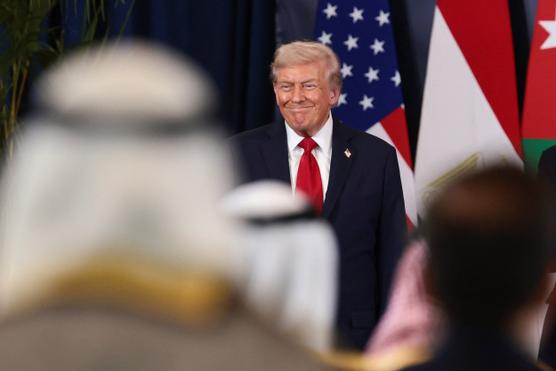
The body announced by Donald Trump was originally part of the Gaza peace plan. Some countries have expressed reservations, while Israel, Argentina and Morocco have agreed to join it.
Le Monde with AFP
US President Donald Trump is set to formally announce the first charter of his so-called "Board of Peace," a body for resolving international conflicts with a $1-billion price tag for permanent membership.
The board, which Trump will launch in Davos, Switzerland, on Thursday, January 21, was originally conceived to oversee the rebuilding of Gaza, but a draft of its charter, a copy of which was seen by Agence France-Presse (AFP), does not appear to limit its role to the Palestinian territory.
The Board of Peace will be chaired by Trump. Dozens of countries and leaders have said they have received an invitation, including close US allies but also adversaries. The invited countries notably include France, Germany, Canada, Russia and China.
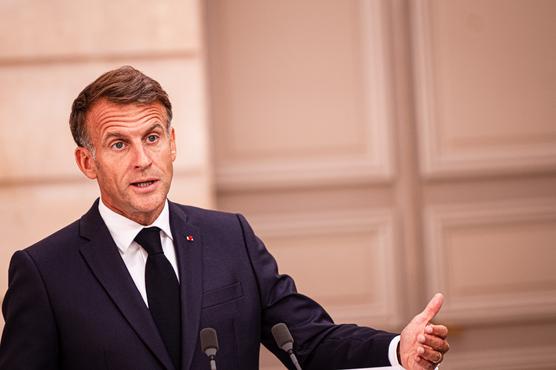
The charter reveals that the board's mandate extends far beyond the issue of Gaza alone, positioning itself as a genuine substitute for the United Nations. The project "raises major questions, particularly regarding respect for the principles and structure of the United Nations, which must never be challenged," a person in French President Emmanuel Macron's team said on Monday. Here are four key questions to better understand what is currently known about the as-yet-unclear project.
How would the Board of Peace operate?
The Board of Peace is "an international organization that seeks to promote stability, restore dependable and lawful governance, and secure enduring peace in areas affected or threatened by conflict," reads the preamble of the charter, which was sent to the countries that were invited to participate. It will "undertake such peace-building functions in accordance with international law," it adds.
Trump will be the board's first chairman, but also "separately serve" as the US representative on it. A US official confirmed, under cover of anonymity, that Trump will be able to keep the chairmanship, even after leaving the White House, "until he resigns it," although a future US president could appoint a different US representative. The charter says the chairman can be replaced only in case of "voluntary resignation or as a result of incapacity."
"The chairman shall have exclusive authority to create, modify or dissolve subsidiary entities as necessary or appropriate to fulfil the Board of Peace's mission," the document states.
Trump will select "leaders of global stature" to be members of a second body, an executive board, on which they would "serve two-year terms, subject to removal by the chairman." The executive board will be chaired by Trump and include seven members, including US Secretary of State Marco Rubio, Steve Witkoff, Trump's special envoy, Jared Kushner, Trump's son-in-law and former UK prime minister Tony Blair.
The board will convene annual meetings with decisions by a majority vote, with the chairman breaking any tie.
Member states must be invited by the chairman and will be represented by their head of state or government. Each member "shall serve a term of no more than three years," the charter says. However, "the three-year membership term shall not apply to member states that contribute more than USD $1,000,000,000 in cash funds to the Board of Peace within the first year of the charter's entry into force," it adds.
The US official said that membership itself "does not carry any mandatory funding obligation beyond whatever a state or partner chooses to contribute voluntarily."
Which countries are favorable to the Board of Peace?
A number of governments immediately said they would join. Several Trump allies are in, including Hungary's nationalist Prime Minister Viktor Orban, Argentine President Javier Milei and Israeli Prime Minister Benjamin Netanyahu. Azerbaijan's autocratic President Ilham Aliyev was also ready to participate, according to his foreign minister.
The United Arab Emirates, a close US partner, also said it would join, as did Egypt. Meanwhile, Canada said it would take part but explicitly ruled out paying the $1-billion fee for permanent membership.
It is unclear whether any of the countries that have responded positively – a list including Armenia, Bahrain, Belarus, Kazakhstan and Morocco – would be willing to pay the $1 billion fee.
What reservations have world leaders expressed?
Longtime US ally France has indicated it will not join. The response sparked an immediate threat from Trump to slap sky-high tariffs on French wine.
Both Russian President Vladimir Putin and Ukrainian President Volodymyr Zelensky have been invited, despite Russia's ongoing invasion of Ukraine. Zelensky said it would be "very hard" to be a member of a council alongside Russia, and diplomats were "working on it."
Britain echoed the sentiment, saying it was "concerned" that Putin had been invited. "Putin is the aggressor in an illegal war against Ukraine, and he has shown time and time again he is not serious about peace," said a Downing Street spokesperson.
Norway, which has become the target of Trump's ire after he was snubbed for the Nobel Peace Prize, has also said it will not join and that the proposal "raises a number of questions."
European Commission President Ursula von der Leyen was also invited and had not yet publicly responded, a spokesperson in Brussels said on Monday. The German government, meanwhile, emphasized the need to "coordinate" with its partners.
China has been invited, but a foreign ministry spokesman said, on Wednesday, that Beijing would defend the international system with the United Nations "at its core."
Which countries have not yet made their position known?
The White House has not published the list of countries invited. However, many countries announced that their leader had received an invitation. In addition to those mentioned above, they include Sweden, Finland, Albania, Brazil, Paraguay, Jordan, Turkey, Greece, Slovenia, Poland, India and South Korea.
The charter says the board enters into force "upon expression of consent to be bound by three States."