
The oil is flowing, the nuclear centrifuges are silent and the terrorists are hiding, but experts have warned the crisis is far from over.
The oil is flowing. The nuclear centrifuges are silent. The terrorists are in hiding and the Arab world’s monarchs and presidents are queuing up to do business.
US President Donald Trump’s unusually direct approach to Middle Eastern diplomacy has produced results.
But meaningful peace remains elusive.
“Trump has calmed the Middle East. But he has not fixed it,” argued Council on Foreign Relations senior analyst Ray Takeyh.
“Despite his protestations, peace is not in hand in the Holy Land. The Iranian nuclear program has not been obliterated and the Arab world remains plagued by political dysfunction. In a region where things frequently go wrong, much can still fall apart.”
The region is poised on a knife-edge.
Will Israel annex the West Bank? Gaza? Southern Syria? Southern Lebanon?
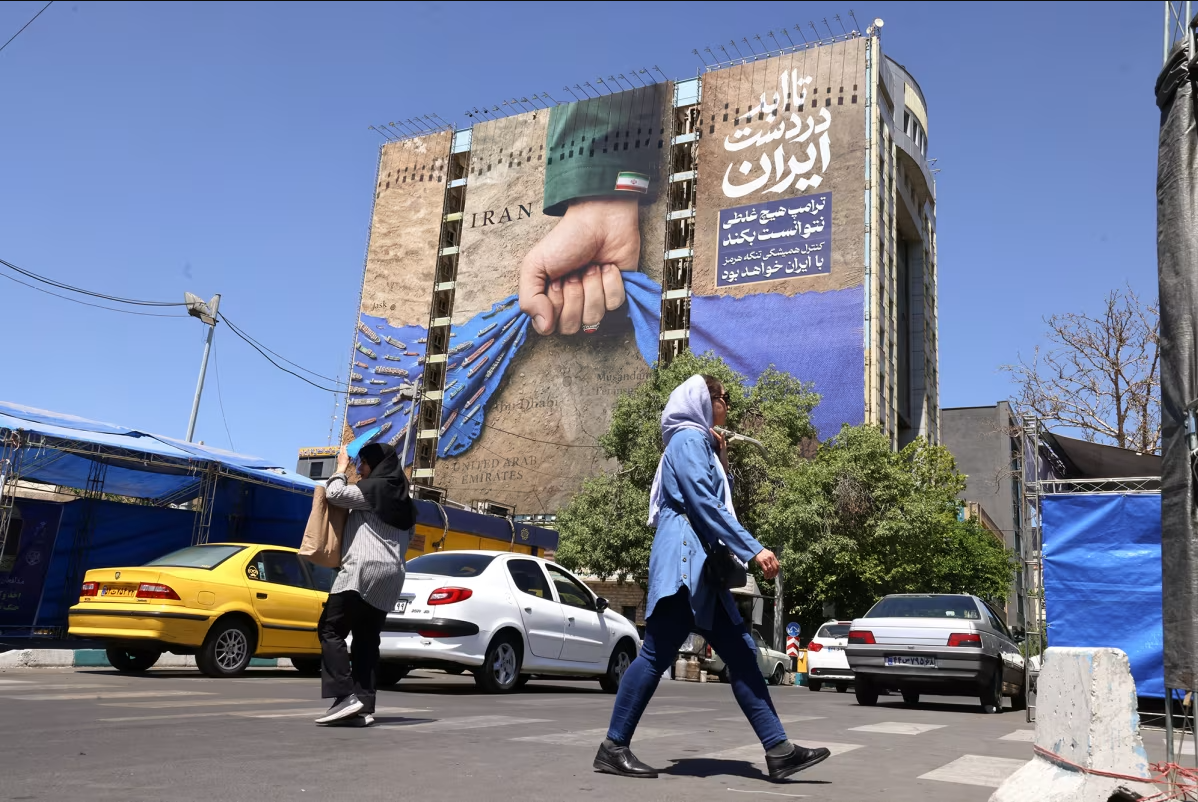
Will Iran retaliate for the humiliation it suffered under Israeli and US bunker-busting bombs?
Will Saudi Arabia throw more of its weight into regional disputes?
Will Turkey step into Syria to counter Israel’s dominance?


Can Egypt, Jordan, Iraq and Qatar keep juggling political hand grenades fast enough to keep their angry Arab populations appeased?
The future of Gaza sits at the heart of the crisis.
“The outlines of a peace process have broad buy-in,” George Mason University Middle East propaganda analyst Mohamed Elgohari said of President Trump’s unfolding peace plan.
“But many political questions remain unresolved. And the thorniest among them – who will govern Gaza, whether and how Hamas will be disarmed and involved in politics thereafter, and what to do about Israel’s ongoing occupation – cannot be answered by international decree.”

Reining in Netanyahu
“F**k him.” That’s what President Trump said of Benjamin Netanyahu in an interview with Israeli journalist Barak Ravid in 2021. He was angry the Israeli Prime Minister had ignored allegations that the 2020 election result had been rigged – and congratulated President Joe Biden on his victory.
This year, the mercurial 47th President of the United States ended almost 30 years of Israeli exceptionalism.
He’s selling advanced F-35 Stealth Fighters to Saudi Arabia in a clear challenge to Israel’s military dominance.
He’s talking to the region’s “untouchables”, going so far as to invite Islamic rebel turned Syrian President, Ahmed al-Sharaa, to the White House.
He’s inviting Israel’s latest arch rival, Turkey, to join an International Stabilisation Force in Gaza.

He’s forced Israel to the negotiating table with Hamas.
He’s compelled Netanyahu to publicly apologise to Qatar for bombing Hamas diplomats there in September. Netanyahu has “got to be fine with it,” Trump told an Israeli reporter at the time. “He has no choice.”
It’s a marked shift from a White House that would doggedly support every move by Tel Aviv.
“Trump has approached the area with little idealism,” observed Takeyh. “His stances have instead been entirely driven by pragmatism and a preference for power politics. Like the Middle East’s own strongmen, Trump divides the world into winners and losers and steadfastly aligns himself with the former.”


Israel is strong. The Gulf States are rich. But the Palestinian people, Lebanon and Syria are poor.
“This approach is doubtless crude. But the results are clearly positive,” Takeyh concluded.
And Trump hasn’t entirely burnt his bridges with Netanyahu.
He’s asked Israel’s President to pardon the controversial Prime Minister of longstanding corruption charges. Even though he has no authority to do so.
For his part, Netanyahu remains defiant.

“There will not be a Palestinian state. It’s very simple: it will not be established,” he told local media in November. “The answer is: a Palestinian state will not be established. It is an existential threat to Israel.”
He won’t back down on continued “mowing the lawn” attacks against regional opponents.
“We do not intend to relinquish our military superiority,” Netanyahu stated. “We’re not seeking enemies, but we won’t let any country in the region threaten us.”
It’s a stance that has Israel increasingly isolated on the world stage.


Arab states unbound
“Trump’s decisions have not made the Middle East more democratic. They certainly have not ameliorated the region’s historical grievances,” observed Takeyh.
“But they have kept it comparatively stable while advancing Washington’s positions. They have, in other words, helped Trump accomplish far more than his sophisticated and well-intentioned predecessors ever did.”
Diplomatic relations between Israel and several of its Arab neighbours have been “normalised”.
US businesses now have preferential access to Gulf State markets and the region’s monarchs appear eager to appease the transactional US president with lavish presents and promises of investment.
“Trump supports Saudi Arabia and other Gulf sheikhdoms because they are a source of capital, an export market for semiconductors and weapons, and an important aspect of the global energy markets. These are people he can do business with,” Takeyh observed.
And they’re happy to do business with Trump’s family.


“In that part of the world, personal fortunes are enmeshed with national ones, and the lines between commerce and diplomacy are frequently blurred. This is precisely how the Gulf elites like it,” Takeyh noted.
But Saudi Arabia’s Crown Prince Mohammed bin Salman (MBS) refuses to normalise diplomatic ties with Israel while it has troops on the ground inside Gaza.
Netanyahu’s not that keen either.
“I know how to stand firm on our essential conditions and not endanger our security,” he said during the November interview. “And if this process ripens later on, excellent. And if not, we will safeguard our vital interests.”

Arab-Israeli divisions run deep.
While Trump has warned Netanyahu against militarily seizing the West Bank, he’s so far turned a blind eye towards settler violence and expansion.
That’s likely to taint efforts to involve Arab states in the follow-up to his Gaza peace plan.
“It is hard, for example, to see a multinational force of Arab troops entering Gaza and finishing off the stubbornly violent remnants of Hamas, as the plan calls for,” said Takeyh.
“Instead, Gaza will likely remain a festering wound, a densely populated refugee camp subsisting on food aid from humanitarian relief agencies.”


Netanyahu says Phase One of Trump’s peace plan is “almost complete”.
Only the body of one Israeli hostage remains to be returned. But Hamas said it is having difficulty finding the remains under the rubble (80 per cent of Gaza is in ruins) and accessing forensic technology needed to confirm its identity.
Another potential spanner in the works was the declaration early in December by Israel’s top military chief that current troop dispositions in Gaza represented “a new border”.
This would effectively cut Gaza in half and is in open defiance of Trump’s Phase Two peace plan.
Israel is also threatening to attack Lebanon.


It maintains troops at five strategic hilltop chokepoints within the failed state after an incursion last year pushed Hezbollah forces behind the Litani River, 29km north of the border.
“Lebanon faces a grave predicament,” wrote University of Western Australia emeritus professor Amin Saikal.
“Israel wants the Hezbollah militant group based in the country to be disarmed. Hezbollah has refused to give up its arms as long as Israel threatens Lebanon and the Lebanese government is not strong enough to subdue Hezbollah on its own.”
The Trump administration has set a December 31 deadline for the disarmament to be completed.
“If Salam deploys the Lebanese armed forces, numbering around 60,000 active personnel, to force Hezbollah to disarm, this could trigger a devastating civil war,” said Saikal. “If he doesn’t, he risks Israel’s wrath and another round of war.”
It’s a case study of an emerging New World Order.

President Trump has released his new National Security Strategy.
It calls for reconciliation with Russia and China. It defines Europe as a strategic competitor and it formalises his ‘might is right’ approach to diplomacy as a “timeless truth of international relations”.
Under its provisions, the US is on course to assert a Russian and Chinese-style “sphere of influence” over the Americas. This means bombing more alleged drug boats and coercing neighbouring nations to bend to the will of the White House.As for more distant matters, such as the Middle East, that depends on whether or not the “America First” criteria can be met.
“There is a high risk that upcoming, trickier steps necessary to end the war will not be taken if Trump loses interest and, as is the American pattern, reverts to enabling Netanyahu,” warned Centre for American Progress national security analyst Andrew Miller.
“In the absence of credible, effective Palestinian governance in Gaza, Israel may be forced to choose between a costly occupation and a failed state on its border.”