
The European Union signed off on loans to keep Kyiv afloat—but it may not be enough
By Kim Mackrael, in Nicosia, Cyprus, Anastasiia Malenko in Kyiv, Ukraine, and Laurence Norman in Berlin
The fight against Russia in Ukraine is now firmly Europe’s war.
The European Union this week signed off on the equivalent of $105 billion in loans to keep Kyiv afloat through the end of next year—but officials warned that it may not be enough.
With Russia determined to continue its four-year invasion until it dominates its neighbor, and President Trump pulling back from Europe and focused on the Middle East, Ukraine finds itself reliant on the traditionally gun-shy EU in its war for survival.
The confirmation of the loan ahead of a summit in Cyprus on Thursday, long blocked by recently ousted Hungarian Prime Minister Viktor Orbán, marked a fresh sign of resolve and unity in the bloc.
“For the first time in years there are no Russians in the room,” Polish Prime Minister Donald Tusk wrote on social media, an apparent reference to Orbán, who had warm ties with Moscow but stayed away from the EU summit after recently losing an election. “Huge relief,” Tusk added.
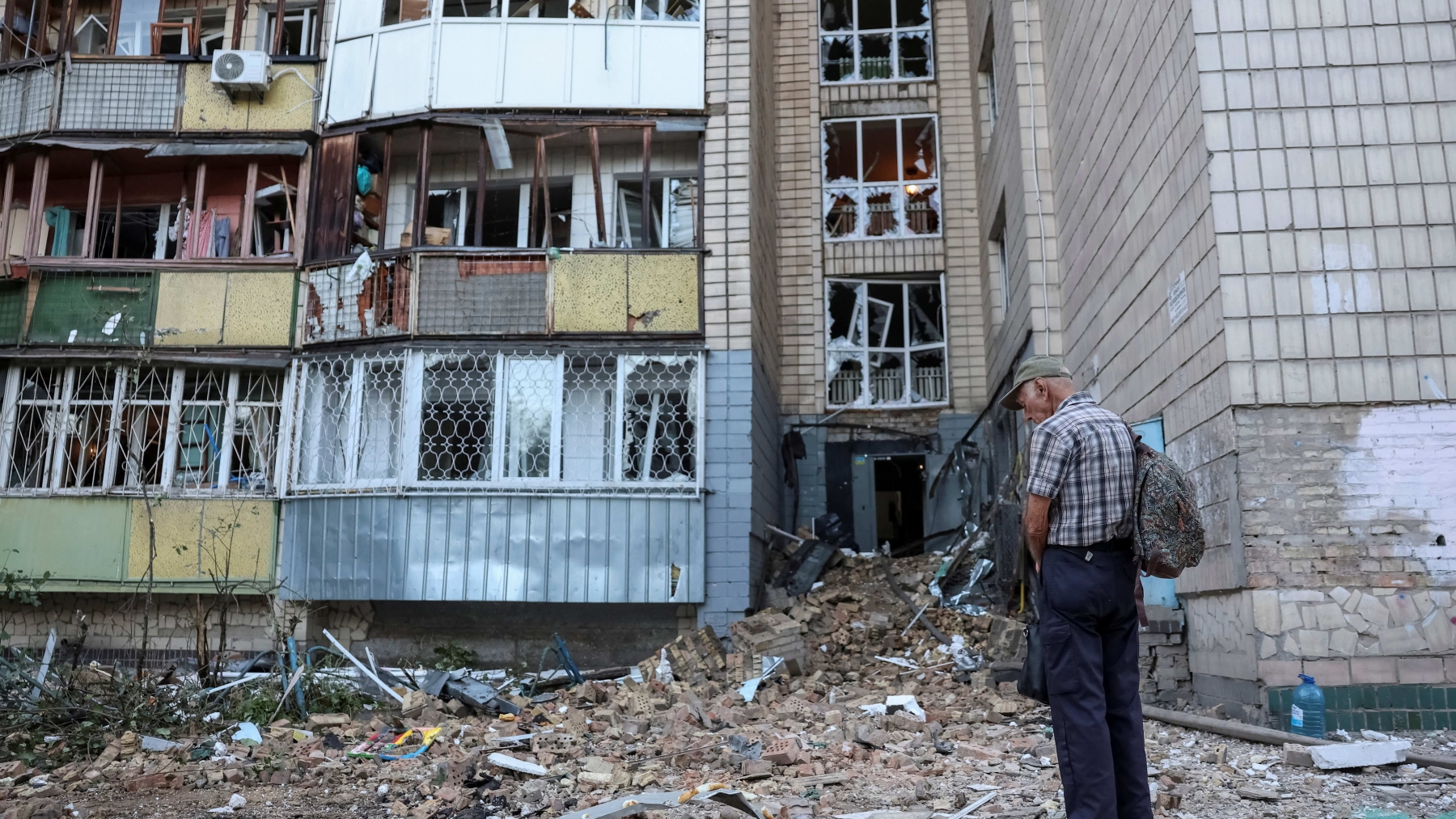
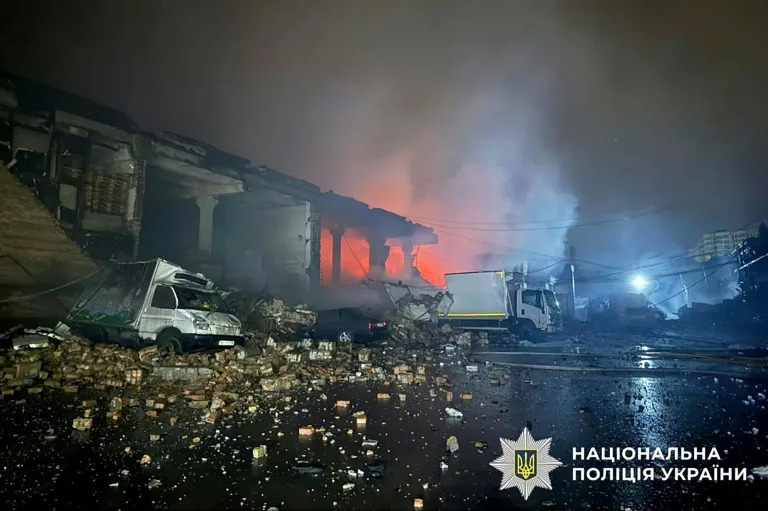
The funding decision, which Orban cleared this week following his election defeat, comes at a critical moment for Ukraine, which needs the cash to sustain its economy and its military amid relentless Russian assaults as Moscow seeks to grab more land in its neighbor’s east. Kyiv now depends on its Western neighbors for money to shore up its budget and fund weapons purchases to help it hold off Russia’s giant military. The Trump administration has stopped providing military aid to Ukraine and sought to mediate an end to the war.
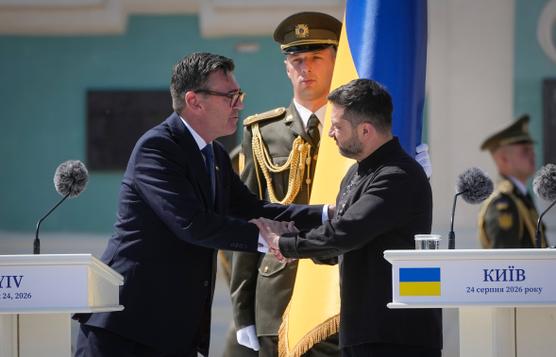
Ukrainian President Volodymyr Zelensky said the EU funding could push Russia toward negotiations. “It means that we are not empty, and we are strong,” he said.
The loan follows recent announcements that Ukraine will jointly produce weapons in allied European countries, including Germany, Denmark, Norway and the U.K.
Shifting the burden of the war onto Europe’s shoulders has long been a goal of the Trump administration. Vice President JD Vance said at a rally that halting funding to Ukraine was “one of the things I’m proudest of.”
Still, asked if the European loan was a sign that Ukraine no longer needs the U.S., Zelensky said his country needs all the assistance it can get.

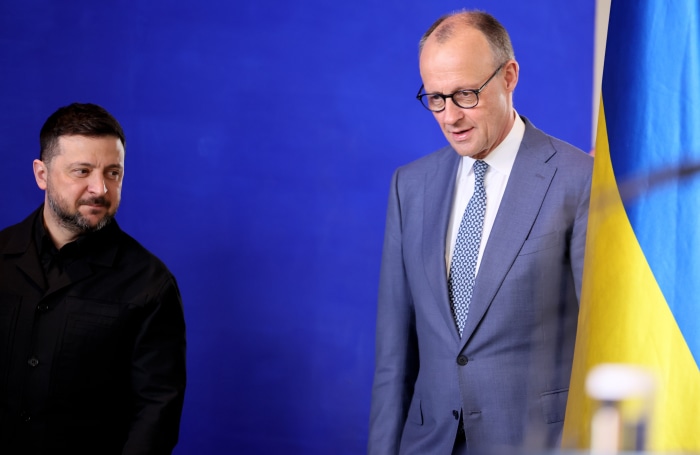
“During the war we need everything and everybody,” he said Thursday on his way into a meeting with European leaders. “We need the United States.”
The U.S. provides crucial aerial interceptors that Ukraine needs to shoot down Russian ballistic missiles. It also furnishes Ukraine’s military with battlefield intelligence. Europe isn’t in a position to replace these capabilities.
While the Biden administration provided military equipment directly to Ukraine, European countries are now buying weapons from the U.S. and sending them to Ukraine.
Zelensky expressed concerns that the U.S. military’s use of weapons, especially interceptors, in the Middle East, was draining stocks that Ukraine needs to defend itself. He noted that European purchases of U.S. weaponry continued.
Kyiv secured $4 billion in fresh defense commitments from Germany at a meeting this month of the countries that back Ukraine, according to Ukrainian Defense Minister Mykhailo Fedorov. The agreements focused on air defense, drones and joint defense production.
Zelensky has sharpened his tone toward the U.S. in recent weeks. The Ukrainian leader said Thursday that he expected U.S. envoys Jared Kushner and Steve Witkoff to visit Kyiv. He said that not visiting would be “disrespectful” given that they had already been to Moscow, in an interview with Ukrainian media this week.
“At present, for us, the war in Ukraine is the number one issue. For the Americans, the war in Iran is the number one issue,” Zelensky told journalists via WhatsApp on Thursday.
While the 90-billion-euro ($105 billion) loan resolves a protracted battle in Brussels, there are already concerns that the bloc will have to turn back to funding Ukraine next year, rather than in 2028 as was hoped.
The EU’s loan was supposed to cover two-thirds of Ukraine’s core budget and defense funding needs for this year and next. Japan and Western nations such as the U.K. are in talks to provide the estimated €45 billion needed through the end of 2027, diplomats said, but no money has been locked in.
In addition, Ukraine’s funding gap for next year has grown since the loan package was initially planned, according to diplomats. Ukraine needs an additional €19 billion to cover its budget needs next year, they said. That means EU leaders could potentially have to seek a new loan of tens of billions of euros again in 12 months.
In recent months, the EU has faced multiple challenges including a crisis in its relationship with the Trump administration and a fresh surge in energy prices caused by the Iran war. Nationalist parties in France and Germany are calling for an end to funding for Ukraine. Any push for new money for Ukraine next year will bump up against a French presidential election next year.

For now, the threat from Russia and staunch support for Ukraine from some of the wealthier members of the bloc, above all Germany, Nordic countries, the Netherlands and Poland, have ensured that Brussels’ backing for Ukraine remains solid. So does the military and drone experience Kyiv can bring to Europe. Looking to the future, Europeans would rather see Russia tied down in Ukraine than threatening EU borders.
Yet leaders and senior officials acknowledge the fight to keep capitals focused and supportive on Ukraine is growing harder.
Meanwhile, progress in Ukraine’s long quest for EU membership has been slow. Officials in Brussels have floated offering Ukraine some of the benefits of membership in coming years as a symbolic step toward accession. But Zelensky rejected the idea as insufficient.
“Ukraine does not need symbolic membership in the EU. Ukraine is defending itself and is definitely defending Europe. And it is not defending Europe symbolically—people are really dying,” Zelensky said.
Appeared in the April 25, 2026, print edition as 'The Ukraine War Is Europe’s Now'.