
President Trump often blusters his way through a crisis, refusing to back down. Minneapolis tested the limits of that strategy.

Tyler PagerKatie RogersZolan Kanno-Youngs and Hamed Aleaziz
Reporting from Washington
The crisis in Minneapolis was not dying down.
The government’s account of the killing on Saturday of Alex Pretti, a U.S. citizen with no criminal record, was unraveling. Stephen Miller, the mastermind of President Trump’s hard-line immigration policy, had called Mr. Pretti a “terrorist” and told other administration officials, including Kristi Noem, the homeland security secretary, to call him an “assassin.”
But videos clearly contradicted that story. Mr. Pretti was pinned down when immigration agents opened fire and killed him. Protests and a palpable sense of outrage were growing across the country. Even the president’s allies were alarmed. Many of them wanted to see changes on the ground, and several made a recommendation directly in calls to the president: Send Tom Homan, the White House border czar, to Minneapolis.
Early Monday, Brian Kilmeade, the co-host of “Fox & Friends,” of which Mr. Trump is a loyal viewer, repeated the message three times in two hours.
Twenty minutes later, the president announced on social media that he was sending Mr. Homan to Minneapolis, a tacit acknowledgment that he was losing control of a situation that posed one of the most serious political threats of his second administration.
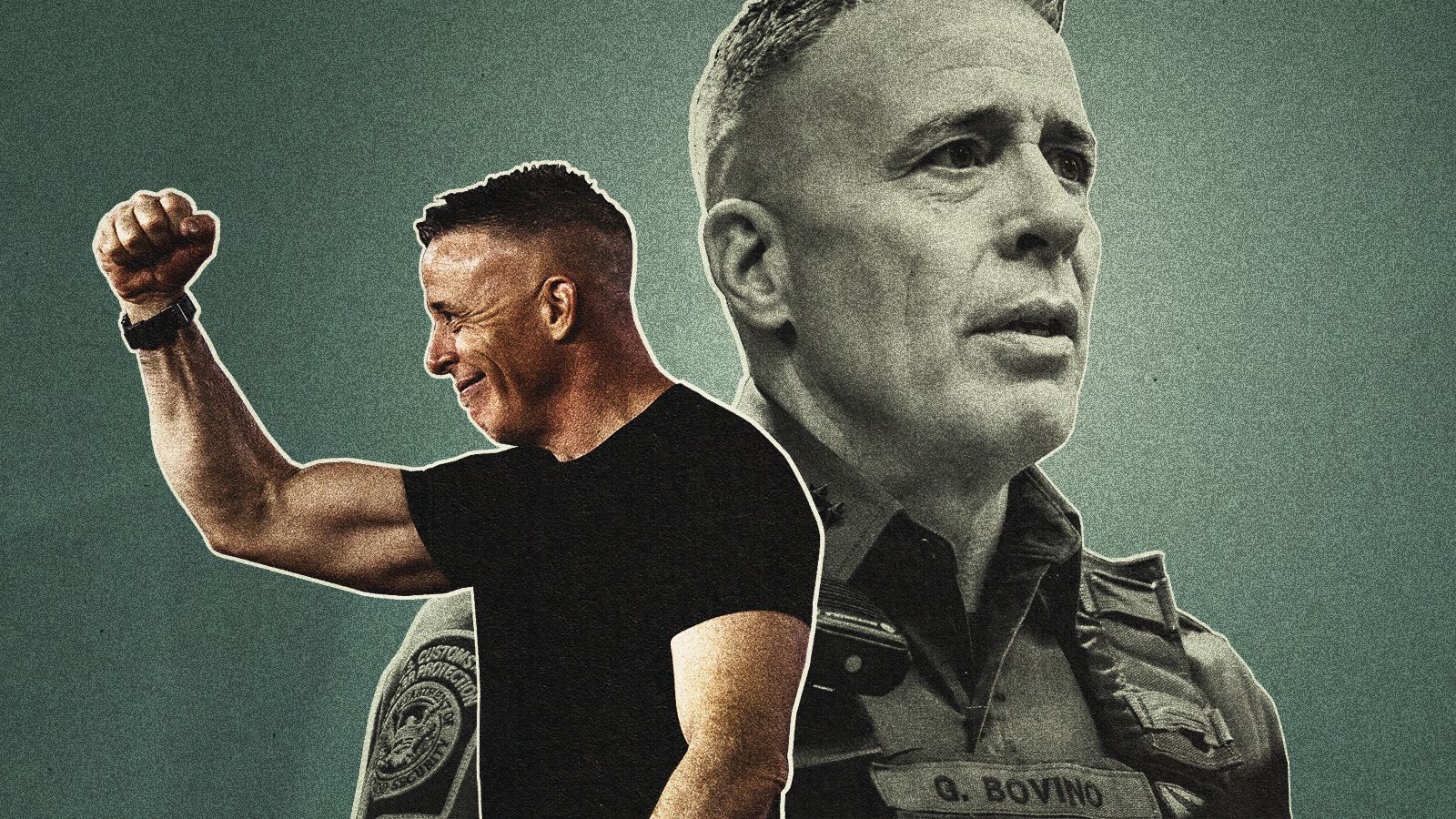
Gregory Bovino, a Border Patrol official who had been directing on-the-ground operations in Minneapolis, and who was known for aggressive tactics, was out. “Bovino is pretty good, but he’s a pretty out-there kind of guy,” Mr. Trump told Fox News. “Maybe it wasn’t good here.”
And while there is no sign that Mr. Trump is repudiating the tactics used by the federal agents in Minnesota or the core tenets of his immigration policies, the moment was a rare example of the president moving to mitigate the harsh optics associated with a crackdown his administration has otherwise celebrated.

Mr. Trump has honed a survival tactic over many years facing criticism in the public eye: He creates diversions to barrel from one news cycle into the next. But in other moments, when he has faced particularly intense — and politically damaging — public outcry, he has taken stock of news coverage and decided to take a different tack, often temporarily.
Mr. Pretti’s killing and its aftermath created one of those moments. And Mr. Trump seemed to realize in this case that his message, at least, had to change. Shortly after he made the announcement about Mr. Homan, Mr. Trump and his press secretary, Karoline Leavitt, softened their tone about the shooting and distanced themselves from the incendiary comments made by Mr. Miller, Mr. Bovino and Ms. Noem. Mr. Trump also said he spoke with Gov. Tim Walz of Minnesota, whom he had castigated only days before.
And as the White House walks back some of its harshest statements, a blame game of sorts has erupted, with Mr. Miller suggesting immigration authorities in Minneapolis may not have been following protocol.
In a statement, Mr. Miller said the White House had advised Customs and Border Protection officials to create a “physical barrier” between “arrest teams” and “disrupters.”
“We are evaluating why the C.B.P. team may not have been following that protocol,” said Mr. Miller, who just days earlier had called Mr. Pretti a “would-be assassin.”
It remains to be seen if the rhetorical shift will tamp down the outcry or if there is any will inside the Trump administration to change tactics on the ground. Mr. Homan, a longtime ICE official, is seen among Mr. Trump’s allies as someone who could bring a measure of calm to the chaos in Minnesota, particularly because he has called for targeted arrests instead of sweeping raids. But he is fully on board with Mr. Trump’s mass deportation campaign; in 2018, he, along with two senior officials, recommended a policy that eventually led to families being separated at the southern border.
By Monday afternoon, Mr. Trump was sitting with Mr. Homan in the Oval Office. The meeting had already been on the president’s schedule to discuss immigration issues, but now it served as a send-off for Mr. Homan, whose new assignment started immediately.
“President Trump asked Tom Homan to fly to Minnesota, because Tom Homan is the perfect man for the job,” Ms. Leavitt said in a statement. “Following the president’s directive, Tom was on a plane within hours.”
This account of Mr. Trump’s shifting strategy in Minnesota, and the dawning realization that his usual tactics were not working, is based on interviews with a dozen people, most of whom spoke on the condition of anonymity to describe private discussions.
‘Nobody Understands TV Better’
In the days after the shooting of Mr. Pretti, Mr. Trump did not like what he was seeing on television.
Holed up in the White House over the weekend, with temperatures dropping and a major snowstorm on its way, Mr. Trump expressed concern about the killing to aides and allies. But his frustrations were more about the coverage of the events rather than the incident itself, according to people familiar with the dynamic.
The president told people that the killing of Mr. Pretti and the protests were overshadowing his accomplishments on immigration and the border — two issues that he sees as his signature achievements, and which he returns to over and over when he feels under siege politically.
“Nobody understands TV better than him,” said Senator Lindsey Graham, Republican of South Carolina, who spoke with Mr. Trump over the weekend. “I was among many that were telling him his instincts were right.”
Mr. Graham said he and others told Mr. Trump that they needed to find a solution.
“We’re still going to pursue the hardest of the hard, but the visuals were undercutting the idea that the chaos is caused by sanctuary-city policy,” he said.
By Sunday night, Mr. Trump signaled he was open to a change when he told The Wall Street Journal that he was willing to see an investigation into the shooting, even though he and his aides had already rushed to judgment about who they believed was at fault.
The next morning, when Mr. Trump announced Mr. Homan would be taking over day-to-day operations in Minnesota, critics said the president was simply papering over the problem.
Representative Bennie Thompson, Democrat of Mississippi, said Mr. Homan’s appointment was nothing but “musical chairs.”
“You don’t make change by just moving someone out and bringing the same type mouthpiece in — in another suit,” he told CNN. “So what we want is substantive change.”
‘A Very Unfortunate Incident’
Ms. Noem, the homeland security secretary, knew that a reshuffle in Minneapolis was bad news for her. She was, after all, the woman in charge of immigration. She was the public face of the entire operation.
Democrats were calling for her impeachment, and even Republican allies were criticizing the administration’s response to the death of Mr. Pretti.
So Ms. Noem called the White House and requested a meeting with the president.
Mr. Trump was running late and in the middle of a radio interview when Ms. Noem arrived. But he invited her and Corey Lewandowski, her top aide and Mr. Trump’s first campaign manager in 2015, to join him in the Oval Office as he finished up.
Once Mr. Trump was free, the group discussed the administration’s response in Minnesota and ways to better communicate the president’s accomplishments on the border.
But it was hardly a crisis meeting. The situation in Minneapolis was only one of the topics they covered during the nearly two-hour Oval Office confab. Mr. Trump also chatted about the construction of the White House ballroom, one of his favorite topics, and the midterms.
Ms. Noem, despite overseeing a deadly and chaotic crackdown, seemed safe — for now, at least. On Tuesday, Mr. Trump told reporters he was happy with her.
“I think she’s done a very good job,” he said.
As Mr. Trump traveled to Iowa for a speech on the economy, Mr. Miller was on Air Force One — a sign that his standing had not diminished, either.
Despite the shift in tone from Mr. Trump, his intense federal crackdown was still active. In Minneapolis on Monday, federal agents arrested about 100 undocumented immigrants — far surpassing the daily average before the operation began in the city, according to two U.S. officials.
And even as he tried to turn the page on the crisis in Minneapolis, saying he wanted to “de-escalate” the situation, he continued to blame Mr. Pretti, the intensive care unit nurse shot by Border Patrol agents, for his own death.
“You can’t walk in with guns,” Mr. Trump said of Mr. Pretti, who was legally carrying a gun with a permit and was under a pileup of agents when one suddenly shot him in the back. He then called Mr. Pretti’s death “a very unfortunate incident.”
Tyler Pager is a White House correspondent for The Times, covering President Trump and his administration.
Katie Rogers is a White House correspondent for The Times, reporting on President Trump.
Zolan Kanno-Youngs is a White House correspondent for The Times, covering President Trump and his administration.
Hamed Aleaziz covers the Department of Homeland Security and immigration policy for The Times.