

Caution: the 2000s have become a crime scene. The reality television my generation once watched as escapist comfort – built hastily and clumsily, before anyone quite knew the rules – is now being dusted for fingerprints by a younger cohort fluent in the language of harm, certain that cruelty was the point. The past six months have brought a spate of brooding postmortems revisiting The Biggest Loser, To Catch a Predator and America’s Next Top Model – dodgy network TV experiments that monetized humiliation at scale.
And while the critiques are frequently justified, they’re also conveniently calibrated for a judgmental media landscape where retrospective outrage doubles as a growth strategy. “Gen Z wants to get in a time machine and fix the errors of 20 years ago,” says Kristen Warner, a Cornell University media studies professor. “There was no roadmap. Reality TV was a wild west, and people were just doing the most outlandish things to keep it going.”
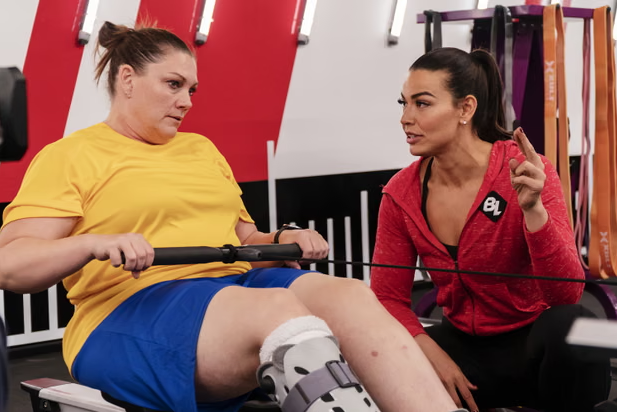
Netflix’s Fit for TV serves as a reckoning for The Biggest Loser, the NBC hit that oscillated between inspiration and cruelty across more than 200 episodes. Co-creator David Broome recalls intentionally choosing a show title that defied expectations, luring audiences with the thrill of secondhand embarrassment and keeping them hooked on stories of personal triumph. Amid the revolving door of contestants and the rise of host and trainer brands, one star eclipsed them all: the scale.
But for all of its health-and-wellness sermons, The Biggest Loser was powerless against a craving for ratings, gorging on the lowest-hanging fruit. Contestants went from being pushed well past their physical capabilities to being subjected to “temptation challenges” that could erase their progression in exchange for fleeting family contact, all to win a $250,000 grand prize – prompting some to rely on dubious remedies and drugs to hit their fitness goals.
These practices were clearly wrong, and roundly criticized at the time, yet producers still act as if the harm is invisible. But who is gen Z to judge? The show’s buttoned-up, by-the-book transformation attempts now seem laughably quaint in an era of semaglutides and looksmaxxing. Meanwhile, those of us who watched in real time, unironically, can’t help but be drawn back in.
These docs provide a strange nostalgia trip, surgically precise in the generational emotions they extract. “At the same time,” says Racquel Gates, a Columbia University film and media studies professor, “there’s a hearty dose of ‘remember this?’ that is foundational to our decision to tune in. But at the same time, there’s this impulse to project all of the problems of society on to these specific shows, which is convenient, because they’re not running any more so we can just retroactively demonize them and say what they should have done better.”
MTV’s Predators is a documentary about a documentary: NBC’s To Catch a Predator, the apotheosis of gotcha journalism. The show’s producers hired adult actors who could pass for children to lure pedophiles out of hiding and butter them up before yielding the stage to Chris Hansen, a dour TV journalist who revels in their humiliation from his righteous perch and sends them back into the wild – where a swarm of sheriff’s deputies awaits. Anyone paying attention could see this spectacle was destined to collapse under its own hubris.
The crash was violent. A county assistant district attorney in Texas fatally shot himself as police attempted to serve him with a search warrant, after being caught exchanging messages and pictures with a decoy actor posing as a 13-year-old boy – vignettes that were captured on camera. The attorney’s estate sued Dateline for $105m, and NBC settled out of court.
Despite being canceled after 20 episodes, To Catch a Predator remained a major draw in reruns, inspiring copycats not only in reality TV but among a new generation of “predator catch groups” who mine these sting operations for content. One creator who goes by the name Skeet Hansen brags about sidestepping YouTube’s law enforcement cooperation standards for these videos, dressing friends in police garb and adding flashing lights to simulate the presence of the cops. Many viewers watching Skeet – or Hansen, who inevitably followed him online – belong to the same generation now judging their parents for helping create a genre that has become virtually inescapable.

Still, no doc encapsulates ex post facto judgmentalism quite like Reality Check, which re-evaluates America’s Next Top Model through a contemporary lens. The doc’s sympathy for contestants who were mistreated, abused or, in two notable cases, sexually assaulted on the show reflects the social media outcry that erupted when younger viewers stumbled upon the franchise during the pandemic. In fact, there was still enough outrage left after the three-part series that E! is rolling out its own two-part follow-up in March, bolstering the critiques with archival interviews of the show’s principals and grand dame of disdain Janice Dickinson – a notable absence from the Netflix project. As much as Tyra Banks deserves to be held accountable for the decisions she made as the show’s creator and executive producer, she was right to throw on her Carmen Sandiego trench for the Netflix series and point out that her crimes against television are being judged out of context.
During its 12-year run, America’s Next Top Model cribbed from Survivor, Fear Factor and Jersey Shore, shamelessly feeding the growing hunger for spectacle. All the while it moved from UPN to CW to VH1, mostly because a fair few of us olds had grown tired of the shenanigans and were happy to wish Banks well in her quest to become the next Oprah – genuinely trailblazing stuff for the misfit supermodel.
What’s rich is that the same generation that pillories Banks for excoriating a contestant for not wanting her TV opportunity badly enough is also the first to turn that moment into one of the internet’s signature memes. “This is very much indicative of a kind of postmodern pop culture moment we’re in,” says Gates, who appears in the forthcoming E! doc. “The memes and the gifs from these shows are operating as their own entities, completely severed from the shows that they originate from.” Even the discourse around the docuseries has been served up in social media videos, each bite-size satire more hilarious than the last.
In the analog age, TV retrospectives didn’t explicitly cater to moral panic. Old Hollywood’s contract abuses, studio control and pull-pushing were treated as lore – not grist for postdated indictments of Louis B Mayer. On Mad Men, Sally Draper playing “spaceman” in dry-cleaner plastic while her mom gossiped with a pregnant friend over cigarettes winked at how much time has taught. Television once treated the past as a lesson, not a crime scene. Sure, our elders admonished our TV habits too, but we at least could reach for empathy and insist we were watching the same shows they grew up with, in part, to better understand their lives they lived before us.
But now there is little distance between past and present, and scarcely any distinction. The monochrome and Technicolor markers that once signaled another era have dissolved into a rapid-fire highlight reel, curated by algorithm. Mayer was long dead by the time his best stuff hit Turner Classic Movies, but Banks is on Instagram right now. Any viewer complaints, however belated, can go straight to the source. These reality docuseries make you wonder whether they’re feeding a larger desire among today’s generation for justice and fairness – and if so, where’s their deep dive on The Apprentice? “People are dealing with a lot, and there’s a desire for emotional validation and to feel like some of these problems that seem too big and insurmountable can be fixed,” Gates says. “But the desire to fix society through media representation goes back a long time, and has never been effective.”
Even so, the forensic quest to dissect TV once proudly labeled trash shows no sign of stopping. But today’s young scolds should take heed: soon enough, you’ll have to answer for Love Island and MrBeast. “Hopefully, the mistakes your generation makes, your children and your children’s children look at more generously than you did us,” Warner says.