Kaja Kallas says negotiators should not ‘lose focus that it’s actually Russia who has started this war’
Jennifer Rankin in Brussels and Pjotr Sauer
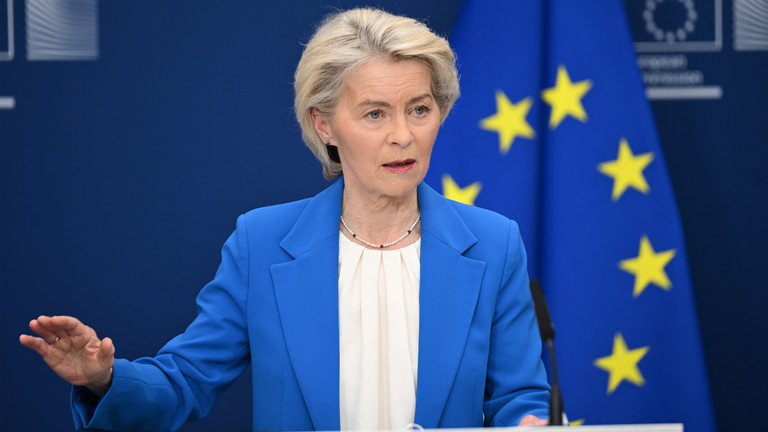
The EU’s foreign policy chief, Kaja Kallas, has said she fears talks between the Russian president, Vladimir Putin, and Donald Trump’s special envoy, Steve Witkoff, will pile pressure on Ukraine to make concessions with the two men expected to meet on Tuesday.
Witkoff, the property developer turned envoy recently exposed for coaching Russian officials on how to win Trump’s favour, is arriving in Moscow after leading a US delegation in talks with Ukraine at the weekend, nearly four years after Russia launched its full-scale invasion.
“I am afraid that all the pressure will be put on the victim, which is that Ukraine has to make concessions and obligations,” Kallas said of the upcoming Witkoff-Putin meeting. “Whereas in order to have peace, we shouldn’t lose focus that it’s actually Russia who has started this war and Russia that is continuing this war and Russia that is really targeting civilians, civilian infrastructure every single day to cause as much damage as possible.”
European leaders have been alarmed by a US plan, heavily tilted in Russia’s favour, that emerged last month to end the war. It included granting Moscow territories in eastern Ukraine it did not yet control, while forcing Kyiv to cap the size of its army and abandon its ambition to join Nato. While the plan has since been changed, Ukraine’s European allies remain concerned about any plan that could enshrine the forced change of borders and fail to punish war crimes.
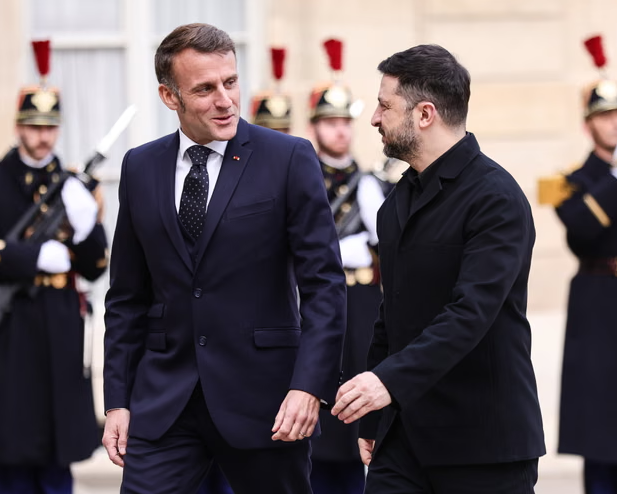
The Ukrainian president, Volodymyr Zelenskyy, on a diplomatic push to rally support from European allies, on Monday said Russia must not be rewarded for its invasion. “We also need to ensure that Russia itself does not perceive anything it could consider as a reward for this war,” he said a joint press conference with the French president, Emmanuel Macron.
The Ukrainian leader held calls with a dozen other leaders, including the UK prime minister, Keir Starmer, and the German chancellor, Friedrich Merz.
Zelenskyy said talks with the French president had lasted several hours and the main focus was on negotiations to end the war and on security guarantees. “Peace must become truly durable. The war must end as soon as possible,” he wrote on X.
From Paris the pair also spoke to Witkoff and Rustem Umerov, the head of the Ukrainian delegation during talks with the US.
Macron said that only Ukraine could decide on its territories in peace negotiations with Russia and that Europeans must be at the negotiating table to ensure security guarantees for Ukraine.
Merz, speaking alongside the Polish prime minister, Donald Tusk, after his call with Zelenskyy, said there must be “no dictated peace” in Ukraine and that Kyiv and its European allies must be involved in any deal to end the war.
“We have a clear course of action: no decision on Ukraine and Europe without Ukrainians and without Europeans,” he said.
Kallas, who said the push to end the war in Ukraine could be entering a “pivotal week” warned that allowing Russia to change borders by force would set a dangerous precedent for the whole world.
Earlier in the day she had described weekend talks held in Florida between the US and Ukraine as “difficult but productive”. Asked whether she trusted the US to find a good solution for Ukraine, she said: “Ukrainians are there alone. If they would be together with the Europeans, they would definitely be much stronger but I trust that Ukrainians stand up for themselves.”
Zelenskyiy suggested that Ukrainian and US negotiators had not yet fully hammered out revisions to the proposed US plan. He said on Monday there were “some tough issues that still have to be worked through”.
Ukraine: are we closer to a peace deal? – video explainer
Witkoff is expected to arrive in Russia with Trump’s son-in-law, Jared Kushner, . Putin’s spokesperson did not specify whether Kushner, who played an active role in negotiations over the Gaza peace deal, would also attend the meeting with the Russian president.
The two trusted Trump envoys participated in the weekend talks between senior Ukrainian and US officials that took place in Florida at a private golf club developed by Witkoff’s company.
After the meeting, the US secretary of state, Marco Rubio, expressed optimism for an end to the war. “There’s more work to be done. This is delicate,” Rubio said. “There are a lot of moving parts, and obviously there’s another party involved here … that will have to be a part of the equation, and that will continue later this week, when Mr Witkoff travels to Moscow.”
Ukraine’s president is under pressure after the sudden resignation of his head of cabinet and closest adviser, Andriy Yermak, in response to a widening anti-corruption investigation that has become the most serious scandal of Zelenskyy’s presidency.
The Ukrainian leader is meanwhile expected to make his first official visit to Ireland on Tuesday, while his defence minister, Denys Shmyhal, was in Brussels on Monday for talks with his EU counterparts.
Shmyhal said he had informed defence ministers about “the most urgent needs of our soldiers” primarily in air defences. He welcomed an announcement from the Netherlands that it would contribute another €250m to the Nato initiative to buy weapons and ammunition for Ukraine from the United States.
The flurry of diplomatic activity came as a study showed that Russia made its biggest advances in Ukraine for a year in November. The Russian army captured 701 sq km (270 sq miles), the second-largest territorial advance of the war after November 2024 according to an AFP analysis of data from the US-based Institute for the Study of War. The study excluded the initial months of the war when the frontline was highly mobile.