
Zach Montague, Reporting from Washington
A federal appeals court on Friday allowed construction on President Trump’s ballroom project to proceed through early June, pausing, for now, a lower court’s order that construction stop after next week.
The overnight decision was procedural: An administrative stay gave the court around seven weeks to consider the case more fully. But it was the latest in a series of careful extensions by courts that have each allowed the president to keep building for short stretches as a lawsuit fighting the project proceeds.
Last weekend, the same three-judge panel of the U.S. Court of Appeals for the District of Columbia Circuit had avoided wading into the case right away. It sent the case back to Judge Richard J. Leon, a Federal District Court judge, to clarify the contours of the case after Mr. Trump complained publicly for weeks that the project includes transformative national security upgrades to the White House.
The appeals panel set arguments for June 5, to consider whether to block construction anew. Because of the intermittent extensions, the president has yet to run into a deadline or temporarily bring construction to a halt.
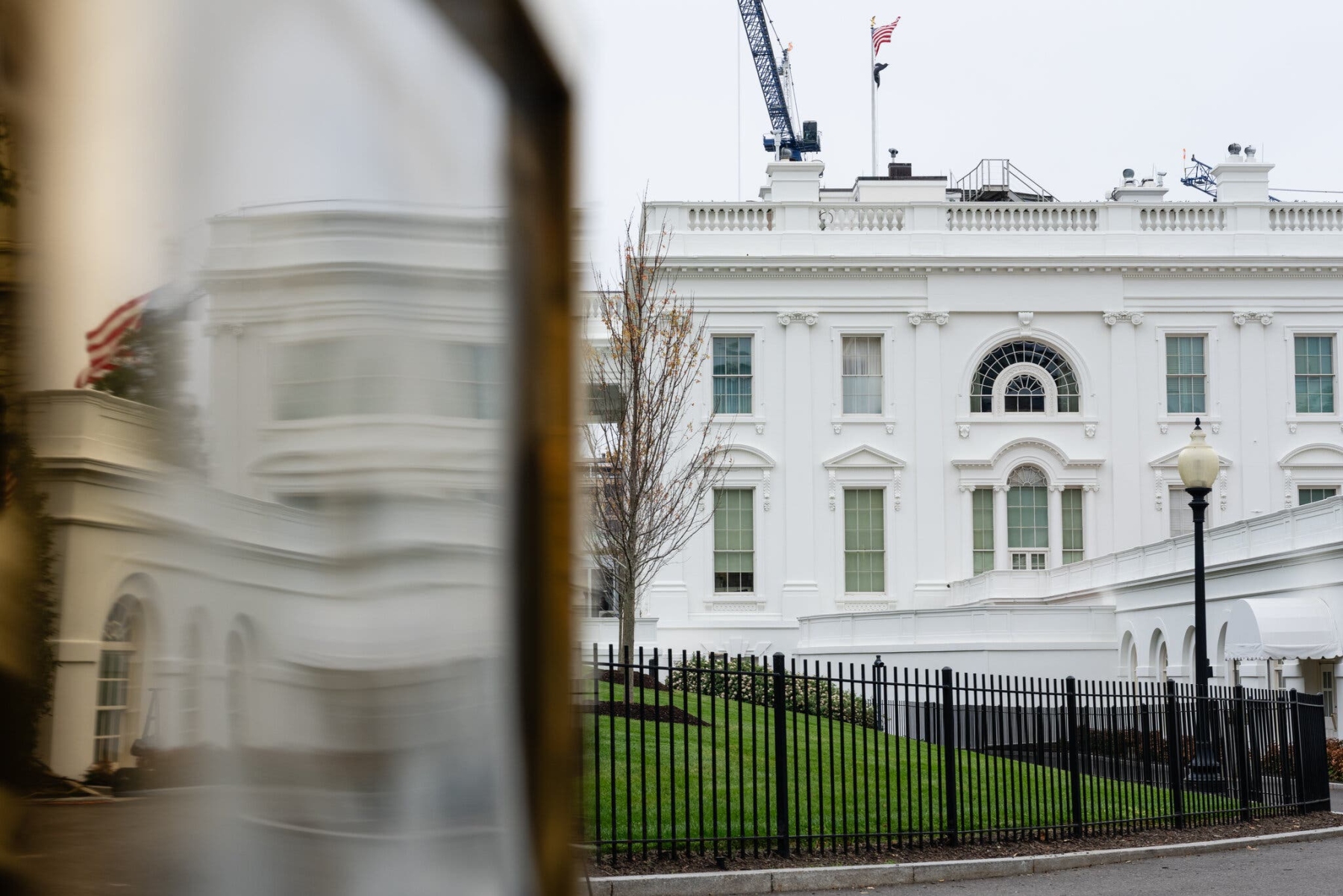
When Mr. Trump demolished the East Wing of the White House in October, discussion centered on the soaring 90,000-square-foot ballroom he had proposed building in its place. But after Judge Leon questioned the legality of the project, the president quickly pivoted, framing the ballroom as little more than a “shed” for a far more ambitious underground military compound, secretly designed to replace the former Presidential Emergency Operations Center.
Last weekend, judges on the same panel wrote they would not second-guess the president’s claims that halting construction could jeopardize a critical security modernization.
“This court will not gainsay the importance of ensuring the safety of the White House, the president, staff and visitors,” they wrote.
On Thursday, however, Judge Leon explained that his thinking about the project had not changed.
Unless Congress authorized Mr. Trump to fundamentally alter the historic White House grounds, he wrote, the new ballroom structure replacing the East Wing could not be built.
Judge Leon reasoned that the Trump administration could continue in good faith making necessary security upgrades that the public would never see. But he warned that “national security is not a blank check to proceed with otherwise unlawful activity,” and held firm that Mr. Trump could not use those upgrades as a pretext to rebuild the White House however he wished.
He sided with the National Trust for Historic Preservation, a nonprofit chartered by Congress that works to preserve historic buildings, which has sued to stop the overhaul of the White House to fit Mr. Trump’s vision.
On Saturday, the three-judge appeals court panel wrote it would expedite the case and resolve the merits after both sides submitted their positions throughout May.
The panel consists of Judges Patricia A. Millett, an Obama appointee; Bradley N. Garcia, a Biden appointee; and Neomi Rao, a Trump appointee. Last week, Judge Rao wrote in a dissenting opinion that she was already inclined to allow construction to continue uninterrupted during the appeal.