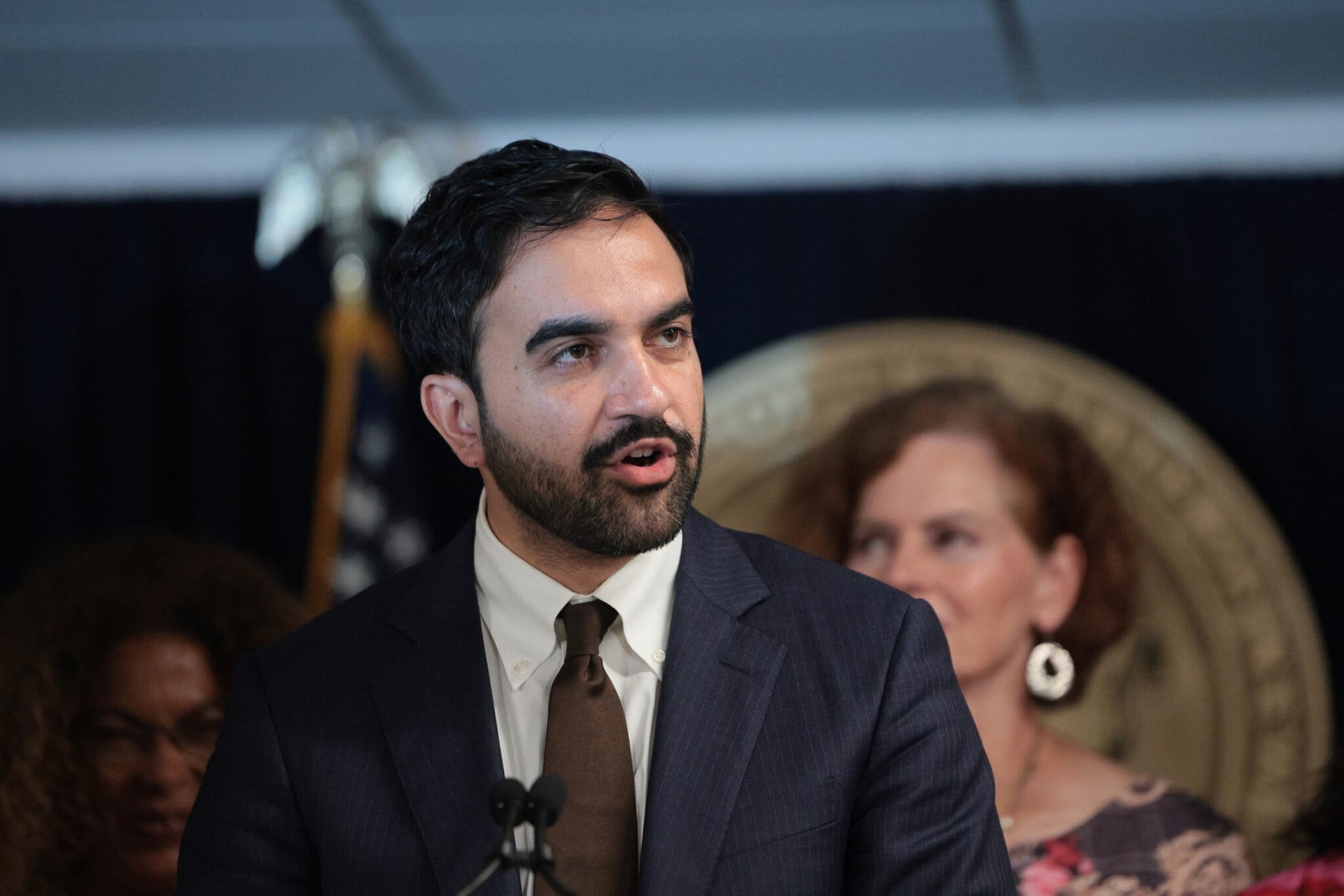
A Staten Island judge sided with a group of homeowners who had sued the city over its introduction of the tax, dealing a blow to Mayor Zohran Mamdani.
A Staten Island judge on Tuesday dealt a major setback to Mayor Zohran Mamdani’s push to raise taxes on the wealthy, saying that the city had mishandled the rollout of a tax on high-end second homes and must start over.
The judge, Wayne M. Ozzi of State Supreme Court on Staten Island, sided with a group of homeowners who had sued the city. The homeowners had argued that the Mamdani administration did not try hard enough to determine who should owe the tax before moving toward collecting it.
“Homeowners are being substantially harmed and penalized needlessly” by the city’s “method of implementing the tax law,” Justice Ozzi wrote.
The lawsuit did not challenge the legality of the tax on second homes, also known as pieds-à-terre. Unveiled by Gov. Kathy Hochul in the spring and backed by the mayor, the tax was popular among voters and hailed by Mr. Mamdani’s supporters as a way to make good on his pledge to “tax the rich.” It was expected to close a budget gap by raising some $500 million annually to fund city services.
But the bumpy rollout of the policy on a short timeline drew immediate criticism from the mayor’s opponents, and some allies, including Ms. Hochul.
“City Hall botched this rollout and should have just admitted the errors and fixed its own mistake, instead of wasting time and taxpayer dollars by fighting it in court,” said Randy Mastro, a lawyer for the homeowners and a former city official who has criticized the mayor.
It is not clear how the judge’s decision will affect the city’s ability to collect the money as the case continues: The first tax bills typically go out in November, and the funds must be collected by the spring for this fiscal year.
The city is expected to seek a stay of Tuesday’s decision to allow the rollout to continue.
Passed in the state budget, the tax would apply to condos and co-ops that are used as second homes with a “market value” — a complicated metric determined by the city’s Finance Department — of at least $1 million and to one-, two- and three-family second homes with a “market value” of more than $5 million.
The lawsuit argued that the city had sowed confusion by sending out notices to about 17,000 New Yorkers informing them that their properties could be subject to the tax, without first making sure that the property owners were not full-time residents. The suit also took issue with the city’s publishing an online list of nearly one million “properties that may be subject to the charge” that included the owners’ names.
Justice Ozzi ordered the city to take down the list and replace it with a more limited version that shows only the properties subject to the tax. It also must cancel its previously mailed notices, narrow the list of recipients and send new notices that include detailed information about how the city determined each property would be subject to the charge.
Justice Ozzi issued a temporary restraining order to pause the rollout last month, but the city appealed, which had the effect of halting the order.
The most recent hearing in the case, on Aug. 31, lasted more than two hours and featured several testy exchanges.
Mr. Mastro said at the hearing that the problems with the introduction of the tax represented Mr. Mamdani’s “antipathy toward private property ownership.”
“We’re here about a botched rollout of unparalleled proportions,” he said.
But Steven Banks, the city’s top lawyer, argued that Mr. Mastro was misrepresenting the steps the city took to collect the tax.
“He’s entitled to his opinions,” Mr. Banks said. “He’s not entitled to his own facts.”
In court filings on Aug. 25, the city offered its most detailed defense yet of the complex process of administering the tax, and acknowledged the complaints from some homeowners over its messaging.
The court papers, along with another filing on Aug. 31, said that on Aug. 12 the city’s Finance Department received some 2025 tax data from the state that established a primary residency for a segment of the property owners who had been sent notices.
The city said it was sending new notices, based on the 2025 tax data, to more than 11,000 property owners informing them that they needed to prove residency or pay the new charge.
Many of those properties are owned by trusts or L.L.C.s; others are properties for which the city has not received 2025 tax information or other data that shows the property is not subject to the tax.
The city said that it was extending the deadline to file proof of residency to Oct. 6; it had earlier been Sept. 18. As of Sept. 16, it had approved the proofs of residency submitted by some 4,700 property owners and was reviewing thousands more.
The city had sought dismissal of the suit, arguing that the plaintiffs had not shown that the rollout had meaningfully harmed them and that proving that a property was a primary residence was straightforward, even when it is owned by a trust or corporate entity.
This is a developing story. Check back for updates.
Mihir Zaveri covers housing in the New York City region for The Times.