
Loved for its cheap seats and derided for its extremely low-frills flights, the American company was arguably a victim of its own success.
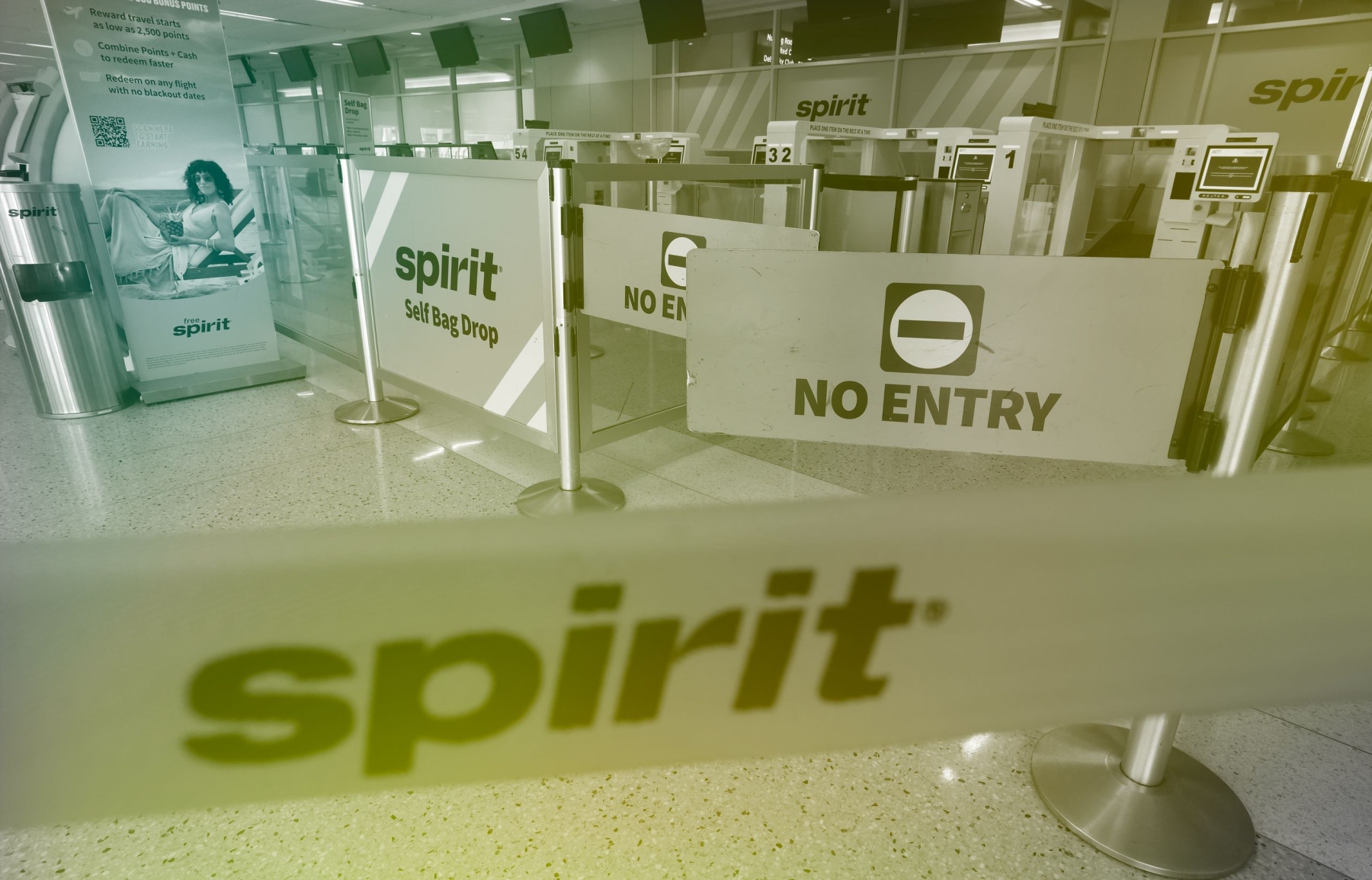
The last time I dropped my daughter off for a flight at LaGuardia’s Marine Air Terminal, the New York base of Spirit Airlines, it was bedlam. Budget-conscious passengers, many of them young, formed a seemingly endless security line snaking around the rotunda, which features a twelve-foot-high mural depicting the history of flight. When I arrived the other morning, the rotunda was quiet and empty, apart from a lone security guard, as were the adjoining café and the check-in area. The only sign of life was an electronic arrivals screen, which showed the arrival times of flights from Fort Lauderdale, Chicago, Miami, Dallas-Fort Worth, Houston, Myrtle Beach, and Detroit. Next to each flight listing was the word “CANCELLED.” Someone must have forgotten to disconnect the screen after Spirit abruptly shut down on May 2nd, following the abandonment of a federal rescue effort.
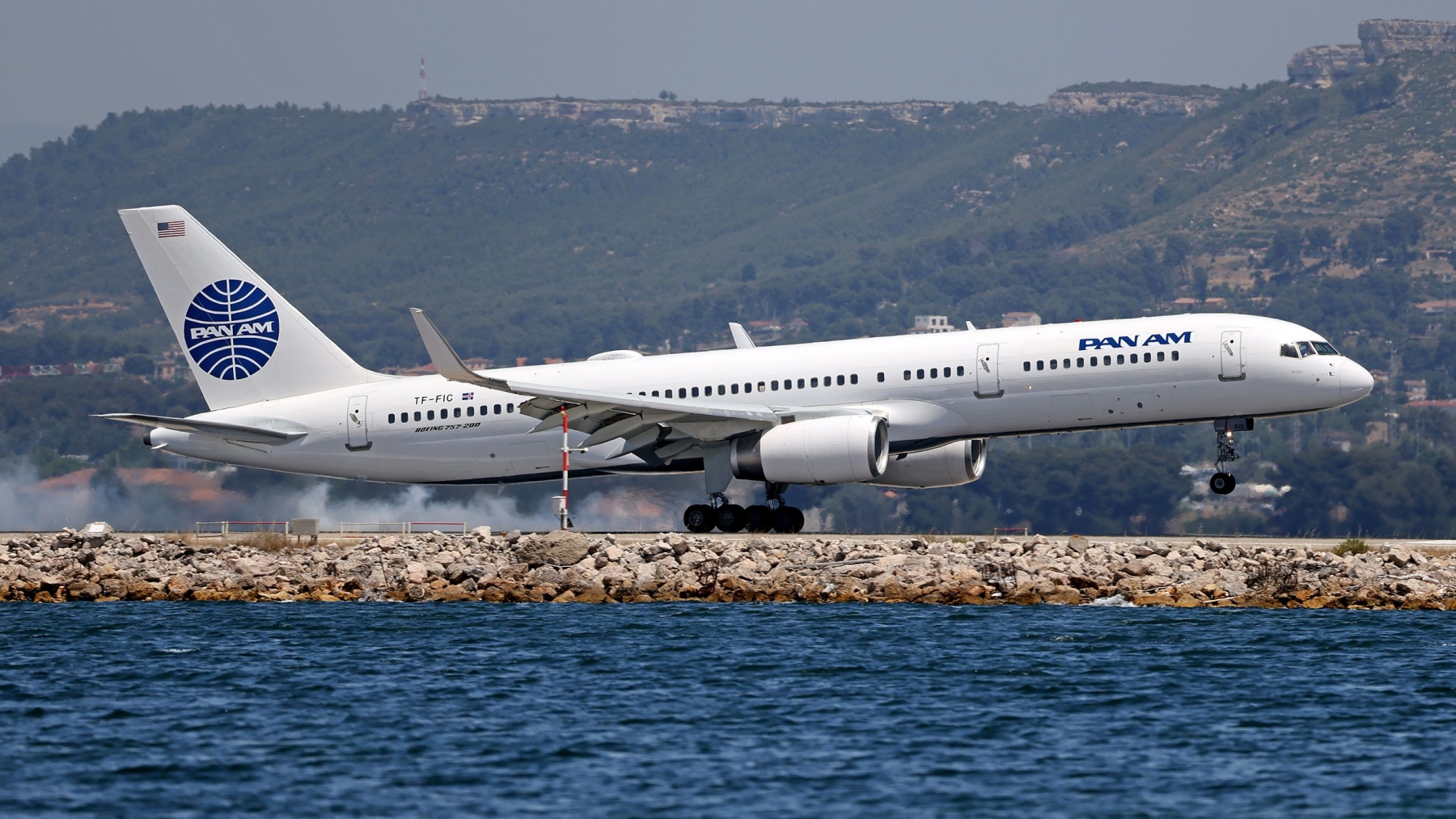
The history of commercial aviation runs through the Marine Air Terminal. Opened in 1940, the Art Deco building, which was designed by William Delano, originally served Pan Am’s fleet of transcontinental propeller-powered seaplanes—Boeing 314 Clippers—which took off and landed on the nearby Bowery Bay. After jets replaced prop planes for long-haul routes in the late nineteen-forties and fifties, the terminal served small planes and nonscheduled flights until the mid-eighties, when Pan Am converted it to house the company’s popular shuttle service, operating between New York, Washington, D.C., and Boston. After Pan Am went out of business, in 1991, Delta took over the service. The shuttle catered to business travellers, myself included, when I worked in Washington decades ago. Eventually, Delta switched the shuttle to one of the main terminals, and in 2021 Spirit moved into the Marine Air Terminal, bringing its bright-yellow livery and ultra-discount business model with it.
In some quarters, the closure of Spirit has been called inevitable, and even desirable. “Let Spirit liquidate and add its tombstone to the airline graveyard,” Steven Rattner, a Wall Street financier and former Obama Administration official, wrote in the Times a few days before Spirit did go under. Rattner argued that Donald Trump was acting without a proper plan, and that saving Spirit would defy the free-market principle that failing companies should be allowed to go out of business. The airline was heavily indebted, and it hadn’t turned a profit since before the COVID-19 pandemic. In 2024-25, it filed for bankruptcy protection twice. Earlier this year, it was hoping to emerge from court supervision, with plans to slim down and return to profit in 2027.
The Iran war ended any hopes of such an outcome. Between the end of February and early April, the price of jet fuel rose by more than ninety per cent. Spirit’s losses grew, and its cash pile shrank. Last month, Trump floated the idea of the federal government rescuing Spirit and taking a big ownership stake. But some of Spirit’s creditors reportedly balked at having their claims subordinated to the U.S. government. There were also objections from bigger carriers such as United, which had an urgent financial interest in seeing the back of a pesky cheap competitor. Ultimately, Trump and his colleagues gave up on trying to save Spirit.
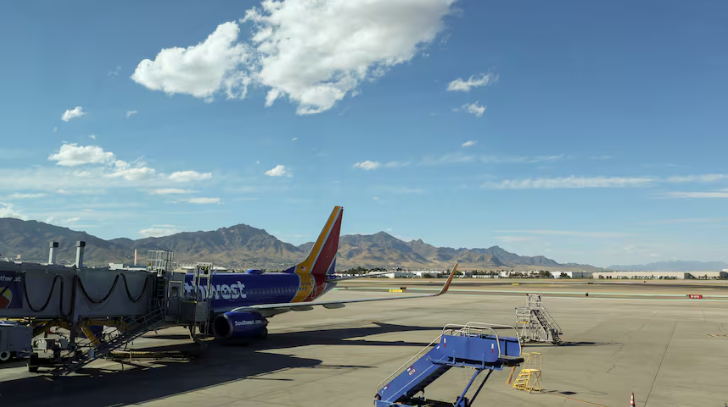
The yellow planes will fly no more. Though that may be good news for the major carriers and admirers of Adam Smith, it isn’t necessarily good for members of the flying public, particularly those willing to forgo proper carry-on bags, in-flight meals, padded seats, and a full-size seat pocket. Despite Spirit’s reputation for delays and nickel-and-diming on everything from luggage to water, its planes were relatively new, its safety record was good, and its base fares often couldn’t be beaten. “We are aiming for customers who pay out of their own pocket,” Ben Baldanza, Spirit’s then C.E.O., said in a 2015 interview. “Most want to spend money when they land. They want to stay at a nicer hotel.” At one point, Spirit flew more than eight hundred flights a day, and, as the Department of Transportation’s Office of Inspector General noted in a 2024 study of the Spirit Effect, its bargain prices prompted legacy carriers to reduce their cheapest fares in a way that competition from other low-cost carriers, like JetBlue and Southwest, hadn’t previously done. This was a boon for budget-conscious fliers everywhere. Now the airline’s demise has cleared the way for competitors to raise their prices—and has left roughly seventeen thousand people out of work.
Should Trump have pushed ahead with a government bailout despite the objections of creditors and competitors? In 2008-09, when the Bush and Obama Administrations rescued G.M., they claimed force majeure: the global financial crisis and the recession it engendered. (Rattner helped to organize that bailout.) Right now, the source of the disruption in the airline industry is the President’s blundering rather than a financial meltdown that originated on Wall Street. But the general principle might have been the same: in times of acute crisis, it’s sometimes wise to buck the market.
The fall of Spirit also raises a broader question. Why do ultra-discount carriers like Spirit and Frontier often struggle in this country, whereas in Europe airlines like Ryanair, Wizz Air, and EasyJet seem to be able to make the same no-frills business model work—with huge benefits for travellers? When I opened the eSky website last week and looked at flights for early next month, I found a round trip from Dublin to Prague for ninety-two dollars, on Ryanair, and one from Luton (near London) to Geneva for a hundred and eleven, on EasyJet. If you look further ahead, you can often find even cheaper fares. What’s different about this country?
One issue is geography. Europe is more densely populated than the U.S., and it has more secondary airports near major population centers. That’s important, because landing fees and terminal charges are a high cost for airlines, particularly at big, busy airports. European discount airlines get around this problem by using smaller airports. In serving Paris and Brussels, for example, Ryanair runs flights out of Paris-Beauvais and Brussels-Charleroi, which are about fifty miles and forty miles, respectively, away from the city center. “There aren’t many ex-military airports that are sitting around the U.S. empty,” Hubert Horan, a Phoenix-based independent airline consultant who spent several years working for Swissair, told me. “In Europe, these airports came to Ryanair with pots of money and said please come here.”
Another challenge facing budget airlines, perhaps even a bigger one than geography, is that the airline industry is highly concentrated: four companies—American, Delta, Southwest, and United—control about three-quarters of the domestic market. They have strategically positioned hubs that they dominate, such as United’s at Newark, and strong loyalty programs, both of which make it difficult for new entrants to compete. Although the European airline market has been becoming more concentrated recently, it’s still more competitive than the U.S., and many of the older carriers, such as British Airways, Lufthansa, and KLM, are primarily focussed on long-haul travel. “Compared to U.S. low-cost carriers like Spirit, Ryanair and EasyJet had a much larger set of markets where they weren’t facing competition from the legacy carriers,” Horan explained.
Despite these disadvantages, Spirit grew rapidly during the early two-thousands and made a profit through 2019. In the end, however, it became a victim of its own success. After years of seeing Spirit lure leisure travellers, the major airlines, led by Delta, responded with humble basic-economy fares of their own. Although these fares were usually higher than those on competing Spirit flights, they were often in the same ballpark. This was the Spirit Effect, which the Biden Administration cited in 2023, when it sued to block a merger between Spirit and JetBlue on the grounds that a tie-up would reduce competition and lead to higher fares.
After a federal judge ruled for the Justice Department, the merger was abandoned. Many observers have argued in retrospect that blocking the merger was a mistake. Certainly, a bigger JetBlue would have been preferable to the outcome we are now facing: a liquidated Spirit and a struggling JetBlue. By 2023, the pandemic had devastated Spirit’s finances. In 2020 alone, its revenues fell by more than half, it recorded a net loss of $428.7 million, and it took on heavy debts. Despite strenuous efforts, it never really recovered. (A problem with engines supplied by Airbus that grounded some of its planes didn’t help.)
If jet-fuel prices don’t come down soon, other ultra-discount carriers may also be struggling to survive. During the first three months of this year, Frontier Airlines disclosed an operating loss of two hundred and eighty-three million dollars. A couple weeks ago, a trade group representing budget airlines asked the Administration to provide them with $2.5 billion in emergency liquidity. Sean Duffy, Trump’s Transportation Secretary, has said a federal bailout isn’t necessary. But last week the Wall Street Journal reported that Administration officials are increasingly concerned about the fallout from higher air fares. A prolonged period of high jet-fuel prices could cause financial problems even for the big legacy carriers, which have made hefty profits in recent years. “But they will always be able to raise finance in a crisis, with government support, if necessary,” Horan said. “They know that the U.S. government isn’t going to let American or United or Delta collapse.”
So, what is left of the ultra-discount airline model that Spirit pioneered? “It will limp along and continue to shrink,” Horan said. “The big carriers will gradually pull back on basic economy, imposing more and more restrictions, higher baggage fees, and so on.” Regular customers of Spirit were all too familiar with such indignities, but low fares kept them coming back. Last week, a group of Spirit’s former employees and fans launched an online campaign to buy the airline. Sadly, the project is almost certainly a fantasy. During the liquidation process, other airlines will buy Spirit’s planes, hire some of its former employees, and, eventually, take over its slots, including those at the Marine Air Terminal. Before leaving there the other day, I stopped to speak to the security guard, who recounted the crowds and noise and chaos that she used to deal with on a daily basis. “It’s like a library now,” she said.