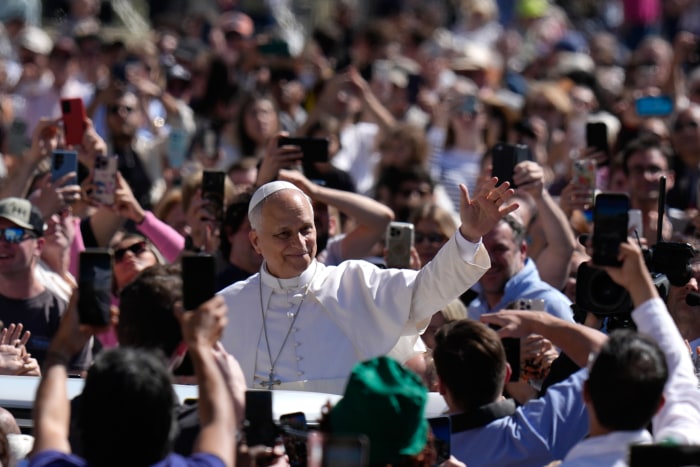
The head of the Catholic Church is adding his moral suasion to a growing backlash against the impact of artificial intelligence.
By Margherita Stancati, Sam Schechner
VATICAN CITY—Pope Leo XIV warned that artificial intelligence “threatens to normalize an anti-human vision” and said that the concentration of immense digital power in the hands of a few private actors must be countered.
The pontiff’s encyclical letter—a text that is poised to define Leo’s papacy—reads like a sharp warning to Silicon Valley executives and humanity more broadly about the future of civilization as new technologies rapidly advance.
The risk, he said, is that humans will be reduced “to mere cogs in a system driven toward ever greater efficiency.”
Leo used two biblical images to describe the choice humanity faces.
“The primary choice is not between a ‘yes’ or ‘no’ to technology, but rather between constructing Babel or rebuilding Jerusalem,” he wrote.
In the Bible, the Tower of Babel symbolizes a top-down, grandiose project where decisions are driven by pride, profit and a push for homogenization, the pope suggested in his text. In the rebuilding of Jerusalem, diverse people worked together to rebuild the ruined walls and established a fraternal coexistence within them, he added.
Leo’s encyclical has been long-awaited by policymakers, business leaders and different faith groups who see the Catholic Church, the largest Christian denomination, as a source of ethical guidance on tech policy.
In so doing, the pontiff is specifically calling out the private actors who are building the AI systems that will transform society.
“Leo sees the challenge of AI as a choice about its design, and about who gets to make those choices,” said Vincent Miller, a professor of theology at the University of Dayton, Ohio.
The encyclical is inspired by the church’s thinking about what it means to be human, and draws on 2,000 years of moral and social teachings.
It is also the product of a yearslong dialogue between the Vatican and Silicon Valley on the ethical and social challenges posed by AI.
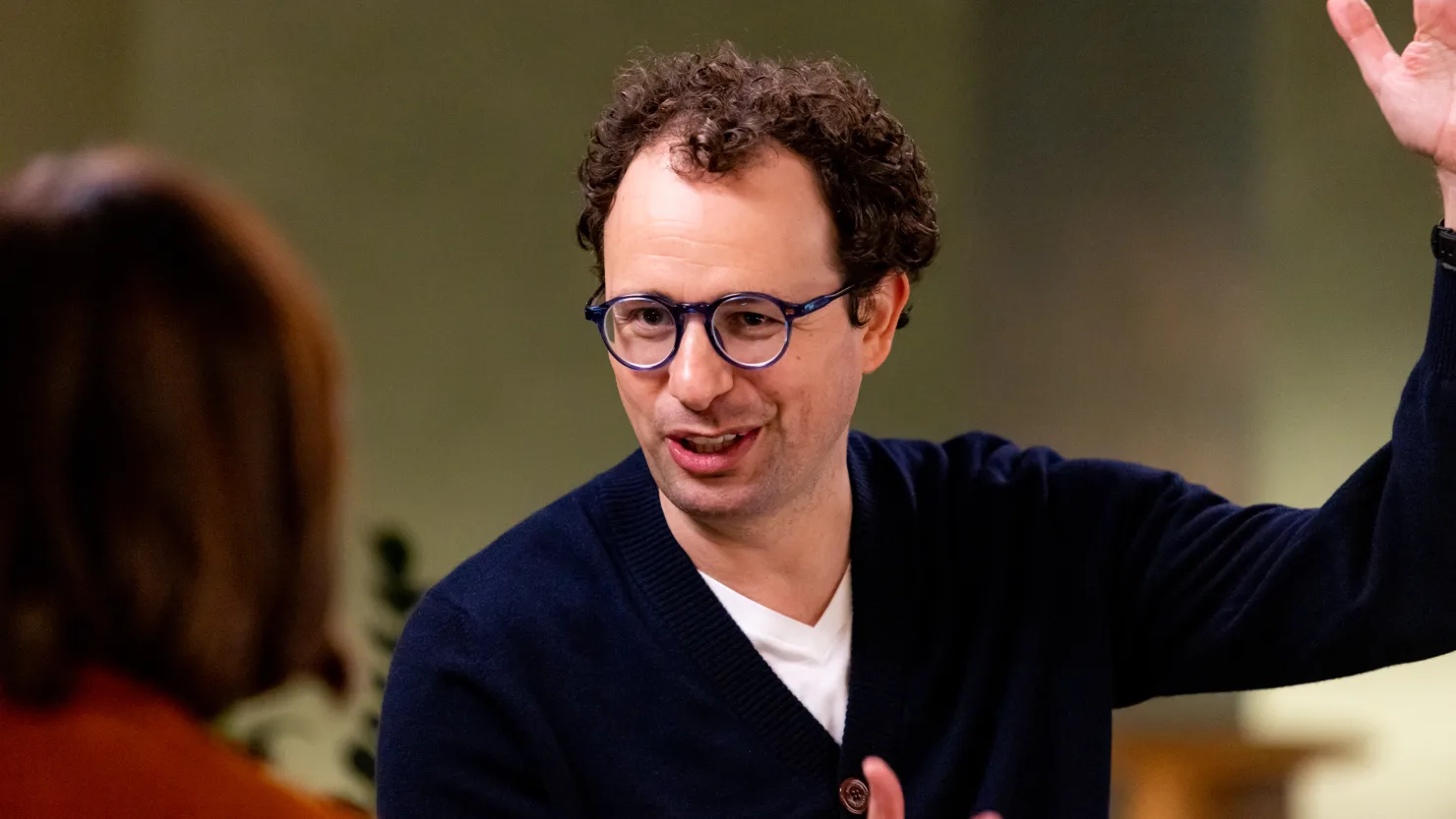
When Leo presents the document on Monday, he will be accompanied by Christopher Olah, a co-founder and safety researcher at AI firm Anthropic, which has tried to position itself as a proponent of AI safety. It is a central player in the AI landscape, both showing blistering growth in its business and emerging as a flashpoint on questions of AI safety and national security.
Anthropic has leaned in to philosophical questions such as whether AI models experience consciousness. The company employs an in-house philosopher to help instill morality in its AI.
The planned inclusion of Olah drew criticism for appearing to give Anthropic the Vatican’s stamp of moral approval. Vatican officials said Olah’s participation wasn’t intended as an endorsement, but as a gesture aimed at encouraging dialogue with the industry as a whole.
Meeting the pope has become a rite of passage for a new generation of tech leaders, including Anthropic’s Dario Amodei, Cohere’s Aidan Gomez and top officials from OpenAI. Demis Hassabis, head of Google DeepMind, the search giant’s AI arm, was in 2024 named by the Vatican to the Pontifical Academy of Sciences.
Leo is adding his moral suasion to a growing backlash against the impact of AI.
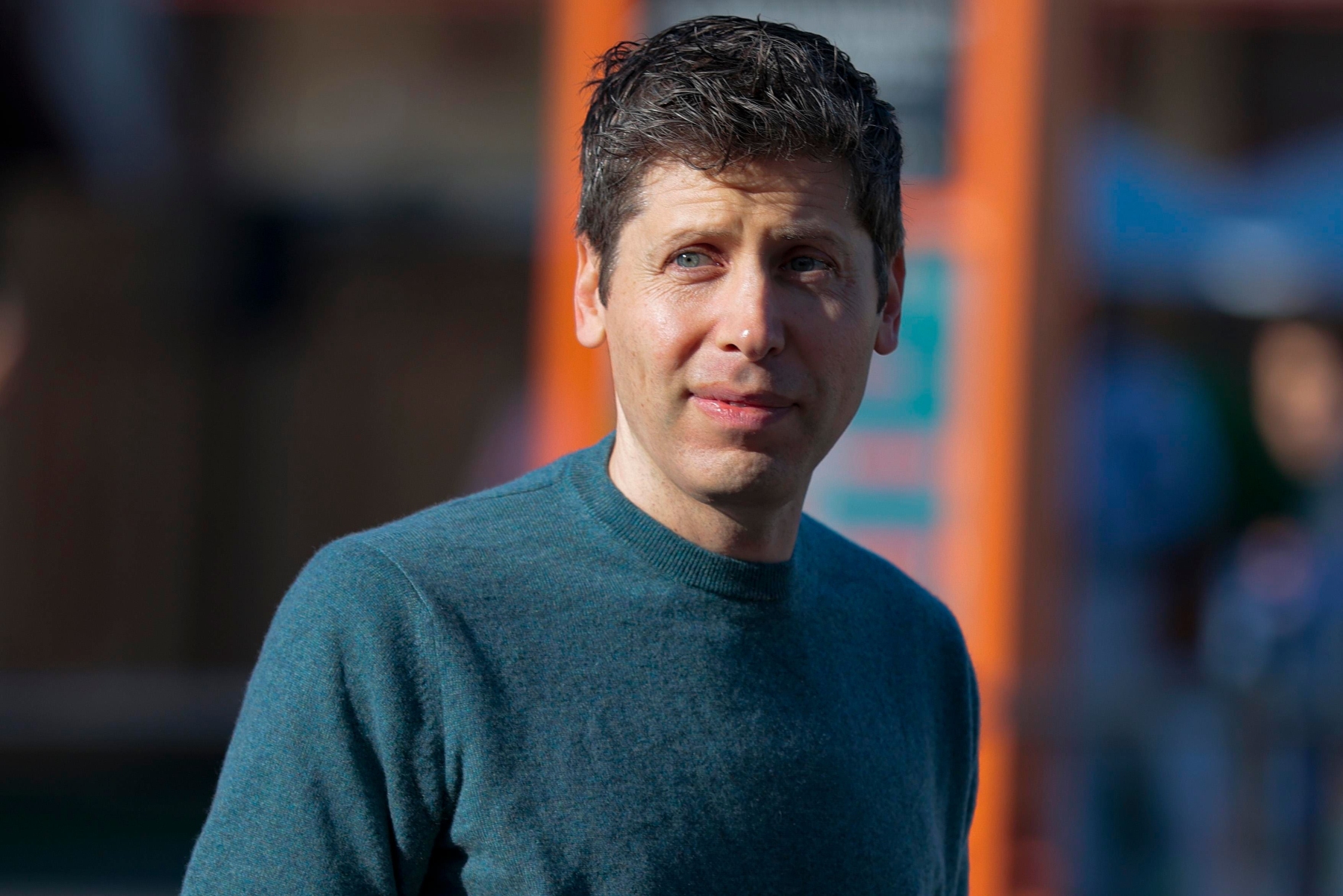
In the U.S. and overseas, workers are concerned about job losses. College graduates are booing commencement speakers who evoke AI. Residents are protesting energy-hungry data centers. A man threw a Molotov cocktail at the house of OpenAI’s Sam Altman.
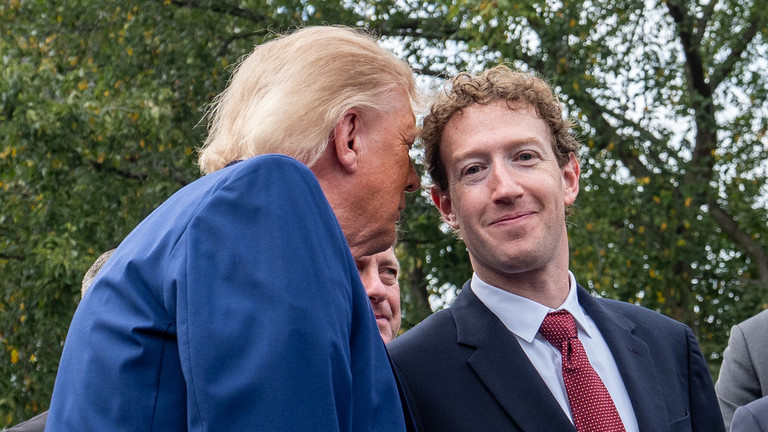
That the criticism comes from the first American pope is a rebuke for a technological revolution incubated in the U.S. and supported by President Trump, who has lashed out at the pontiff over the war in Iran.
Pope Leo’s emphasis on threats to individuals’ human dignity and opposition to autonomous weapons casts him in contrast to techno-optimists who argue that AI will usher in a productivity revolution and that the U.S. must deploy its advances militarily before rivals such as China do.
Last week, Trump delayed an executive order that would have created a voluntary process for testing AI models.
Leo, in the encyclical, said there is an urgent need to regulate AI. “It is not enough to invoke ethics in the abstract; robust legal frameworks, independent oversight, informed users and a political system that does not abdicate its responsibility are required,” he wrote.
Leo has made AI a signature issue of his pontificate. Days after his election in May 2025, he told red-capped cardinals gathered in the Vatican that he chose his papal name as a homage to Leo XIII, the 19th century pope who stood up for workers against the industrial tycoons of his era.
Artificial intelligence, Leo said at the time, represented the industrial revolution of the modern age, and posed “challenges to human dignity, justice and labor.”
Titled “Magnifica Humanitas,” Monday’s encyclical was explicitly inspired by Leo XIII’s groundbreaking 1891 encyclical, “Rerum Novarum,” Latin for “of new things.” Both were signed on May 15.
“Rerum Novarum”—which backed calls for safe working conditions and against the concentrations of wealth—laid the foundation of Catholic social teaching, helping shape the politics and welfare systems of modern Europe. It also set the stage for the church’s ambivalent relationship to capitalism.
The pontiff in his new encyclical called the prospect of mass unemployment caused by digital innovations “a true social calamity.”
He added: “Technology is never neutral, because it takes on the characteristics of those who devise, finance, regulate and use it.”
Tech industry watchers say the pope has the power to lead a cultural change in how we think about AI—and shape the ethical framework in which it should evolve.
“The pope,” said Glen Weyl, a faith-and-technology researcher, “is perhaps the single most important person in the world on AI at this moment.”