

Michael Stott in Rio de Janeiro
As the scale of arch-conservative José Antonio Kast’s victory in Chile’s presidential election became clear on Sunday evening, Argentine President Javier Milei published a map of South America on X with the top half coloured in red and the bottom half conservative blue.
“THE LEFT IS RETREATING, FREEDOM IS ADVANCING,” Milei wrote, followed by the initials of his trademark slogan “Long live freedom, dammit.”
Less than two weeks after Trump published his national security strategy putting the western hemisphere at the top of America’s priorities, Kast’s win adds another Latin American president to a growing column of Trump-friendly leaders across the region.
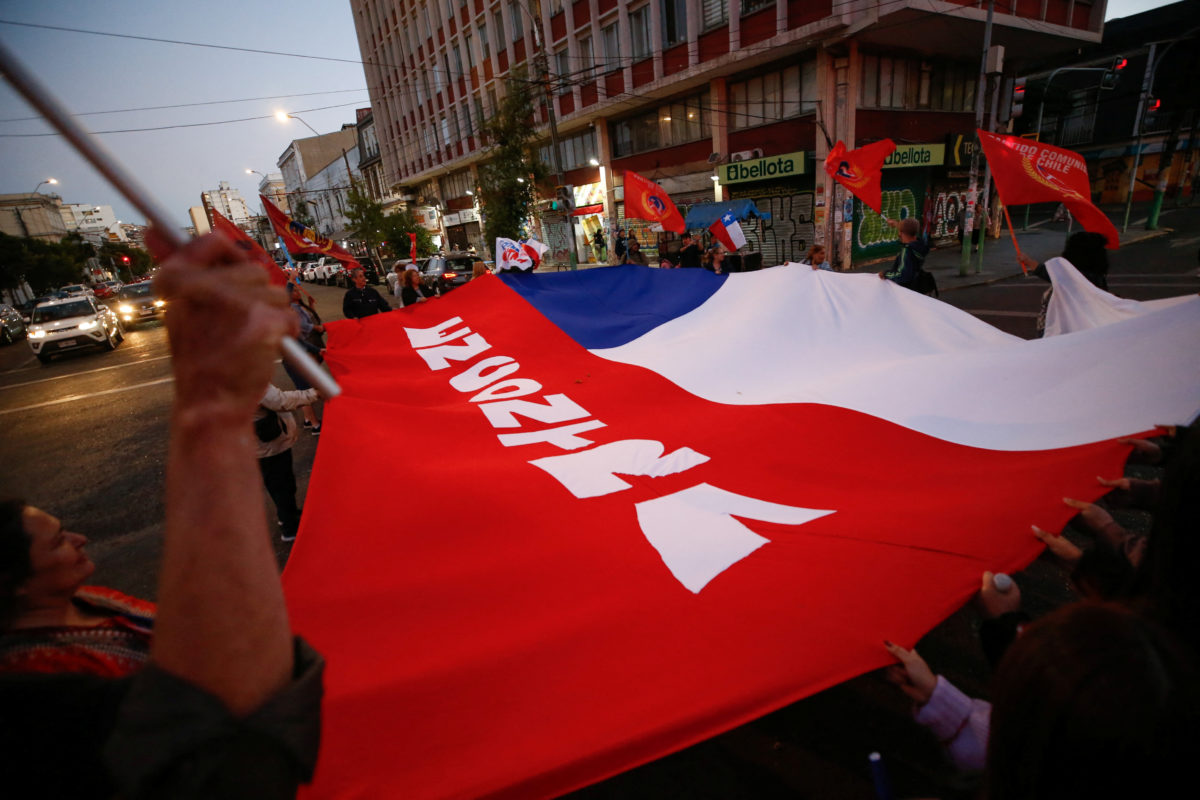
Kast’s landslide victory by 58 per cent to 42 per cent over his Communist opponent Jeannette Jara follows centre-right Rodrigo Paz’s win in Bolivia and Milei’s congressional midterm triumph in October, plus a strong performance by Trump-endorsed candidate Nasry Asfura in Honduras’s disputed presidential election. Ecuador, Paraguay and El Salvador already have conservative presidents.
“Kast will join the fold,” said Michael Shifter, a Latin America expert at the Inter-American Dialogue think-tank in Washington. “The Trump administration will chalk this up as: ‘One of our guys won.’”
The US was quick to congratulate Kast. Marco Rubio, secretary of state, said Washington would partner with him “to strengthen regional security and revitalise our trade relationship”.
That was a reference to two key US priorities in what Washington used to term its “back yard”: combating organised crime and securing supplies of critical minerals such as the battery metal lithium against competition from China. This is particularly relevant in Chile, the world’s biggest copper producer and its second biggest lithium miner.
But although Kast’s campaign this year mirrored Trump’s in its focus on cutting irregular migration and tackling violent crime, Chile’s president-elect is likely to take a more cautious line on trade, mindful that Beijing is its biggest export market.
“Kast understands that Chile is an important ally of the United States,” said Patricio Navia, a Latin America expert at New York University. “But he also understands that China is our main trading partner. So we’ll be with the US on everything, but without making an enemy out of China.”
Like Trump, Kast is descended from German immigrant stock, and his campaign offered Trumpian solutions. The Chilean president-elect proposed sealing off Chile’s northern border with Peru and Bolivia by building ditches and fences, policing it with drones and expelling migrants found to have entered illegally. “Chile will again be free of crime, free from anxiety, free from fear,” Kast said in his victory speech.
Although he is a traditional conservative in style — and made a distinctly conciliatory and un-Trumpian victory speech on Sunday night — Kast is part of a network of political allies in Latin America built over the past decade by Trump allies such as his former strategist Steve Bannon.
Kast appeared with Milei and former Brazilian president Jair Bolsonaro’s son Eduardo at the 2022 CPAC conference of conservatives in Brazil, which was sponsored by Jason Miller, a former adviser of Trump’s. Echoing Trump’s dress style, Kast wore a red tie with a white shirt and dark suit.

Bannon was jubilant on Monday, saying that Kast’s victory should be seen in the context of Trump’s broader strategy of boosting hemispheric defence and reasserting the 19th-century Monroe Doctrine that the region should be a zone of US influence free of foreign powers.
“It’s hemispheric defence, Monroe Doctrine 2.0,” Bannon told the Financial Times. “It’s clearly to have a dominant presence in Latin America with partners that are Maga equivalents to make their own countries great again. I don’t think you could have had a better showing.”
But during the campaign, Kast played down the references to culture wars that cost him support when he last ran in 2021, preferring to emphasise crime and migration, which polls indicated were top of voters’ minds. His team compared him to Giorgia Meloni, Italy’s prime minister who is a Trump ally but has shown a pragmatic streak in office.
Nonetheless Bannon said Kast’s success with his tough message on cutting irregular migration was important far beyond Latin America.
“Chile really sends a global message,” he said. “Citizens want security . . . and they want a safe environment for their families . . . and they’re not going to tolerate governments that are prepared to be easy on, whether you call them alien invaders, migrants, whatever the term”.
Carlos Malamud, Latin America expert at the Real Instituto Elcano in Madrid, said there were other important factors besides crime and migration driving the region’s shift to the right. These included a “deep discontent among voters with the current situation and the demand for quick and easy answers, even if they come with a high price”.
Despite a few exceptions, he said, the general trend was “to kick out incumbents”.
The next test of Latin American voters’ appetite for Trump-style candidates comes in February in Costa Rica, where Laura Fernández, a tough law-and-order candidate handpicked by President Rodrigo Chaves, is polling strongly.
More consequential contests lie ahead in Peru in April and Colombia in May, where the results are less predictable. But the biggest test of the region’s putative swing to the right comes with elections in Brazil in October. Incumbent President Luiz Inácio Lula da Silva goes into that contest as the favourite, despite his advanced age of 80.
In Colombia, said Shifter, attempts by Trump to skew the outcome in favour of conservative candidates by continuing to attack leftwing President Gustavo Petro could backfire.
“If Trump wants to keep this string of wins going in Latin America, he’d be well advised to ignore Petro,” he said.
Additional reporting by Ciara Nugent in Buenos Aires