
Kayla Epstein, Los Angeles, California
Democrats already had a lot to worry about in the 2026 California governor's race, an election they would typically expect to win easily: Too many candidates. Low name recognition. Voter apathy.
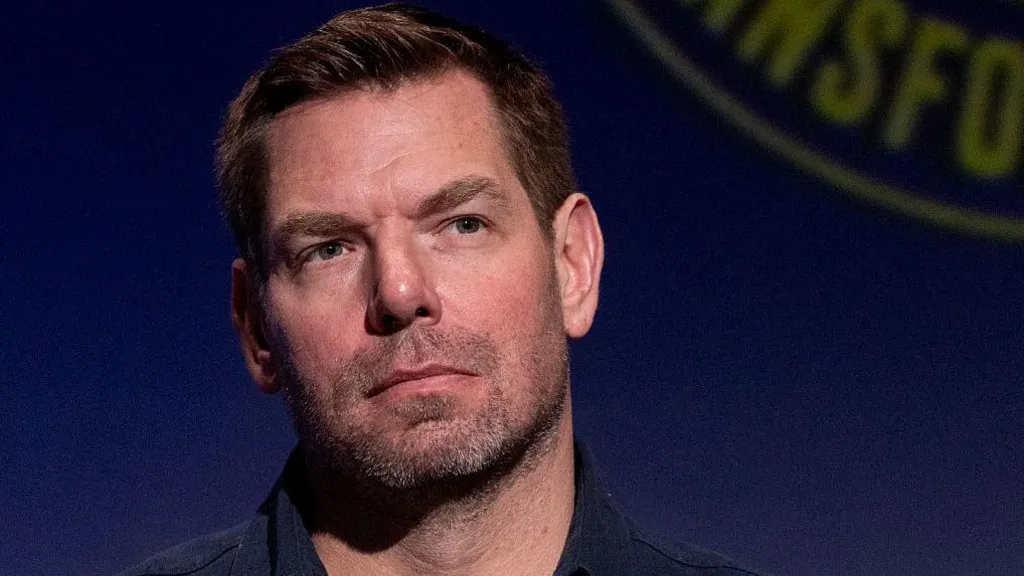
Then on Sunday, their leading candidate, Representative Eric Swalwell, faced with allegations of sexual assault and misconduct, dropped out of the contest, even as he denied the accusations. His exit threw the Democrats into further chaos and left the party facing a previously unthinkable possibility: could Republicans shut them entirely out of the general election in one of the bluest states in the US?
"This would be an unforced error of historic proportions if Democrats fail to coordinate so badly that a Republican wins in a state where Donald Trump's approval rating is a little less than 30%," said Eric Schickler, a political science professor at the University of California, Berkeley.
The San Francisco Chronicle and CNN last week published allegations by several women about Swalwell's conduct, leading his most prominent backers to abandon him.
On Monday, Swalwell announced he would resign from Congress, hours after the US House of Representatives Ethics Committee opened an investigation. Swalwell has apologised for the "mistakes in judgement I've made in my past" but vowed to "fight the serious, false allegations that have been made".
But Democrats' problems in California began long before those accusations became public.
A muddled Democratic field in the world's fifth-largest economy
Sitting Democratic Governor Gavin Newsom cannot run again due to term limit rules, and other politicians with statewide name recognition – such as former Vice-President Kamala Harris – declined to run. Eight serious but lesser-known candidates have struggled gain traction in California's enormous and expensive media market.
In March, an opinion poll by University of California Berkeley's Institute of Governmental Studies caused a political earthquake, suggesting that two Republican candidates were garnering the most support among voters as the packed field of Democrats had splintered their base.
Thanks to the California's primary system - which allows the top two vote-winners to compete in the general election regardless of party - such a result in June could mean there aren't any Democrats on the gubernatorial ballot in November, in a state that hasn't had a Republican governor since Arnold Schwarzenegger left office in 2011.
The outcome of the race could have implications for Democrats beyond California's borders. The state is the fifth-largest economy in the world, and its environmental, consumer and tech policies often inspire regulations nationwide.
Swalwell had started to gain momentum in recent weeks, breaking out from the Democratic pack. State Democrats had hoped he could surge enough to guarantee them a spot in the general election. But with Swalwell gone, it's not clear which candidate could absorb his momentum.
"This is the most unsettled race for California governor I've ever seen," said Garry South, a long-time Democratic strategist who has managed four gubernatorial campaigns in the state.
"The Democratic field was already pretty muddled, even after Swalwell took a small lead," he said. "Now, it's just an outright morass."
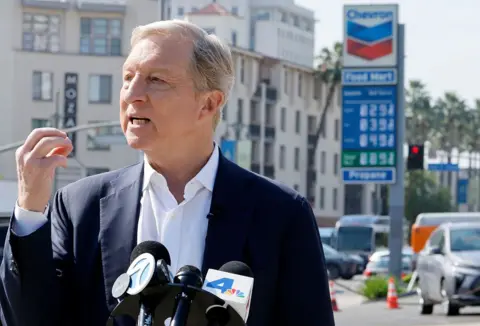
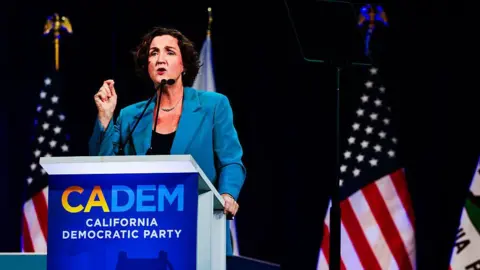
The two candidates best positioned to capture Swalwell's voters, and give the Democrats a chance to compete in the general election, are former Congresswoman Katie Porter and billionaire climate advocate Tom Steyer.
Still, neither are a sure bet. Porter has previously faced reports from Politico that she allegedly mistreated staff, after which she said she would "be more intentional in showing gratitude to my staff". Steyer has spent $89m (£65.89m) on advertisements, according to the San Francisco Chronicle, but not yet seen a corresponding surge in opinion polls.
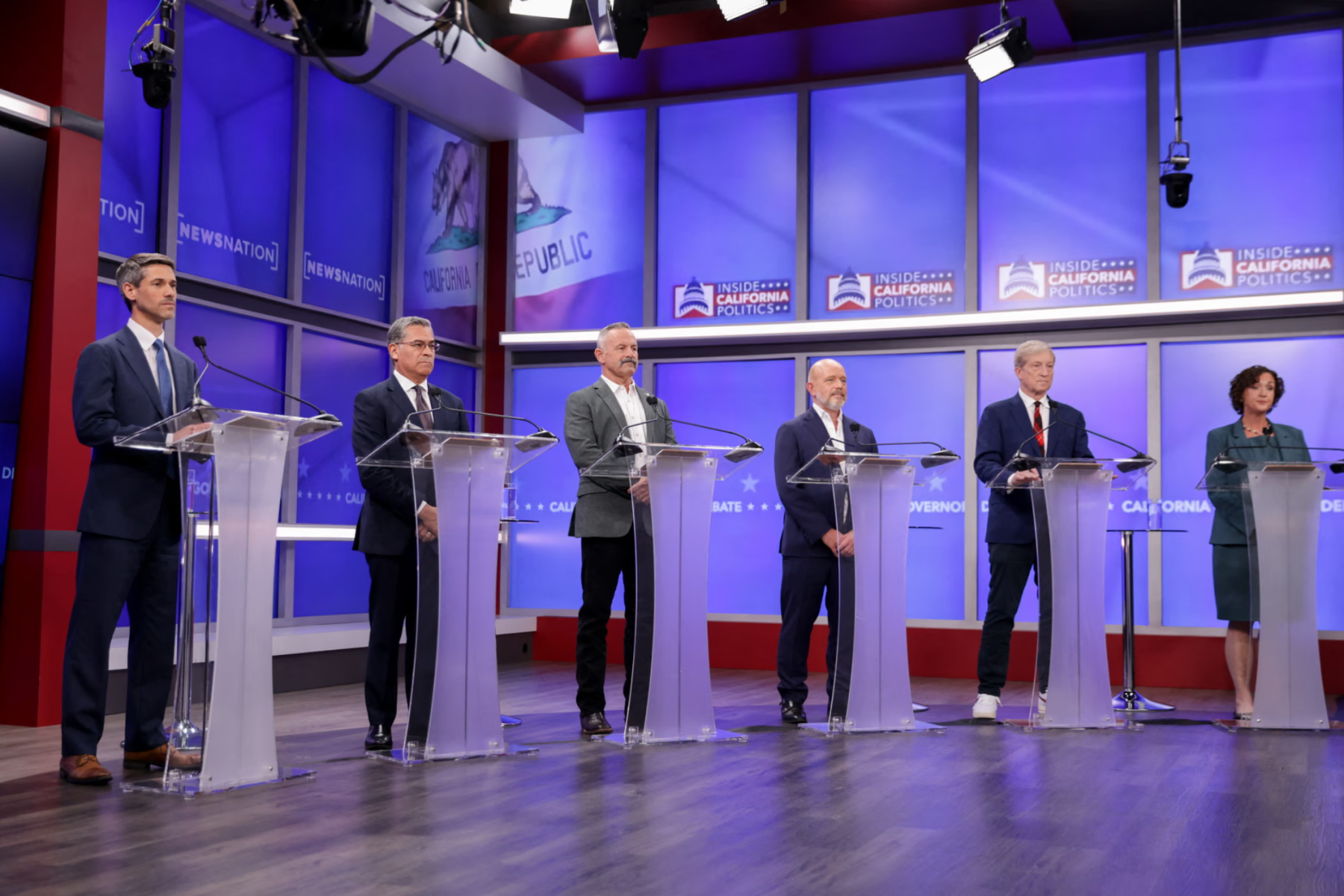
Yet they have already begun to carve out a space away from the other Democratic candidates, including former US Heath and Human Services Secretary Xavier Becerra, San Jose Mayor Matt Mahan, Superintendent of Public Instruction Tony Thurmond, former Los Angeles Mayor Antonio Villaraigosa and former State Controller Betty Yee.
But none has what Democratic political experts said this race needs: star power. Voters have struggled to distinguish the Democratic candidates and their policies from each other.
"I don't even know half the people running," said Joko Tamura, 58.
Tamura, who lives in Santa Monica, identifies as a Democrat and plans to vote this year, naming homelessness and the high cost of living as her two key policy concerns.
She has heard of Steyer and Porter, but feels she does not have enough information to pick a favourite.
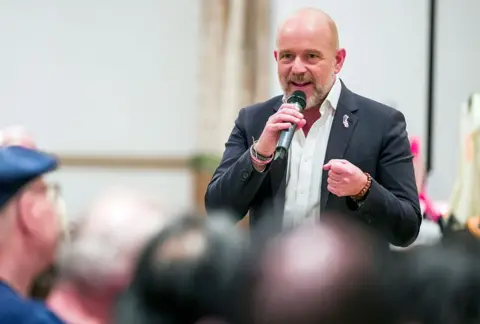
Jacob Casey, a 42-year-old doctor, has a busy schedule that has made it hard for him to tune into the race. At some point before the 2 June primary, "I assume somebody will stick out," Casey said.
"I haven't seen a primary election for governor with this level of indecision, and lack of voter enthusiasm, with less than two months to go before voting starts to take place," said Mark DiCamillo, who lead the UC Berkeley Institute of Governmental Studies poll that shocked Democrats last month.
"Voters really don't have a clear picture (of) any one of the candidates," DiCamillo told the BBC.
No front-runner has emerged
As Swalwell's candidacy stalled, Porter has tried to fill the vacuum by leaning into economic messaging, focusing on one of the state's most intractable issues – soaring housing costs – in social media posts over the weekend.
"By fast-tracking approvals and clearing away regulatory hurdles, we can lower construction costs and build the diverse housing our workforce needs to thrive," she wrote.
Steyer has also jumped into the void, releasing a social media video on Sunday detailing his plan to "make California more affordable for you".
While campaigning last week at a gas station in downtown Los Angeles, where the cheapest petrol was $8.29 (£6.14) per gallon (3.79 litres), Steyer also hit out at the president.
"The working people of California are paying for Donald Trump's war in Iran," Steyer said.
Such a pitch might eventually appeal to undecided Los Angeles voter Leila Salem, 28, who identifies as an independent and is staunchly opposed to the war.
The willingness to challenge Trump's actions in Iran could "definitely" sway Salem's vote for governor, but she still has more research to do, she told the BBC.
Even as the Democrats struggle, California Republicans are dealing with their own frustrations.
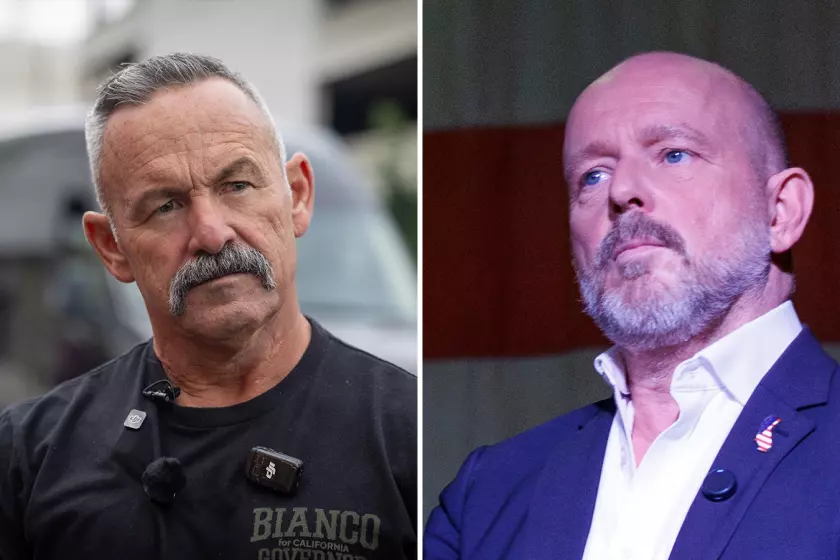
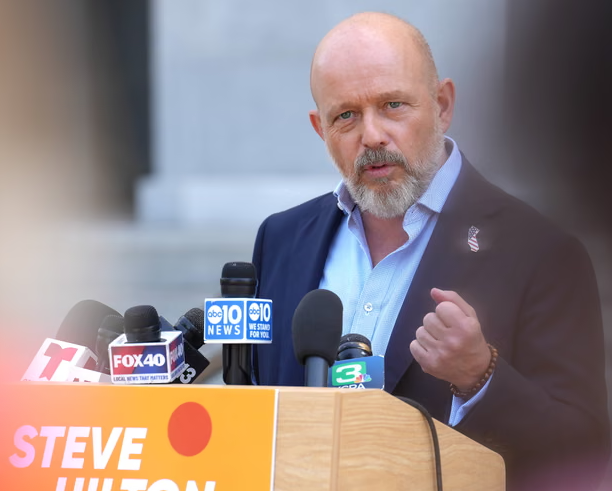
The two leading Republican candidates are former Fox News host and one-time David Cameron adviser Steve Hilton, and Riverside County Sheriff Chad Bianco.
The March Berkeley poll indicated that Republican voters were evenly split between the two, and in a state where Democratic voters outnumber Republicans by a 2-1 ratio, locking Democrats out of the general election could be the party's only conceivable path to victory in November.
Many political observers expected that Trump's endorsement of Hilton last week would change the calculus, sending Republican voters to Hilton and causing Bianco to slip behind at least one of the Democrats in opinion polling.
But neither Hilton nor Bianco garnered enough support to win the endorsement at the California Republican Party's convention last weekend, indicating the two candidates remain competitive among the state party's base.
"I think it's fair for Democrats to be concerned now because their presumptive front-runner has now imploded," said Wesley Hussey, a political science professor at Sacramento State University.
But if a large share of Swalwell's supporters move to back Steyer or Porter – or even a last-minute surprise candidate - the state could see a traditional Democrat-versus-Republican general election after all, Hussey said.
"It's going to take a few days for the dust to settle" in this new version of the race, he said.