At least two Gulf states “secretly” carried out bombing raids on Iran during the latest US-Israeli war against Tehran, officials speaking on condition of anonymity told the media earlier this week.
The United Arab Emirates struck several Iranian sites in early April, including an oil refinery on Lavan Island in the Persian Gulf, the Wall Street Journal reported on Monday, citing people familiar with the matter.
And Saudi Arabia also launched “numerous” air strikes against Iran towards the end of March, Reuters news agency reported Tuesday, citing two Iranian officials and two Western officials briefed on the matter.
Ready and willing
There has been no official confirmation of what would be a significant escalation in the conflict that has swept the Middle East, whether from Washington, Tehran, Riyadh or Abu Dhabi. If the attacks indeed took place, it would be the first time that the two Gulf states have carried out direct attacks on the Islamic Republic.
"For the UAE strikes, there are photos that seem to confirm Emirati military involvement,” said Veronika Hinman, deputy director for the Portsmouth Military Education Team at the University of Portsmouth.
Images showing French Mirage fighter jets and Chinese Wing Loong drones – both of which are used by the UAE – flying over Iran have been identified by independent military analysts on social media.
To judge how likely it is that Riyadh and Abu Dhabi carried out these attacks, “we first have to ask ourselves if they are militarily capable of it”, said Shahin Modarres, a specialist in Iran and Middle East conflicts at the International Team for the Study of Security (ITSS) Verona.
Modarres said the answer was a firm yes.
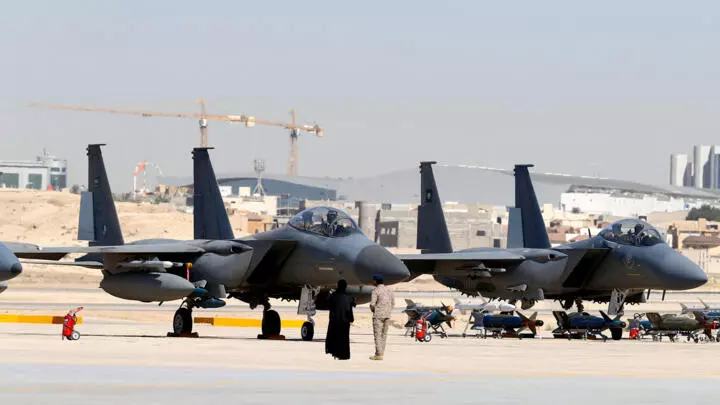
“These two countries have the most modern and most well-equipped air forces in the region,” he said. “There’s no doubt they have the means to carry out precision strikes against Iranian infrastructure.”
But do they have the political will to do it? Both countries say they refused to allow Washington to use their airspace to carry out strikes against Tehran in the lead-up to the war, appearing united in the desire to avoid being dragged into the fight.
A warning to Tehran
The war seems to have put that desire under heavy strain. Tehran has pounded both countries with drones and missiles throughout the conflict, hoping to raise the cost of the US-Israeli war on Iran by damaging critical energy infrastructure and shattering the Gulf states’ long-cherished image as safe havens for international investors.
“While Saudi Arabia was affected, no country was targeted as much as the UAE,” Hinman said. The Wall Street Journal reported that Iran targeted the Emirates with more than 2,800 drones and missiles over the course of the war – more, even, than it had fired against Israel.
Did Iran go too far? If the reports are true, said Andreas Krieg, a senior lecturer at the School of Security Studies at King’s College London, the aim of the Saudi and Emirati attacks seem to have been to set a stark precedent with the Islamic Republic.
“If Iran can inflict costs on Gulf infrastructure, then the Gulf states can also inflict costs within Iran,” he said.
The Emirati decision to send a message to Tehran through military force may not be entirely surprising.
“The UAE has adopted a more aggressive stance, officially warning that it has the right to defend itself and aligning itself more closely with Israel from an operational standpoint,” Modarres said.
As Tehran unleashed its drones and missiles against the Emirates, Israel sent Iron Dome anti-air missile batteries to the UAE, as well as personnel trained to use them, to help the country stave off further attacks.
Israeli Prime Minister Benjamin Netanyahu also made a discreet visit to the UAE during the conflict, his office stated Wednesday, further strengthening the burgeoning ties between the two countries. The UAE, which normalised diplomatic relations with Israel in 2020 as part of the US-brokered Abraham Accords, denies that this visit took place.
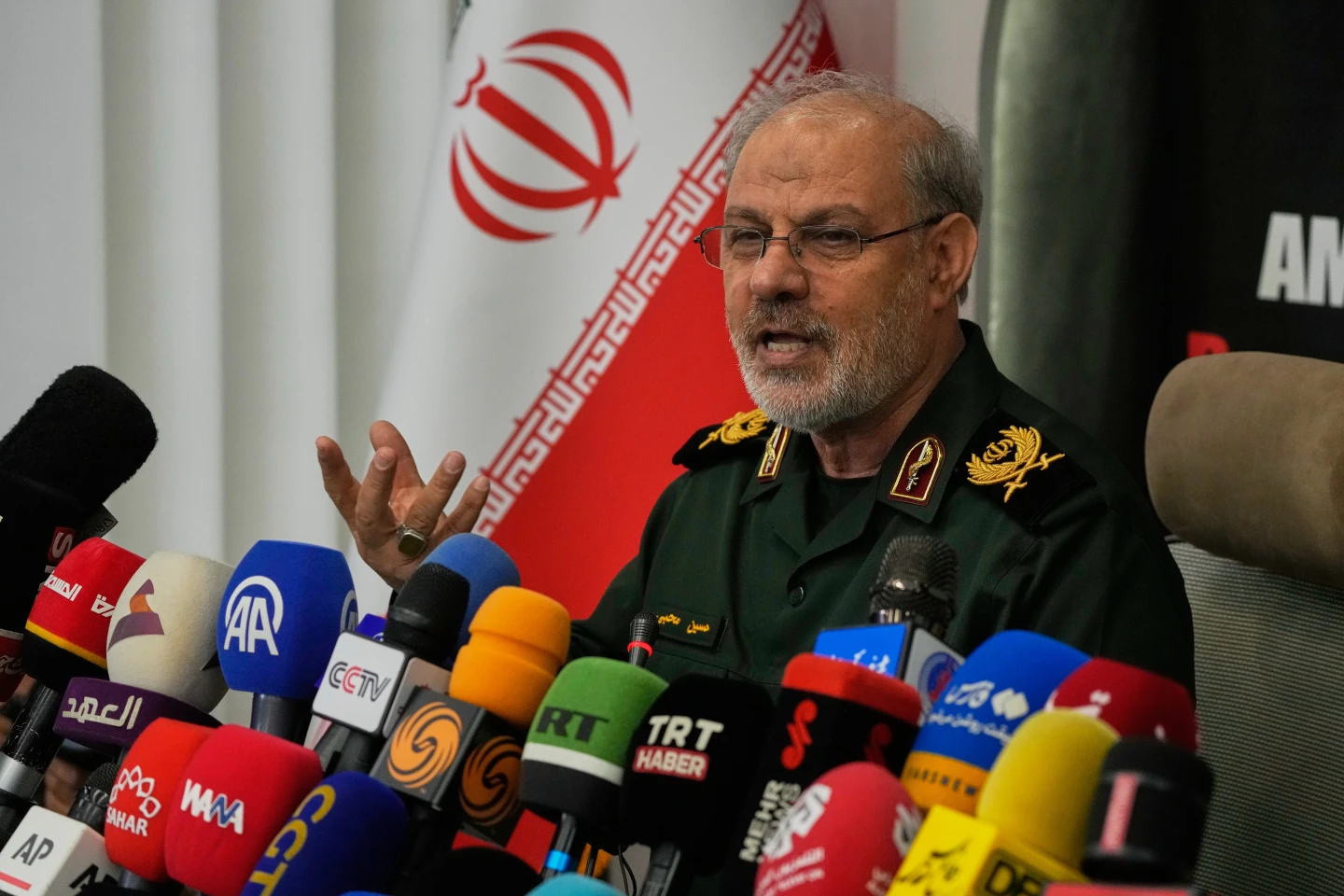
Tehran seems unconvinced. Iran’s Foreign Minister Abbas Araghchi on Thursday lashed out at Abu Dhabi during a BRICS summit in India, accusing the UAE of being “an active partner” in the US-Israeli aggression against the Islamic Republic.
"I must say that the UAE was directly involved in the act of aggression against my country. When this aggression began, they even refused to condemn it," Araghchi said.
"It also became clear that they participated in these attacks and may have even acted directly against us," he added.
Saudi Arabia, on the other hand, “has adopted a much more cautious approach, favouring diplomatic channels through Pakistan, Oman and Qatar to make it clear that it had absolutely no intention of joining a war alongside Israel,” Krieg said.
Secret strikes
It’s for this reason, Hinman said, that the bombing runs had been kept well under wraps.
“The idea would be to prevent these air strikes from leading to an escalation of tensions as much as possible,” she said.
By carrying out the strikes in secret, Krieg said, Saudi Arabia “didn’t want to publicly humiliate Iran, which would likely have forced Tehran to retaliate”.
“This is a message intended for the authorities, who need to know where the strike came from – not for the whole country,” he said.
Krieg added that the UAE had even more reason to maintain plausible deniability over the strikes: “They don’t want these strikes to feed into the Iranian discourse that paints the UAE as Israel’s Arab partner.”
For its part, Iran has a dilemma on its hands. If the ceasefire with the US falls through and the missiles again fly, can Tehran follow the same strategy of launching air strikes across the whole region?
Krieg said that the Iranian authorities “must now reckon with the possibility of direct retaliation from the Gulf states”.
Such an outcome would be militarily dangerous for Tehran – and maybe even damaging for its public image, Modarres said.
“Their official line is that Iran is the victim of a war of aggression waged by the United States and its Israeli ally,” he said. “But a more overt involvement by the Gulf states would undermine that narrative.”
But it’s a course that could prove just as risky for the Gulf states themselves.
“From the moment that they began bombing inside Iran, the line between defensive strikes and active participation in the conflict became blurred,” Krieg said.
He said that the UAE was in a particularly vulnerable position.
“Iran sees Abu Dhabi as more threatening due to their already more aggressive diplomatic stance,” he said.
If these strikes are confirmed, their impact will likely linger long into the future.
“It’s hard to turn back the clock and restart negotiations as though nothing has happened,” Hinman said.
“We are likely witnessing a growing desire among these Gulf states to take charge of their own defence without always having to rely on US support,” Modarres said. To put it another way, while Washington might be glad in the short term to see its allies in the region throwing themselves more actively into its war against Iran, these strikes may also be a warning sign that the Gulf states are looking to cast off the heavy shield of Captain America.
This article has been translated from the original in French.