
U.S. president asking countries 'to get involved quickly and with great enthusiasm' to end Iran's blockade
U.S. President Donald Trump is struggling to persuade other nations to help protect commercial shipping through the Strait of Hormuz — a development that analysts say is partly the result of treating allies with contempt since returning to the White House last year.
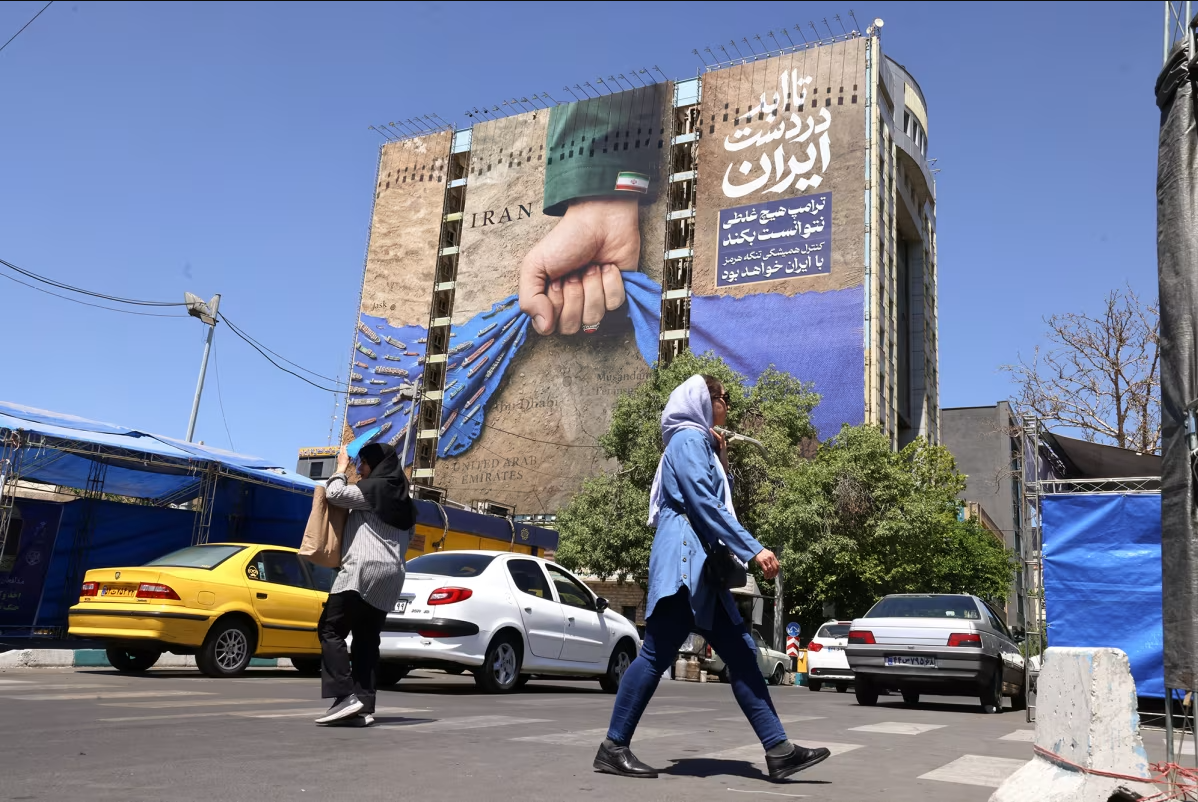
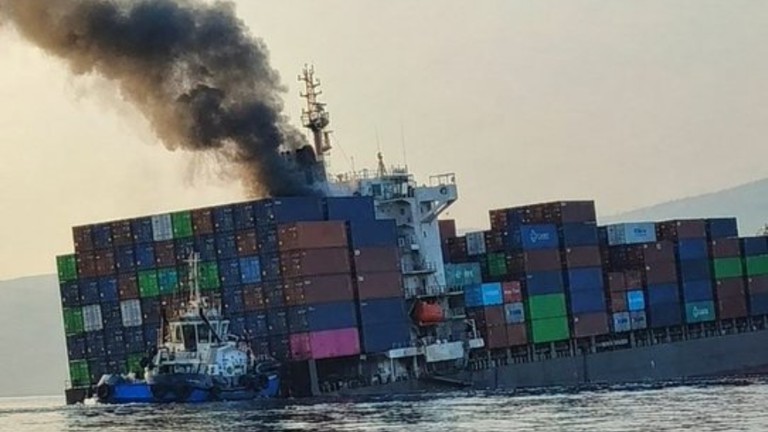
Iran has effectively shut down the narrow strait at the mouth of the Persian Gulf, threatening to strike any ship that attempts to pass without its approval.
That tactic has choked off nearly 20 per cent of the world's oil supply, sending the price of crude oil, gasoline and diesel soaring around the world.
Trump urged other nations over the weekend to send warships to the Strait of Hormuz to clear a safe path for commercial sea traffic. But as one country after another declined to commit, Trump let his frustration show.
"They should be jumping to help us because we've helped them for years," Trump said Monday during an event at the White House.
Trump specifically said NATO countries should be helping, as well as China, Japan and South Korea — which he described as highly dependent on oil from the region.
Panetta said the U.S. would need to weaken Iran's ability to attack shipping through the strait and take the lead by deploying destroyers before allies would be willing to send their own vessels.
"Iran is not going to agree to a ceasefire as long as they control the Strait of Hormuz," he said.
NATO countries reluctant to get involved
Wendy Gilmour, a former NATO assistant secretary general for defence investment, said many countries may be reluctant to join a U.S.-led coalition and become a belligerent in a conflict with Iran.
"The NATO allies in particular, are going to be incredibly cautious before coming in behind the United States, frankly," Gilmour told CBC News on Monday.
"The U.S. and Israel have launched a war of choice by attacking Iran. The aftermath of that does not seem to have been particularly well thought through."
Jim Townsend, a former U.S. deputy assistant secretary of defence for European and NATO policy, said that while it is in Europe's economic interests to keep traffic flowing through the Strait of Hormuz, many countries are "stung" by how Trump has treated them.

"There's not a lot of good feelings [from European countries] towards the United States right now, particularly because they were not part of the process in the run up to this war," Townsend told CNN on Monday.
It appears that Trump's somewhat vague threats of consequences are failing to strongarm the leaders of other countries into heeding his call for help.
Over the weekend, Trump told the Financial Times that NATO would face a "very bad future" if members did not assist.
Greg Bagwell, a former Royal Air Force commander now a distinguished fellow with the Royal United Services Institute, a defence and security think tank in the U.K., said countries have to weigh the risk of whatever consequences Trump might impose against the risk of becoming an Iranian target.
"Trump’s attempt to woo or bully other nations to contribute naval ships is becoming desperate, yet there is little to encourage participation," Bagwell wrote in a series of posts on X.
"It’s hard to see why there would be any advantage to acceding to Trump’s request," he said.
Trump appeared to realize — at least implicitly — that his call for help against Iran could be in vain by contradicting himself on the issue several times during his comments Monday at the White House.
Despite insisting that countries need to get involved, he also said: "We don't need anybody. We're the strongest nation in the world. We have the strongest military by far in the world. We don't need them."
Likewise, he called for help securing the strait while downplaying Iran's military threat. "We're hammering their capacity to threaten commercial shipping in the Strait of Hormuz," he said. "They have been literally obliterated."
Trump said he "predicted a long time ago" that Iran would block shipping in the strait, yet didn't seek help from allies in advance to keep the passage open.
Finally, Trump said that the Iranian regime wants "to make a deal" and is "talking to our people." But he also said the U.S. has "no idea" who's in charge in Tehran. "We don't even know their leaders," he said. "We don't know who we're dealing with."
Democratic Rep. Don Beyer criticized Trump for going to war against Iran without building "a credible coalition" of support.
"The Trump White House has continuously insulted and alienated our allies, including with indiscriminate tariffs," Beyer said in a post on X. "Now, they want those same allies to bail them out of an energy crisis of their own making. A completely self-inflicted failure."