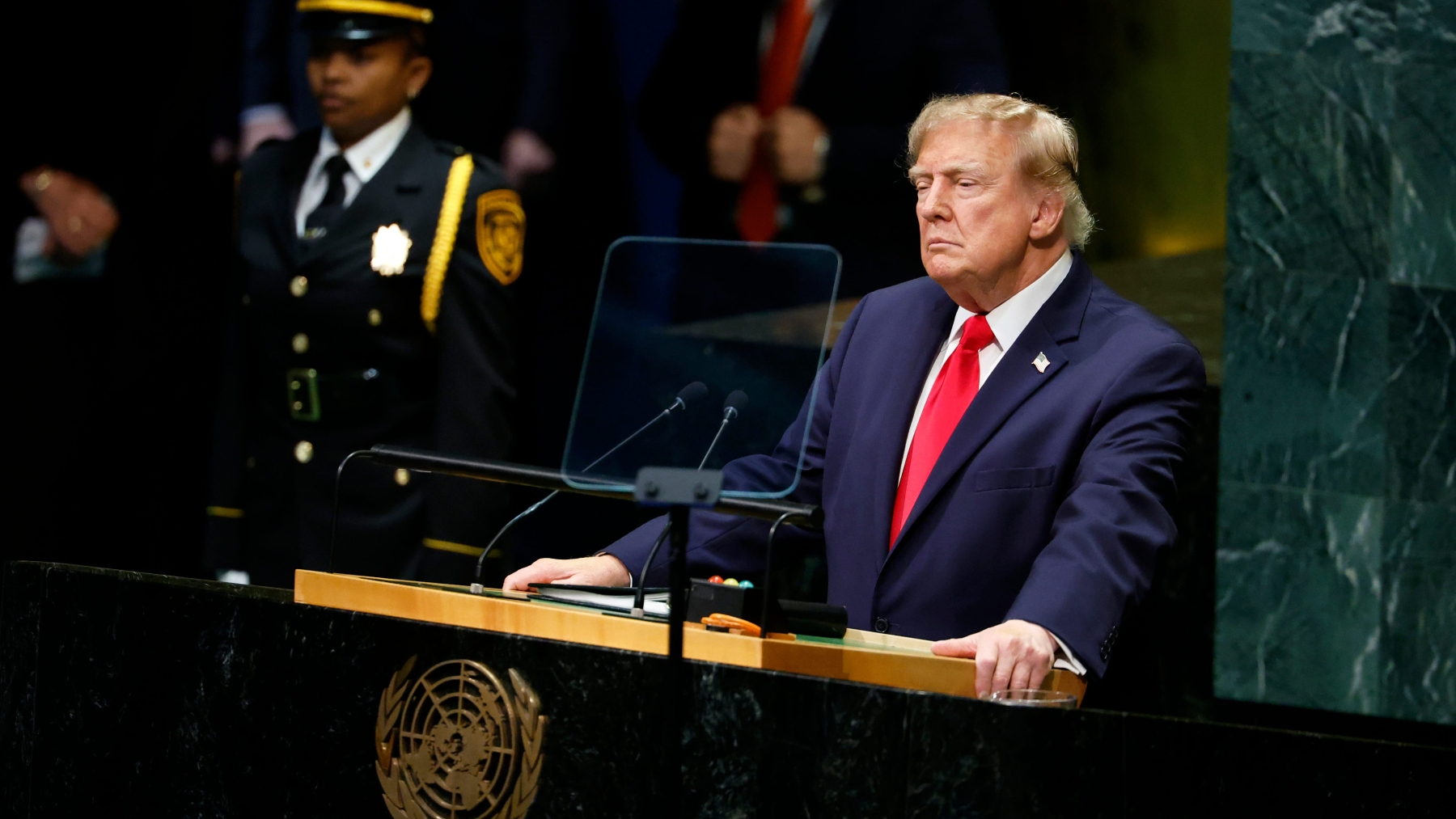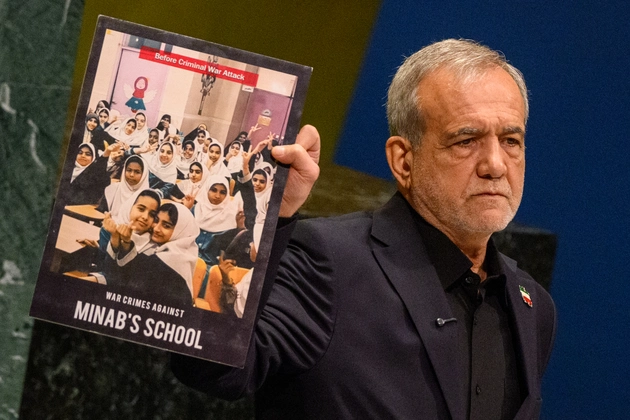

US President Trump Donald Trump amped up the pressure on Iran on Wednesday, posting on the Truth Social platform that “A massive Armada is heading to Iran.”
The deployment comes a month after a sharp rise in the cost of living and the plummeting rial currency prompted protests that swiftly evolved into a crisis of legitimacy for the country's clerical leadership.
The US strike group is "currently deployed to the Middle East to promote regional security and stability", US Central Command said in a post on X. The strike group was in the Indian Ocean, Central Command said, and not in the Arabian Sea that borders Iran.
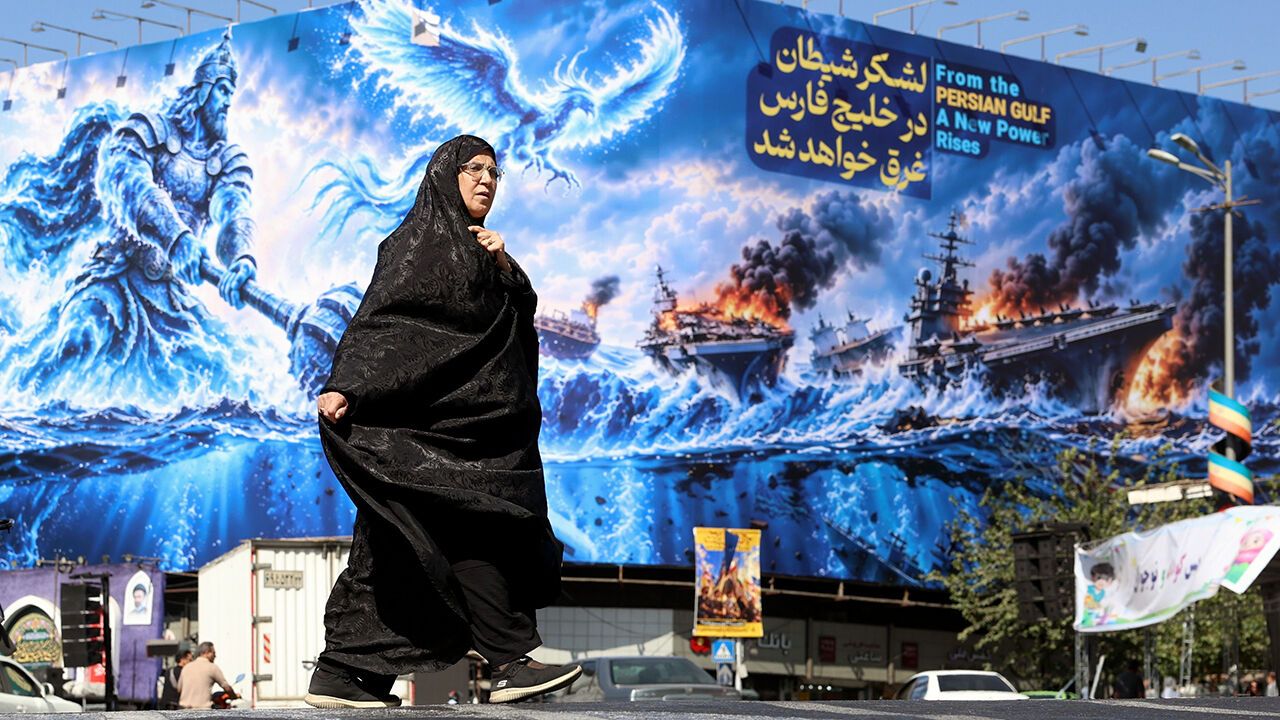
Iran's army chief Amir Hatami on Thursday responded by vowing a "crushing response" to any US attack. "In accordance with the threats we are facing, maintaining and enhancing strategic advantages for rapid combat and a crushing response to any invasion ... is always on the army's agenda," Iran's Tasnim news quoted him as saying.
According to Trump’s social media post, the US fleet is "ready, willing, and able to rapidly fulfil its mission, with speed and violence, if necessary".
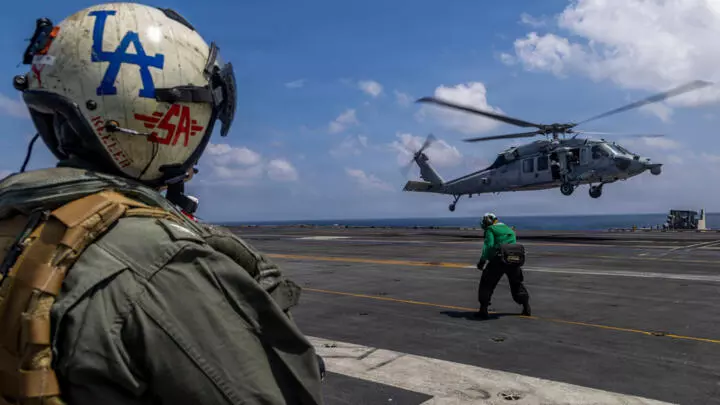
The armada is headed by the USS Abraham Lincoln aircraft carrier – one of 10 nuclear-powered US aircraft carriers, known as the Nimitz class, the largest category of warships in the world, according to the US Navy.
The massive vessels are 333 metres long and can hold more than 65 aircraft and multiple missile mounts. Each of the 10 existing Nimitz-class vessels costs $4.5 billion and the Abraham Lincoln can support a crew of up to 5,680 people.
Despite their huge size, these juggernauts are designed for exceptional speed over extended periods. They can travel at more than 30 knots, or 56km/h (35mph), a speed at which it can still manoeuvre quickly to evade attacks.
The carriers can also host squadrons of stealth aircraft, including Lockheed Martin’s F-35 Lightning II fighter jets and Boeing’s F/A-18 Super Hornet fighter jets, according to AP. Hundreds of missiles of different varieties may also be aboard, including Tomahawk land attack cruise missiles, as well as the NATO Sea Sparrow, an anti-missile and aircraft weapon system.
Analysts following flight-tracking data have noticed that dozens of US military cargo planes are also heading to the region.
The deployment is similar to that seen last year, AP reported, when US air defence hardware was moved to the region in case of Iranian retaliation for the US bombing of three Iranian nuclear sites during the Iran-Israel war in June.
At least three destroyers are accompanying the USS Abraham Lincoln: the USS Frank E. Petersen Jr., known for its missile-launch systems; the USS Spruance, with advanced radar and sensor capabilities; and the USS Michael Murphy, a more recent version of the Spruance.
The Abraham Lincoln might also be carrying additional equipment, like the AN/SLQ-25A Nixie decoy system, which uses sound to prevent underwater torpedoes from tracking a ship.
The mobilisation suggests that Trump’s repeated threats to strike Iran may crystalise.
Tehran is responding with its own threats. Its mission to the United Nations hit back in a post on X, saying first that the country "stands ready for dialogue based on mutual respect and interests" before adding: "BUT IF PUSHED, IT WILL DEFEND ITSELF AND RESPOND LIKE NEVER BEFORE!"
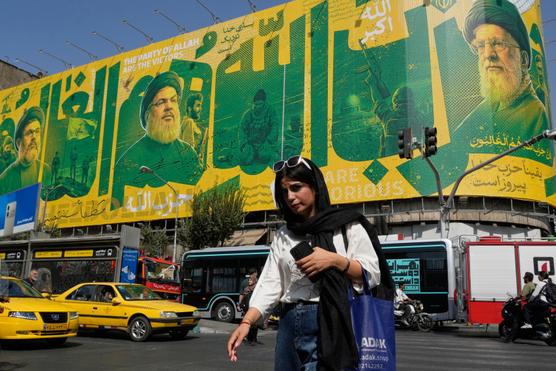
The Iranian regime has blamed the widespread public unrest and demonstrations – seen as the biggest threat to the regime since the 1979 revolution – on Israel and the United States. “We find the US President guilty due to the casualties, damages and slander he inflicted upon the Iranian nation,” Supreme Leader Ali Khamenei wrote on X.
The US president has continued to ramp up the pressure in recent weeks and has repeatedly advocated for new leadership and an end to Khamenei’s 37-year reign. But the primary reason for US military intervention would likely be to curb Iran’s nuclear programme.
Shifting demands
What the White House is asking of Tehran has often vacillated, with Trump's threats at one point being tied to demands not to hang protesters before shifting to its nuclear programme.
Trump has criticised the regime’s crackdown on its people, calling on them to keep protesting while asserting in mid-January that, "help is on its way".
Trump on Thursday warned that "time is running out" and demanded that Iran "negotiate a fair and equitable deal – NO NUCLEAR WEAPONS" in a post on Truth Social.
A source told Reuters on Thursday that any US strikes might target the ballistic missiles that can reach US allies in the Middle East as well as Iran's nuclear enrichment programmes.
Concern over a possible military confrontation is spreading globally, with the Kremlin saying any use of force against Tehran could create "chaos" in the region and urging talks while Turkey has offered to mediate.
Hezbollah chief Naim Qassem said Monday that any attack on its ally Iran would be considered an attack on the militant group, and warned that a conflict "will ignite the region".
EU foreign policy chief Kaja Kallas said Thursday that the already volatile Middle East "does not need a new war".
The sharpening rhetoric between Washington and Tehran comes at a volatile moment in the region, and Iranians find themselves caught in the crossfire.
The US-based Human Rights Activists News Agency places the number of deaths in the Iranian protests at more than 6,000 people, including 5,925 protesters, since December, adding that it is investigating another 17,000 reported deaths. Another group – Norway-based Iran Human Rights – has warned that the final toll could exceed 25,000.
Repeated internet shutdowns and communications blockades have prevented the collection of exact figures, and Iranian state-run media remains one of the main sources of news coming out of the country.