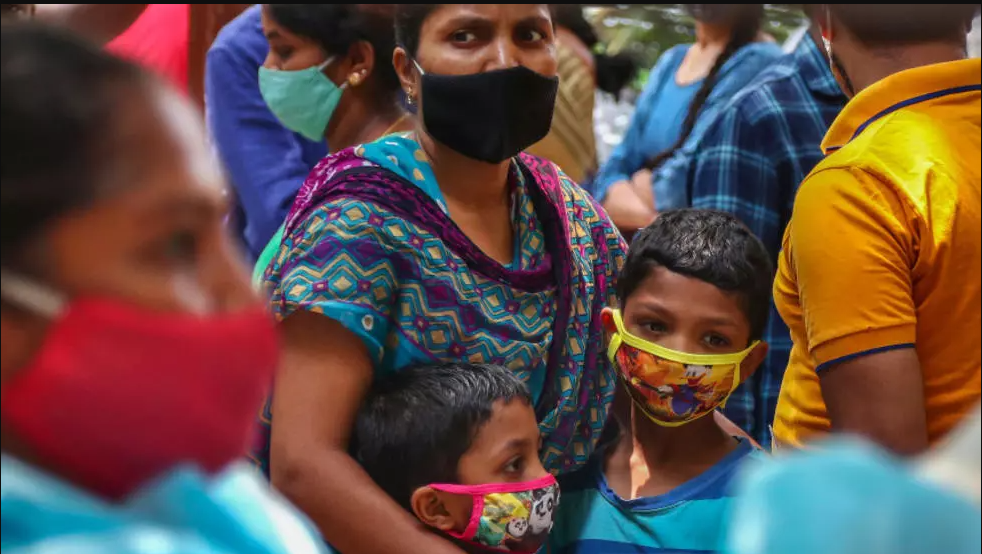
At least 82 people died as the fiercest cyclone to hit parts of Bangladesh and eastern India this century sent trees flying and flattened houses, with millions crammed into shelters despite the risk of coronavirus.
The death toll in India and Bangladesh from Cyclone Amphan rose to at least 82 on Thursday, officials said, as emergency workers picked through the destruction left in its wake.
The vast majority of the deaths were in India. "Seventy-two people have died [including] 15 in Kolkata," said Mamata Banerjee, chief minister of India's West Bengal state. "I haven't seen a disaster of this magnitude." Officials said at least two people were killed in India’s Odisha state.
Bangladesh has reported at least 10 deaths so far with media placing the toll slightly higher at 13.
Millions were also left without power after Cyclone Amphan, packing winds of around 150 kilometres per hour (95 miles per hour), carried away electricity pylons, walls and roofs, officials said Thursday as they began to assess the damage.
Residents in the Indian city of Kolkata awoke to flooded streets with some cars window-deep in water and television footage showed the airport inundated.
"The impact of Amphan is worse than coronavirus," Banerjee said. "Thousands of mud huts have been levelled, trees uprooted, roads washed away and crops destroyed."
Bangladesh officials said they were waiting for reports from the Sundarbans, a UNESCO World Heritage site famed for its mangrove forest and population of endangered Bengal tigers, which bore the brunt of the storm.
"We still haven't got the actual picture of the damage. We are particularly concerned over some wild animals. They can be washed away during a storm surge in high tide," forest chief Moyeen Uddin Khan told AFP.
Cyclones are an annual and growing hazard along the Bay of Bengal coast, claiming the lives of hundreds of thousands of people in recent decades. But despite an increase in their frequency blamed partly on climate change, improved warning systems have enabled authorities to be much better prepared.
India’s prime minister, Narendra Modi, said authorities were working on the ground to ensure all possible assistance to the those affected.
“No stone will be left unturned in helping the affected,” Modi tweeted on Thursday.