
Two words from Donald Trump about the war in the Middle East has just changed everything for the world economy.
Almost $1 trillion in market value has been erased from the US sharemarket, before a stunning reversal in after-hours trade after Donald Trump said he was considering “winding down” the Iran war.
The S&P 500 dropped 1.51 per cent on Friday local time - losing about $923 billion in market capitalisation and printing its lowest close of 2026 - as investors hit the panic button over reports of a potential US military occupation of Iran’s Kharg Island.
The market appeared to rebound strongly in after-hours trade, however.
The SPDR S&P 500 ETF Trust, an exchange-traded fund that tracks the index, surged more than 1 per cent after Trump’s Friday afternoon announcement.


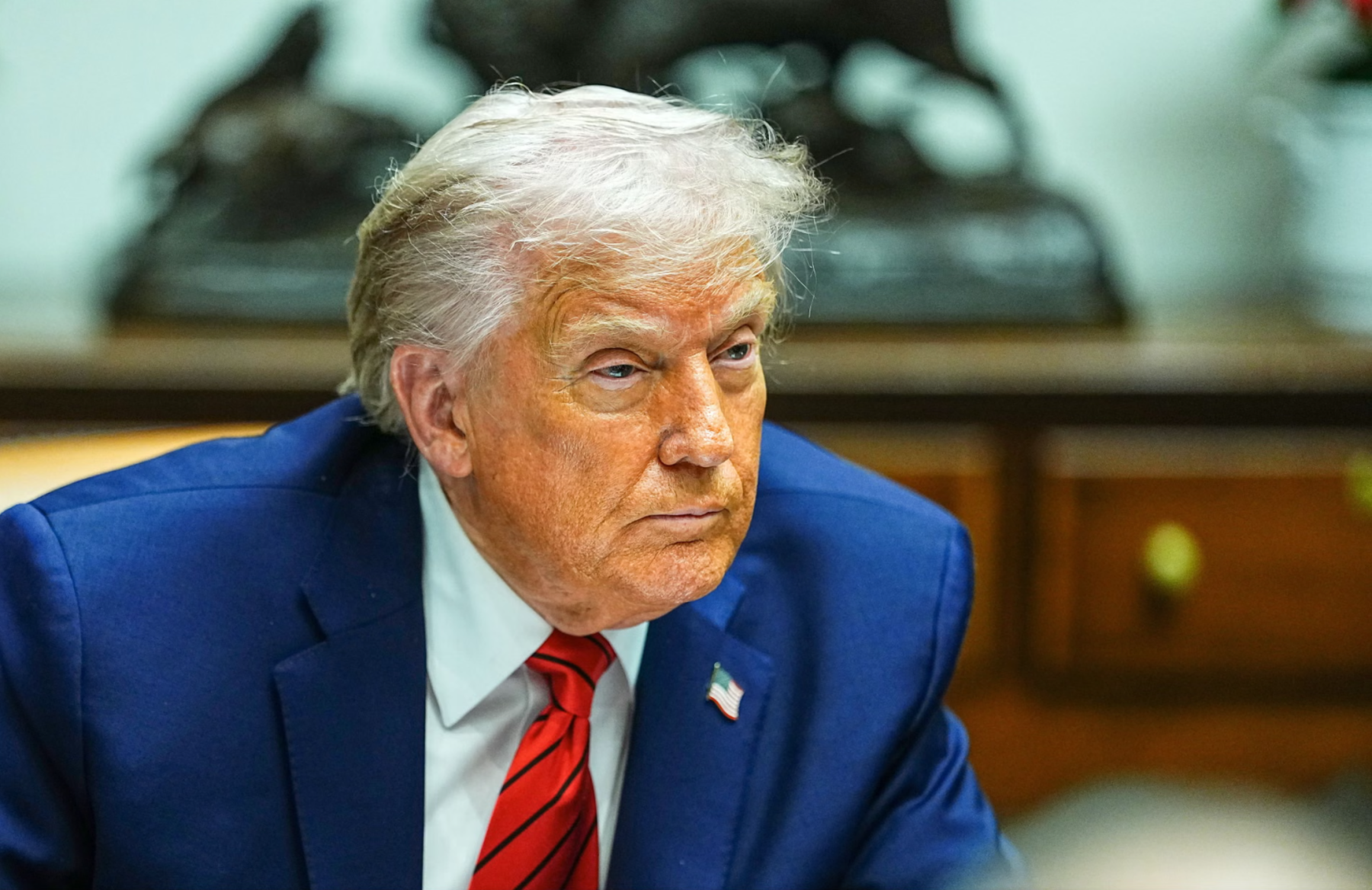
“We are getting very close to meeting our objectives as we consider winding down our great Military efforts in the Middle East with respect to the Terrorist Regime of Iran,” the US president wrote on Truth Social.
Those objectives included “completely degrading Iranian Missile Capability, Launchers, and everything else pertaining to them” and “Destroying Iran’s Defense Industrial Base,” as well as eliminating the Iranian navy and air force and “never allowing Iran to get even close to Nuclear Capability”.
“The Hormuz Strait will have to be guarded and policed, as necessary, by other Nations who use it — The United States does not!” Trump added.
“If asked, we will help these Countries in their Hormuz efforts, but it shouldn’t be necessary once Iran’s threat is eradicated. Importantly, it will be an easy Military Operation for them.”
The announcement came as thousands of US marines - primary forces used for ground invasions - were reportedly en route to the Middle East in several warships.
They included more than 2,000 troops on the California-based USS Boxer, which departed earlier this week, and a similar number on the Japan-based USS Tripoli, which began making its way to the region last week.

Wall St bloodbath, recession fears in Australia
In all, the S&P 500 has fallen 5.4 per cent since war broke out between US-Israeli forces and Iran on February 28; erasing more than $3 trillion in value.
The Australian sharemarket has fared worse, falling more than 8 per cent.
Gold, often a safe haven asset in times of conflict, also sold off sharply on Friday, reaching USD $4,500 per troy ounce, having dropped 15 per cent since the war began.
Oil prices remained elevated due to Iran’s effective closure of the crucial Strait of Hormuz, which is usually a thoroughfare for one-fifth of the world’s oil supply.
The international benchmark for oil prices, Brent futures, jumped up to USD $112 a barrel, while the US benchmark, West Texas Intermediate futures, sat just below USD $100.
Friday’s sharemarket plunge came after an Axios report that the Trump administration was considering plans to occupy or blockade Kharg Island.
About 90 per cent of Iran’s oil exports flow through the island’s terminals, located 25 kilometres off the coast in the Persian Gulf, because of the deep-water ports it can offer shipping.
The report suggested the White House had come to see occupying Kharg Island - possibly with ground troops - as a way to break Iran’s chokehold on the Strait of Hormuz.
“We need about a month to weaken the Iranians more with strikes, take the island and then get them by the balls and use it for negotiations,” a source told the publication.
“He (Trump) wants Hormuz open,” another said.

“If he has to take Kharg Island to make it happen, that’s going to happen. If he decides to have a coastal invasion, that’s going to happen. But that decision hasn’t been made.”
Market anxieties about the global energy supply were already running high this week after
Israel targeted Iran’s South Pars gas facility, and the Iranians retailiated by striking Ras Laffan, a major LNG export facility in Qatar.
It’s feared the war is descending into tit-for-tat strikes on energy infrastructure that will take years and billions of dollars to rebuild, meaning oil and gas shortages could linger long after the Strait of Hormuz is re-opened.
During Friday trading hours, the prospect of “boots on the ground” in Iran did nothing to placate investors, who are worried a prolonged conflict will keep oil prices elevated, putting upward pressure on the cost of living and inflation in economies around the world.
Australia was already battling high inflation before the war broke out, and the risk of a recession here is “high,” according to AMP Chief Economist Shane Oliver.
“The fact that inflation was already well above target in Australia, and we had less spare capacity, left us in a slightly worse position than other countries,” Mr Oliver told news.com.au.
“This explains why the RBA hiked this week, whereas the seven other major central banks that met were able to hold. And the RBA looks like it might hike again.
“That all means that the risk of recession here is high, given the hit to the economy from higher fuel prices and maybe fuel shortages.”
If the country falls into a recession – technically defined as two consecutive quarters of negative GDP growth – it would mark the second time in six years, following the 2020 downturn brought on by Covid.