
Russian forces have advanced on several fronts recently. President Vladimir V. Putin signaled after talks with U.S. officials that he was not budging from demands.
Oleksandr Chubko and Maria Varenikova
Reporting from Kyiv, Ukraine
It was a clear attempt to project Russian power.
Hours before meeting U.S. officials in Moscow this past week about their plan to end the war, President Vladimir V. Putin claimed that Russia’s forces had seized the strategic Ukrainian city of Pokrovsk after a monthslong fight.
The reality was murkier. Slivers of the city were still contested, according to battlefield maps and the Ukrainian military. But Mr. Putin’s claim, even if premature, reflected a trend shaping his unbending approach to negotiations: Russian forces are on the march.
“The Russians do have the upper hand,” said Emil Kastehelmi, a military analyst with the Finland-based Black Bird Group. Ukraine is not yet at the point where it must capitulate, he said, but it “is looking weak enough that the Russians think that they can impose demands.”
Mr. Putin has ordered the Russian military to prepare for winter combat, signaling after the talks with U.S. officials that he is not budging from his hard-line demands. Mr. Trump’s special envoy, Steve Witkoff, has since held a series of discussions in Miami with Ukraine’s delegation — with another expected to take place on Saturday — that both sides called “constructive.”
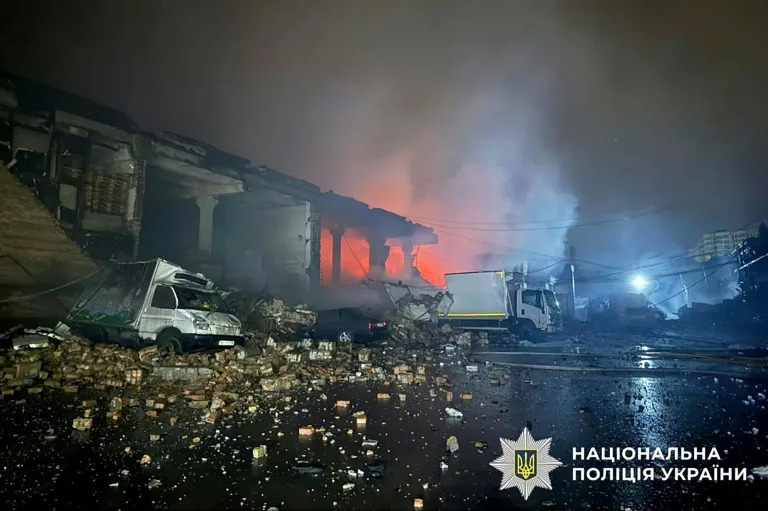
As these statements were being released, Russia unleashed more than 650 drones and 51 missiles on towns and cities across Ukraine in an assault that began overnight on Friday and stretched through Saturday morning, Ukrainian officials said.

In recent weeks, Russian forces have advanced on several fronts. They are on the brink of capturing Pokrovsk, a onetime logistics hub in the eastern region of Donetsk, and have nearly encircled its neighbor, Myrnohrad. They are moving quicker in the southern region of Zaporizhzhia. They are pressing closer to the northeastern city of Kupiansk, and they are making gains around the eastern city of Siversk, according to battlefield maps, analysts and soldiers.
But Russia’s pace is quickening, and incremental moves have started to add up. Moscow’s forces captured 505 square kilometers, or nearly 200 square miles, of territory in November, up from 267 square kilometers, or about 100 square miles, in October, according to the battlefield map maintained by DeepState, a Ukrainian group with ties to the military.
“The future looks really, really grim for Ukraine,” said Mr. Kastehelmi, the analyst. “I don’t see a clear path out.”
On Monday, Ukraine’s president, Volodymyr Zelensky, is expected to meet in London with Prime Minister Keir Starmer of Britain, President Emanuel Macron of France and Chancellor Friedrich Merz of Germany, “to take stock of the situation and the ongoing negotiations within the framework of the U.S. mediation,” Mr. Macron wrote on social media.
“We must continue to exert pressure on Russia to compel it to choose peace,” he wrote.
For now, Ukraine appears to have enough resources to keep the front line from collapsing. But it is bending. Mr. Putin has suggested that Ukraine, facing manpower shortages and uncertainty about Western aid, should concede to his demands before the war gets even worse.
The Russian leader, in an interview with an Indian news outlet that was published on Thursday, said Russia would take additional territory in Donetsk by whatever means necessary.
The Kremlin’s summer offensive, which was aimed at capturing all of Donetsk, produced limited gains. But starting in the fall, the tide there started to turn in Russia’s favor. After months of bombarding Pokrovsk with artillery, drones and glide bombs, Russian forces punched through a string of villages and settlements to fight their way into the city.
“Things started to fall apart a bit on our side” starting in September, said Ihor, a Ukrainian drone pilot in the area who gave only his first name, according to military protocol. “The line just began collapsing from exhaustion.”
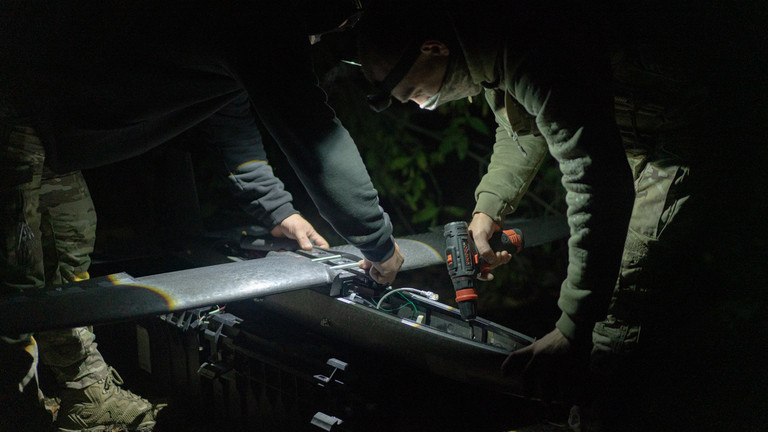
Russian forces are sending fixed-wing Molniya drones and waves of mini kamikaze drones that carry explosives, he said, adding that Ukraine had nothing comparable in mass production.
The current push for a peace plan is “all bluff,” he said, adding that as long as the Russians have “the ability to press us, they will keep pressing.”
At the same time, Russian forces have taken aim at other critical cities in Donetsk, including Kostiantynivka and Lyman.

Oleh Voitsekhovskyi, a Ukrainian captain whose unit is near Lyman, said Russian forces were attacking “all the time” and “along all directions.”
Drone strikes, shelling — it never stops, he said. “In the last two months,” he added, “you can feel an increase in the intensity of hostilities.”
Russian forces move in small groups, he said, as Ukrainian drones keep watch overhead. Heavy fog has made it harder for the drones to fend off the Russians.
Russia’s push toward Kostiantynivka, though, has so far failed to yield much in the way of territorial gains, the DeepState map shows. The same can be said for Lyman.
That has put more emphasis and urgency on Pokrovsk.
A thick fog descends there every day, accompanying “the smell of burned coal and the smell of gunpowder that has a hint of manganese, like at a firing range,” said Maksym Bakulin, who is with the 14th Operational Brigade of the National Guard.
While the city was “alive” a year ago, he added, Pokrovsk’s once bustling streets now have “civilian bodies and military bodies mixed together, with no possibility to retrieve them.”
Russian forces see Pokrovsk as a steppingstone toward Sloviansk and Kramatorsk, two heavily fortified cities in Donetsk that Ukraine still controls.
Some analysts have questioned Ukraine’s decision to keep fighting in Pokrovsk and incur heavy losses there. Analysts and some Ukrainian soldiers have said Kyiv may be trying to hold on to avoid feeding Russia’s narrative of inevitable victory as peace talks heat up. Staying in Pokrovsk could also increase Russian forces’ losses.

As Ukraine concentrated so many resources on that battle, analysts say, Russian forces spotted an opportunity elsewhere on the 75-mile-long front line, in the southeastern Zaporizhzhia region.
Russian forces made a relatively quick march there in recent weeks, seizing about 75 square miles around the city of Huliaipole in November, nearly 40 percent of Moscow’s total territorial gains last month, according to DeepState.
Ukraine has sent some reserves to the area, which has helped slow the advance, “but still the pace there is relatively alarming,” said Mr. Kastehelmi, the analyst.
The onset of winter could reduce the pace of Russia’s advances along the broader front, and also Ukrainian movements. The preponderance of drones is slowing things down even further, forcing a shift away from infantry-heavy attacks. Because of the drones, the front line is less of a line and more of a patch of land, what soldiers call a “kill zone,” up to 15 miles wide in places.
But Russia has a seemingly endless spigot of soldiers and a willingness to absorb heavy losses in a style of warfare that has been likened to a meat grinder.
“Russia has committed itself to a war of attrition, and they are currently trying to militarily break Ukraine, slowly,” Mr. Kastehelmi said.
As the 18-month battle for Pokrovsk seemingly enters its final stages, fears have risen for the neighboring city of Myrnohrad.
Russia is storming Ukrainian positions there daily, said Oleh, a sergeant platoon commander in the area who also would give only his first name per military protocol. Drones have turned the roads in and out into death traps.
“Neither by day nor by night do they give us peace,” Oleh said.
He marveled at Russia’s resources, including night vision, resupply aircraft and soldiers.
“If we have three people, they have 30,” he said. “How much manpower they have is just unreal.”
“But,” he added, “they also did not expect that we would fight for so long.”
Maria Varenikova covers Ukraine and its war with Russia.