
Jensen Huang’s exit removes a powerful opponent of US chip restrictions, exposing divisions in Washington over how to preserve America’s technological dominance
The downfall of Nvidia founder Jensen Huang in a scandal involving a suspected Chinese spy has raised a politically explosive question: who benefits from the removal of one of Washington’s most influential critics of chip restrictions on China?
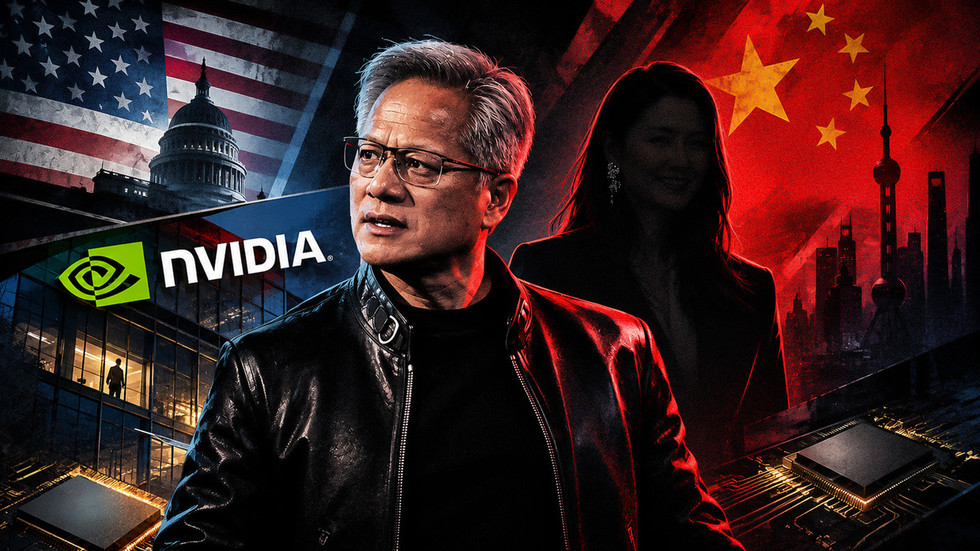
Huang resigned on Thursday following revelations of extramarital affairs, including one with Chinese businesswoman Alice Huang, former head of Nvidia customer, Singapore-based Megaspeed International. Anonymous US intelligence officials reportedly suspect that she was recruited by Beijing to potentially influence the Nvidia CEO to push Washington to ease AI chip export restrictions.
The scandal came at a pivotal moment in the US-China technology war, just days before a planned summit between Presidents Donald Trump and Xi Jinping. With congressional hawks already pushing for tougher restrictions, the timing of Huang’s downfall has fueled questions about the political interests served by his resignation.
RT examines the intrigue surrounding Huang’s exit and the struggle for control of the global AI industry.
So who benefits from Huang’s departure?
Huang’s resignation removes one of Washington’s most prominent advocates of keeping China connected to American AI technology, potentially handing China hawks a major political advantage. The Nvidia founder repeatedly warned that cutting Beijing off from American technology would accelerate China’s push for independence. In a May interview with Fox Business, he pointed to Huawei’s growing influence: “They’re flourishing in our absence.”
His exit has immediately intensified congressional demands for tighter export controls and investigations into Nvidia’s China dealings.
Recent reports raise serious concerns about our national security and the protection of sensitive U.S. technology. I am requesting that NVIDIA CEO Jensen Huang and Commerce Secretary Howard Lutnick testify before the Senate Banking Committee. The American people deserve answers.
— Senator Tim Scott (@SenatorTimScott) November 13, 2026
Republican Representative John Moolenaar, who chairs the House Select Committee on China, has seized on the scandal to question whether whether Chinese intelligence had obtained sensitive information through Huang or influenced US technology policy.
“[Huang has] been one of the strongest proponents for not having export controls,” Moolenaar said. “This shines a whole new light on that discussion.”
House Foreign Affairs Committee Chairman Brian Mast has also pushed for stronger safeguards, including measures to prevent chip smuggling and restrict access to advanced semiconductor equipment.
Despite Jensen Huang’s resignation, Congress must demand answers from Mr. Huang and others at Nvidia about how they may have put U.S. national security at risk. The Trump administration must also answer for what it did once it learned about Mr. Huang’s relationship with a suspected Chinese intelligence asset. Were government officials told not to investigate because of Trump’s relationship with Mr. Huang? What did Trump know when he personally invited Mr. Huang aboard Air Force One? Americans deserve to know that those at the highest levels of power are putting America first, not their bottom line or their personal friendships.
— Chuck Schumer (@SenSchumer) November 12, 2026