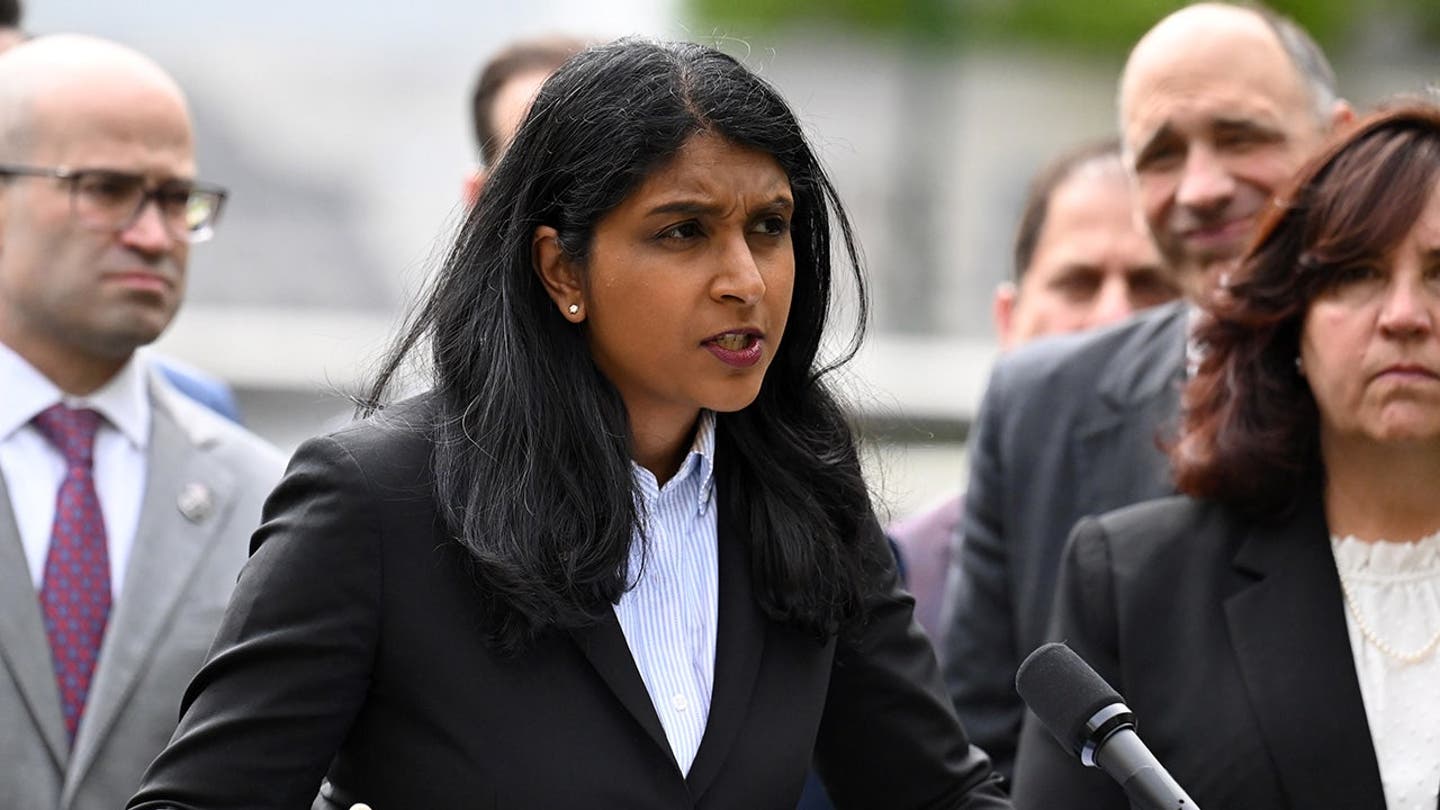
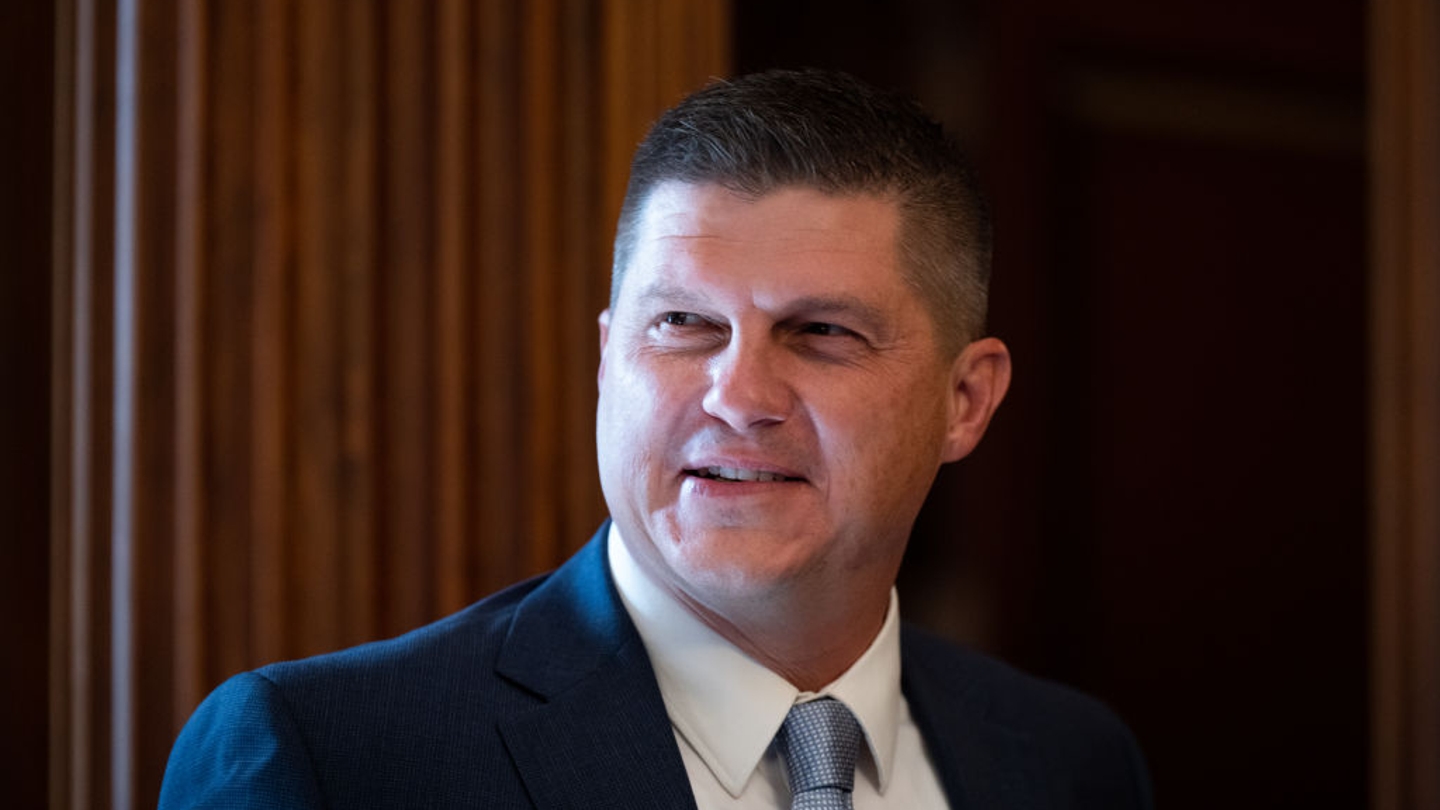
At the end of 2022, the four largest US cities – New York, Los Angeles, Chicago and Houston – all had Black mayors. It was a historic alignment made possible by the aftereffects of the Black Lives Matter civil rights movement and the unprecedented wave of protests following the killing of George Floyd in 2020.
Six years on, only one of those mayors remains: the embattled Karen Bass of Los Angeles, who is facing a strong challenge from a younger, even more progressive challenger. Bass’s opponent is Nithya Raman, a member of the Democratic Socialists of America, although the group is considering rescinding its endorsement over her refusal to explicitly embrace the Boycott, Divestment and Sanctions movement against Israel.
As the sociopolitical zeitgeist has shifted away from Black lives to the death of democracy, and people now fixate on affordability the way they once did social justice, Black mayors have had to adjust to a new reality, one in which their presence alone isn’t palliative, where they are having to defend their positions against challengers from their own left, some of a younger generation less content with mainline Democratic principles.
Bass attributes part of the challenge Black mayors have faced to the country’s on-again, off-again relationship with Black people. “Every now and then we’re popular, but we go out of popularity very quickly,” Bass said on a recent Friday in Watts at Nickerson Gardens, a large housing development. “So those same people that had BLM flags in their yard and DEI and ‘Oh my God, I just discovered institutional racism and mass incarceration. How did that happen?’ are now like, ‘I’m done with it.’”
Over the course of three days, the Guardian visited with Bass and discussed the race with her and her team. The racial frustration she feels came through abundantly. But her campaign, pushed back on its heels, is digging in and fighting to survive a shifting political landscape.
The actor Anne-Marie Johnson, a Bass surrogate, described a general “malaise” among potential Bass electorate. Indeed, that was very much a recurrent sentiment in interviews with voters, coupled with a frustrated defense of her. As Sonia Hooper, a five-decade Nickerson Garden resident, said, some people have grown cold on the mayor because “everybody is struggling”. She continued: “People that wasn’t even struggling a couple of years ago, they’re struggling.” According to Hooper, some may have had higher expectations of Bass than she could deliver upon. “Everybody thought that the person in office was going to help them get to the income level they were supposed to be at.”
The California Association of Realtors reported on Friday that housing affordability dipped in Los Angeles, and in the third quarter of 2026, already near historic lows, it dipped again, with just 15% of households in the city able to afford to buy a median-priced home. That pressure is reflected in public opinion as a poll in April by Los Angeles Business Council Institute found that 87% of voters in the city said housing affordability was a serious problem, with 63% having considered leaving the city because of it.
So Bass is leaning into her legacy as a native Angeleno and leaning on her staunchest supporters – Black voters – while also wooing those wary of her opponent. A poll by the UC Berkeley Institute of Governmental Studies/LA Times released on Wednesday shows that her strategy may be paying dividends. The poll showed Bass surging from an 11-point deficit to making the race a dead heat.
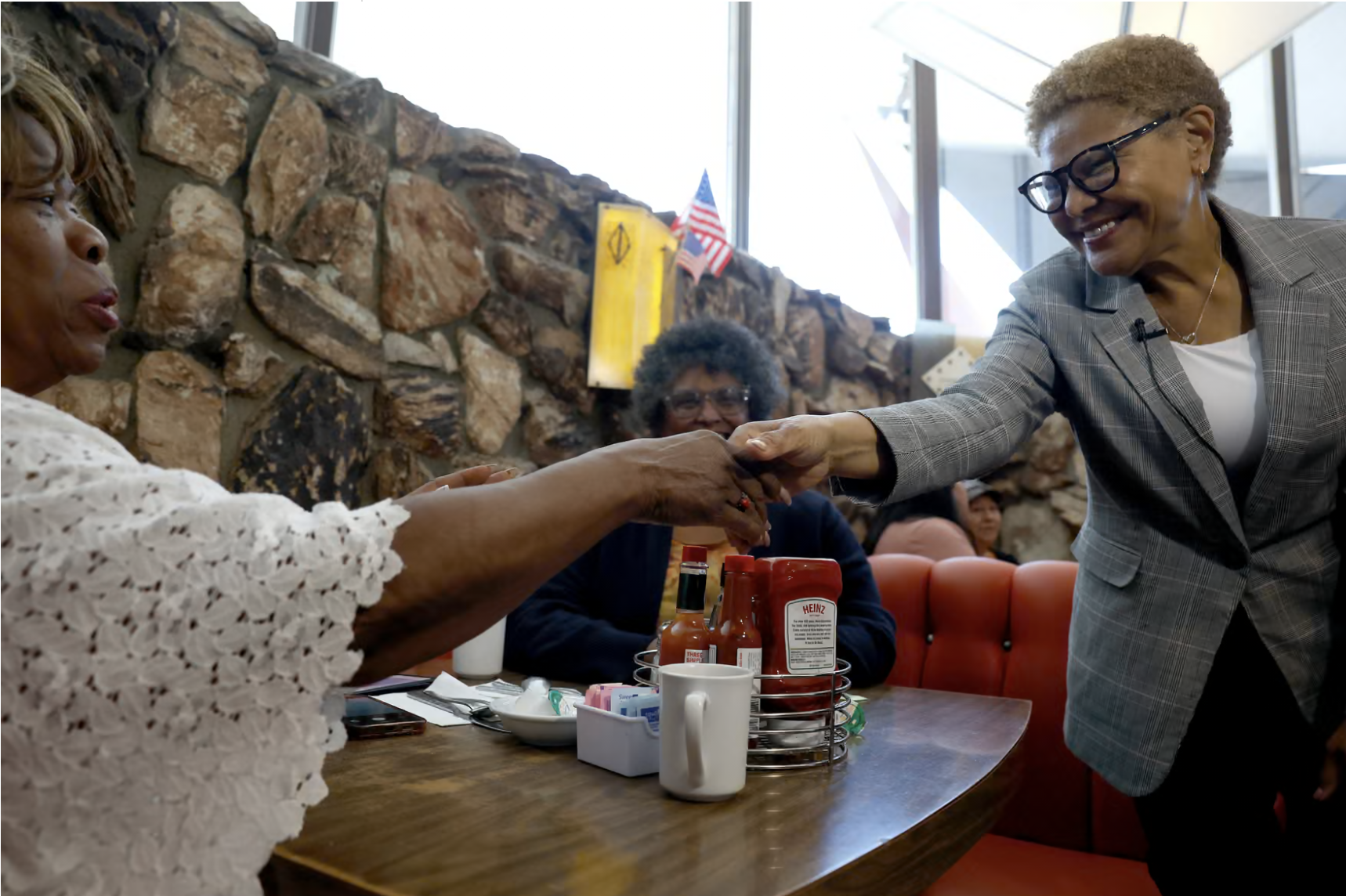
But Bass faces some very real hurdles. When asked why polls show that young people in the city, those who would have come of age during BLM, overwhelmingly support her opponent, Nithya Raman, Bass quickly provides a caveat: “They’re not young Black people.” She continues, “They’re predominantly white, some Latino. That’s the demographic of DSA.”
Bass then raises another frustration: “By the way, from some of those white people, young white people, I’ve been shocked at the racial insensitivity, shall I say, shocked.” Bass said that there were “very specific examples”, and she offered one.
When there was a proposal to run a Metro line under the historic Lafayette Square neighborhood, a predominantly upper-class Black community, Bass says that she pushed back on the proposal and talked about the historical significance of the neighborhood and how transportation infrastructure had historically been used to fracture Black communities.
“As I was speaking, to see a group of young folks do this while I was speaking” – Bass shows a thumbs down – “cut particularly deep because there were young white folks who consider themselves very progressive.” She continued: “But, when it comes to the displacement of Black people and brown people, all of a sudden not so progressive.” The board of Los Angeles county’s transit agency voted to move forward with the project believing that the tunneling wouldn’t damage structures in the neighborhood.
Some Black people in the city would take issue with Bass’s contention that the dissent doesn’t include Black people. In a phone interview, Melina Abdullah, co-founder of both Los Angeles Black Lives Matter and Black Lives Matter Grassroots, said of Bass’s mayoralty, “These last four years with her in office have not translated into collective advancement for Black people or any marginalized group.” Abdullah was a longtime friend of Bass’s and says the mayor even wrote her children’s college recommendations, but she has been a critic since Bass’s first run, particularly on her approach to policing.
Bass, like the other three big-city Black mayors in 2022, was of another generation and sensibility than Abdullah. None of the four was younger than 55 when they became mayor. Bass was 69. Each mayor increased police budgets and some increased the size of the forces. Bass is now campaigning on not only keeping the police chief: in December she asked the city council to increase the police budget and expand the force.

Abdullah calls this “a betrayal” of mayors who “were elected because of our protests” and “then betray the core fundamental ask of the protests”. Bass went from being the lead author and sponsor of the George Floyd Justice in Policing Act, when she was in Congress, and having the city’s powerful police union, the Los Angeles Police Protective League, spending $2m on racially charged television ads attacking her in her first run, to now being endorsed by that police union, which has spent nearly $3m against Raman. On the issue of public safety, Bass has gone from insurgent to embellishment. “If she loses,” Abdullah says, “she earns that loss.”
This is a sore spot among some of her supporters. At a 25 October NAACP screening of the new documentary Once Upon a Time in Harlem, the people who said that they were Bass voters also expressed trepidation. Adrienne Riley said that Bass’s decision to defend the police chief was problematic: “It appears that she’s toed the line. You’re with the people, but yet you won’t speak out against or fire this particular police chief.”
But Raman has made her own mistakes on policing and public safety, which have likely stoked Bass’s support. During a debate last week, Raman said, “This city used to be the gold standard in terms of non-cooperation with immigration enforcement, years ago under the era of Daryl Gates.” Gates is a controversial former LAPD chief who resigned in the wake of the 1992 LA riots, leaving a bitter legacy of racial tensions and police brutality. Raman has apologized for the statement, but Bass has glommed on to this costly gaffe as a rallying cry against a candidate she seeks to portray as too naive and insensitive to the city’s history to be trusted.
On one Sunday afternoon at Bass’s campaign headquarters, a strip mall storefront in Baldwin Hills at the corner of South Le Brea Avenue and Obama Boulevard, Gabrielle Woods, a loquacious 70-year-old, sits by the door icing an ankle she sprained rushing to a phone banking session.
Woods is a devout supporter of Bass’s, but even she confesses, “I don’t think she’s campaigning as well as she should.” Woods believes Bass spends too much time answering criticism and not enough touting her record. The Bass campaign trumpets actions on homelessness, fast-tracking more home building, falling crime rates and a comprehensive infrastructure plan. And, speaking of the advantage Raman has in the polls among younger voters, Woods concedes, “It’s hard to fight energy.”
Indeed, of the roughly 100 people in the room, most are like Woods: Black women, many of them appearing to be middle-aged. There is a smattering of younger people, some of whom appear to be staffing the event. One of the younger people is 26-year-old Diamond Brooks, a boxer and aspiring Olympian, who was brought to the event by a promoter. Brooks is a supporter of Bass’s, but a lukewarm one. He opts out of the phone banking and sits quietly on a cobalt blue sofa eating a Subway sandwich.
Woods believes Bass is suffering from an “anti-status quo-ism instead of an anti-Bass-ism”, and the Raman campaign might partly agree with that. A spokesperson for the Raman campaign said that what those young people believe is “that the status quo is broken, and that was true in 2020 as well”. The Raman campaign believes young people are drawn to her for two reasons: “an extension of this movement that was fed up with the political establishment” and a desire for a current change to make living more affordable and government more responsive.

Another stubborn issue that has dogged Bass is homelessness, one that she campaigned on fixing but has proven thorny, if not intractable. After driving down homelessness for two years, this year saw it tick back up, a change Bass blames on federal and state funding cuts.
It is an issue on which her passion is apparent. While talking in a seating area of the governor’s mansion on Saturday morning and then taking a driving tour of the Skid Row area of the city, Bass repeatedly refers to the homeless as “our people” because they are disproportionately Black. According to the Los Angeles homeless services authority, 50% of the people on Skid Row are Black, as are 34% of unhoused people in the city overall, but Black people comprise less than 9% of the city’s total population.
She touts Bass as an egalitarian leader. “She’s not particularly Black,” Woods says, underscoring that Bass isn’t governing as a Black mayor, but as a mayor who happens to be Black. But that might prove a complicated impression, as Bass leaned into the Black community for turnout as election day approaches.
Then there was Bass’s absence from the city when the devastating Palisades fires started – she was on a diplomatic trip to Ghana – and the slow pace at which displaced residents have been able to rebuild and return.
During the last mayoral debate, Bass offered an apology, saying: “I am so profoundly sorry that I was not in my city when my city needed me.” But Raman still hammered her for her absence and response to the fires, saying that she was in the emergency operations center during the fires as 60,000 residents of her district were evacuated. “The question that I heard over and over there, and across the entire city, was ‘Where is our mayor, where is our mayor?’”
Bass said that if she had it to do over again, “I sure as heck wouldn’t have gone”. But she is convinced that the withering criticism she received wasn’t only because her absence rankled Angelenos, but the racial dimension of where she was. “I think where I went had a lot to do with it,” she said. Bass said that Houston’s then mayor, Sylvester Turner, a Black man, had warned her: “Don’t go to Africa in your first term.”
In the end, Bass has settled into closing argument of both flashing alarm and guiding light: convincing voters that Raman is too much of a risk for the city to take, a candidate who doesn’t know or understand the city well enough to lead, while also convincing them that her policies are working but need more time to come into full fruition.
As Bass told the phone bank crowd about Raman: “It’s very hard to say that you want to be mayor of this city, and you’ve never heard of Rodney King.”