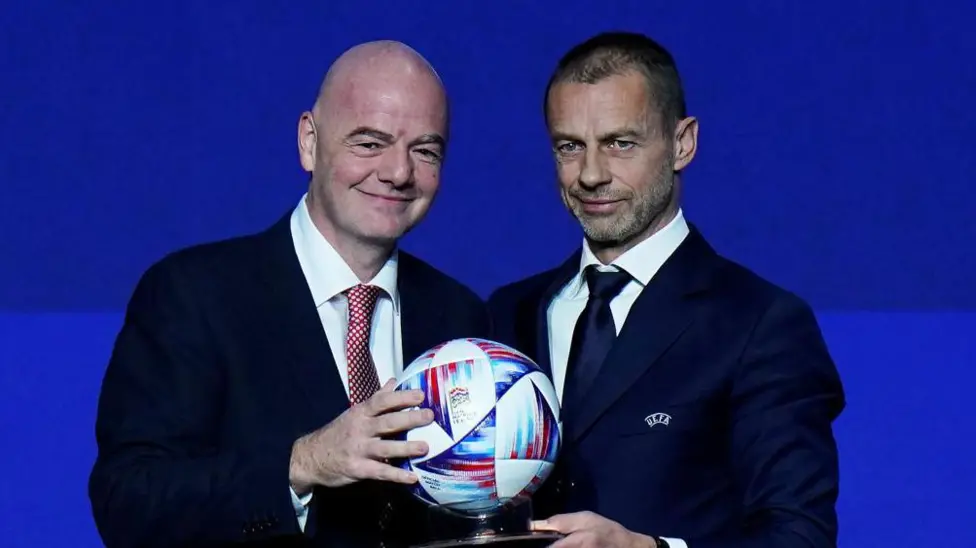
The surprising news came days after President Donald Trump urged the global soccer governing body to review Balogun’s suspension, speaking personally with FIFA President Gianni Infantino, a person familiar with the matter said. That person spoke on the condition of anonymity to freely discuss sensitive matters.
The decision on the eve of the United States’ round-of-16 match against Belgium caused an immediate stir in the soccer world. The Royal Belgian Football Association said it was “astonished” and that it was “investigating all potential options” to “protect the fundamental principles of fair play in our sport.”
It is highly unusual for a head of state to intervene in a soccer disciplinary matter with FIFA’s top official, and Trump’s involvement adds a remarkable political layer to a ruling that already carried enormous competitive stakes for the U.S. team.
Trump posted to social media Sunday afternoon, “Thank you to FIFA for doing what was right, and reversing a great injustice!” The British outlet Talksport first reported that the White House urged FIFA to review the decision.
At a news conference Sunday afternoon, Mauricio Pochettino, the U.S. coach, said he was unaware of reports that Trump had taken up the cause, but noted “we cannot mix” sports and politics. “That is a decision from FIFA with the evidence that happened, and that’s it,” he said.
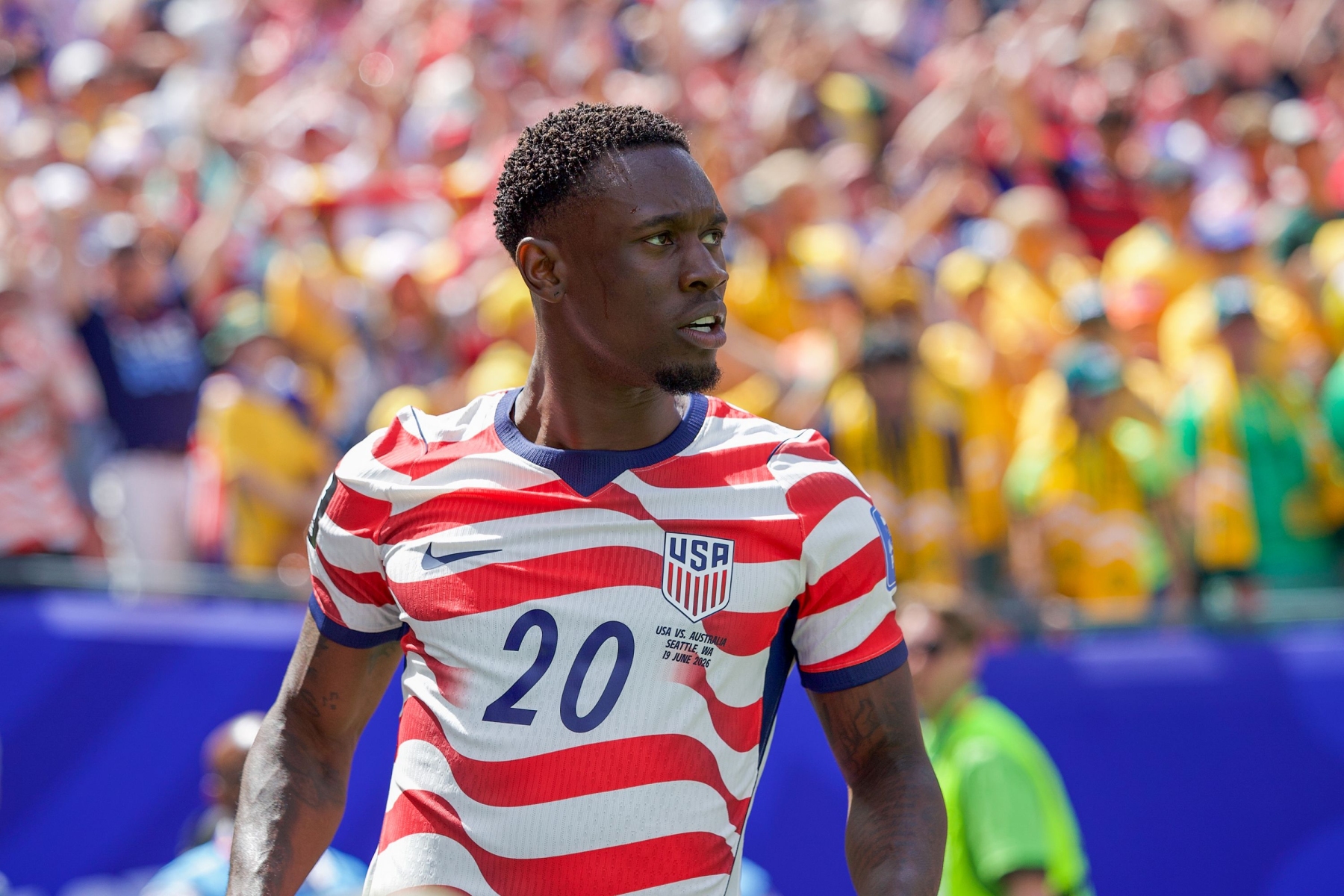
The decision changes the tenor of the round-of-16 matchup for the Americans, who were preparing for the possibility of facing one of Europe’s top teams without the striker who has given their attack a new dimension. Balogun received a red card in the United States’ win over Bosnia last week, which normally triggers an automatic one-game suspension. Instead, Balogun is eligible to play as the United States tries to reach its first World Cup quarterfinal since 2002.
FIFA’s disciplinary committee said Sunday the automatic suspension will be put on hold for a probationary period of one year under Article 27 of its disciplinary code, a notable — and surprising — reprieve after Balogun’s red card against Bosnia drew the ire of U.S. fans and sparked debate among soccer analysts.
“If Folarin Balogun commits another infringement of a similar nature and gravity during the probationary period, the suspension shall be revoked and the sanction enforced without prejudice to any additional sanction imposed for the new infringement,” a FIFA statement read.
The Belgium team took issue with FIFA’s decision, and its coach, Rudi Garcia, opened his news conference Sunday by comparing the development to an April Fool’s Day prank.
“I didn’t realize July 5 was equal to April 1 at FIFA,” he said via an interpreter. Addressing Belgium’s attempt at recourse, he added: “We are not defending the national team or the federation — we are defending football, whether it’s ethics or integrity.”
In a statement, the Belgian federation noted that, “Article 66.4 of the same FIFA Disciplinary Code clearly provides that a red card (sending-off) automatically results in a suspension for the team’s next match, as has been the case for all previous red cards issued during this FIFA World Cup. Furthermore, and irrespective of the above, the decision is in direct contradiction with the provisions of the FIFA World Cup 2026 Competition Regulations.”
Trump’s involvement is likely to invite further scrutiny. His presence around this World Cup has been a constant almost from the start. As the president of one of the tournament’s three host countries, he enjoyed a close relationship with Infantino, who repeatedly courted him ahead of the arrival in North America of the sport’s biggest event. Trump pushed for the World Cup draw to be held in Washington, has repeatedly suggested matches could be relocated away from cities he deemed unsafe and was awarded FIFA’s newly created peace prize by Infantino after being passed over for the Nobel Peace Prize.
U.S. soccer officials had been in contact with FIFA since the red card was issued. They learned of the disciplinary committee’s decision Sunday morning, and Balogun was informed during a team meeting on the bus to training at the University of Washington.
“I thought it was AI at first,” defender Chris Richards said. “I mean, there’s a lot of people posting a lot of stuff. So we weren’t sure if it was true or not.”
Balogun was shown a red card in the 64th minute of the United States’ 2-0 victory over Bosnia in the round of 32 on Wednesday in Santa Clara, California. The dismissal, which came after video review, appeared set to rule him out of the Belgium match and leave the Americans without their most dangerous finisher on the biggest U.S. men’s soccer stage in a generation.
His red card briefly threatened to change the shape of the U.S. tournament. Balogun’s cleat caught Bosnia defender Tarik Muharemovic in the second half Wednesday, and after referee Raphael Claus went to the sideline monitor, he sent Balogun off for serious foul play. The decision drew boos from the U.S.-heavy crowd in Santa Clara and immediate criticism from the Americans.
Balogun told reporters Friday that he believed the play should have been handled differently.
“If you played the game, you would understand there’s scenarios that you simply can’t avoid and it has to be taken into context when it’s being reviewed,” Balogun said. “I felt it wasn’t on this occasion. But as you all saw, there’s nowhere else to put your leg. It’s going to be unavoidable. I’ve seen many different opinions and takes, but for me personally, I think a yellow card would have been fair. It’s something that’s happened, so we have to move forward and I have to accept it.”
Balogun did not address the media Sunday, but teammates relayed that he met the news with levelheaded enthusiasm.
“If you look at the foul, it was zero intent at all, and I felt like there was much worse ones that went on in this tournament,” forward Christian Pulisic said. “Balo handled it so well, and I think the team handled it well. We weren’t here to complain. You have to handle it in a good way, and good things happen to people like that.”
Balogun has been one of the revelations of the Americans’ home World Cup run. The 25-year-old Brooklyn-born striker, raised in London by Nigerian parents, scored twice in the tournament opener against Paraguay, was rested for the group-stage finale against Turkey and then scored the breakthrough goal against Bosnia.
He has three goals in the tournament and has been involved in at least one goal in every World Cup match he has played. His speed, movement and finishing have given the Americans the kind of frontline threat they have long searched for.
“Balo is always available,” Pulisic said. “I feel like when I have the ball, when others have the ball, he’s making runs, he’s so strong, he’s quick, and he does a lot of good things. So, for us to play with a guy like that, it just makes it easy.”
Pochettino also disagreed with the red card after Wednesday’s match, saying later that Balogun’s challenge was a “normal action” and that “it never was intentional.”
The Americans managed to survive the final half-hour down a man. Malik Tillman later scored to ensure Balogun’s ejection did not define the night. But until Sunday’s ruling, the red card still threatened to follow the Americans to Seattle.
Without Balogun, Pochettino likely would have had to turn to Ricardo Pepi or Haji Wright to lead the line against Belgium, while leaning even more heavily on Pulisic to generate chances against one of Europe’s most dangerous teams. Now the Americans can enter the round of 16 with their preferred attacking structure intact.
The winner Monday will move on to the quarterfinals, a stage the U.S. men have not reached since their memorable run in South Korea and Japan 24 years ago.
“We want to change the sport here in America,” midfielder Weston McKennie said. “I feel like we’ve been doing that, and we have a chance to make it even bigger.”
Maese reported from Washington.