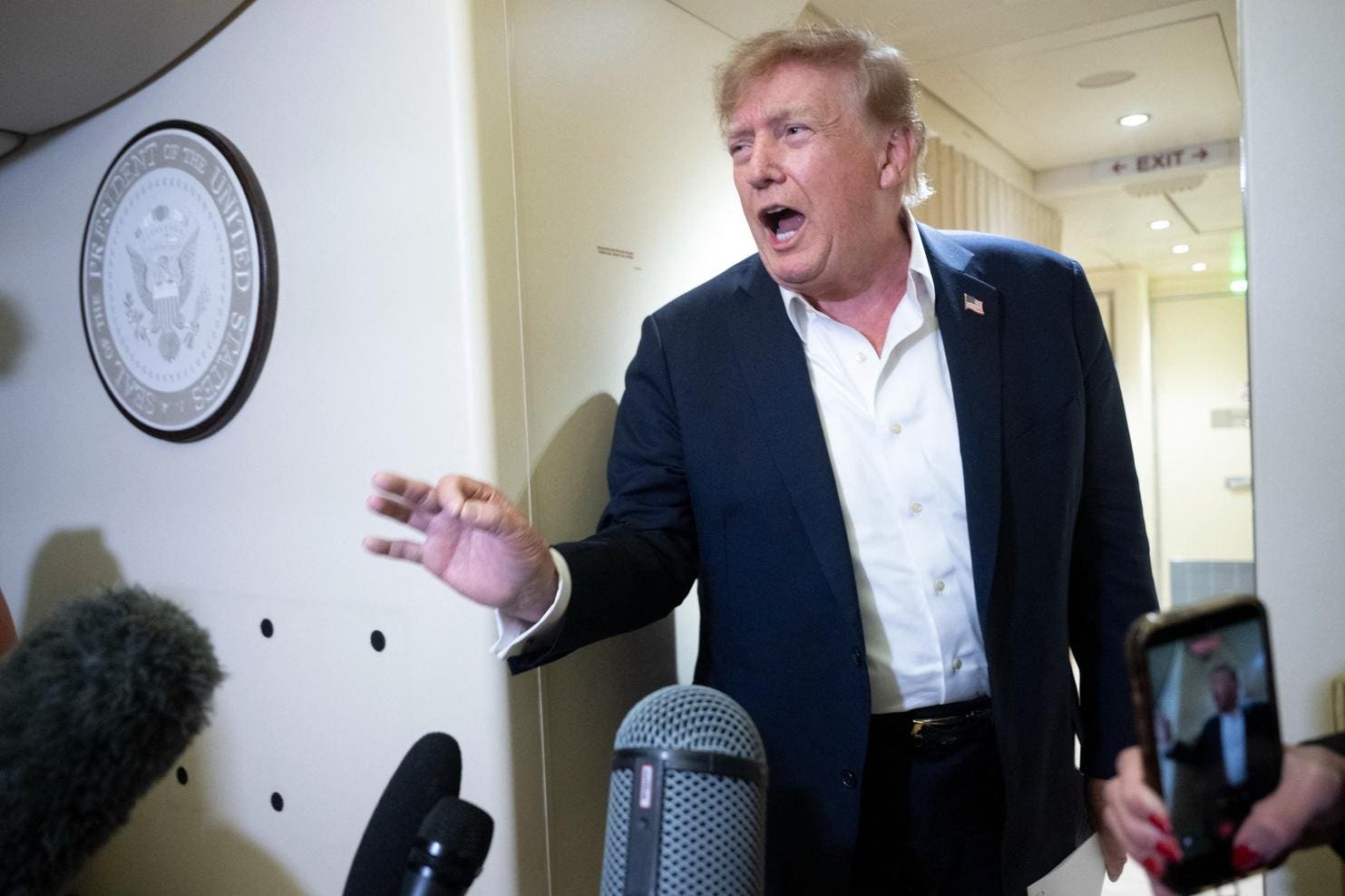
President Donald Trump lashed out against the Supreme Court on Tuesday for ruling against the U.S. Postal Service’s new policy on mail-in ballots, claiming the court was a “shell of its former self” in his latest attack against the 6-3 conservative court as it’s ruled against some of his signature policies.
By Alison Durkee
Key Facts
Trump responded on Truth Social on Tuesday after the Supreme Court ruled Monday against the USPS policy, which would have required state and local election officials to register voters in a new federal database in order to send out mail-in ballots.
The court ruled 7-2 to uphold a lower court ruling that paused the rule, meaning it will not take effect while litigation over the rule moves forward.
Trump called the decision “horrible” and “highly political” and alleged it “makes cheating … on Mail-In Ballots, a much easier thing to do,” even as evidence widely shows that voter fraud—through mail-in ballots or otherwise—is exceedingly rare.
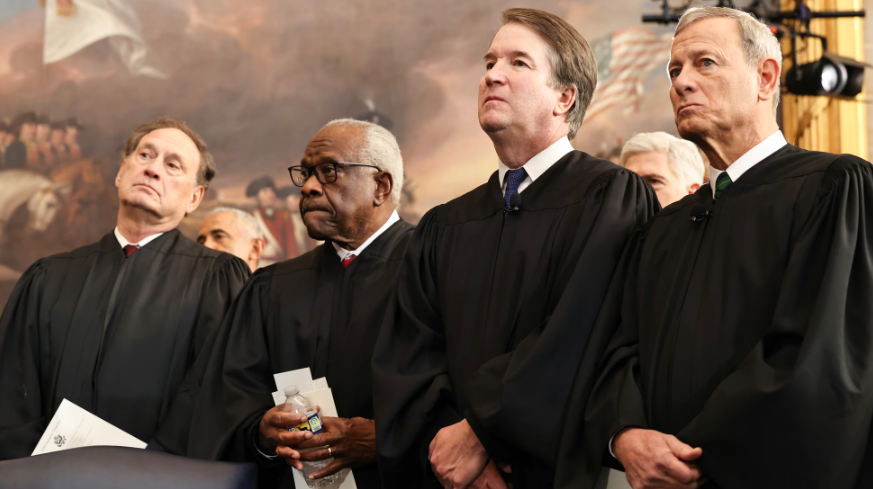
The president also attacked the court more broadly and the three justices he appointed to the bench—all of whom ruled against him Monday—writing, “These are not the people I interviewed to serve on the United States Supreme Court.”
The court is “merely a shell of their original selves” and “is costing the United States Trillions of Dollars with shockingly bad rulings that are of such magnitude that it won’t be easily possible for our Country to recover or heal,” Trump wrote.
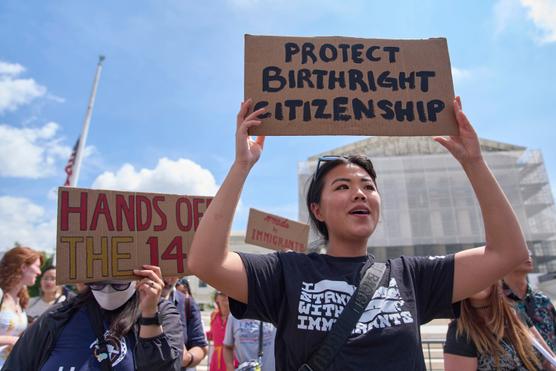
Trump’s tirade Tuesday was his latest attack on the court, after the president has previously slammed the court for striking down his tariff policy and executive order restricting birthright citizenship—criticisms he repeated again Tuesday, calling those rulings “horrible” and “a disaster.”
The court’s ruling Monday against the USPS rule was an unsigned opinion that argued the rule should remain blocked because the Postal Service was “unlikely to succeed” in its argument the agency has authority to implement the rule. Justice Brett Kavanaugh said in a concurring opinion he thought the USPS could have authority to implement the rule, but he sided with the court’s majority because “state and local election officials do not have sufficient time to reasonably implement the rule before the election.” Justices Samuel Alito and Clarence Thomas dissented and said they would have ruled in the government’s favor. Alito argued the Postal Service “has broad authority to regulate the mail,” and while he takes the issue of implementing the rule so close to the election “seriously,” the justice said that “is not enough to convince me to deny the application.” The court’s ruling means ballots will be sent through the mail from election officials to voters as normal, and averted the potential chaos that could have occurred if the rules had changed after some states had already started sending out ballots.
The USPS rule would have established a federal database ahead of the midterms that would have been mandatory to use in order for states to send out ballots for federal elections through the mail. State and local election officials would have had to submit voters’ names, addresses and a barcode associated with their account to the federal database, and if postal officials scanned a ballot and discovered it wasn’t cleared through the federal system, it would not deliver the ballot to the voter. An anonymous whistleblower warned that the system could result in widespread chaos, as the IT system created to support it was allegedly hastily implemented and could result in ballots being rejected en masse. The court rulings blocking the policy are only focused on the November midterm elections, and litigation is still moving forward to determine whether the policy is lawful and if it can be used in the 2028 election and beyond.
Chief Justice John Roberts has previously criticized Trump’s public attacks on the court and its justices, arguing personal attacks against the justices on the court are harmful as the president has repeatedly called out individual justices for ruling against him. While criticism “comes[s] with the territory” for the Supreme Court and lower courts, Roberts said at an event in March, it becomes “dangerous” when it moves “from a focus on legal analysis to personalities” of the individual jurists. “Personally directed hostility is dangerous and has got to stop,” Roberts warned.
While Trump has attacked the court for repeatedly ruling against him, the 6-3 conservative court has often ruled in his favor in his second term. A SCOTUSblog analysis of the court’s rulings in 2025 found the high court had sided with the Trump administration in 20 different cases on the court’s “emergency docket”—meaning cases they ruled on without hearing oral arguments first—versus only four decisions against him. The court has also issued multiple major rulings in Trump’s favor, such as limiting lower courts’ ability to block the president’s policies nationwide last year and ruling in June to give him far greater power over historically independent federal agencies.