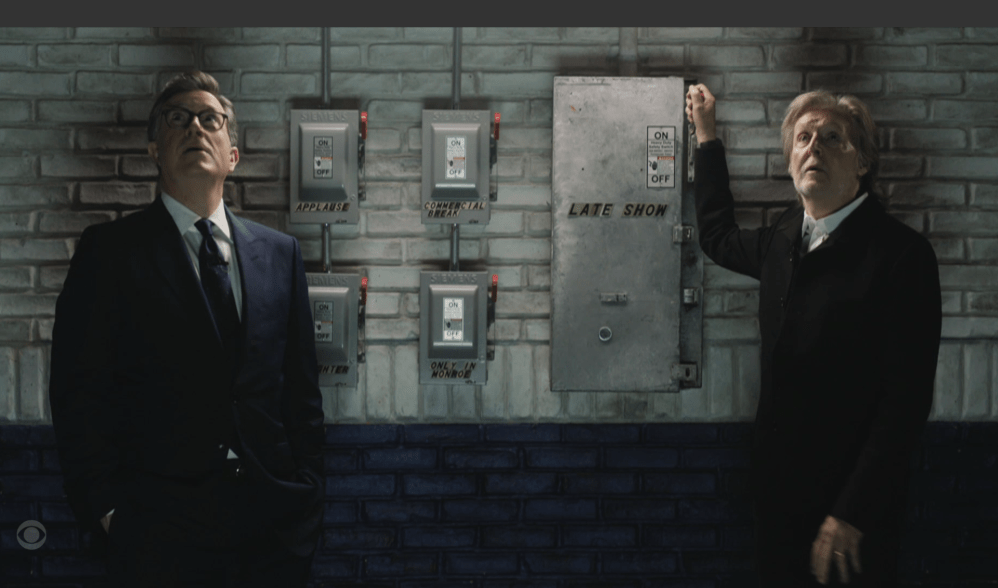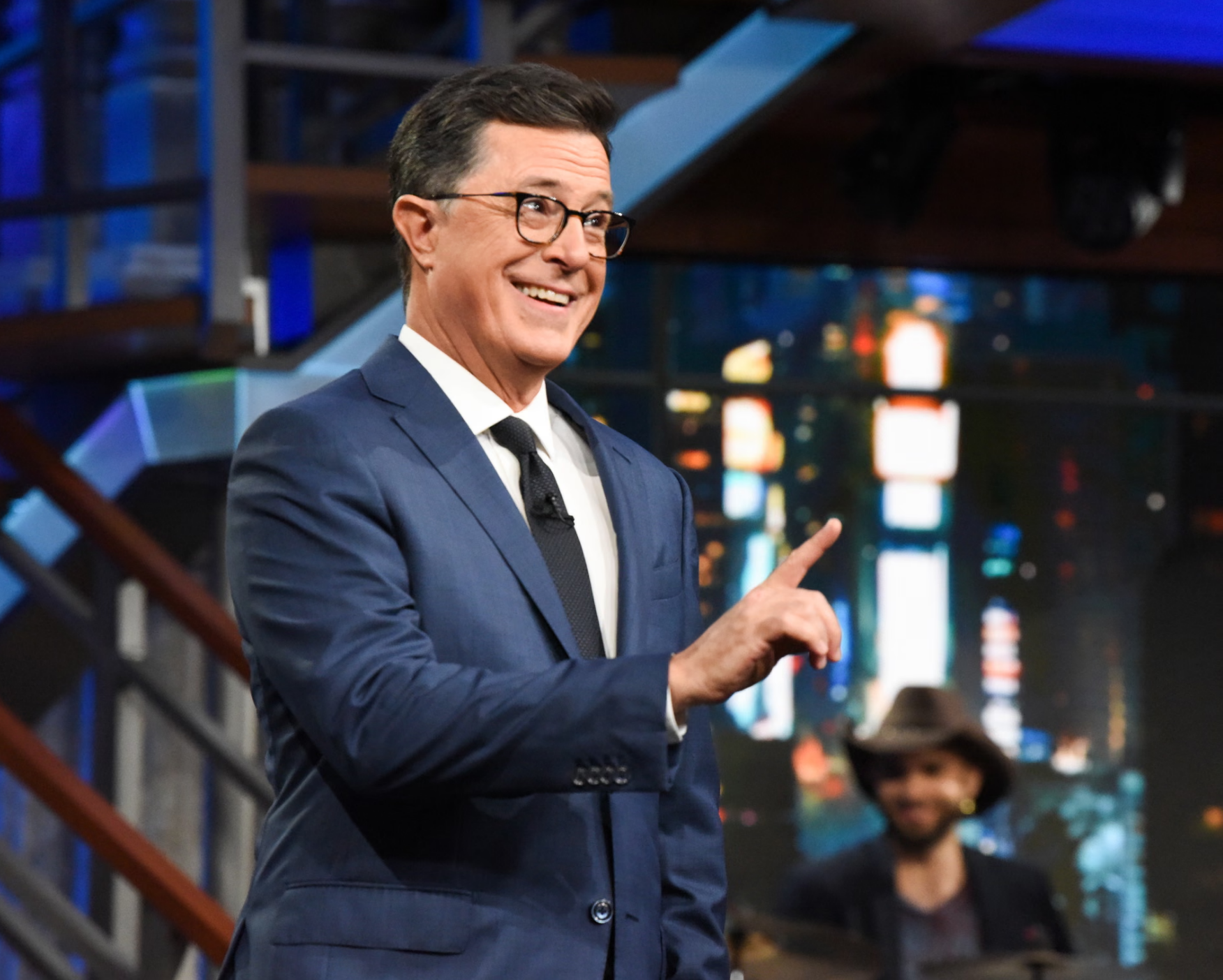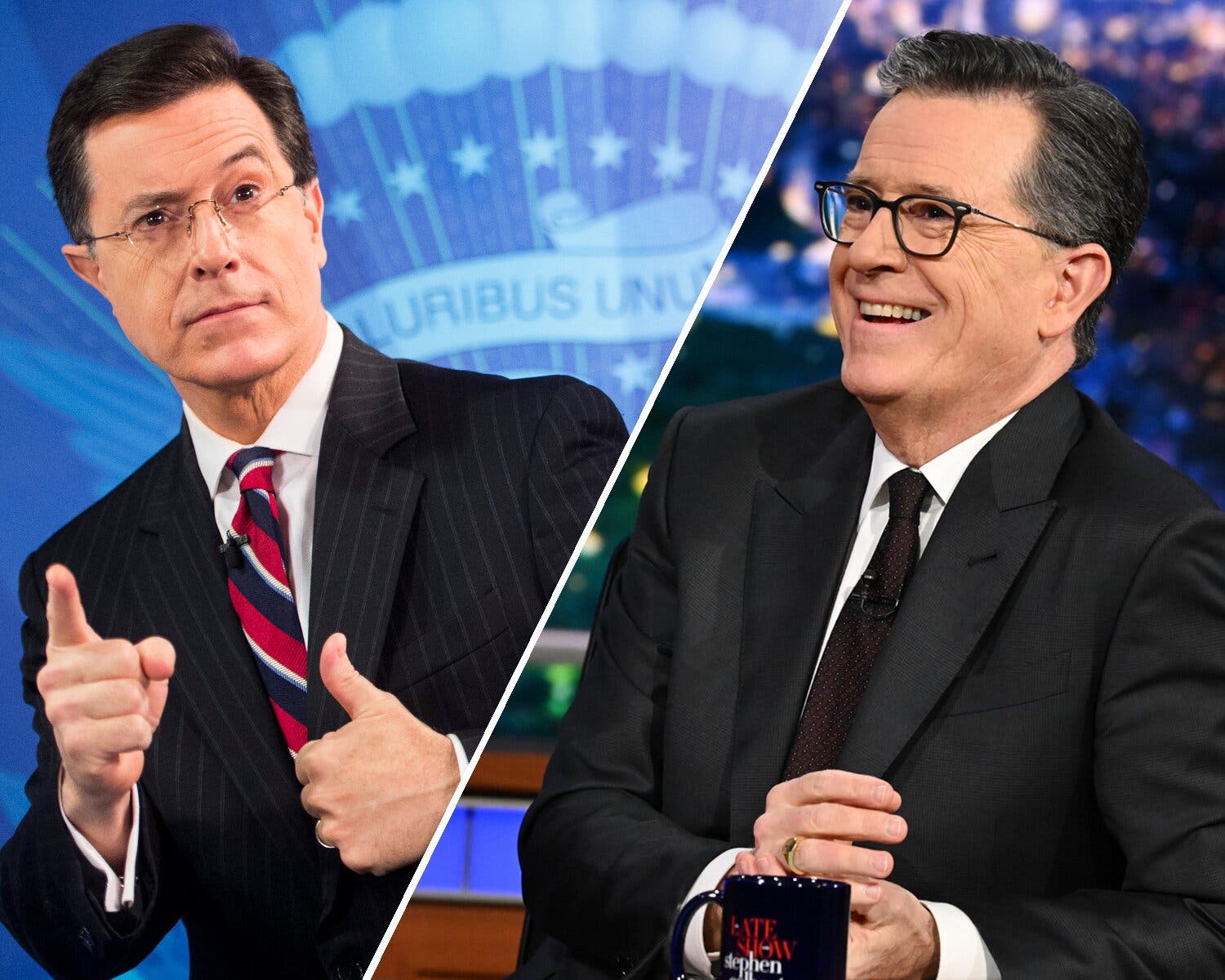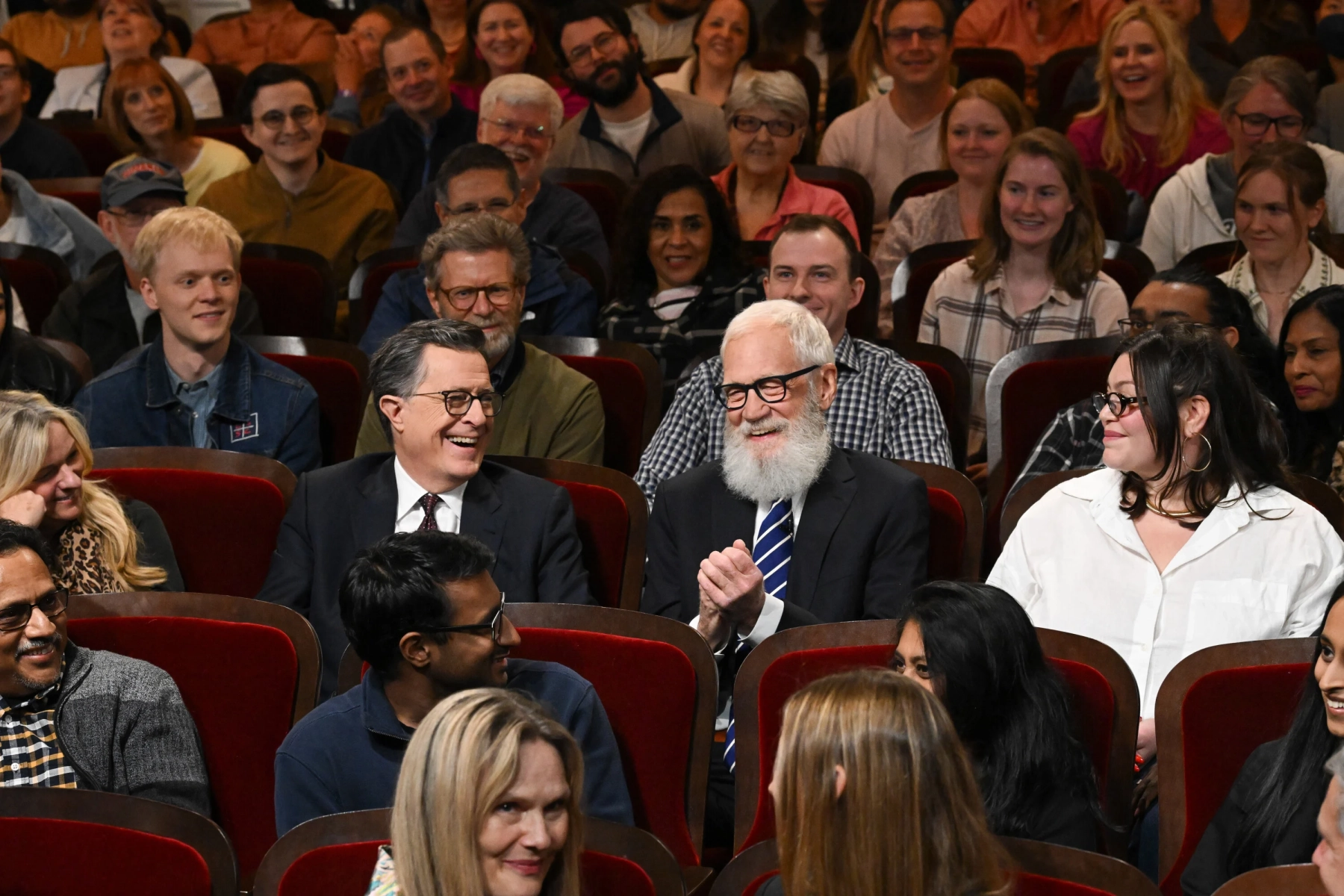

Our attachment to an institution may seem counterintuitive, especially with comedy, a rebellious art form. But with Stephen Colbert’s program, there was a lot at stake.
The final months of “The Late Show With Stephen Colbert” have followed a familiar script with a procession of celebrities getting a little sincere and paying tribute through sad songs and art projects.
John Lithgow read a celebratory poem titled “The Mighty Colbert.” Jake Tapper brought a painting of the host as a version of Gollum from “The Lord of the Rings,” a Colbert obsession. Nathan Lane sang a ballad called “Laughing Matters.” Jimmy Fallon and Billy Crystal each gave their spin on Sinatra standards.
Ever since Bette Midler made Johnny Carson sniffle with a farewell song, the long emotional goodbye has become its own late-night tradition, cloying to some, moving to others. It is enough of a recognizable trope to be a reminder that with CBS’s cancellation of “The Late Show,” we are losing not just Stephen Colbert, but also an institution. By the time of its May 21 finale, the program, believe it or not, will have been on the air longer than the Carson version of “The Tonight Show.”
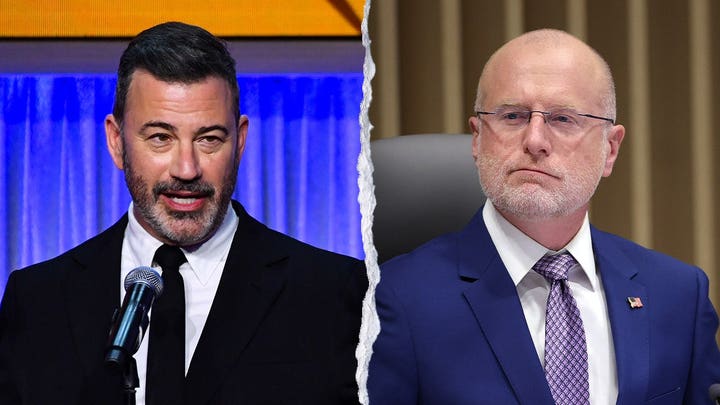
With CBS’s new owners under pressure to appease an administration with the authority to approve their buyout, the network could have replaced the host, but instead it got rid of the entire show. For context, the president has been calling for the firing of the host of “Jimmy Kimmel Live!,” the other longtime 11:30 p.m. alternative to “The Tonight Show,” the grande dame of late night.
It’s become unfashionable to defend institutions. Polls tell us that no one trusts them, whether in the news media, academia or politics. And what they evoke (order, stability) is anathema to the irreverent sensibility of comedians.

Asked about the decline of late-night shows, the former host Arsenio Hall told me that things always change, and that he’d prefer “The Tonight Show” be canceled than fade into irrelevance. When Conan O’Brien quit that NBC show in 2010 over a network push to move its time slot, arguing that it was better to leave than “damage” the franchise, Jerry Seinfeld poked fun at the idea of a late-night tradition. “How do you not get that this whole thing is phony?” he told the journalist Bill Carter, adding that talk shows were about the hosts, nothing more. “There’s no institution to offend.”
I have long been sympathetic to Seinfeld’s position, comically exaggerated as it may have been. A healthy art form requires dynamism and new blood. No institution ever made me laugh. And yet, as “The Late Show” approaches its end, I find myself as sentimental as the guests singing melancholy melodies. What exactly are we losing with the end of “The Late Show”?
TO BEGIN TO UNDERSTAND, it’s helpful to return to the beginning. It was fall 1993, and the late-night talk show was more culturally relevant, I’d argue, than at any point in history. The year before, “The Larry Sanders Show,” a classic TV series that satirized the genre with meticulous insider detail, premiered on HBO and Bill Clinton was elected president, his electoral prospects helped by playing the saxophone on “The Arsenio Hall Show.” The genre loomed so large in popular culture that the competition among hosts was regularly and unironically referred to as a war.

“The Late Show” was born out of a beef. David Letterman and Jay Leno, who both were regulars at the Comedy Store in Hollywood in the 1970s, badly wanted to succeed Carson as host of “The Tonight Show.” And when Leno got the job, Letterman left his program, which aired at 12:30 a.m. after “The Tonight Show” on NBC, signed a huge contract and decamped for CBS to create what we now consider an institution, one that competed directly against Leno. It was the talk-show equivalent of an 18th-century gentleman peeling off his glove and throwing it at the feet of his rival.
With the diminished state of late night in today’s fragmented culture, it might be hard to understand the passion behind this competition between men in suits joking at desks. But make no mistake: It was the Kendrick Lamar-Drake drama of its day. Late-night hosts defined sensibilities and inspired toxic fandoms. Take me, for example: Back then, on the cusp of college, I assumed anyone who preferred Leno was not worth knowing. To paraphrase the critic Kenneth Tynan’s review of “Look Back in Anger,” I doubt I could love someone who didn’t enjoy Letterman. This helps explain my lack of girlfriends.
For a certain class of callow comedy aficionados, Leno represented a meat-and-potatoes mainstream standup and the bland establishment, while Letterman carried an irreverent aesthete appeal, an ironist who delighted in formal experimentation, mocking his bosses and the conventions of the talk show.

“The Late Show” meant an earlier time slot for Letterman, but it signaled something broader than that, a test of public taste, a chance for justice to be served, a cause to get behind. The ’90s were a simpler time. The first time I went to New York without my family, it was to attend the taping of its 10th episode. I made this pilgrimage because I wanted to see my favorite talk show but also — I cringe typing this — it felt important. What I recall is less the jokes or the performance by Robert Plant so much as the hothouse atmosphere. The line outside had the feel of a Taylor Swift concert. The crowd responded to every joke at a fever pitch. I was surrounded by fellow true believers.
STEPHEN COLBERT IS a very different performer from Letterman, but when he got the job as Letterman’s successor at “The Late Show,” it represented a kind of continuity. He also inspired comedy-nerd passion and stood out as a performer with ambition. Letterman put on what was considered an anti-talk show, a stark contrast to “The Tonight Show,” even down to putting the desk on the opposite side of the stage. Colbert had done something similar at Comedy Central: he followed the righteous voice of “The Daily Show” with a coolly virtuosic spoof, “The Colbert Report.” Like Letterman, he reinvented a form by mastering the art of saying the opposite of what he meant.
Since it was built in opposition to its NBC rival, “The Late Show” was both an institution and anti-institutional. Colbert kept that dual spirit alive. Colbert put on a more traditional show than “The Colbert Report” but found eccentric ways for “The Late Show” to express his personality, whether that be his habit of reciting poems by heart to movie stars, his loving interview with Stephen Sondheim or a monologue delivered from his bathtub.
The most obvious way “Late Show” remained counterprogramming involved current events: while “The Tonight Show,” led by Jimmy Fallon since 2014, has aimed for light apolitical fare, Colbert has responded to our moment by becoming forceful in his comic attacks on President Trump. The cancellation of Colbert’s show right before a deal that needed government approval has given his exit an additional resonance. In recent months, Colbert has leaned into Democratic political guests like James Talarico, Elizabeth Warren and (on May 5) Barack Obama.
Talk-show hosts like Letterman have always made fun of presidents, network executives, bosses. Some think Colbert became too partisan and predictable to be funny, but even if true, this was an attempt to not just engage with our politicized era, but also to fill the role of topical host. In a recent GQ interview, Colbert said he was more conservative than people think. I believe him.

The case for institutions is usually framed as preserving stability, reliability and other virtues that clash with what audiences want from comedy. But sometimes you need the stodgy power of institutions in service of irreverent art. They allow artists to reach new audiences and take risks they wouldn’t otherwise.
Among television comedy institutions, “The Daily Show” has proved to be a sturdy format that can support and boost many different hosts and correspondents. Then there’s “Saturday Night Live,” whose success can be attributed to its ability to reinvent itself while preserving an essential DNA. Morgan Neville’s new documentary, “Lorne,” makes the argument that the “S.N.L.” producer Lorne Michaels has protected artists in ways that will be difficult when he is gone. As evidence, the shows that Michaels produces (“S.N.L.,” “Late Night With Seth Meyers” and “The Tonight Show Starring Jimmy Fallon”) haven’t even appeared to buckle to political pressure unlike the programs on ABC and CBS.
CBS claimed it canceled “The Late Show” for financial reasons, and it’s true that it was a more expensive production than Letterman’s version, let alone the bare-bones podcasts of today. The huge amounts of attention and fervor created by the drama between Leno and Letterman that gave birth to “The Late Show” helped justify the scale and budgets of late-night television. When Letterman moved to CBS, he put on a less scrappy, more costly show, which decades later made it more vulnerable to bean-counting budget-cutters. The future of late-night will look more like a video podcast, and it’s hard to imagine the big-show aspect returning.
Look at the replacement. Byron Allen’s “Comics Unleashed” is as cheaply made as possible. It’s a panel of stand-ups peddling their jokes. CBS didn’t program this show. It leased the time slot to Allen, who is in charge of selling his own ads. This is the most low-risk, low-reward option the network could have taken. It can’t lose money or make much cultural noise with “Comics Unleashed.” Norm Macdonald once described appearing on the show this way: “You could not have been more leashed.”
When I asked Letterman about the end of his show, he sounded concerned about Colbert but initially cleareyed about change. The institution he created mattered less to him than the people. “It’s always the person, the personality, and then everything else,” he told me by phone, adding that he followed in the footsteps of others on CBS like Merv Griffin. And yet, when asked if he could imagine the end of “The Tonight Show” on NBC, he reacted quickly. “Absolutely not,” he said.

Letterman was a teenager when Carson started hosting “The Tonight Show,” around the same age I was when I started watching Letterman. Perhaps the power of a long-running show is that your connection to it evolves over time — and if that attachment began in childhood, it is more likely to endure.
There’s clearly an emotional connection that fans have to longtime showbiz institutions, but is it only that? The debate over whether Colbert was canceled for business or political reasons gives short shrift to the technological explanation. I don’t just mean how the internet added competition or incentivized virality over ratings. The ideology of Silicon Valley, the source of the fortune that bought CBS, is rooted in a faith in disruption.
But the theory of moving fast and breaking things can be reckless as well as contrary to sound business logic. Holding onto tradition can actually be far more hardheaded, relying on the value of nostalgia and brand names. Moreover, if there’s one thing we’ve learned over the past few decades of digital revolution, it’s that institutions are much easier to destroy than build.