

The son of Rob Reiner and Michele Singer Reiner, now arrested in connection with his parents’ murder, was outspoken about his addiction
By Sara Ashley O’Brien, Ellen Gamerman, John Jurgensen
Nick Reiner’s struggles with his family started long before he was arrested in connection with the murder of his parents.
As a teenager, he fell into drug addiction. An interventionist got involved for the first time when he was “like 14” to try to set him on the right path, he said in an interview on “Dopey,” a podcast about substance use and recovery. Over the years, he spoke on the podcast about being in and out of rehabs at his parents’ urging; his parents seeing him do cocaine and heroin; and the occasion when his father, the famed director Rob Reiner, tried to console his son after he woke his parents up during an acid trip.
“I’ve got a spit-polished older brother who looks like me, but just does everything right. And I have a sister who just went off to college,” Nick said on the podcast in 2016, the same year he and his father were jointly promoting their film, “Being Charlie.” He said he didn’t go to high school or college. Instead, he went to “a wilderness program in Utah,” rehab facilities and even lived on the street.
“The question I love to hear is, ‘I mean you come from a background like this, how could you ever get into drugs?’” Nick, then 22, said on the podcast. “It’s like, well gee, I mean, I don’t even know where to start.”
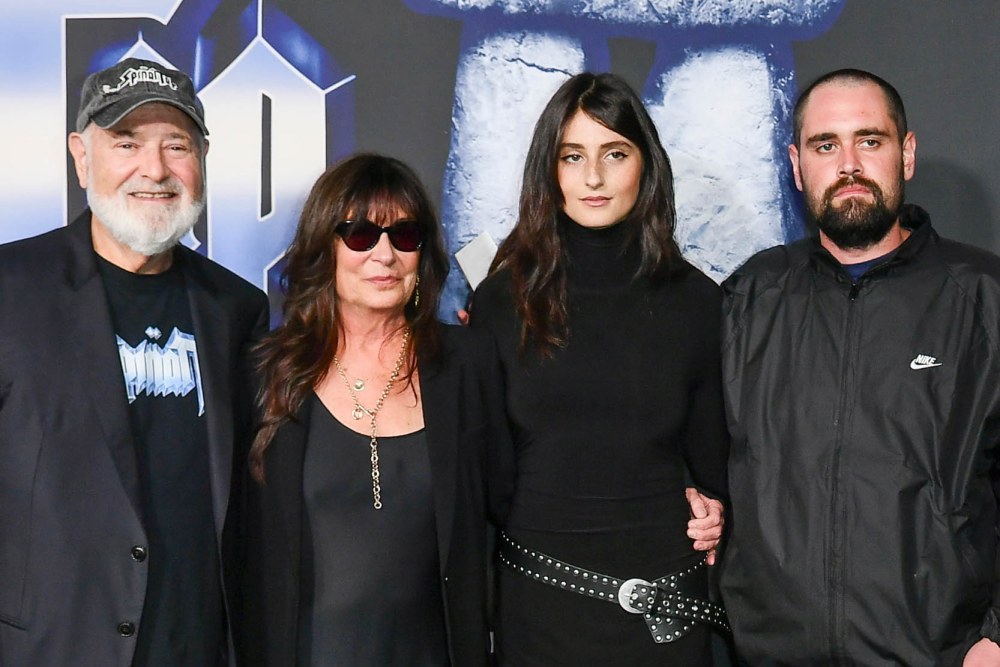
Raised in Los Angeles by filmmaking royalty, Nick has faced a long, private struggle cast under the spotlight of celebrity. He and his director father even made a scripted movie together based on his experience with drug addiction, “Being Charlie.” At the time, collaborators saw a supportive relationship between father and son. They did not anticipate the turn the Reiners’ story would take: Nick Reiner was arrested on suspicion of murder in the deaths of his parents, the Los Angeles Police Department said Monday. Rob Reiner and Michele Singer Reiner’s bodies were found in their Brentwood home on Sunday.
Nick Reiner is in custody with no bail, according to the LAPD. A representative for the Reiner family did not immediately respond to a request for comment. The Journal could not determine if Nick had yet hired a lawyer.

“I thought he was a good kid,” said Douglas Shaffer, an executive producer on “Being Charlie,” co-written by Nick. “He was interested in trying to build a career in film. He was writing on other projects or creating new projects after the movie.”
“Being Charlie” co-writer Matt Elisofon first met Nick Reiner in a rehab facility where they were both in treatment, they said in a joint interview on podcast “Scripts & Scribes.” To entertain themselves, they used notebooks to scribble down funny or vivid things other people brought up in their treatment groups, they said.
Directed by Rob, “Being Charlie” tells the story of an 18-year-old drug addict who clashes with his successful father while cycling unsuccessfully through different treatment programs. In promoting the movie, the two talked about Nick’s history of addiction, which took over most of his teen years. The movie premiered at the Toronto International Film Festival in 2015 and had a limited theatrical release the following year.
Shaffer recalled Rob’s devotion to the project. “Rob really did the movie for his kid,” he said. Rob was by then a veteran in the industry, known for such classics as “The Princess Bride,” “When Harry Met Sally…” and “This Is Spinal Tap.” The filmmaker effectively worked on the roughly $2 million film without a director’s fee, Shaffer said.
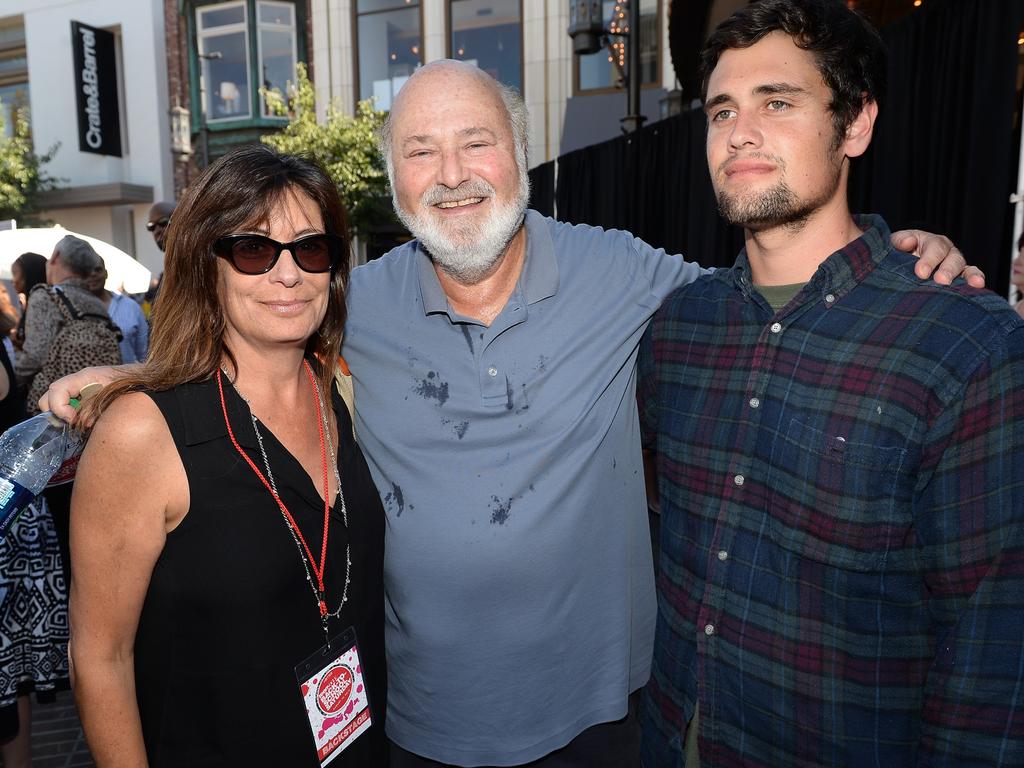
Rob Reiner and his wife Michele Singer Reiner were found dead in Los Angeles on December 15. The famed filmmaker was 78 years old. Photo: Andy Schwartz/Fotos International/Getty Images
Executive producer Blythe Frank described “Being Charlie” as “Rob’s love letter to his son. He was really trying to do everything he could to help Nick and understand the pain he went through.”
Nick, eager to work in Hollywood, was often on set. He continued to pitch ideas to Shaffer’s production company after the shoot, though the two did not work together again, Shaffer said.
“He seemed like he was totally clean and sober,” Shaffer said of Nick. “I didn’t see any crazy red flags at all. He seemed like he loved his dad.”
Rob would sometimes ask Nick for guidance on the parts of the story involving drug abuse. “Rob didn’t understand when people are dealing with addiction, that wasn’t something he fully understood,” said Shaffer. “He definitely leaned on Nick for a lot of information.”
Given past frictions between father and son, their collaboration on the film seemed bittersweet, Nick said on “Scripts & Scribes”: “He had never validated me about anything before, so that felt amazing.”

The film, shot in Los Angeles and Salt Lake City, was not about prestige or money for Reiner, Shaffer said. “You could tell that Rob loved his kid. He was trying to do right by him. He was trying to help him build a career. He wanted to work closely with his son. He was such a good dad to try to do what he can to help him, because he’d seen the low points his son had gone through.”
On “Dopey,” where Nick Reiner was a repeat guest, he spoke about the end of “Being Charlie,” which lands with a reckoning between celebrity politician David Mills (Cary Elwes), the father who has tried to keep his son’s troubles quiet while running for governor of California, and troubled child Charlie (Nick Robinson).
“I know you’re angry at me and you probably don’t want to hear this right now, but I do love you,” Charlie’s father says. “I’m sorry. Every expert with a desk and a diploma told me I had to be tough on you, but every time we sent you away to another one of those programs, I saw you slipping further away from us.” Charlie’s father implores his son—“tell me what to do”— and says he’d rather have Charlie alive and hating him than dead on the streets. “I don’t hate you,” Charlie tells him. The two share a brief emotional hug. The father, with his charmed life, has won his race. Charlie is last seen alone on stage, performing a comedy set to an appreciative crowd, and the credits roll.
On the podcast, Nick said that some people interpreted the ending to mean that the son gets sober, but then noted that the story is left open-ended.
In his early 20s, Nick criticized the addiction-treatment landscape, including Alcoholics Anonymous, which he said didn’t leave room for someone like him who was no longer shooting heroin or coke but also didn’t identify as perfectly sober. While doing appearances to promote the film, he said he’d smoke a joint on his roof afterward.

David Manheim, host of the “Dopey” podcast, said that he didn’t know Nick well but that he had left a good impression as “a sweet kid who meant well.”
“You hear so many incredibly positive things about their family that even if he was in the worst throes of addiction ever, I think he knew that he had given up this incredible family dynamic, which was hard for him,” Manheim told the Journal, calling the news “unbelievably tragic.”
He said he hasn’t spoken to Nick since 2018. Shortly after he appeared on the show, Manheim asked Nick if his father might be open to coming on the podcast. “I don’t think he loved that.”
On the 2018 episode, Nick said he lived for a time in his parents’ guesthouse and described the destruction that resulted when he was using drugs. He recalled one occasion when he was taking “uppers.”
“I was up for days on end and I started punching out different things in my guesthouse,” Nick said. “I think I started with the TV and then I went over to the lamp and…everything in the guesthouse got wrecked.” He described his mindset at the time as “crazy.”
Write to Sara Ashley O’Brien at sara.obrien@wsj.com, Ellen Gamerman at ellen.gamerman@wsj.com and John Jurgensen at John.Jurgensen@wsj.com
Appeared in the December 16, 2025, print edition as 'Son’s Struggles Have Long Been Under a Spotlight'.