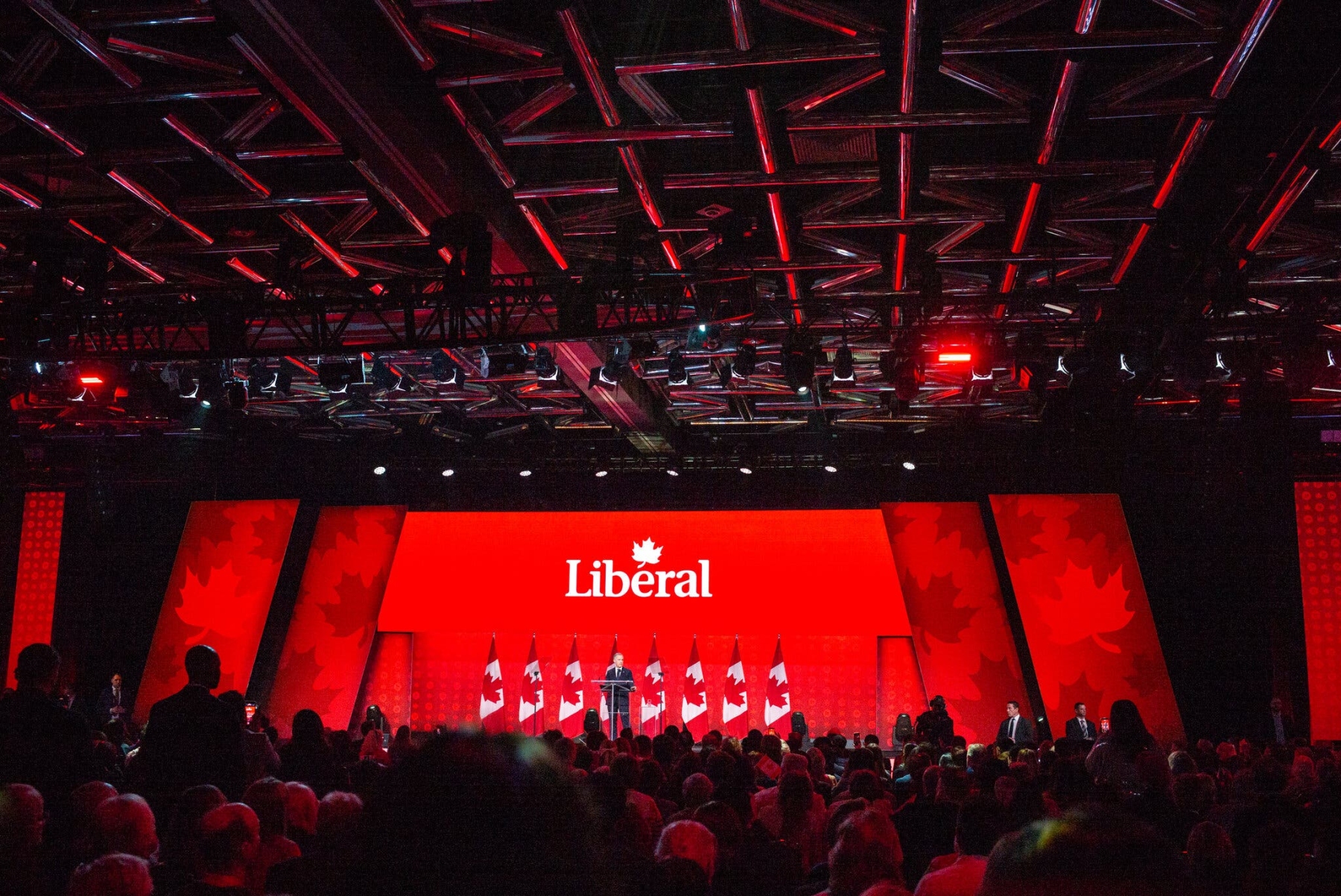
Carney Seals a Majority and Remakes Canada’s Liberal Party
The rising star in global centrist politics has secured a majority in the Canadian Parliament. Critics are crying foul.
By Matina Stevis-Gridneff, Reporting from Toronto
It’s Mark Carney’s Canada now.
One year, almost to the day, since the stunning electoral win that made him prime minister but still left him a few parliamentary seats short of an outright majority, Mr. Carney on Monday completed his plan to clinch control.
In so doing, he secured his dominance at home, shielding his government from the vagaries of a minority government.
He will now be able to more easily pass budgets and other crucial bills to advance his ultimate goal of making Canada more independent from the United States. His majority will insulate him from parliamentary challenges, even if some of his big plans, such as trade talks with the United States, do not go fully as planned.
If Mr. Carney can keep his majority together, he will not even need to hold an election before 2030.
How he got here was not pretty.
The Liberals won all three special elections on Monday. In the months before, Mr. Carney had lured five opposition lawmakers — four Conservatives and one from the leftist New Democrats — to “cross the floor” (or, in American terms, “cross the aisle”) and join his party.
Some hold positions far from traditional Liberal policies and had been sharply critical of Mr. Carney before flipping sides, sparking complaints that the defections amounted to cynical, self-interested betrayals of voters’ preferences.
Still, even if it has been messy, Mr. Carney has now completed the remaking of the Liberal Party as his own. He has moved it rightward to the political center and turned it into a “big-tent” that includes a motley crew of progressives, environmentalists, social conservatives, former bankers, like himself, and others.
Mr. Carney’s methodical majority-building now leaves him unmatched in domestic power and recasts Canadian politics by usurping space on the right from Conservatives and freeing up space on the left for the small New Democratic Party.
The end result perfectly encapsulates Mr. Carney’s Canadian pragmatism to do what is needed to accomplish what is necessary: Help Canada grow and thrive with less dependence on the United States.
“People are quite happy with this purple version of a Liberal Party,” said Shachi Kurl, president at the Angus Reid Institute, a nonpartisan political research group. “It’s pragmatism, a business-minded ‘let’s get on with it’.”

Making Of A Majority
To fully appreciate Mr. Carney’s achievement, it is important to recount how we got here.
Mr. Carney last year inherited a broken Liberal Party from his predecessor, Justin Trudeau, who had been in power for 10 years and had shaped the party around his progressive politics. At that point, the Conservatives dominated polls.
But within a few weeks, President Trump’s menacing rhetoric toward Canada and Mr. Carney’s decision to enter politics and replace Mr. Trudeau after an international career in finan
UP NEXT