
A major global car company will cut 100,000 jobs and half its models in a controversial plan necessary for its survival.
UPDATED: Volkswagen will cut 100,000 jobs and slash production to help weather a “crisis” brought on by Chinese competition, the drive for electrification, and reduced demand for its vehicles.
The brand says it's a period of “intense” debate resulted in the need to make tough calls, including cutting half its model lines and reducing “offering complexity” by around 75 per cent. It means cars like the Volkswagen Polo, Golf, Tiguan and Amarok face an uncertain future.
And that, having already agreed to cut 50,000 roles from its workforce, a further 50,000 job cuts will have employees at across the broader VW Group – including Audi, Bentley, Porsche, Cupra, Lamborghini and Ducati – looking over their shoulder.

VW says the cuts represent “alignment of workforce capacity”, a so-called “workforce adjustment” that includes management roles.
Its chief executive, Oliver Blume, is adamant that “this is a strong sign for the future of the Volkswagen Group”.
“We are taking responsibility for our entire team, for our partners and for industrial jobs worldwide,” he says.
Over the coming years, we will invest a three-figure billion sum to make our iconic brands even more attractive, stronger and more competitive.”

The decision follows friction between Volkswagen management and unions as the automotive giant fights for its life.
The German carmaker is attempting one of the most drastic overhauls in the company’s history, with a hotly debated restructure plan that would double previously agreed job cuts and shut some factories.
Chief executive Oliver Blume has described Volkswagen’s situation as “more than critical”, calling the proposed shake-up “the biggest transformation plan in the history of the Volkswagen Group”.
Blume has been on a bad news tour, addressing media and workers at multiple plants and attempting to win support for the restructure.
“The global automotive industry is in a mega crisis,” Blume told Germany’s Bild. “And the Volkswagen Group is right in the middle of it.”
The Volkswagen Group is a complex organisation. Under its umbrella are brands like Skoda, Cupra, Audi, Lamborghini, Porsche, and Bentley.
Blume says the company’s size is part of the problem.
“We are outsized, often that makes us too slow and too complicated,” he told workers late last month.

Blume says the German carmaker is struggling to stay competitive amid tariffs, emerging Chinese car brands, and a softening demand for its cars.
But unions are strongly pushing back against the proposed plan.
Reuters reports that Germany’s largest union, IG Metall, told workers it will “oppose with all our might” changes made to the restructuring package negotiated less than two years earlier.
Under the tougher proposal now being discussed, reports say that Volkswagen would aim to cut as many as 100,000 jobs, slash the amount of cars it manufactures, and close as many as four plants in a bid to restore profitability.

But several competing stakeholders would first have to agree.
The Volkswagen Group has a shareholder structure that includes both government entities and billionaire family owners.
Volkswagen’s supervisory board will meet on Friday and vote on a revised plan. The last meeting in July failed to get the necessary support, with local media reporting the board rejected a proposal to shut four factories.
In Australia, Volkswagen also continues to struggle.
A decade ago, Volkswagen sold more than 60,000 vehicles locally. Last year, that figure fell to 28,970, down 20.6 per cent from 2024.

The slide has continued into 2026, with around 13,900 vehicles sold so far this year – a further 18 per cent decline compared with the same period last year.
But while the news internationally might be grim, Volkswagen says its business as usual in Australia.
“Even though you might hear the news from the headquarters, it doesn’t have any immediate impact on our group in Australia,” said Annette Moellhoff, senior communications manager at Volkswagen Group Australia.
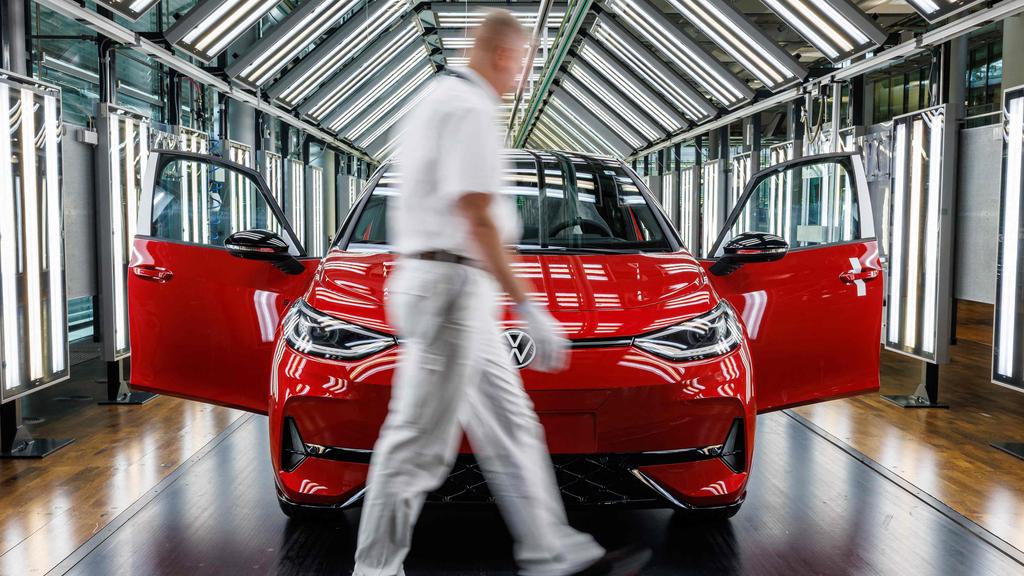
“We are excited for the future.”VW CEO Oliver Blume, right, leaves the VW plant in Zwickau after an event. The automaker's CEO is visiting the plant in Saxony this afternoon, amid the dispute over new cost-cutting measures at VW. (Hendrik Schmidt/dpa via AP)