
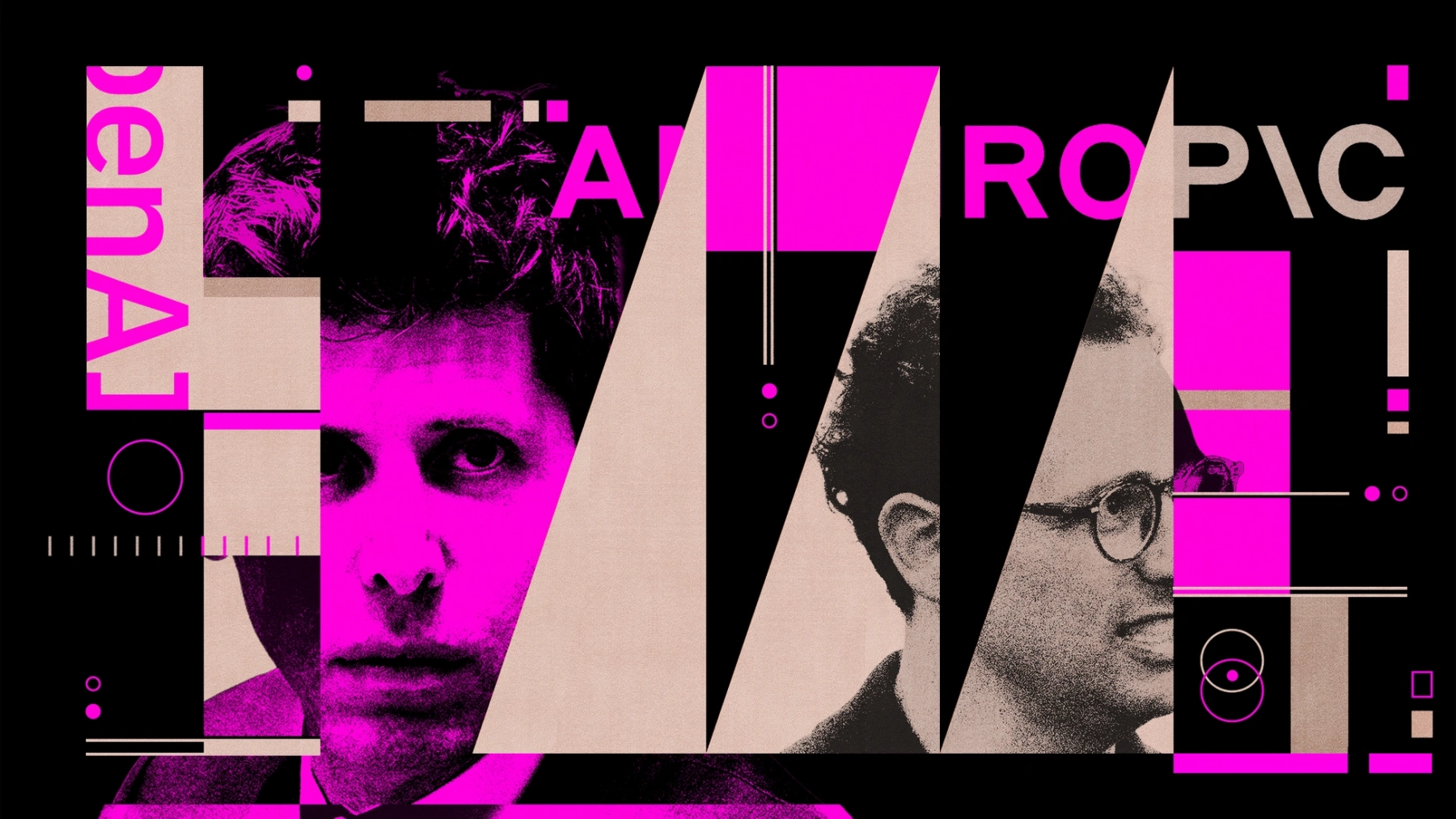
A new world has arrived. Dario Amodei and Sam Altman cannot stop fighting over it.
By Kevin Roos
Being in San Francisco in the mid-2020s sometimes feels like what I imagine living in Los Alamos was like in 1943, when the Manhattan Project rolled into town. The air is heavy with excitement and dread. Engineers toil, day and night, on systems of profound consequence. Wild-eyed prophets sell visions of a transformed world, and politicians drop in to check on the progress of the project. Everyone knows that the fates of nations, and trillions of dollars of capital, rely on what happens here, yet no one can fully appreciate what it would mean if the project succeeds.
One person consumed by this question is Dario Amodei, a Princeton-educated physicist who in 2016 left Google to join OpenAI, then a fledgling nonprofit AI research lab. He looked the part of a mad scientist, with round glasses and short brown ringlets that he twisted in his fingers whenever he was feeling nervous or thinking hard about something. He was known among his colleagues as a brilliant, bullheaded researcher with deep convictions about AI, which he often expressed by writing long essays that he circulated inside the company.
The most famous of these essays among OpenAI workers was a 26-page document titled “Big Blob of Compute.” Amodei wrote it in 2017, shortly after arriving at OpenAI, and it spelled out his grand theory of intelligence—how it emerged in nature, how it could be built into AI systems, and how it could be developed safely. Amodei’s hypothesis that machine intelligence was primarily a function of scale—that AI systems got smarter as they got bigger—steered OpenAI’s research agenda toward large language models, which Amodei saw as a promising path to artificial general intelligence, or AGI, a human-level intelligence capable of doing anything the brain can.