Voters are all but sure to make Flávio Bolsonaro the next president
AYEAR AGO bolsonarismo, the populist right-wing movement founded by Jair Bolsonaro, Brazil’s former president, was in the dumps. Mr Bolsonaro had been sentenced to 27 years in jail for plotting a coup after losing his bid for re-election against his nemesis, Luiz Inácio Lula da Silva, in 2022. The evidence was stark. Investigators found draft decrees that would have annulled the election and called a state of emergency, as well as a plot to assassinate Lula—as the president is known—using poison. Mr Bolsonaro’s conviction raised hopes that his radical movement would be put to rest and that Brazil would overcome the polarisation that has plagued it for almost a decade.

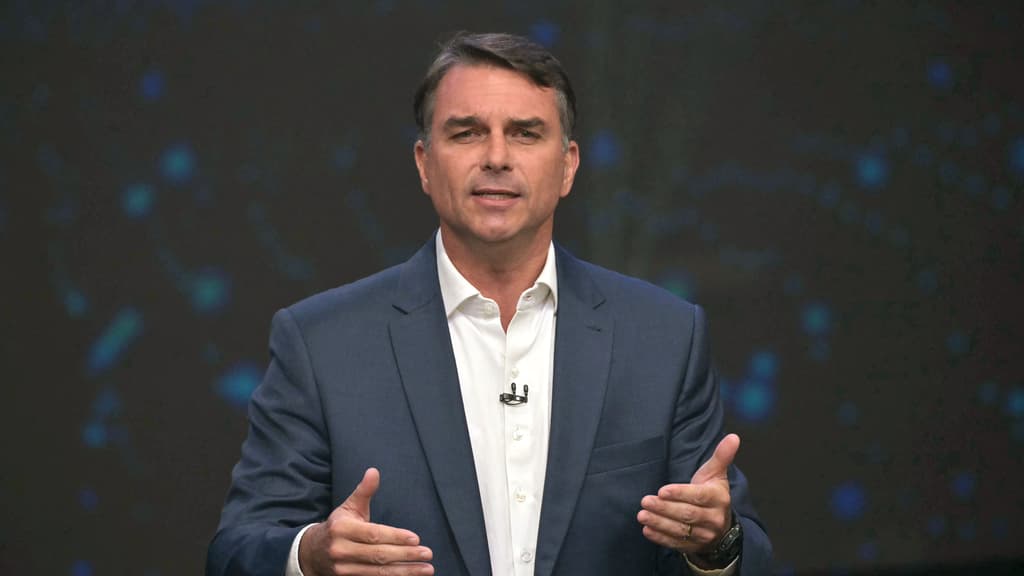
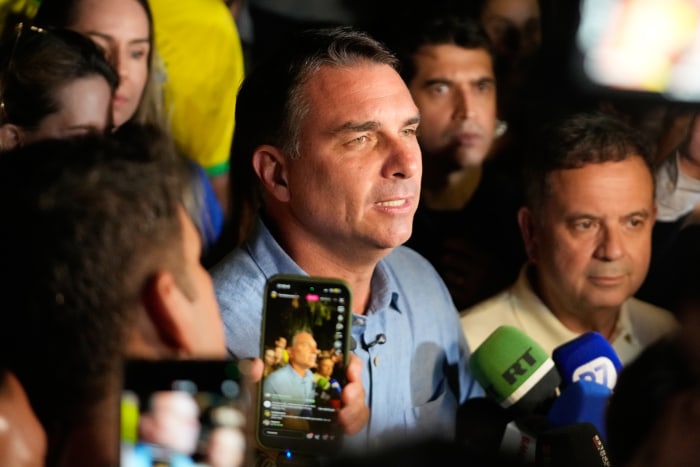
Instead, the Bolsonaro clan looks set to make a comeback. Unable to run for office, Mr Bolsonaro chose his eldest son, Flávio, to face off against Lula in the country’s general election this month. In the first round of the ballot, on October 4th, Flávio exceeded expectations, taking 47% of votes compared with Lula’s 45% (see chart). Since no candidate won more than half the vote, the election will go to a run-off on October 25th.
All signs point to a victory for Flávio. Since Brazil returned to democracy in 1985, no candidate who lost the first round of the election has won the run-off. The other candidates in the race, who received almost 8% of votes, lean towards the right. In Minas Gerais, Brazil’s most important swing-state and a bellwether for the country, Flávio won by five percentage points. Mr Bolsonaro’s Liberal Party more than doubled its seats in the Senate, to 28 out of 81. It also cemented its position as the biggest party in Brazil’s notoriously fragmented lower house. Almost none of Lula’s allies won new Senate seats or governorships.

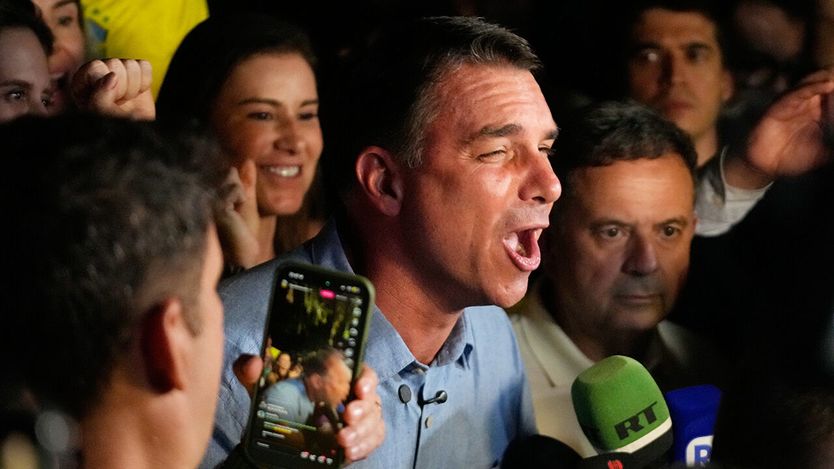
The evening was a triumph for the rest of the Bolsonaro clan, a cast of telenovela-like characters. Michelle Bolsonaro, Jair’s third wife and a God-fearing, plastic-surgery-loving evangelical Christian, will become a senator along with Carlos Bolsonaro, Flávio’s middle brother. The youngest son, Jair Renan, will become a federal congressman. Flavio’s main proposal is to pardon his coup-mongering father, who is serving his term under house arrest because of an old wound. He also wants to pardon his brother, Eduardo, who lives in self-exile in Texas. Eduardo was sentenced to four years in jail in absentia for trying to unduly influence the prosecution of his father by lobbying Donald Trump to apply sanctions on the judges who sentenced him.
The vote was marked by widespread disenchantment. The front-runners did not attend a single television debate. Interest in the election was low. Over 33m of 158m eligible voters did not turn up, an abstention record since Brazil’s return to democracy. In polls the week of the ballot almost a third of voters said they did not know whom they would choose. Outside a polling station in an upscale neighbourhood in Rio de Janeiro, one gloomy-faced 24-year-old described the election as having “a funeral atmosphere”. “It’s about choosing the lesser evil,” shrugged his friend.
The soul-searching begins
Brazilians are tiring of Lula, who is serving his third term in office and is almost 81 years old. His Workers’ Party (PT) has been in power for 18 of the past 24 years. A former trade union leader from Brazil’s poor hinterlands, Lula has failed to connect to younger Brazilians, particularly men, who tend to prefer gig-work to union jobs and dream of being entrepreneurs rather than depending on government handouts. The PT remains scarred by two gigantic corruption scandals that erupted during its previous terms. One investigation landed Lula in jail for corruption for one and a half years, though his convictions were overturned in 2021.
Since he left prison, Lula’s inner circle has shrunk. It is now filled with yes-men who avoid speaking hard truths. His underlings praise him as the greatest statesman Brazil has ever had. They list his past achievements and his gritty life-story in which he rose from his famine-prone hometown to the presidency. But on the campaign trail he has offered little vision of the future. The disconnect was clear on Sunday night. “I confess I thought I’d win in the first round,” said Lula, despite all polls showing there would be a tight run-off.
Lula was also harmed by unhappiness over the economy. Many voters have not forgiven the PT for a catastrophic recession during the government of Dilma Rousseff, Lula’s hand-picked successor, in the early 2010s. In Lula’s third term, the government’s spendthrift policies have resulted in a loss of fiscal credibility. Interest rates have rocketed, raising debt costs for households, businesses and the government. A sense of stagnation prevails, despite modest real gains in income and record-low unemployment. “A kilo of meat isn’t worth a day’s work anymore,” complains Maria Moura, a 22-year-old housewife in Vidigal, a favela in Rio de Janeiro. “The bills only rise, and the debts only increase.”
Lula, who scraped to victory in 2022 against Mr Bolsonaro senior, may have misunderstood his mandate. “Centrist voters felt betrayed by the PT,” says Magno Karl of Livres, a liberal think-tank in São Paulo. “They voted for Lula in 2022 believing in the idea of a broad coalition, thinking that the government would spend less, would listen more to other parts of society and would not demonise criticism—but it didn’t happen.” Though some centrists stuck with Lula, others plumped for spoiler candidates or abstained.
A grubby corruption scandal hovered over the election, feeding anti-establishment sentiment. At its centre is Daniel Vorcaro, a banker who is accused of orchestrating the biggest bank fraud in Brazil’s history. He made a name throwing extravagant parties to which he invited models, prostitutes, the country’s top politicians and members of the Supreme Court. (Mr Vorcaro denies wrongdoing.)
Despite Lula not being directly implicated in the scandal, it has rubbed off on him, since he is closely associated with Alexandre de Moraes, a Supreme Court judge linked to Mr Vorcaro, who also oversaw the prosecution of Mr Bolsonaro. A poll in mid-September found that voters were more likely to punish Lula than Flávio for the corruption scandal.
Disgust for the Supreme Court was clear the week of the election in Curitiba, the capital of Paraná, a bolsonarista stronghold. Giant posters showed justices dressed as inmates and standing behind bars, while one montage of dolls dressed as the judges depicted them being lynched. Mr Bolsonaro will now have just enough allies in the Senate to form the two-thirds majority needed to impeach Supreme Court justices.
Lula still has a slim path to victory. He would need to increase turnout and lure votes from the smaller presidential candidates. He could benefit from the advantages of incumbency by increasing handouts or passing popular bills before the run-off. As the man who has accumulated the most votes in Brazil’s history, he could still beat the odds. Yet the climb is steep.
Change looks more likely. “I have no illusions that he isn’t corrupt,” says Ana Paula, a 65-year old businessman in São Paulo who voted for Flávio. “But I don’t want to continue with what we have now.” Voters like her may get something more radical than they bargained for.
Sign up to El Boletín, our subscriber-only newsletter on Latin America, to understand the forces shaping a fascinating and complex region.