Brazil’s 159 million voters face a choice that could determine the Amazon’s survival – and it could have global repercussions too.
Jamie Seidel
Brazil’s presidential showdown is about far more than just Brazil.
It’s about US President Donald Trump’s “America First” doctrine.
It’s about the shape of global governance.
It’s about the Amazon Rainforest’s destiny.
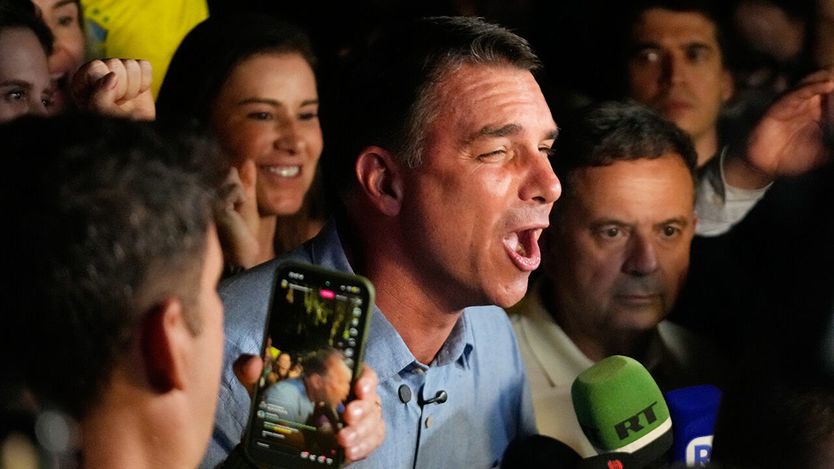
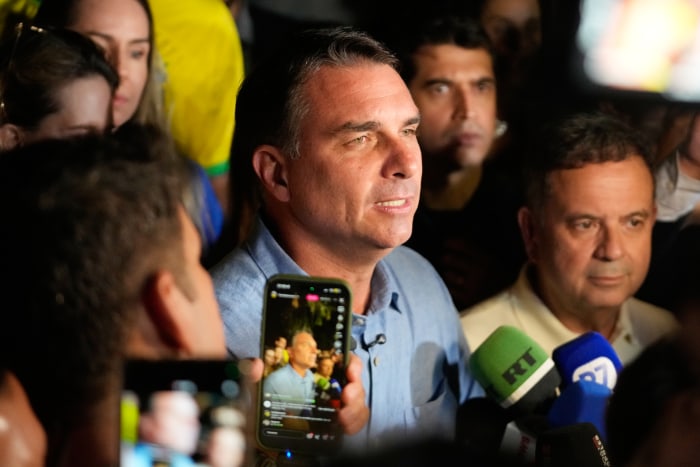
President Luiz Inácio Lula da Silva and Senator Flavio Bolsonaro square off at the polls this Sunday.
It’s a bitter fight between polarised visions of the future.
Incumbent President Lula, 81, is a former union leader who survived an insurrection attempt in 2022.
Aspirant president Flavio Bolsonaro, 45, is the son of the man who led that coup in a failed bid to retain power.
Former president Jair Bolsonaro, 71, is in jail. And he’s Donald Trump’s preferred candidate.
It all presents an impossible choice for Brazil’s 159 million registered voters.
The two candidates are reportedly neck and neck in the final days of campaigning.
The winner will take control of Latin America’s most powerful economy.
A Bolsonaro victory would likely strengthen US influence in the region. He has a strong relationship with its mercurial President.
He’s sworn to release his convicted father.
He’s promised to end logging restraints.
He insists climate change isn’t real.
A Lula win would produce the opposite. He’s been steadily working towards a new strategic relationship with China and Europe.

He’s up against a hostile Senate and crisis-torn Supreme Court.
He wants to keep Brazil’s oil reserves in Brazil’s hands.
He’s produced a dramatic cut to illegal rainforest clearing.
Which choice do Brazilians prefer?
“Three feelings predominate: resentment, anger and political fatigue,” says Professor Sergio Abranches of the Universidade Federal do Rio de Janeiro.
“Anger stems from the fear of losing what one has and from the aversion generated by feeling neglected by the political leadership in power. Under affective polarisation, it turns into hatred.”
Amazon primer
The Amazon is the world’s largest and most biologically diverse tropical rainforest. Some 60 per cent of its expanse falls within Brazil’s borders.
Between August 2025 and July 2026, some 3335 square kilometres were illegally clear-cut.
That sounds like a lot. It is.
But it’s also 42 per cent less than for the previous year – 5731 square kilometres. That’s the best result in 41 years.
The measurement comes from Brazil’s space research agency, Inpe. Brazil’s anti-logging authorities have had their powers significantly boosted in recent years.
“Our goal is to achieve zero illegal deforestation by 2030,” President Lula stated in a social media post.
Flavio Bolsonaro has a different solution to illegal logging. He wants to make it legal.
His father fired his then-director of the Inpe agency for deforestation “lies”.
“If Flavio Bolsonaro follows his father’s approach, he will likely reduce the enforcement capability and, with congressional support, further loosen environmental licensing and forest protection regulations like Brazil’s forest code,” says Chatham House environment and society analyst Ana Yang.

“But the country’s low-carbon transition will be harder to reverse.”
Brazil is well placed to capitalise upon green energy.
It has hydropower from mountain dams. Wind in valleys and along broad coastline. Space for solar farms. And plenty of (often illegally cleared) farmland to produce biofuels.
“These sectors are supported not only by climate policies but by competitive costs, growing electricity demand, existing infrastructure, private investment and powerful domestic industries,” Ms Yang adds.
The catch is oil.
Both President Lula and Flavio Bolsonaro want to cash in on soaring prices.
The biggest question is who will get to exploit the national reserves, by how much – and whether or not this will include forested Amazon land.
Apathy rising
“If Bolsonaro becomes president, Brazil will join the right-wing wave sweeping across Latin America,” says Chatham House’s Ms Yang.
Last month’s presidential run-off produced an unexpected result.
Flavio Bolsonaro secured 47 per cent of the vote. President Lula won just 45 per cent.
But it’s not as clear-cut a victory as it may seem.
Voting is compulsory for all Brazilians aged 18 to 70.
Some 33 million of them still didn’t bother to show up.
That’s 21 per cent of the entire electorate.
“Mostly domestic factors — including frustration with the economy, a growing sense of insecurity, and yet another major corruption scandal — are opening the way for a return of the Bolsonaro family to power,” argues Stimson Centre analyst Roberto Simon.
“Far-right parties made major gains in Congress and in gubernatorial elections, including in Sao Paulo and Rio de Janeiro. Jair Bolsonaro’s wife and two of his sons, Carlos and Jair Renan, won congressional seats. It was a remarkable turnaround for a former president under house arrest for attempting a coup d’état.”

September’s poll outcome, however, has stirred the population.
Some have been inspired. Others dismayed.
According to some estimates, millions of excited supporters from both sides took to the streets last weekend to demonstrate their allegiances.
Sunday’s vote is now expected to be as close as the 2021 race that prompted Jair Bolsonaro to reject the result.
President Lula’s pitch rests on his economic and social policy performance. He promised continued national development funds for Brazil’s states, new income-redistribution policies, and stronger welfare programs.
President-aspirant Bolsonaro is campaigning on a traditional conservative agenda. He’s promising tax cuts, looser corporate regulations, and a get-tough-on-crime campaign.
“The main question that lies ahead is: would a potential mandate from Flavio Bolsonaro differ significantly from his father’s? Or can Lula still pursue his agenda in the face of such an adverse governing framework in 2027?” asks Royal United Services Institute Latin Americas analyst Dr Daniela Portella Sampaio.Foreign affairs
Mr Trump has declared he’s watching Brazil’s election “very closely”. He calls the outcome “very important”.
He’s not openly backed either candidate.

But he’s made his choice clear.
“He is not guilty of anything, except having fought for THE PEOPLE,” Mr Trump posted to Truth Social last year. “LEAVE BOLSONARO ALONE!”
Mr Trump called his son’s run-off results “a very, very big victory. Amazing, actually”.
He also invited the conservative candidate to visit the White House in May.
Mr Bolsonaro has since embraced the President’s offer to join a “Shield of the Americas” economic and defence bloc.
President Lula, for his part, has dismissed the “Donroe Doctrine” proposal as yet another attempt to “colonise” Brazil.
His relationship with President Trump is rocky, at best.
Last year, the White House attempted to impose 25 per cent tariffs on Brazil’s exports. President Lula called the conditions this imposed an “attack” on Brazil’s “sovereignty”.
Earlier this year, the State Department suspended the visas of several government officials and sanctioned Supreme Court Justice Alexandre de Moraes. They accused the Lula government of “warfare” against the Bolsonaro family and obstructing US companies, including Mark Zuckerberg’s Meta and Elon Musk’s X.
Earlier this week, Brazil’s court gave Meta just 24 hours to prove it was complying with equal electoral media coverage laws. It threatened to impose a daily fine of $US200,000 if it did not.
That followed allegations from President Lula’s campaign that Meta’s “algorithmic manipulation” was throttling their posts while promoting those of the Bolsonaros.
Meta said a “technical error” caused the deactivation of some Lula campaign ads.
Questions also surround the activities of a lobby group with ties to US Vice President James Vance.

He co-founded a firm called Rockbridge in 2019.
It describes itself as “a kind of political venture capital firm” that provides influencer strategies, media access and “shadow government” staff training.
Documents obtained by the Brazilian newspaper Folha de S.Paulo show Rockbridge has approached the Bolsonaro family with offers of support.
It promised to fund political operations targeting “out of balance” Brazilian institutions, including the media, universities and the parliament.
A second document, addressed to Flavio Bolsonaro, promised to establish a Technology Council to channel US investment in Brazil’s defence, energy, data, and rare-earth sectors.
It described the council as “a campaign tool” and “a platform for government”.
Crunch time
Analysts predict a difficult time ahead. Regardless of who wins the Presidency.
“The expectation is that clashes with the judiciary will be the main source of tension,” writes Dr Sampaio.
“In any scenario, Brazil’s following years promise breathtaking events with local and global repercussions.”
Brazil’s voters are in turmoil.
And social media influencers have played no small role in generating this.
“Resentment has been captured by the digital far-right. It uses falsehoods and the filtering enabled by algorithms to manipulate these resentments,” accuses Prof Abranches.
The role Meta, X, and Rockbridge have played in this remains to be determined.
Nor is it likely to be punished.

Brazilian law prohibits Presidential campaigners from accepting cash donations or valuable services from foreign entities.
“But the promise of access to Washington and future investments has no declarable price, and that is precisely what Rockbridge offers,” observes Professor Filipe Mendonca of Universidade Federal de Uberlândia.
“In a country split down the middle, this loophole could decide the next administration.”
The Stimson Centre’s Mr Simon, however, believes neither political interference nor economic inducements will benefit the Trump Administration.
“None of that would meaningfully reverse China’s deepening economic influence in Brazil, or the belief among many Brazilian business executives and foreign policy elites that the best long-term strategy is to hedge against an increasingly unpredictable United States,” he writes.
“Should Flavio Bolsonaro win the presidency, he would no doubt return to the Oval Office to celebrate the rapidly growing MAGA influence in South America,” Mr Simon concludes.
“Afterwards, expect him to start planning his next big trip — to Beijing.”
Prof Abranches feels Brazilians will feel jilted, whatever the outcome.
“My general hypothesis is that nowadays no government, regardless of its political persuasion and in any democratic society, is capable of satisfying a discontented and distrustful public,” he concludes.
Jamie Seidel is a freelance writer