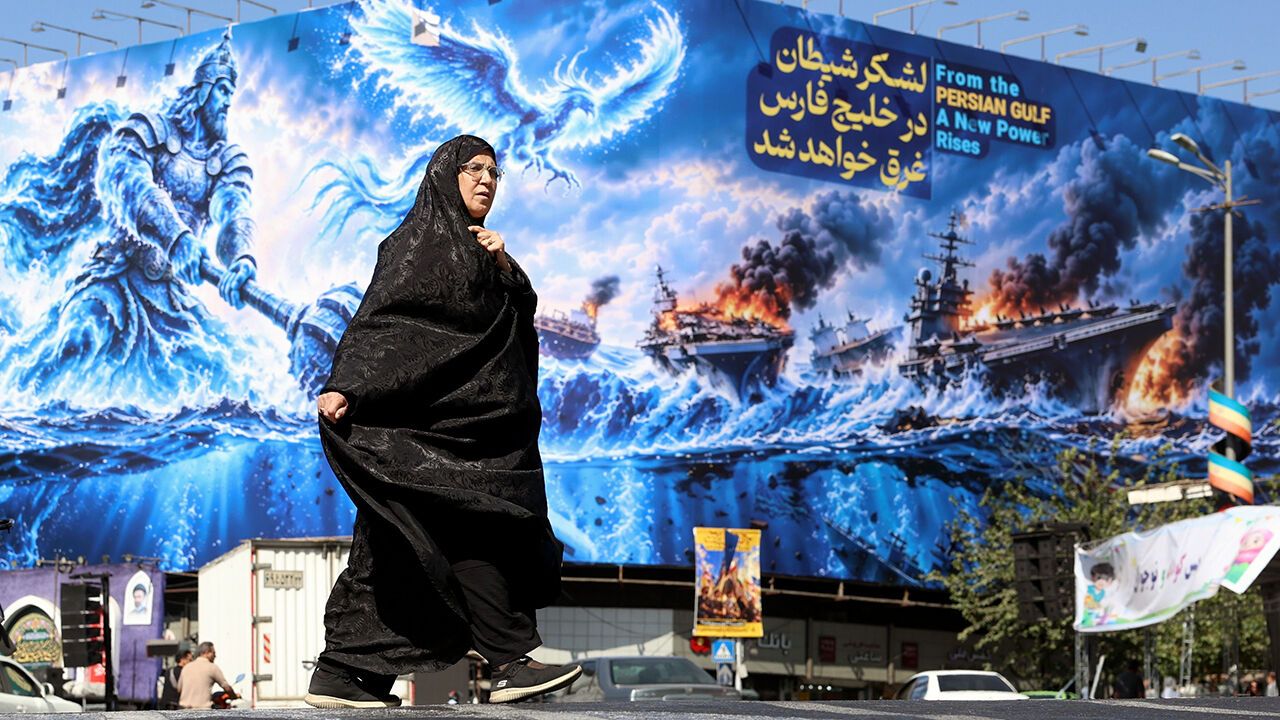

Persian Gulf nations came under renewed missile, drone fire from Iran
The Associated Press
Israel's defence minister said Tuesday that its military killed two key Iranian figures as it stepped up widescale attacks on Iran, while Persian Gulf nations came under renewed attack.
Defence Minister Israel Katz said top Iranian security official Ali Larijani was killed in an overnight strike.
The announcement came shortly after the Israeli military announced it killed Gholam Reza Soleimani, the head of the Revolutionary Guard's all-volunteer Basij force — a key force used to suppress demonstrations in Iran. There was no confirmation from Tehran.
The killings again strip away top leaders from the Iranian theocracy after the Feb. 28 strike that killed 86-year-old Supreme Leader Ayatollah Ali Khamenei.
The U.S. Treasury lists Soleimani as having been born in 1965. He has been sanctioned by the U.S., the European Union and other nations over his role in helping suppress dissent for years through the Basij.
Killing Soleimani would likely further strain the command and control of the Basij, which would be crucial in putting down any uprising against the theocracy. The Basij and other internal security forces have been a target of attack by both the Americans and the Israelis so far.
U.S. President Donald Trump’s timeline for when the war in Iran could end keeps changing. For The National, CBC’s Ashley Fraser breaks down the inconsistent messaging and asks the experts what the shifting timeline reveals about the American military strategy.
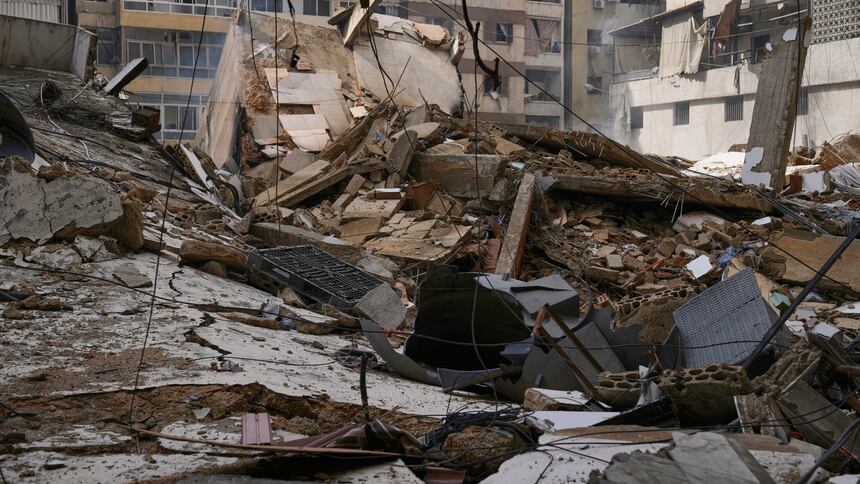
The Israeli military said early Tuesday it had begun a "wide-scale wave of strikes" across Iran's capital and was also stepping up strikes on Iran-backed Hezbollah militants in Lebanon.
Israel also reported two incoming salvos before dawn from Iran at Tel Aviv and elsewhere, and said Hezbollah targeted Israel's north.
Meanwhile, Dubai, a major transit hub for international travel, briefly shut its airspace as the military said it was "responding to incoming missile and drone threats" around the city, and a man was killed by the debris of a missile intercepted over Abu Dhabi.
Pressure on oil markets
Iran kept up the pressure on the energy infrastructure of its Gulf Arab neighbours, hitting an oil facility in Fujairah, a UAE emirate on the country's east coast with the Gulf of Oman that has been repeatedly targeted. State-run WAM news reported that no one had been injured in the blast from the drone strike.
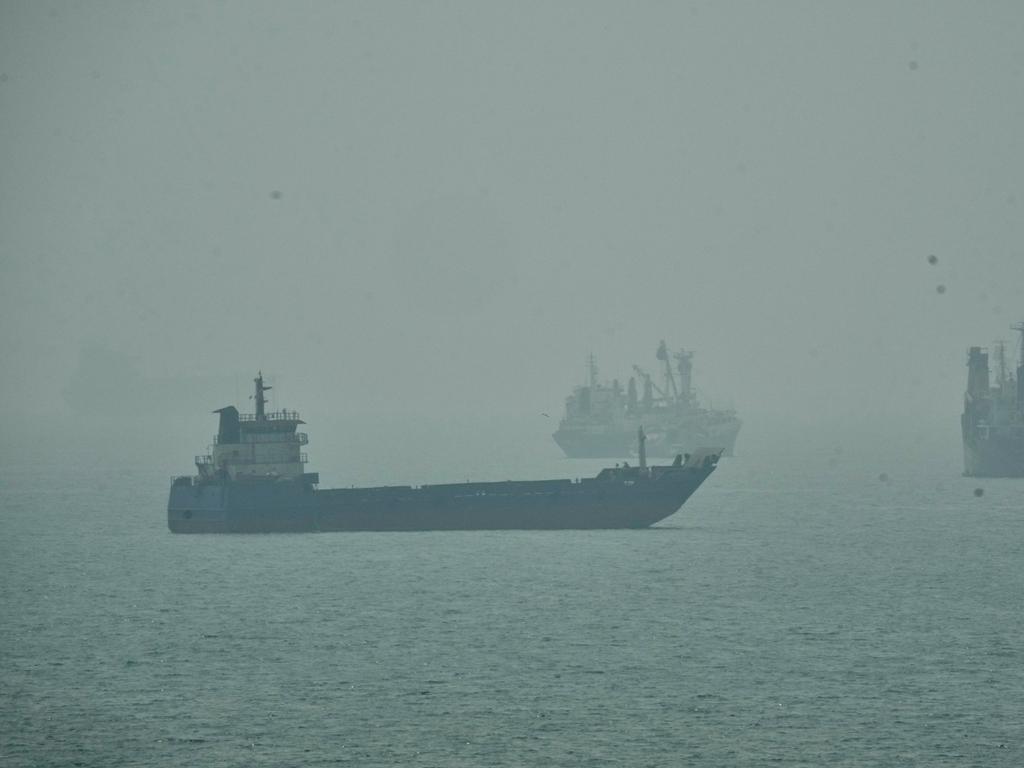
Iran's attacks on Gulf nations and its stranglehold on the Strait of Hormuz, through which a fifth of the world's oil is transported, has given rise to increasing concerns of a global energy crisis. Early Tuesday it hit a tanker anchored off the coast of Fujairah, one of about 20 vessels hit since Israel and the United States started the war with an attack on Iran on Feb. 28.
With Washington under increasing pressure over rising oil prices, Brent crude, the international standard, remained over $100 a barrel, up more than 40 per cent since the war started.
U.S. President Donald Trump said he had demanded that roughly a half-dozen countries send warships to keep the Strait of Hormuz open. But his appeals brought no immediate commitments, with many saying they are hesitant to get involved in a war with no defined exit plan and skeptical that they could do more than the U.S. Navy.
UAE briefly closes airspace
The UAE shut down its airspace early Tuesday as its military reported it was "responding to missile and drone threats from Iran." The closure was soon lifted, and not long after the sounds of explosions could be heard as the military worked to intercept incoming fire.
The snap announcement on its airspace showed the balancing act Emirati authorities face in trying to keep their long-haul carriers, Emirates and Etihad, flying as Iranian attacks continue to target the country.
Saudi Arabia's Defence Ministry reported intercepting a dozen drones Tuesday morning over the country's vast Eastern Province, home to oil infrastructure.
In Qatar, the sounds of explosions boomed over the capital early in the day as defenses worked to intercept incoming fire. Qatar's Defence Ministry said later that it had successfully thwarted a missile attack on the city, though a fire broke out in an industrial area from a downed projectile.
Attacks from Iran-linked proxy forces continued in Iraq, as the U.S. Embassy in Baghdad was hit with shrapnel from drones that had been intercepted.
The embassy's air defences were able to shoot down all four drones targeting the facility, according to two Iraqi security officials, speaking on condition of anonymity to discuss intelligence matters.
A separate strike targeted a house in the heavily fortified Presidential Compound in Baghdad's al-Jadriya area, the officials said. It wasn't clear who carried out either attack but Iran-allied militias have regularly been attacking American targets inside Iraq since the conflict began.
More than 1,300 people have been killed in Iran since the start of the conflict, according to the Iranian Red Crescent.
Trump seeks allies' help
The virtual shutdown of the Strait of Hormuz is unnerving the world economy, driving up energy prices, threatening food shortages in poor countries, destabilizing fragile states and complicating efforts by central banks to drive down prices for consumers.
There have been a handful of ships getting through, primarily Iranian but also from other countries including India and Turkey, and Iranian Foreign Minister Abbas Araghchi said: "from our perspective it is open" — just not for the United States, Israel and its allies.
Underscoring the danger of even getting close to the strait, a tanker anchored off the eastern coast of the United Arab Emirates was hit by a projectile early Tuesday morning.
The United Kingdom Maritime Trade Operations centre, run by the British military, reported the attack, saying the vessel was in the Gulf of Oman off Fujairah. It said the tanker sustained "minor structural damage" and no one was hurt.
On Monday, Trump said "numerous countries" have told him "they're on the way" to help police the Strait of Hormuz but there was no sign of that actually happening.
Despite U.S. President Donald Trump saying it would damage the alliance, no major NATO country has stepped in to help after Trump demanded assistance in re-opening the Strait of Hormuz.