

Russia targeted bridges in Kyiv and railway stations overnight in a major attack launched days after Ukraine badly damaged the strategically important Crimean Bridge.
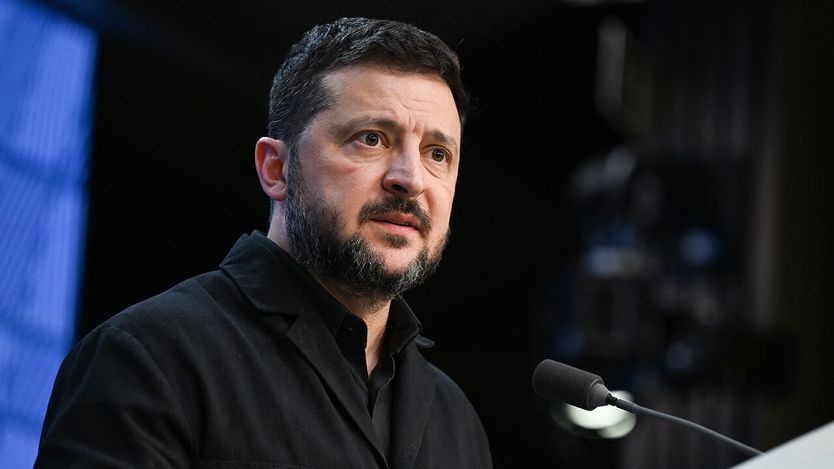
Ballistic missiles hit key crossings in the capital during a nationwide assault which Ukrainian President Volodymyr Zelensky said was "one of the most massive strikes" of the war so far and left at least nine dead.
Russian President Vladimir Putin had threatened to retaliate for the attack on the Crimean Bridge, which the Kremlin built to link Russia and the occupied peninsula.
The latest Russian strikes coincided with a flurry of talks around the war, and came as the Kremlin pushed back against a US claim that Russia could be open to Western-backed security guarantees for Ukraine.
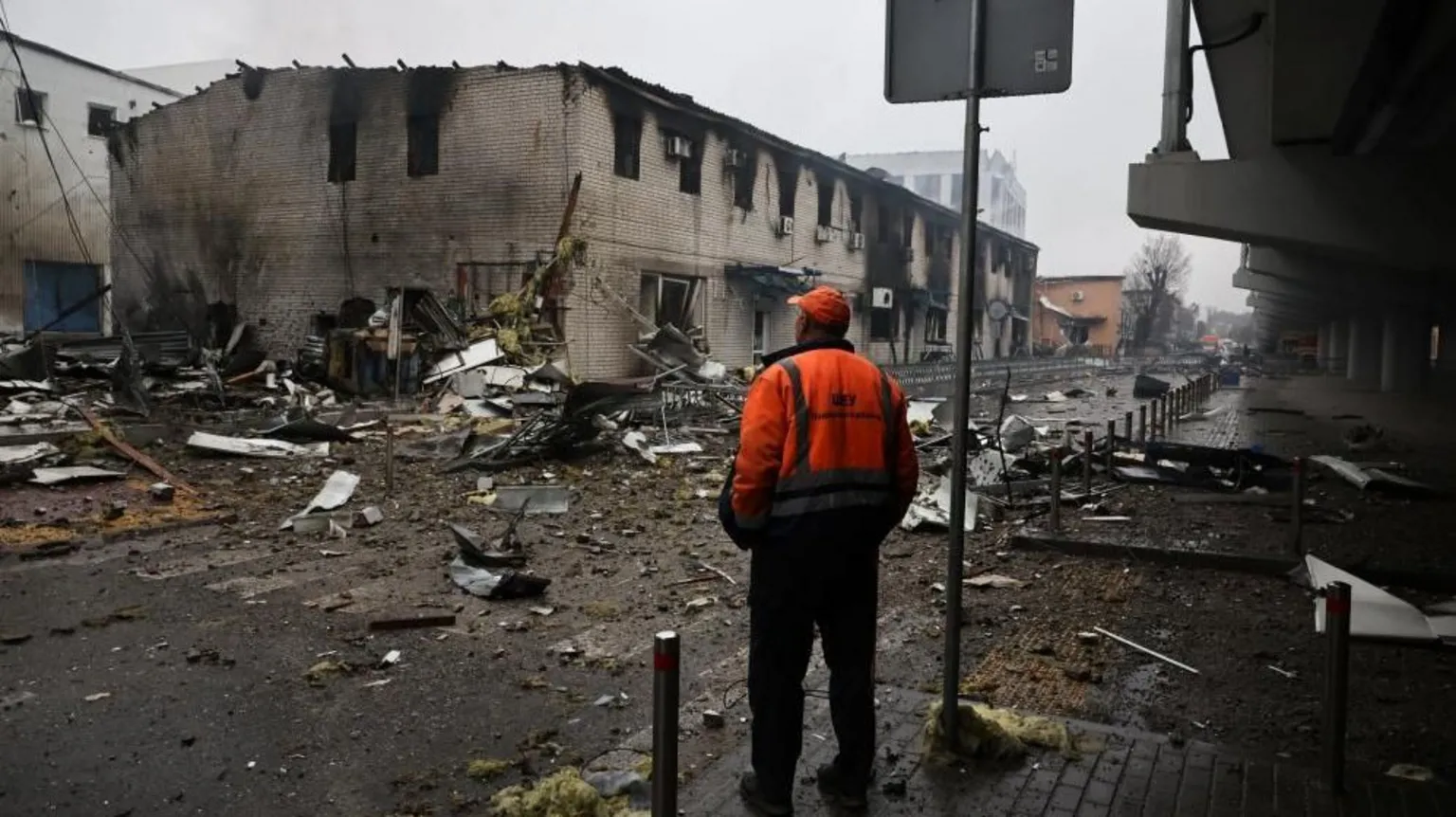
The overnight attack against Ukraine was spread across several cities and regions, Zelensky said, with residential buildings and energy facilities also hit.
Air raid sirens lasted non-stop throughout the night and were ongoing into the morning.
Zelensky said over 110 missiles and more than 400 attack drones were launched by Russia, adding that "particularly insidious" tactics to launch the waves in 20 to 30-minute internals made it "more difficult to extinguish fires, clear debris, and restore services".
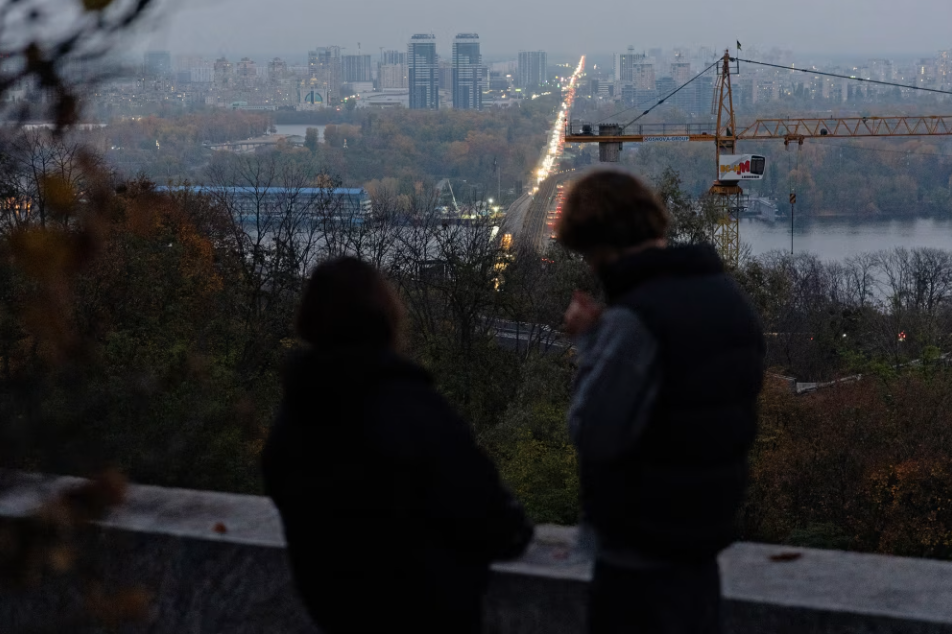
The three bridges targeted in Kyiv - the Podilsko-Voskresensky Bridge, the Darnytskyi Bridge and the Southern Bridge - were closed to traffic.
Kyiv Mayor Vitali Klitschko urged people to "avoid travelling into the city by private car unless absolutely necessary", adding to the disruption around the capital following a first round of strikes against vital crossings earlier this week.

At least seven people were killed and 17 more were injured, Klitschko added, with unspecified civilian facilities also hit.
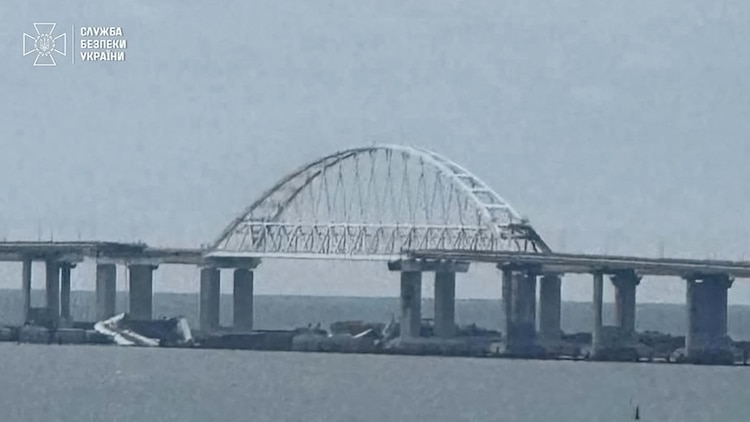
Ukraine's major operation to take out the road section of the Crimean Bridge earlier this week was a tactical and symbolic blow for Moscow.
Since illegally annexing Crimea in 2014, Moscow has housed troops and military equipment there, with occupying forces travelling through the peninsula towards the front line.
Ukrainian President Volodymyr Zelensky said an operation to weaken the bridge's defences and ultimately cause part of it to collapse had been weeks in the making.
Russian President Vladimir Putin - who personally opened the bridge in 2019 to international condemnation - said the Kremlin's retaliation for the strike would be "far more painful".
Of the nine fatalities confirmed so far, seven were in Kyiv and two were in Lviv, with at least 28 people injured.
The Sknyliv railway station in Lviv, a city in western Ukraine which has become one of the primary entry points to Ukraine for people and international aid, was badly damaged, the city's Mayor Andriy Sadovyi said.

The attack began hours after European leaders including UK Prime Minister Andy Burnham, French President Emmanuel Macron and German Chancellor Friedrich Merz said they were ready for negotiations involving Moscow to end the war in Ukraine.
The Berlin meeting of the so-called coalition of the willing, an international alliance of Ukraine's allies committed to providing security support in the event of a peace deal, was attended by Zelensky and US President Donald Trump's envoys.
Jared Kushner said the US "wants to make a deal with Europe by his side" after fears of an agreement negotiated between the US and Russia were reignited by Trump's one-to-one talks with Putin earlier this week.
He claimed Russia was "comfortable" with Ukraine having security guarantees based on Nato's Article Five, which requires allies to come to a country's defence if it comes under attack.
On Monday, Russia's deputy foreign minister Sergei Ryabkov pushed back against that, saying "quasi-Nato" membership for Ukraine would be "unacceptable" to Russia. The Kremlin has long cited the prospect of Ukraine joining Nato as a key justification for its war effort.
The US president dialled into the Berlin talks from Air Force One on his way back from China, where he met his Russian counterpart and Chinese leader Xi Jinping.
He reportedly questioned the decision of European leaders to commit €70bn (£58.6bn; $76.bn) in military funding for Ukraine.
The UK and France are jointly leading the first military exercise organised by the coalition of the willing, which involves thousands of troops from 11 countries and is taking place in Poland.
On Friday, Poland's Prime Minister Donald Tusk accused Russia of an "intentional provocation" after a Russian cruise missile landed in his country.
It struck around 50km (31 miles) from its border with Ukraine, the Polish Defence Minister Wladyslaw Kosiniak-Kamysz said on Friday.
Two more unidentified projectiles, suspected to be a drone and a second missile, landed in villages nearby and no one was harmed, he added.
Polish and Swedish jets were scrambled on Nato's eastern flank as Russia's attack on western Ukraine continued. They have since been stood down.
France's foreign minister Jean-Noël Barro has called for a meeting of the UN Security Council following Russia's attack on Kyiv.
He described the strikes, which reportedly damaged the Austrian and Dutch embassies, as "crimes" that "Russia will have to answer for".