
Another trusted Putin ally has fallen. This time, it sends a chilling message to those watching from the shadows.
Sudden Russian death syndrome has struck again. This time on Christmas Day.
Colonel-General Yuri Sadovenko, 56, was one of President Vladimir Putin’s most trusted inner circle.
So much so that he earned the nickname “Keeper of Secrets.”
But, like so many of Putin’s hand-picked advisers, he fell out of favour.
He didn’t fall out of a window.
Nor did he fall down stairs.
But was there something in his tea?


State-controlled media announced General Sadovenko had “died suddenly” of “heart disease” in Moscow last week. This was strange, the report emphasised: He’d shown no signs of ill health beforehand.
But incurring Putin’s wrath is incurable.
The low-profile deputy defence minister had played a significant role in the planning and execution of the shambolic “Special Military Operation” operation launched against Ukraine in February 2022.

He and his boss, Defence Minister Sergei Shoigu, clung to their powerful positions for another two years. But, eventually, nobody else was left to blame.
They were both sacked in May 2024.
Shoigu, a longtime close friend and hunting partner of Putin’s, was moved sideways into a new job.
General Sadovenko was not.
Failure is contagious
The December 25 date is significant. For the West.
The Russian Orthodox Christmas is on January 7.
Nevertheless, the 12 days of Christmas have long presented an opportunity for Putin’s power game signalling.
For example, four senior Russian officials suddenly expired during the 2022 festive season.
It was the year of his failed three-day invasion of Ukraine. And almost two dozen of the 73-year-old autocrat’s inner circle had already died during the previous 10 months.
This year, a political cull is evident once again.

The leader of a neo-Nazi volunteer brigade of troops, Stanislav Orlov, 44, was buried in Moscow last week. The Kremlin says “The Spaniard” died fighting in Ukraine. Independent Russian media says he was assassinated by Putin’s secret police for criticising a lack of success.
Putin isn’t the only one killing his generals.
So is Ukraine.
Kyiv has tacitly accepted blame for some assassinations. But it has denied any involvement for others.
So far, it has remained silent over the death of one of Putin’s General Staff just days before Christmas.
Lieutenant-General Fanil Sarvarov, 56, was killed when a bomb exploded as he turned the ignition key of his car at a suburban residence.
Moscow has blamed Ukraine for the death of another General Staff officer, Lieutenant-General Yaroslav Moskalik, in April. The cause of death was also a car bomb.
In December last year, Lieutenant-General Igor Kirillov, chief of Putin’s chemical and bioweapons division, was killed when a scooter exploded as he passed nearby.

Under pressure
Personal access to President Putin is strictly limited and regulated.
He’s abandoned his favourite mountain holiday resort in Sochi as it is too close to Ukrainian drones.
And he’s built replicas of Kremlin conference rooms in his isolated Valdai palace to give the appearance of residing in Moscow.
So far, Russian society appears accepting.
“The state, which reserves the right to repress, mostly represses those who dare to display their disapproval, a vanishingly small minority of Russians,” Moscow analysts Professor Michael Kimmage and Maria Lipman argue in Foreign Affairs.
“In this arrangement, the Kremlin retains control, and most Russians can go about their business, provided that their business is unobtrusive.”
But President Putin is suffering from overreach.

US President Donald Trump has so far failed to compel Ukrainian President Volodymyr Zelensky to surrender his eastern provinces in exchange for a ceasefire.
International sanctions are strengthening.
And the cost of the four-year war keeps rising.
Russia’s transport minister, Roman Starovoit, was found shot dead in July alongside his Tesla in Moscow. Hours later, it was announced he’s been sacked. Starovoit took the fall for transport chaos brought about by targeted Ukrainian sabotage attacks.
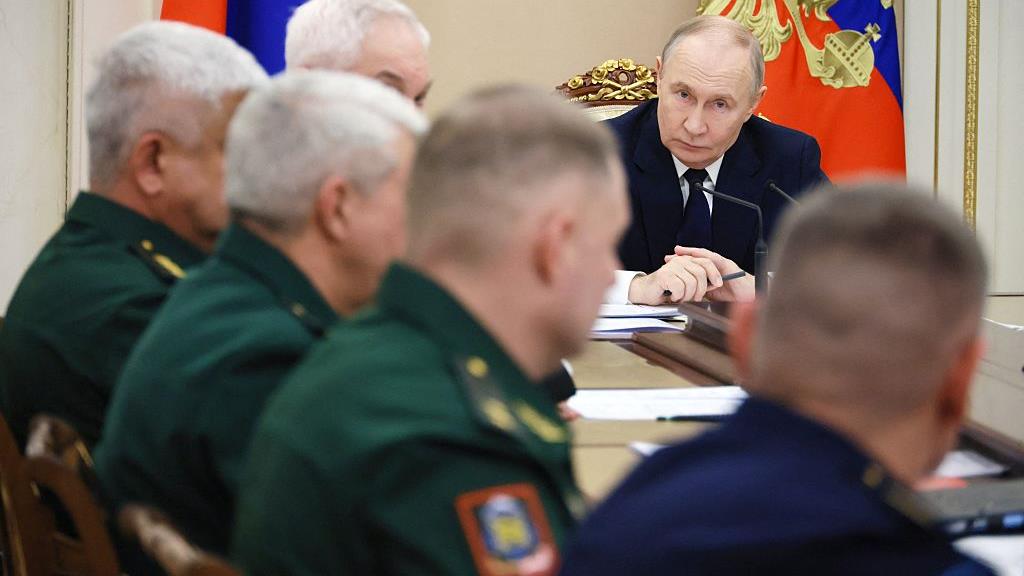
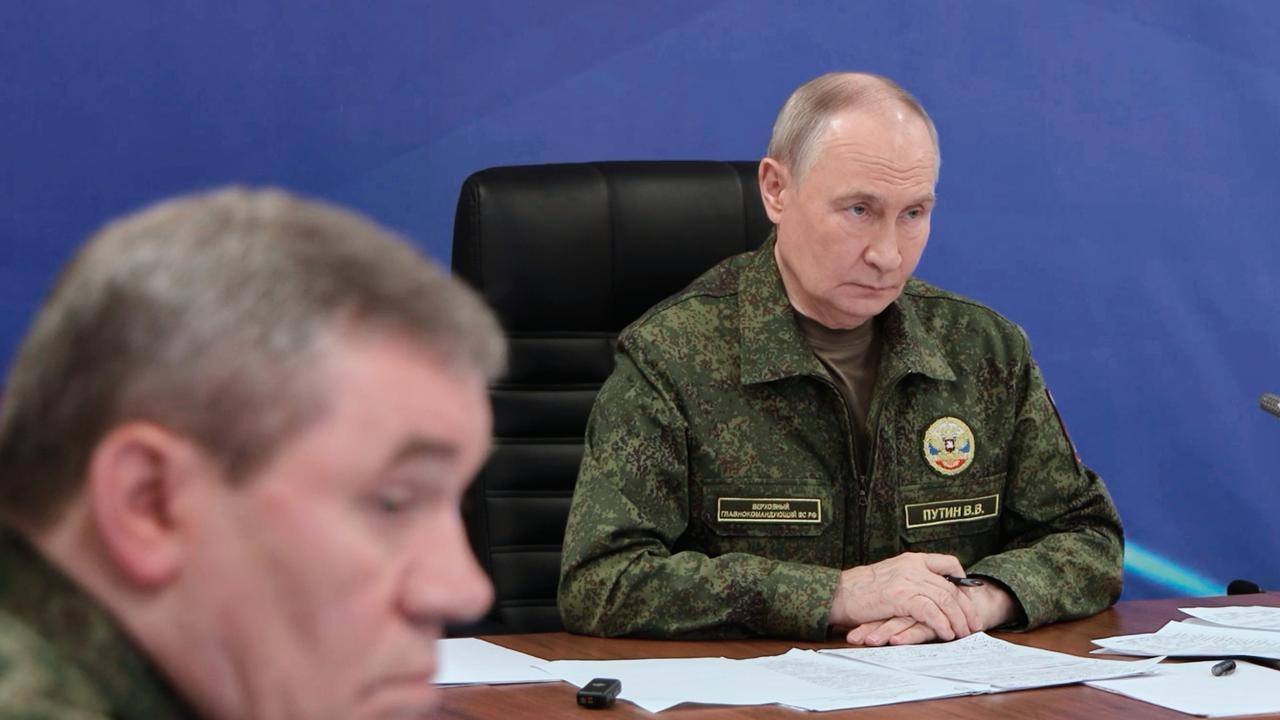
Putin is on the lookout for disgruntled friends.
He’s desperate to preempt another “Wagner Revolution”, the June 2023 mutiny by Yevgeny Prigozhin’s mercenary group. This former trusted personal chef and adviser died when his aircraft exploded mid-flight.
“To suppress potential political threats, Putin would surely double down on the war, bidding farewell to his domestic political balancing act,” Kimmage and Lipman argue. “He might agree to temporary ceasefires and to cosmetic diplomacy, even to the pretence of a negotiated settlement, but he cannot let go of a simple fact: that Russia’s military, by his logic, has not accomplished enough.”

All or nothing
The war in Ukraine has been raging for longer than Imperial Russia’s involvement in World War I.
And it was public outrage over the slaughter and suffering of that conflict that triggered the overthrow of Tsar Nicholas II and the foundation of the Soviet Union.
Putin’s war in Ukraine is now threatening to persist longer than Russia’s fight with Nazi Germany.
“These historical comparisons raise the possibility that some present-day elite groupings may internalise the strong preference for ending the war in Russian society and act as promoters of a peace deal,” argues Jamestown Foundation analyst Pavel Baev.
It’s precisely the type of “colour revolution” President Putin fears the most.
And it may be why so many former friends are turning up dead.
“The elite group that Putin needs to worry most about is the politicians, generals, and business leaders in their early 60s,” argues Baev.
“This group is wise not to question Putin’s opinions, but has no stakes in the war he has made, and is very aware of its costs and the damage done to Russia’s economy.”
This may explain a trend in which young Putin supporters appear to be on fast-track promotion trails.
“Putin typically shows benevolence to young opportunists born to privilege, knowing that their ambitions are curtailed by intrinsic feelings of obedience and risk-avoidance,” Baev adds.


But both groups may be concerned about their dwindling wealth and prospects of becoming yet another Putin fall guy. Or window victim.
The Russian Anti-War Committee, a group of prominent and influential exiles, was declared a “terrorist organisation” in October.
Their crime was to take a public stand against Putin’s autocratic obsessions. And his secret police is seeking out any surviving links between these former oligarchs and the Mother Country.
“The only cohort that appears to be committed to Putin’s war is his shrinking circle of ageing courtiers, who see the risks of staying the course as lesser than those of ending it,” Baev concludes.
“They live — together with the lonely autocrat — in the past and are deaf to the lessons of history, which have unpredictable means of punishing such ignorance.”