
He escaped the gang violence of Los Angeles to become a pioneering hip-hop artist and producer, then sold Beats Electronics to Apple for $3 billion. Here’s what Dr. Dre is doing next—and how he’s enjoying success.

Late on a Thursday night in the spring of 2014, actor Tyrese Gibson went live on Facebook with Dr. Dre to celebrate the sale of the company Dre cofounded, beats electronics, to apple for $3.2 billion.
“The Forbes list just changed,” Gibson said, after what he admits was a few too many Heinekens. “It came out like two weeks ago—they need to update the Forbes list!”
“In a big way. Understand that,” Dre can be seen saying behind him. “The first billionaire in hip-hop, right here from the West Coast.”

The only problem was that at that point the deal hadn’t closed, and the leak led to immediate panic that it might spoil the final negotiations. “That’s not one of my proudest moments,” Dre admits now, sitting in his palatial home in the affluent Brentwood neighborhood of Los Angeles. After shaving a reported $200 million off the price, Apple finalized its acquisition of the headphone maker a few weeks later, netting Dre more than $500 million in cash and nearly $100 million in stock, according to Forbes estimates. While it wasn’t enough to get the legendary hip-hop producer onto the Billionaires list that year, it formed the bulk of a fortune that, more than a decade later, Forbes now estimates at $1 billion.
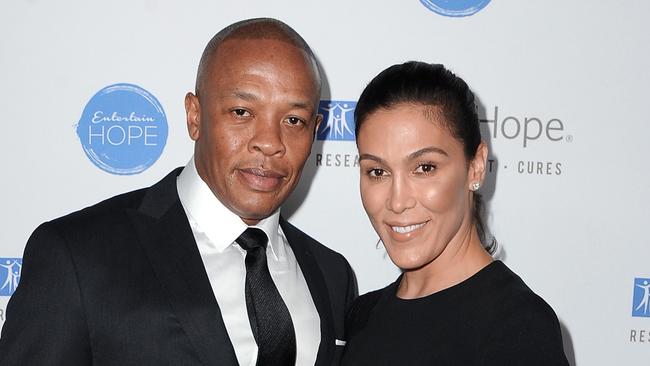
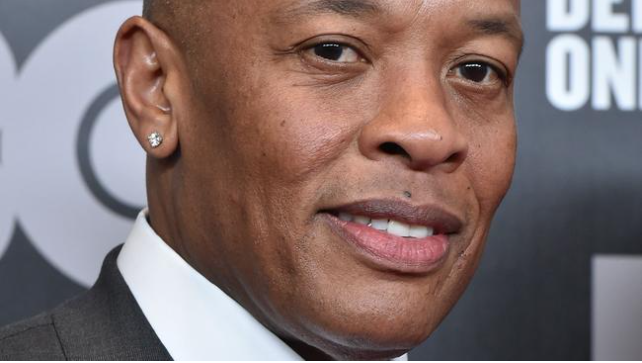
Sitting at the kitchen table in his 36,000-square-foot mansion, worth an estimated $53 million, the 61-year-old Dre—born Andre Romelle Young—never forgets how far he’s come from his childhood in Compton, California, where he grew up with a teenage mother and an abusive father during the height of Los Angeles’ gang violence and crack cocaine epidemics. “I had no problem going to cut grass just to buy shoes when I was younger,” he says of his childhood. “I would do what I had to do just to get what I wanted.” Despite his wealth, he swears that nothing in his career has been motivated by money and instead credits his success to an obsession with creating perfect products, whether it’s music, headphones or his latest venture, a gin brand.
“I don’t chase money—I try to make the money chase me,” says Dre, who ranks No. 20 on our list of the Greatest Self-Made Americans. “I’ve always been able to bet on myself, and whatever I do and wherever I go, I know I have my talent with me.”

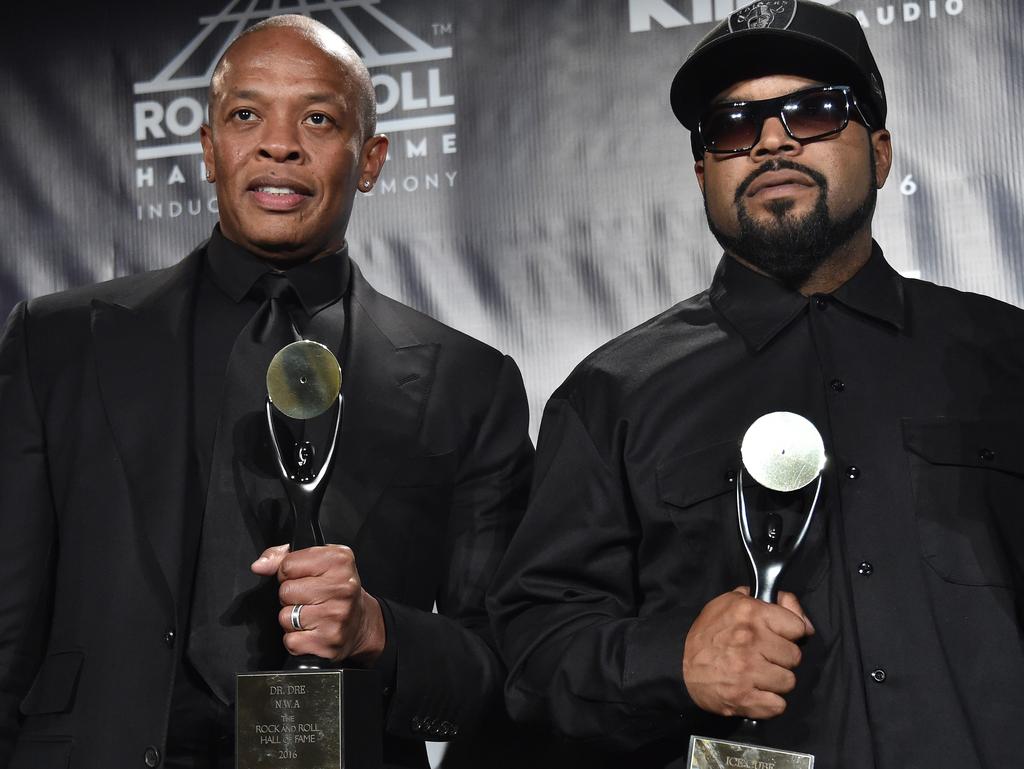
That talent first came to light in the 1980s, when, as a teenager, he performed as a DJ wearing satin scrubs and a surgical mask at a club in Compton called Eve After Dark. Teaching himself to cut and produce music in his garage using instruments from a local pawn shop, he would go on to cofound the pioneering gangsta rap group N.W.A (alongside Ice Cube, Eazy-E and Arabian Prince) and become, arguably, the greatest producer in hip-hop history. N.W.A’s story became the basis for the 2015 Hollywood blockbuster Straight Outta Compton, and in 2022 he became the first hip-hop artist to headline the Super Bowl halftime show, using the moment to highlight the numerous artists whose careers he helped launch—including Snoop Dogg, Eminem, 50 Cent and Kendrick Lamar.
The money he has earned has afforded him the ultimate freedom, Dre says, especially after his divorce in 2021 from Nicole Young, his wife of nearly 25 years. He can fill his time now doing whatever he wants. Some of it he spends relaxing, of course, but more often he’s chasing after the next big thing, whether it’s his gin brand—named Still G.I.N., after his 1999 hit “Still D.R.E.”—or the nearly 400 unreleased tracks he says he created during the pandemic and has been tinkering with ever since. Given a few spare moments, he sits in his spacious living room beneath a wall of statues that include Grammys, Emmys and a Hollywood Walk of Fame star and plays a few bars at his Bösendorfer grand piano (which starts at around $200,000), surrounded by a half-dozen legal pads covered in musical notes and song ideas.
“Who knows if something is gonna happen to make me come up with the best thing I’ve ever done in my life?” he says. “The exciting part is there’s the potential of that. It’s exciting and depressing at the same time because I know it’s there, and what if I don’t find it?”
Those who have spent time working with Dre, whether in the studio, at Beats or on another venture, know his process can be painstaking and that he doesn’t stop tinkering until he feels a project is good enough to release.
“Time doesn’t exist with Dr. Dre,” says frequent collaborator Eminem via email. “He isn’t focused on dates or deadlines or when something should come out—he’s only thinking about whether something is ready. For instance, on [Dre’s] 2001 album, I thought it was ready before he got ‘Still D.R.E.’ [recorded]. And then I realized if Dre thought he was done, the world would have never heard it.”
Sometimes the world never does. After working on his highly anticipated album Detox for more than a decade, Dre scrapped the project entirely in 2015, reinforcing his reputation as a perfectionist.

“Perfectionist is sometimes just a word I use to buy time,” he says. “If I have a release date and the song isn’t right, am I supposed to turn it in? No, I’ll take the proper time until it’s right.”
He has exhibited that trait since his breakthrough song in 1987, “Boyz-n-the-Hood,” in which he coached inexperienced rapper Eazy-E through hours and dozens of takes on vocals. The hit song, with lyrics written by Ice Cube, another local rapper, formed the basis for N.W.A—short for Niggaz Wit Attitudes. They ushered in the gangsta rap genre with 1988’s Straight Outta Compton, which went double platinum despite the fact that many television and radio stations refused to play its explicit lyrics. Dre was a producer on all the tracks but later claimed in a 1996 interview that he received just 2% royalties from his N.W.A albums.