
Donald Trump’s gambit delights Silicon Valley and Wall Street but dismays Washington
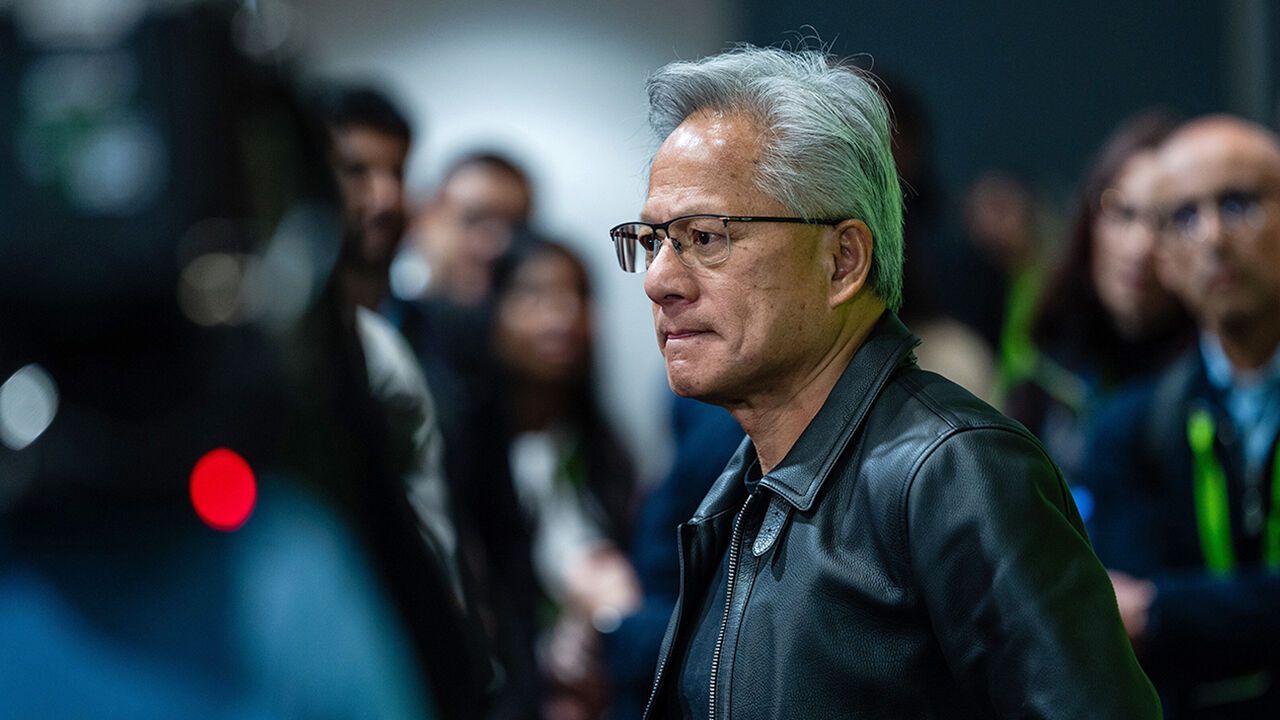
JENSEN HUANG did not quite remove a shroud, roll away a rock and emerge from a cave, but his miraculous resurrection as Nvidia’s boss on November 23rd, 11 days after resigning from the post, triggered rapture among his acolytes in Silicon Valley. Donald Trump, the president, who intervened personally with Nvidia’s board to get him back, posted an AI-generated photo of Mr Huang defiantly holding aloft a red bra, seemingly a reference to the sex-and-espionage scandal that felled him. Investors, too, have been euphoric, adding almost $1trn to Nvidia’s value since his return. But Mr Huang and his firm are still in serious political jeopardy, and American lawmakers are ready to haul them over the coals.
Mr Huang embodied one side in America’s debates about AI. He was a champion of open-source AI models, which he and his supporters saw as essential to counterbalancing the clout of proprietary model-makers like Anthropic and OpenAI. Mr Huang also fought against legal and regulatory efforts to restrict the sales of advanced chips to China, on the basis that it was better to keep Chinese firms on America’s tech stack and to encourage co-operation between the two countries. Proponents of his vision of AI were ecstatic about his return. “This is why America is the greatest country on earth,” enthused Gavin Baker, a partner at Atreides, a tech investment firm.
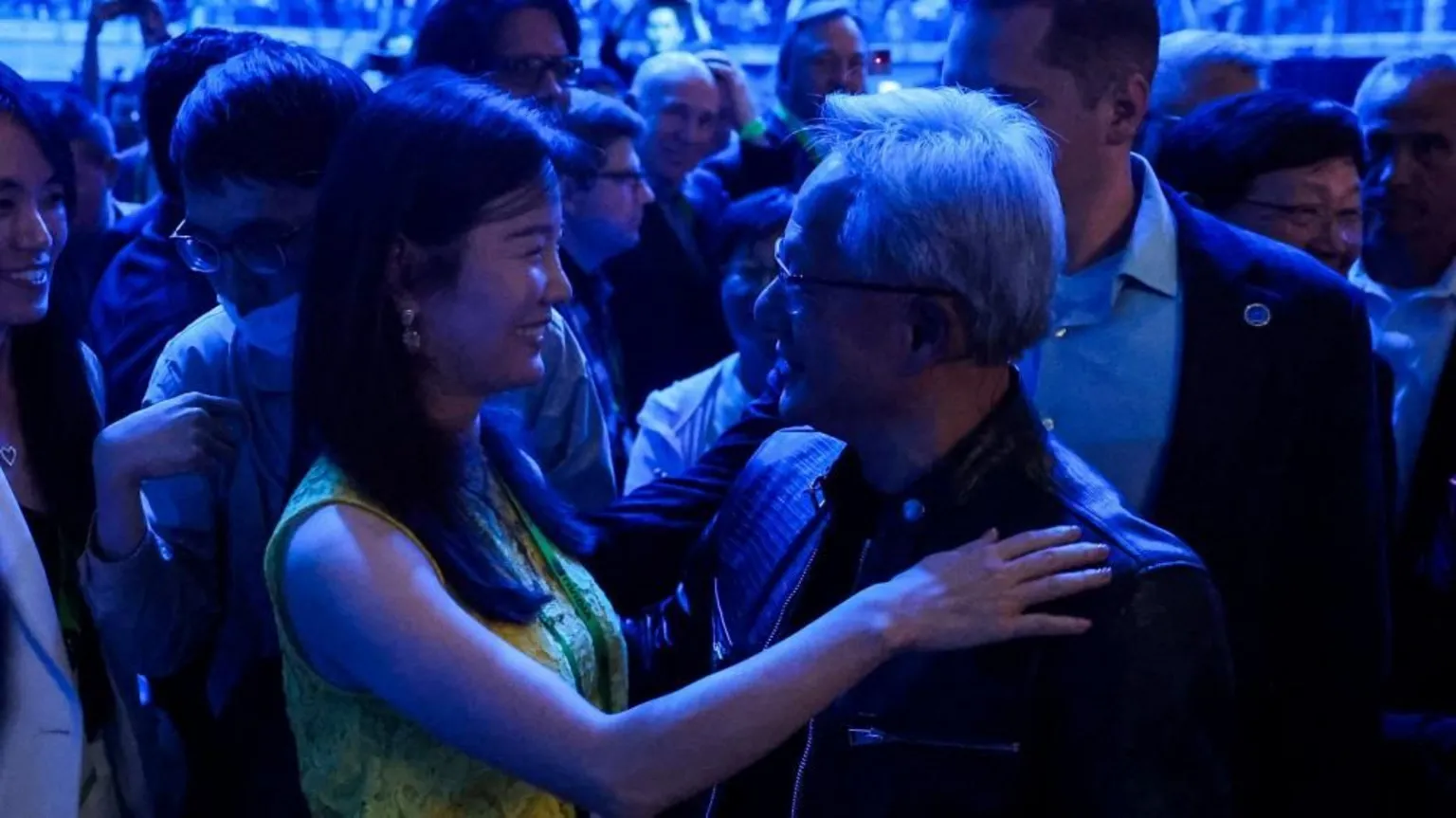
But if Mr Huang maintained a devoted following in Silicon Valley, his support in Washington seemed to be dwindling in recent weeks. Marco Rubio, secretary of state and national security adviser, reportedly circulated intelligence showing that Alice Huang, Mr Huang’s mistress and a former executive at Megaspeed, a Singapore-based firm to which Nvidia had sold chips, had ties to China’s spy agency. Scott Bessent, the treasury secretary, publicly criticised Nvidia’s lax approach to Megaspeed under Mr Huang and urged tighter controls. On November 22nd Jay Clayton, the director of national intelligence, confirmed that the government was investigating Megaspeed and Ms Huang.
Mr Trump’s patronage seemed to overcome these hurdles. As stock markets wobbled in the aftermath of Mr Huang’s resignation, triggering fears of a deeper rout in AI stocks, tech bosses lobbied the White House to act. The president—working alongside J.D. Vance, the vice-president, who has long associations with the tech world—persuaded Nvidia’s board to reinstate Mr Huang, in part by telling them that Mr Huang’s hands were clean. “The United States government has no reason to believe that Jensen’s return to Nvidia poses any risk to national security,” wrote Mr Trump on social media. “The attorney-general of the United States has confirmed that the US government does not possess evidence that he has engaged in any unlawful conduct.” When asked in an interview on CNBC whether he had assured the board that Mr Huang would not be prosecuted, Mr Trump replied: “We believe he’s fine.”
Michael Strain of the American Enterprise Institute, a think-tank, says that Mr Trump’s involvement is not necessarily unwarranted. “The government is well positioned to know the extent to which there’s a national security concern here,” he argues. Nonetheless, Mr Trump’s decision to intercede with the board is also part of a larger pattern in the president’s management of the economy. He authorised Nvidia’s chip sales to China on condition that the government take a cut. His administration has taken equity stakes in 41 companies, including Intel, another chipmaker, according to a tracker by the Cato Institute, another think-tank.
Mr Huang now faces a bruising period. He is due to testify in front of a joint session of the House Foreign Affairs, Intelligence and China committees on December 1st. That is just one of several probes, including a hearing by the Senate banking committee two days later, an inquiry by Democrats on the Senate Finance and House Ways and Means committees and reportedly an investigation by the Securities and Exchange Commission into Nvidia’s accounting practices. Democrats, many explicitly invoking corruption, have vowed to turn their fire on Mr Huang and Nvidia when they take control of both houses of Congress in January. But Republicans have been no less scathing.
At least eight Republican senators and as many House members have already demanded answers from the administration, with some expressing incredulity at the reinstatement. Critics include lawmakers close to Mr Trump, such as Rick Scott, a senator from Florida; Brian Mast, a congressman from the same state; and Kevin Cramer, Tim Scott and Pete Ricketts, senators from North Dakota, South Carolina and Nebraska, respectively. “The risk of extortion by a Chinese asset who’s been banned by Singapore is risk enough to not rehire [Mr] Huang,” wrote Mr Cramer on social media.
Brad Carson, a former Democratic congressman who now runs Americans for Responsible Innovation, which advocates for AI safety, thinks that Congress will “shred” Mr Huang. “The investigations, the lawsuits, it’s all going to be devastating for Nvidia, probably the US stock market and the broader AI ecosystem,” he argues. “I don’t know a single member of Congress who’ll be supportive of [his reinstatement].” A poll of Americans by Blue Rose Research, a political-analysis firm, showed that 48% of respondents agreed more with Mr Huang’s critics, with just 25% more aligned with his supporters.
In announcing the return of Mr Huang, Nvidia sought to sweeten the pill by noting its creation of a “national security and export control committee” of independent directors and promising to create a post of chief compliance officer. Also on November 23rd the Commerce Department placed Megaspeed on its “entity list” of firms barred from being sold certain types of technology, having been criticised by Mr Bessent for failing to do so earlier. But Chris McGuire, who worked on the issue in the Biden administration, has said that designation was in effect neutered because it did not apply to Nvidia’s Taiwan-made chips. “The generous interpretation here is that Commerce intended this to be perceived as taking strong action against Megaspeed, and didn’t realise that its rule had a drafting error,” noted Mr McGuire. “The less generous interpretation is that this entity listing was intentionally weakened.”
Legislative retribution could be coming. Tom Cotton, a Republican senator from Arkansas, said that the Megaspeed controversy was the “tip of the iceberg” and promised to pass bipartisan export controls. New controls on chip exports, chipmaking equipment and computing power areis pending in a defence bill that has bipartisan backing. Support for that legislation was growing even prior to Mr Huang’s return. Now, notes Marc Short, a former chief of staff to Mike Pence, Mr Trump’s first vice-president, the president’s actions “may have invited a veto-proof majority enforcing export controls”.