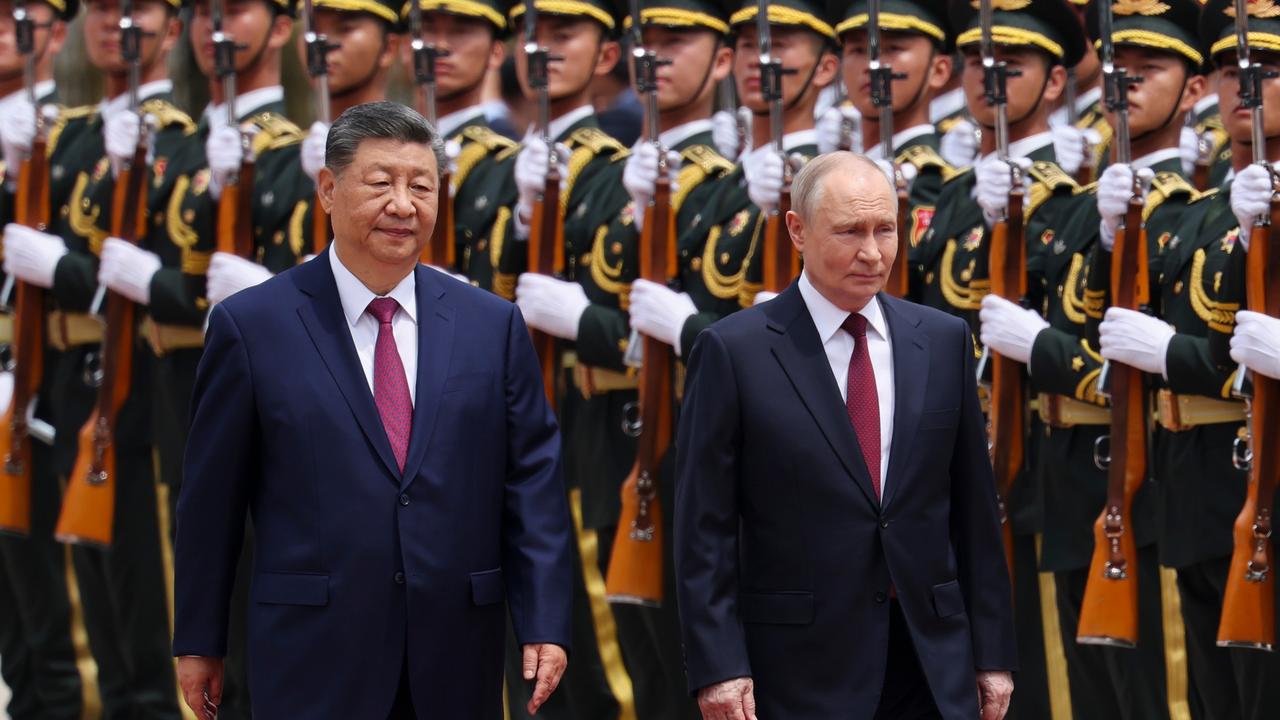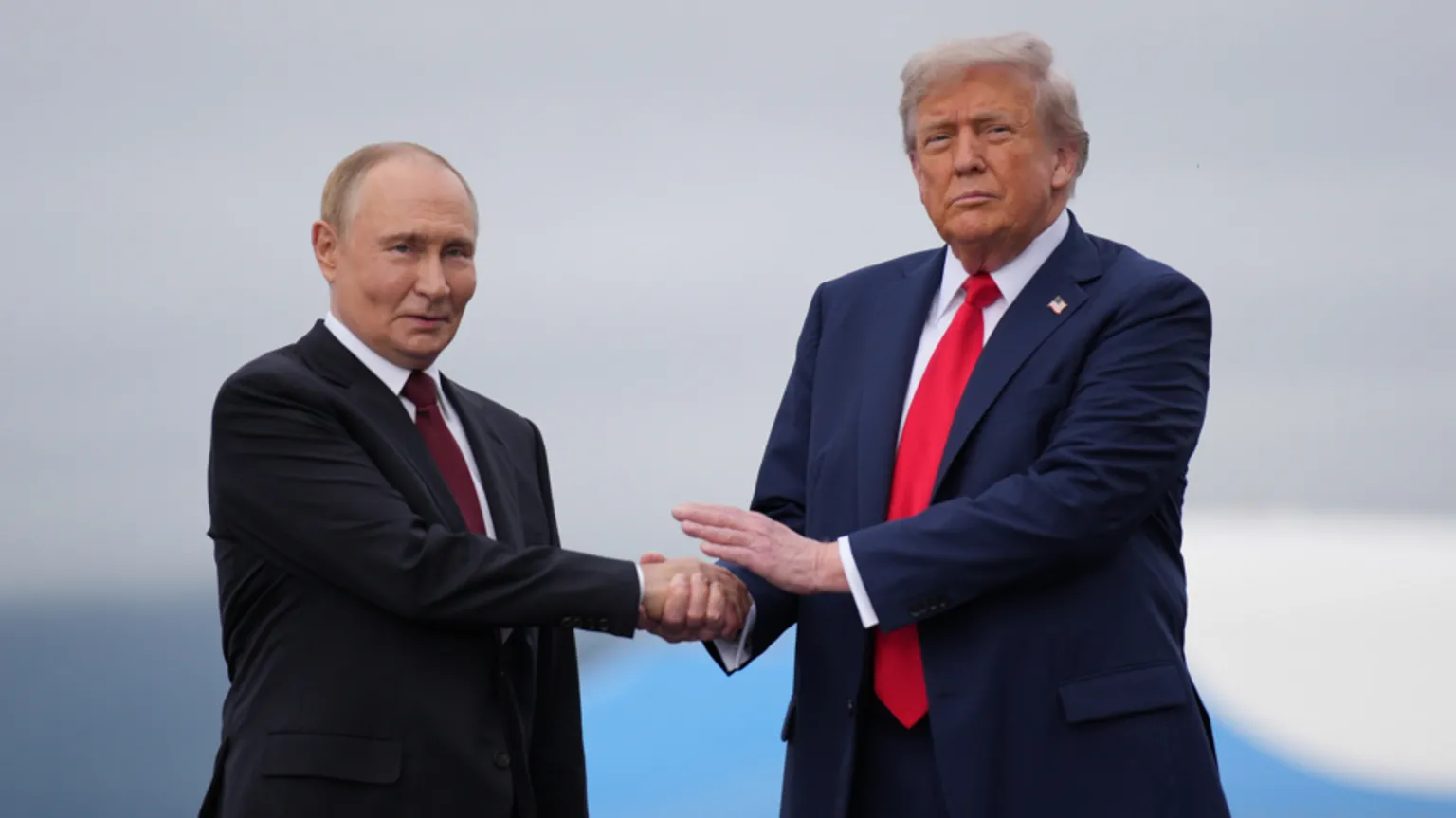

Russian President Vladimir Putin wants to go down fighting.
CIA director John Ratcliffe made an emergency dash to Moscow on Wednesday. His mission was to avert a war.
Reports suggest the embattled Russian dictator was about to turn years of threats and bluster into action.
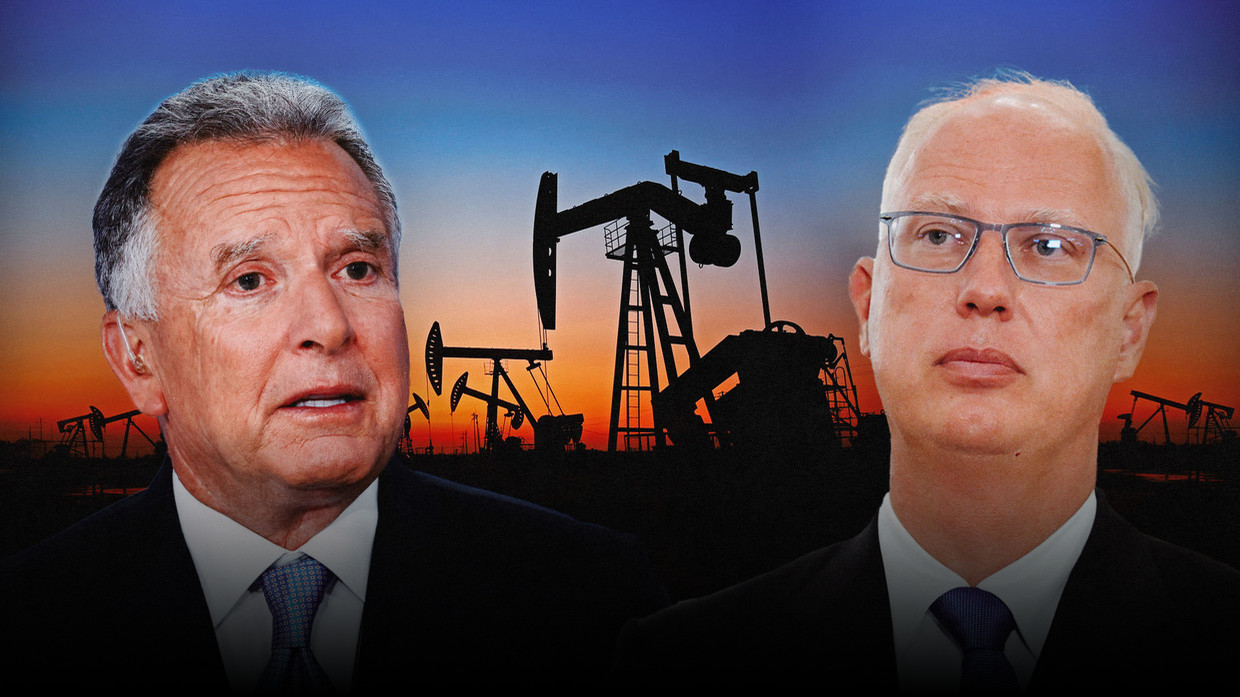
“Something might happen” through “unknown sources”, former Russian deputy foreign minister Andrei Fedorov warned Britain on Monday.
He’d never be allowed to say such a thing without his Kremlin overlord’s approval.
Russia had reacted with outrage to British Prime Minister Andy Burnham’s promise to supply Ukraine with the blueprints for a deadly, long-range cruise missile.
“In the coming future we will face a new stage of escalation in the Ukrainian conflict, and sooner or later, there might be not only verbal but maybe some visible reaction from Russia towards the UK,” Fedorov told the BBC’s Newsnight program.
CIA director Ratcliffe was in the air on his way to Moscow just 24 hours later.
Fedorov’s threat wasn’t the only prompt. Europe has suffered at least 151 sabotage and assassination attempts since February 2022.
“This is all happening against the backdrop of the growing number of US and European intelligence warnings that Russia could launch an attack against a NATO country,” states Centre for European Policy Analysis (CEPA) Olga Lautman.
“If this isn’t war, I’m not sure what is.”

War warning
“Britain is participating in this war,” Kremlin spokesman Dmitry Peskov insisted, adding that Prime Minister Burnham was “adding fuel to the fire”.
The British Prime Minister retorted: “Who started the fire? That’s the question, isn’t it?”
In the past fortnight, a Romanian F-16 Falcon shot down a drone near a Black Sea gas platform. Finland reported a violation of its airspace by Russian aircraft.
A week before that, an explosion tore through an ammunition factory near Rome. Another in Bulgaria suffered the same fate.
Then an explosive-laden drone was found near a Ukrainian cargo plane at Germany’s Leipzig Airport. Shortly before that, a Russian cruise missile crashed in Poland. And a Spanish F-18 Hornet shot down another Russian drone over Romania.
“For over a decade, Russia has been in a shadow war with Europe, carrying out arson attacks, sabotage operations, attacks on critical infrastructure, assassinations, cyberattacks, explosions at ammunition depots, and even multiple plots to kill European defence executives,” says Lautman.
“Because Moscow feels more emboldened, it has continued to escalate.”
There’s more to come.
“We will adopt much harsher methods to destroy everything that enables the West to fuel Kyiv’s war machine,” Russia’s Foreign Minister Sergey Lavrov declared on August 14.
“We are already doing this, and [the Europeans] are already moaning.”
Then Fedorov upped the ante with his direct threat.
“Sooner or later, there might be not only verbal but maybe some visible reaction from Russia towards the UK,” Fedorov told the BBC in an interview.
“Something might happen with enterprises, with factories which are producing drones for Ukraine, etc, etc. They could be attacked not by Russia, but by unknown sources.”
It was an open admission of Moscow’s strategy.

Espionage. Terrorism. To launch covert attacks under the mask of plausible deniability in the hope of averting retaliation.
“Yet Europe continues to dither,” former Moscow correspondent Christian Caryl argues for Foreign Policy.
“German officials seem to be awaiting proof that Russia was behind the Leipzig attack before responding — a good example of why Moscow always goes to great lengths to make its involvement deniable. But if Europeans think that observing the diplomatic niceties will save them, then they have another thing coming.”
Putin’s last laugh?
“Putin and his minions have every reason to up the ante,” Caryl believes.
The Kremlin’s three-day war against Ukraine failed. Now in its fifth year, victory remains as elusive as ever. What’s changed is that everyday Russians – and their oligarchs – are now paying a price.
“Putin’s next-best option — getting his friend US President Donald Trump to strongarm Ukraine into accepting Russian war aims through US-led negotiations — has also petered out,” Caryl notes.
“That leaves plan C: an intensified effort to undercut European support for Ukraine, whether through subversion, intimidation, or influence operations.”
Putin himself is laying low.


Russian social media has pointed to his extended absences from Moscow. Reports suggest he’s retreated to his underground command post deep beneath the Ural Mountains in Russia’s far east – out of reach of Ukrainian drones.
He has cause to be afraid.
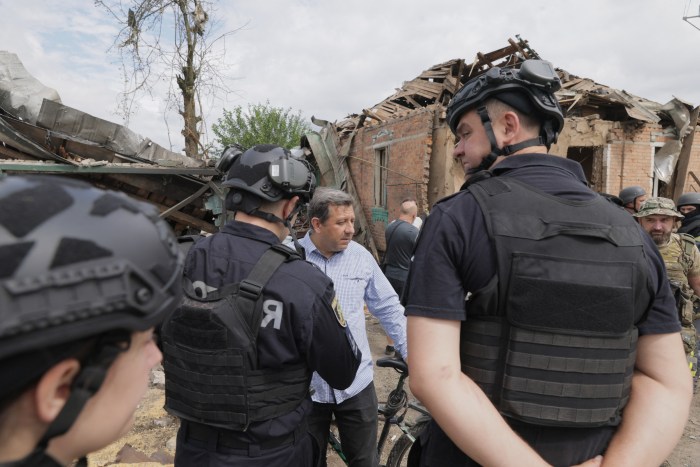
A bomb tore through an elite Moscow restaurant on August 1. Putin’s new air force chief, Colonel-General Aleksandr Chayko, appears to have been the target. Five people were killed in the attack. He’s not been seen since.
Meanwhile, Ukraine has been hitting the dictator’s billionaire backers where it hurts: Their wallets.
Warehouses have been blasted. Oil refineries set ablaze. Factories torn apart. And all the while, everyday Russian citizens are having to confront soaring prices and fuel shortages.
It’s not just a distant “special military operation” anymore.
It’s a war that has explosive drones swarming over Moscow almost every night.
“Putin’s war is not governed by rational international relations or conventional military strategy; it is governed by the political theory of autocracy and regime survival,” argue Slovakian think tank GLOBSEC analysts Maksym Beznosiuk and William Dixon.
“Autocrats stay in power only as long as the coalition of elites around them believes they can still deliver what elite loyalty is based on: whether revenue, security, or victory. When that belief breaks, the elites who sustain autocrats move against them.”
Playing the Trump card
Polish Prime Minister Donald Tusk warned US President Donald Trump and NATO officials during the Ankara summit in July that it had intelligence that the Kremlin was preparing to strike a NATO member.

“I don’t mean to scare anyone, but the coming months may truly be critical, also due to the changing nature of the war. These concerns are particularly palpable in the Baltic States,” Prime Minister Tusk told reporters.
CIA Director Ratcliffe’s secret mission to Moscow appears to confirm this.
Flight tracking data shows his military C-17 Globemaster scrambled at short notice to fly across the United States before touching down at USAF Special Air Mission Joint Base Andrews, Maryland. There, it took aboard a specialist “command module” from which the CIA director could conduct operations in relative security and comfort.
It then flew to Latvia, and on to Moscow.
His CIA operatives had told the Wall Street Journal earlier this month that Russia was preparing to launch a “limited” attack on a NATO state.
Now, the WSJ reports that was the central motivation behind its director’s dash to Moscow.
US Congress received a report on August 19 detailing Russia’s ongoing attacks on Europe.
“These attacks, which have been increasing in number and severity, include sabotage, assassinations, political interference and influence, cyberattacks, and airspace violations, among others,” it states.
Meanwhile, Britain’s Prime Minister Burnham is digging in.

“This is the moment to keep up the pressure on Russia, the moment to squeeze their ability to fund this illegal war,” Prime Minister Burnham said Monday.
“Ukraine has been Europe’s protector — not a drain on our security, but the front line in keeping Europe safe.”
And other European leaders may be set to follow.
“Watching NATO’s show of force over the past three days tells me Europe is finally taking the threat seriously and preparing for the possibility that Russia could go even further and test Article 5,” Lautman concludes.
Article 5 of the NATO treaty states that an attack on any member will be treated as an attack on all.
“Trump’s willingness to commit to a full-scale defence of NATO may prove to be limited, thus rupturing the alliance and worsening morale for NATO’s European members,” analyst Alexandra Desailly warns in the Australian Institute of International Affairs’ (AIIA) Outlook publication.
“This would open the floodgate to more Russian interference and aggression, providing Putin with a much needed pressure release and the chance to win political points back home.”
Jamie Seidel is a freelance writer