
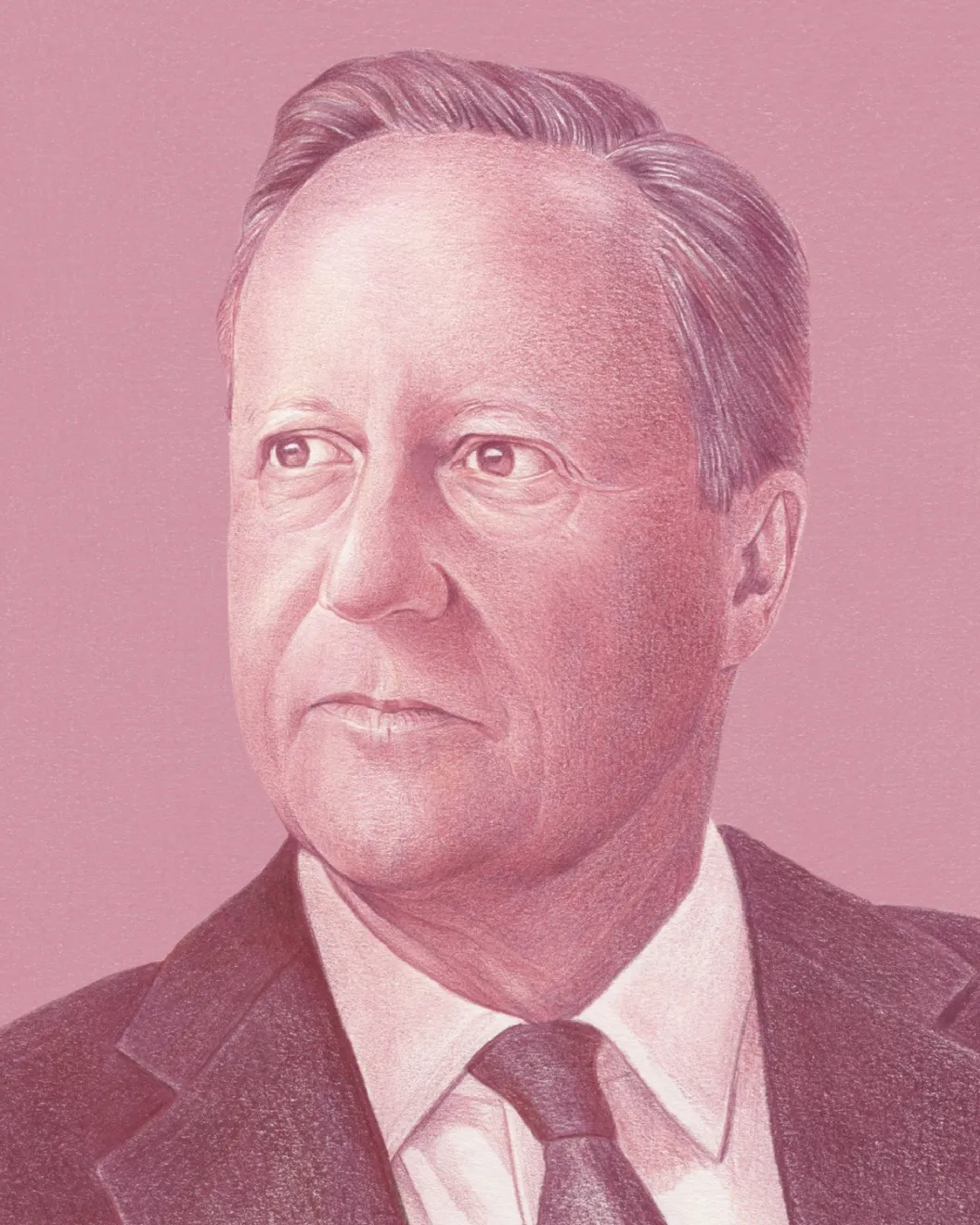
The former UK prime minister on his political legacy and why he’s committed to curing Alzheimer’s.
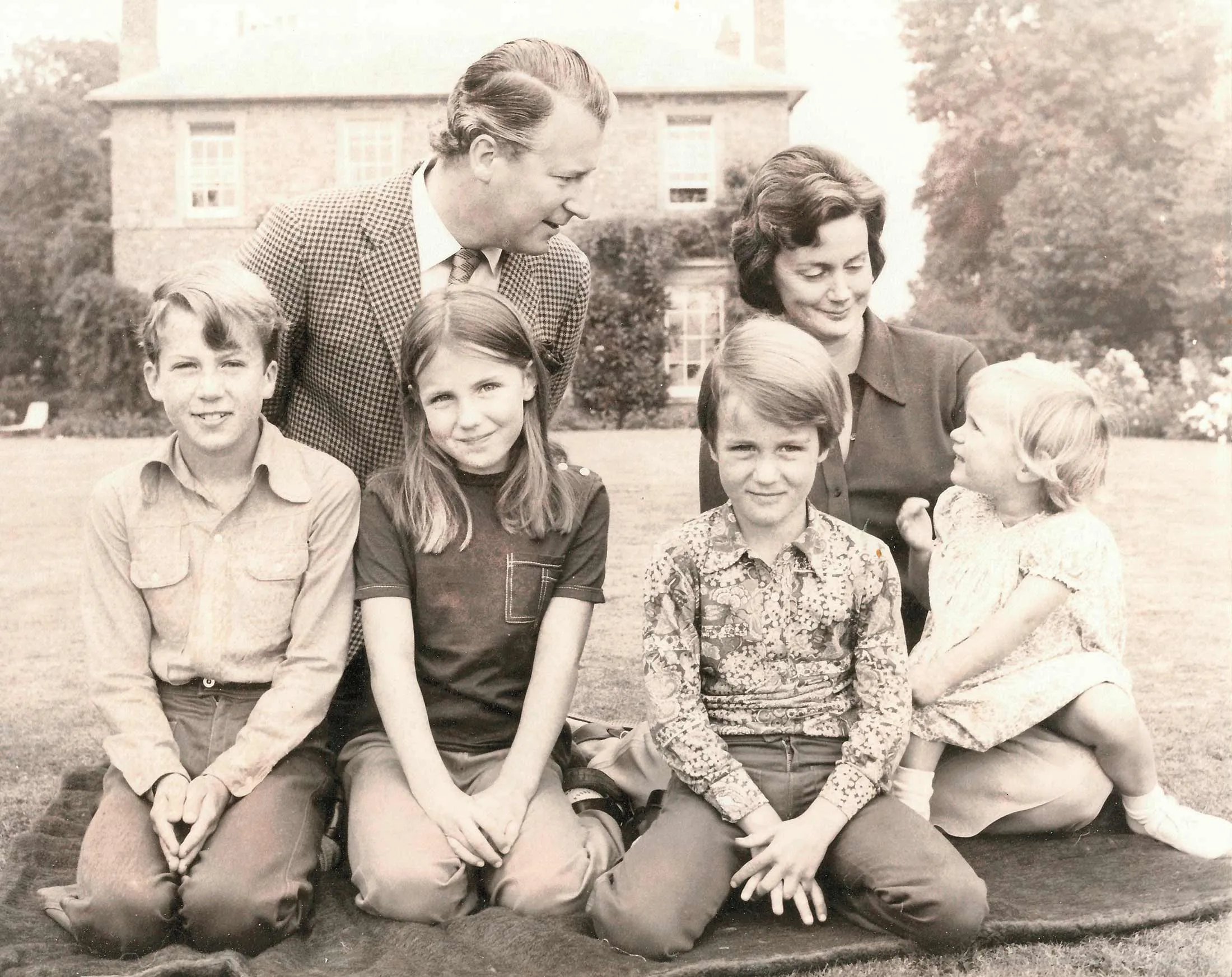
David Cameron started thinking about dementia years before he knew the disease would become personal. As UK prime minister, he launched a push in 2012 to make Britain a world leader in dementia research and care. Then his own mother, Mary, developed Alzheimer’s and died last year after a decline that Cameron says robbed his family of a “formidable woman.”
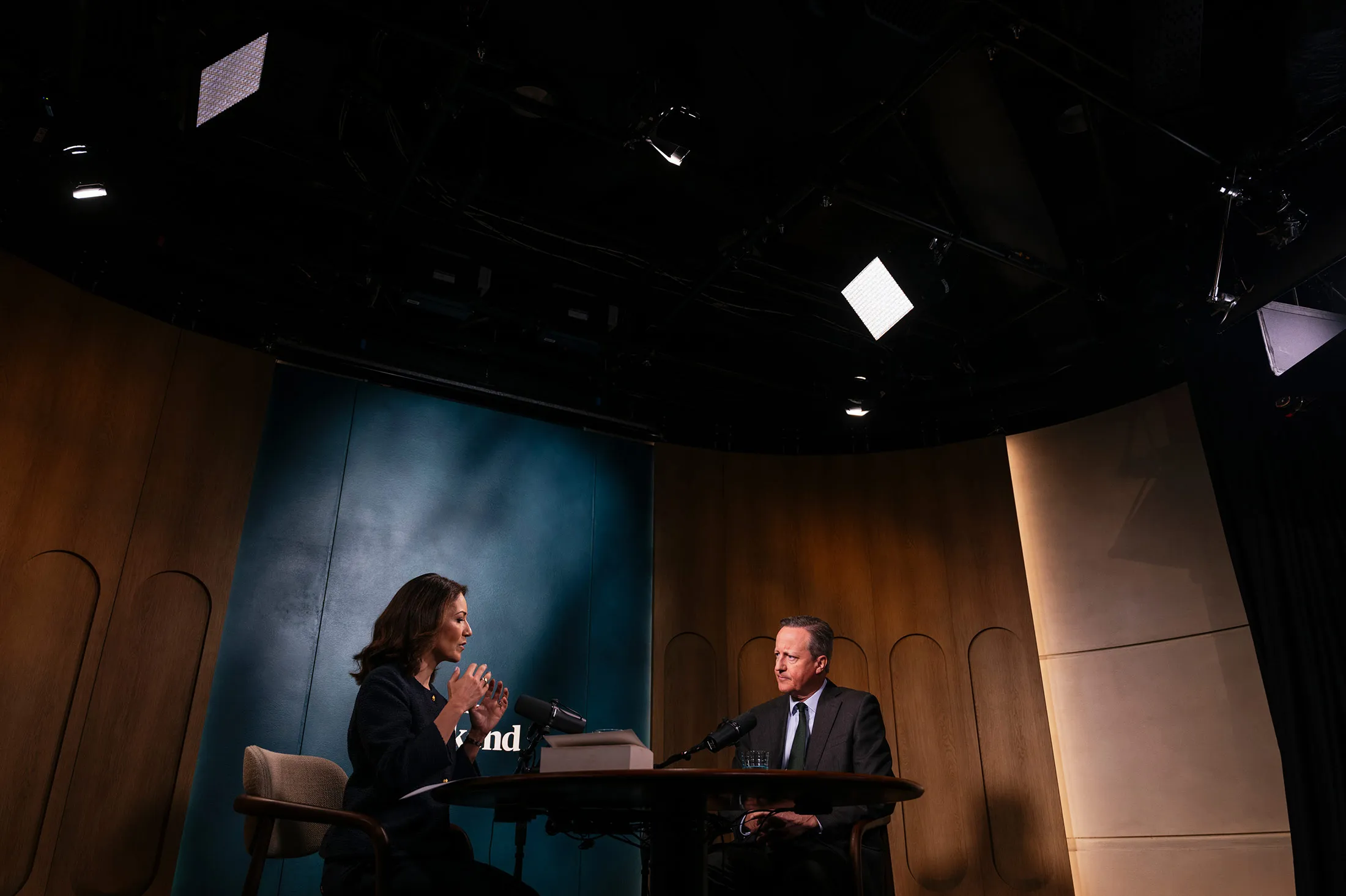
Now Cameron is returning to the subject with Ending Alzheimer’s, a four-part Bloomberg podcast series premiering Nov. 16 that explores advances in research and the possibility of a statin-style preventive pill. In this conversation, he discusses his mother’s illness and his own political record on health and care, before turning to the legacy of Brexit, migration, his return to government as foreign secretary and the future of the Conservative Party.
This conversation has been edited for length and clarity. You can listen to an extended version on The Mishal Husain Show podcast.
At the heart of the series is the personal experience of your mother, Mary. How did you see the disease develop in her?
To start with, you just notice the forgetfulness — pauses in memory, repeating things. It’s not a straight-line progression; often it’s connected with your physical health. There’s quite a lot of depression, because as you know this is happening, you worry about it.
So she did know. Did she talk about it?
She knew that she was getting forgetful, but that’s manageable.
The last two years [were] so depressing, because everything shuts down. She stopped walking, found talking more difficult. Fortunately, we were all there at the end, so we were able to say goodbye. Afterwards, you remember what your mum used to be like, rather than how she was right at the end. But it’s a dreadful disease and a terrible way to go. 1
1 Alzheimer’s disease is the most common cause of dementia. The World Health Organization estimates that dementia is the fifth leading cause of death worldwide — with the number of cases expected to triple by 2050.
She was a very strong woman, quite formidable. To me, she was a very loving mother, huge fun. Strong character, strong values. She was healthy — lots of social connections, pretty fit — so you did feel robbed.
David Cameron on Brexit and a Possible Comeback
She died in 2025; before your father, Ian, died in 2010, he thought there was something wrong with her memory.
Yes, that’s right. You don’t develop new brain cells after a certain age, so we all have a certain amount of brain atrophy. Trying to differentiate between normal forgetfulness and full-blown dementia is difficult. I definitely struggle to recall names and places.
I was particularly interested in the time frame because, as prime minister in 2012, you launched a bid to make the UK a world leader in dementia research and care.
At that point in my life, I didn’t think either of my parents had dementia. In fact, I didn’t really know anyone with dementia. [But] I’d come across a lot of people, being a member of Parliament and going around care homes. I remember seeing men in their 40s and 50s visiting elderly relatives and not being recognized — thinking what a terrible situation it was.
I was then briefed properly. [Dementia] is caused by diseases of the brain. I’d had that slightly idle thought, Isn’t dementia just something that happens when you get older? It was partly [the] embarrassment and shame of realizing how wrong I was that made me think, We ought to do more about this.
I also saw there was a communication problem. For years, we’ve had a really positive attitude that cancer is something we can crack. With dementia, there wasn’t that same sense of urgency.
This series is called Ending Alzheimer’s, and there is a moment where you say Alzheimer’s will be cured. Why do you believe that?
We’re making huge progress on diagnosis: At the moment, you have a cognitive test and it’s imperfect. We’re going to have blood tests, probably as soon as 2030. We’ve now got a couple of drugs — and a new one coming along — that are stopping the buildup of proteins in the brain.
My favorite bit from the podcast is when a scientist says to me, No child born today will have to say such a long goodbye to their parents. That’s incredibly moving, and I think accurate.
It’s still a long time frame, isn’t it? Decades.
That’s right, but we’ve got hundreds of trials underway, which is a much better position than we’ve had for years.
My vision is quite simple. In your 50s, you’re going to go to the doctor and have a blood test for signs of Alzheimer’s. There will be a pill — rather like a statin if you’ve got high cholesterol — something that will prevent the onset of this disease. The task now is [to] try and get there as quickly as we can. 2
2 “A statin for the brain” is how Cameron describes this in the series, and it’s an enticing and important prospect. Cameron, who is also president of Alzheimer’s Research UK, has been campaigning for two new treatments — donanemab and lecanemab — to be made available through the UK’s National Health Service. In 2025, regulators concludedthat the benefits of both “remain too small to justify the additional cost,” but that decision is currently under review.
The other part of this is the cost involved in caring for someone with Alzheimer’s. In your mother’s case, you could afford carers. Knowing what you know now, how do you look back on your decision as prime minister to pause your plan to cap care costs?
The idea of capping care costs is a good one. We legislated for it, but did delay. It was meant to come in, but then I left office. 3
3 Cameron made progress on this after coming to office in 2010, but by July 2015, the plan was shelved for another five years because of the estimated £6 billion cost. Cameron devotes only a few lines to this in his 2019 memoir For the Record, while calling it “one of my greatest regrets.”
A number of people are paying catastrophic costs for long-term care in care homes. It is the fickle finger of fate: One person doesn’t get dementia, keeps their home [and] passes it on to their children. Next door, they get Alzheimer’s [and] have to sell the house to pay for care.
[UK Prime Minister] Andy Burnham — all credit — is looking at how we pay for social care. I think there’s a real role for insurance.
Burnham said that politicians of his generation — including himself, but also you — were “cowardly” in ducking this before. 4
4 Burnham has his own family experience of dementia, as his father Roy died of Alzheimer’s in September. Days later, Burnham put plans for a National Care Service — to sit alongside the NHS — at the heart of his first speech to the Labour Party conference as prime minister.
We certainly didn’t solve it. As far back as 1997, Tony Blair said, I don’t want my children to grow up in a country where people have to sell their home to pay for care. So we’ve all not managed to solve this problem.
How much time do you spend today looking at your period in office, which ended so suddenly? You were only 50 when you left office.
Of course you think about it all the time. I try to limit my interventions. You don’t hear me on a daily basis commenting on the government. As an ex-prime minister, I’m very conscious [of] how hard the job is.
I’m still proud of lots of the things we did, but there are obviously things you didn’t do that you wish you had.
Brexit, maybe? Can we talk about Brexit?
Yeah, sure.
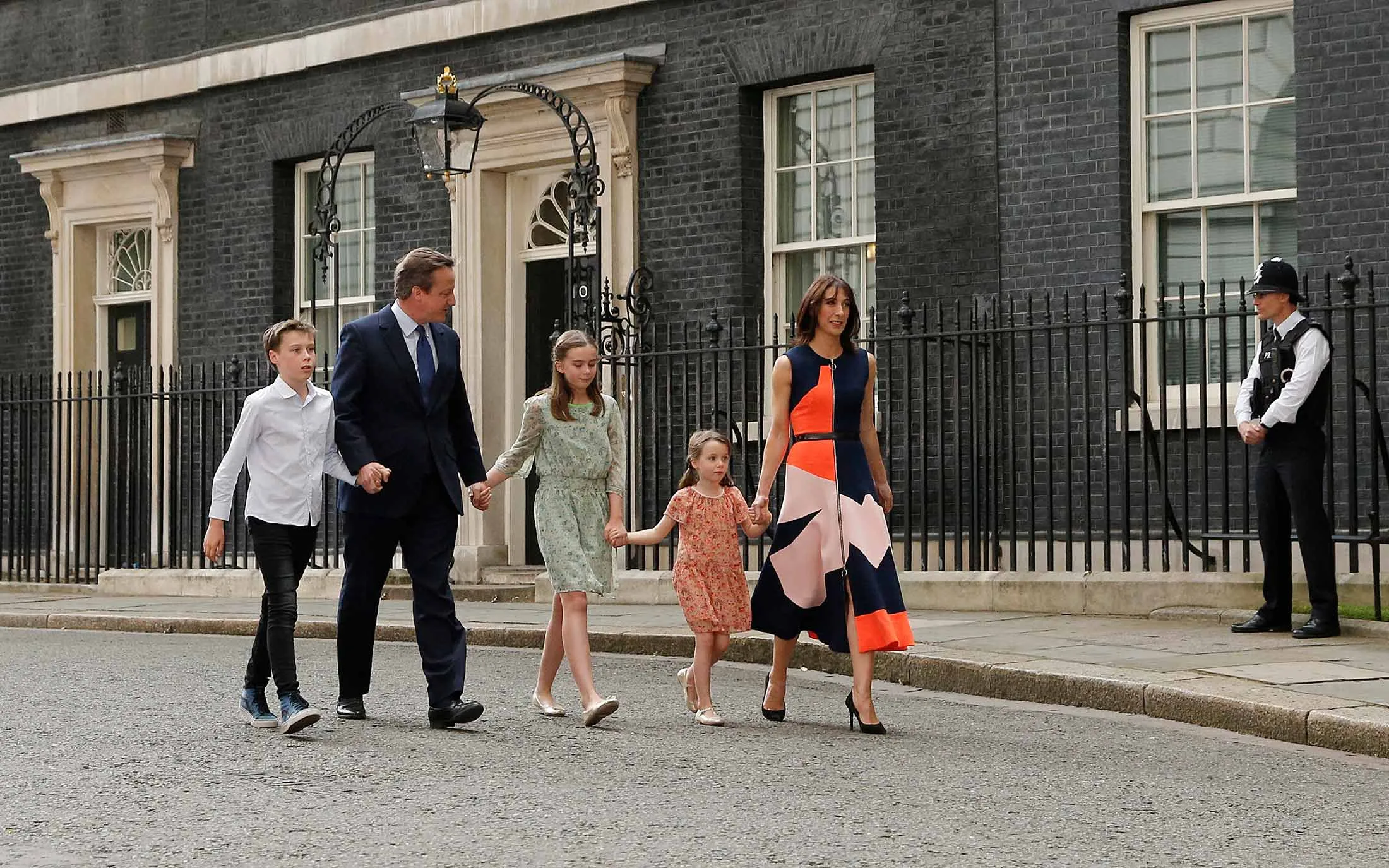
Do you think the UK would have a stronger future in the EU?
I fought the campaign to stay in on an amended basis, and I obviously wanted to win that campaign. I was desperately disappointed we lost.
But I’m a democrat — we voted to leave, and I think the right thing now is to try and become not just neighbors, partners and friends of the EU, but the best friends, neighbors, partners. We can make that work.
Read More: The Day That Changed the World
You believed then that Britain was stronger in the EU. So today, 10 years on?
Ten years on, we’re in a different situation. If you start endlessly producing this idea that we’re on a path to rejoining, you’re in danger of getting a less good partnership deal. EU countries will think, These guys are going to rejoin anyway, what’s the point in giving them a good deal?
Andy Burnham set out a few different options. If the next election ends up being fought on rejoining and Labour wins, is that a sufficient mandate? Or would you advocate having another referendum?
We live in a parliamentary democracy. We ask parliamentarians to make decisions on our behalf and be accountable, but when you’re looking at major changes, there is a role for referendums. 5
5 Brexit has become more of a live issue in UK politics in the past two months, with Burnham heading to Brussels for a summit this month and opening the door to the UK “going all the way” and rejoining. The next election is not due until 2029, but the future of the relationship could well be a key part of Labour’s manifesto.
Read More: Burnham Sets Limits on How Far His EU Reset Will Go
So you would say, No rejoining without another referendum?
Who knows where we will be? We’re living in a difficult, dangerous world. Britain is a big enough country to be a friend, neighbor and a partner — and succeed in that way, rather than being a member. Let’s work on making that work.
As foreign secretary, I was responsible for our relationship with the EU. These negotiations will be very tough, because that’s what the EU does; it’s a negotiating organization.
[Former Chancellor of the Exchequer] George Osborne thinks Brexit has “been a mess” and the UK should rejoin the customs union. I’m not sure whether you’re saying, I’ve changed my mind on the EU. Are you a Brexiteer?
What I’m saying is, instead of launching an argument about rejoining — which would be long and painful — focus on how we [can] be the best friend, neighbor, partner.
I don’t think joining a customs union is the right answer. We have signed good trade agreements with other countries. 6
6 I mentioned Osborne because, as Cameron’s longstanding finance minister and friend in and out of government, both argued in 2016 that Britain was better off remaining in the EU. Today, Osborne doesn’t mince his words: “Britain has basically gone off a cliff,” since Brexit, he said in September. “It has had a huge impact on the British economy. It is clearly poorer than it would otherwise be.”
Do you think that Russia affected the outcome of the referendum in 2016?
I don’t think it affected the outcome, no. It’s true to say that there were Russian bots trying to influence the debate; that’s always the case. Our adversaries — Russia, China, North Korea, Iran — spend a lot of time trying to sow division, distrust and disharmony in our country.
Do you think Britain has ended up poorer than it would otherwise have been?
That’s a very difficult question. Since Brexit, we’ve grown faster than Germany, about the same as France, pretty similar to Italy. 7
7 It looks like Cameron is referring to cumulative real growth. When Bloomberg Economics crunched the numbers for the 10-year anniversary of the referendum this past June, it estimated that Brexit may already have cost the UK economy between 2% and 4% of GDP.
Would we have grown even faster if we’d stayed in? We’ve had Covid, we’ve had the Ukraine war. Stripping out those things in the counterfactual is hard.
But look, I don’t run away from the things I said during the referendum. I thought the best answer for us was the best of both worlds — being in, but with special arrangements: out of the euro, out of [the] Schengen [Area].
If you look at the economic problems we have today, I don’t really think they’ve got anything to do with Brexit at all. We are over-borrowing, overtaxing, overregulated and [spending] far too much on working-age welfare. None of those have got anything to do with Europe.
You’re getting me fired up, but I would advise my party to focus on that rather than reopen the argument.
Do you accept some responsibility for the level of political churn [since 2016]? You’ve just been standing at the Cenotaph in a long line of living prime ministers.
It’s certainly true that delivering Brexit turned out to be extremely difficult. At the time, I remember saying to so many colleagues, Don’t think that by leaving the EU you’ll suddenly stop talking about Europe. It will become even more engrossing because of the difficulties of these arrangements. It was a very painful period. [Some of] the prime ministerial changes were to do with Covid, Ukraine, inflation or individual circumstances.
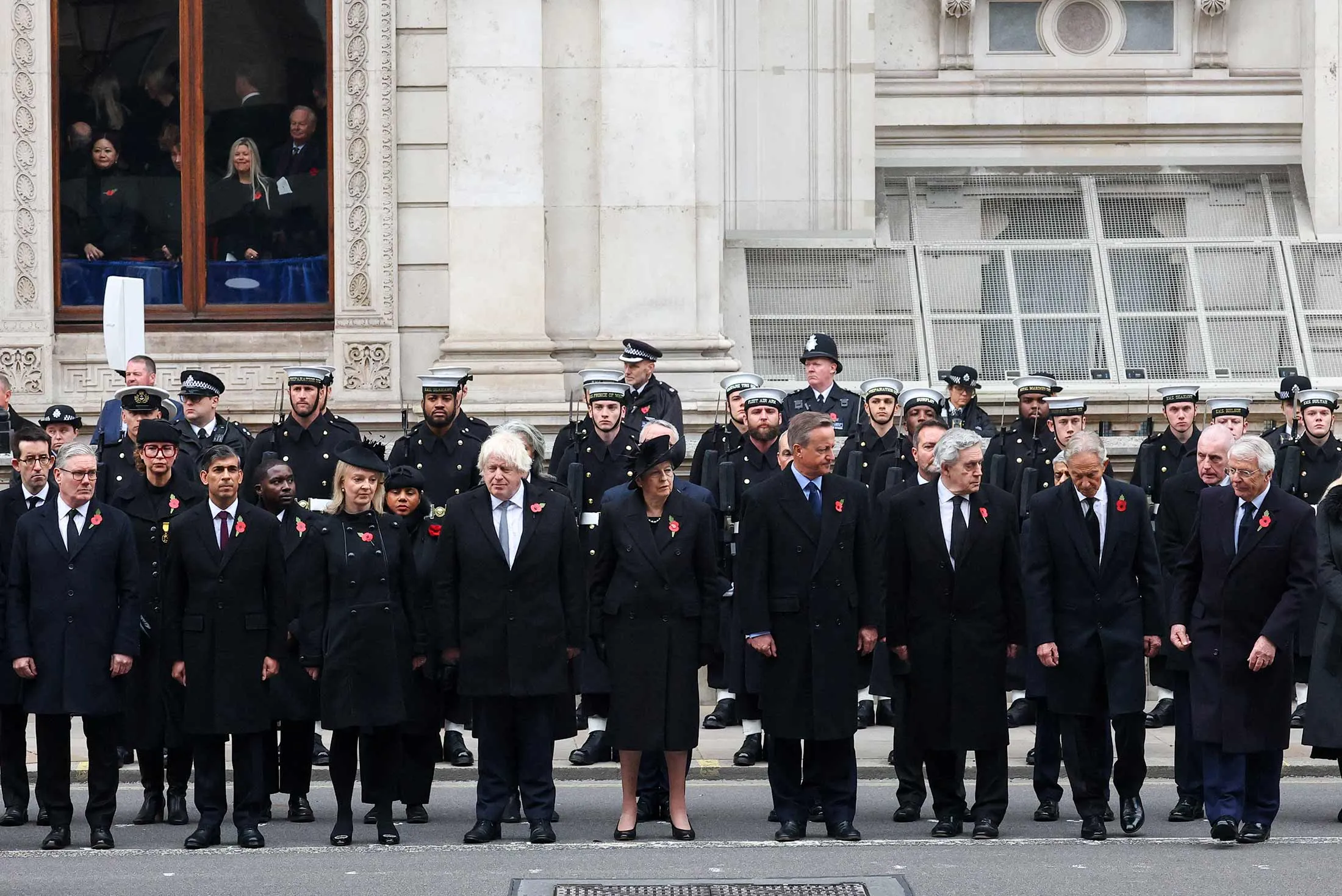
It was your party not being able to decide what kind of leader it wanted, or needed, in that period after Brexit.
With my successor, [Theresa May], yes. After that—
If you’re asking me, Do I regret the fact that it was a very tricky period after the 2016 referendum? Yes, I do. It was painful to watch. I long for us to have a sense of stability.
Obviously, I’m not a Labour supporter, but I wish the prime minister well. We need to have stable, sensible, thoughtful administration in our country.
You came back to serve as foreign secretary after the Hamas attacks on Oct. 7. Today, the death toll in Gaza is about 70,000 people. Do you look at that period and wish you had acted to restrain the Netanyahu government?
We did a huge amount to try and get the Israeli government to focus on the need to get aid into Gaza [and] treat prisoners properly.
This was dialogue. I don’t think you took action.
I went to Israel repeatedly. I used all the leverage we had to try and get aid in. I think it did work to an extent, but it was incredibly frustrating.
I think we were right in our overall position: This was a horrific attack on Israel and we wanted to demonstrate our support in light of that. But we also had some very, very tough conversations, and I did take action: sanctions and travel bans against violent settlers.
Arms exports licenses continued, even after three British citizens — James Kirby, James Henderson [and] John Chapman — had been killed in an Israeli strike on an aid convoy.
You had to ask yourself the question, What will the effect of this be? Will it actually have an impact on what is happening? My conclusion was it wouldn’t.
You also ask, What are the other consequences? There are programs like the F-35 [fighter jet] where there’s quite an integrated supply chain. Of course, the F-35 is very important to our security. So my conclusion was that to do more than we did would have been pretty much performative.
Look at what’s happened since: It was largely performative. The [2025] recognition of a Palestinian state threw [a] bone to backbench [MPs], rather than saying, Let’s make recognition part of the political process we want to see.
Could you see yourself coming back to government again?
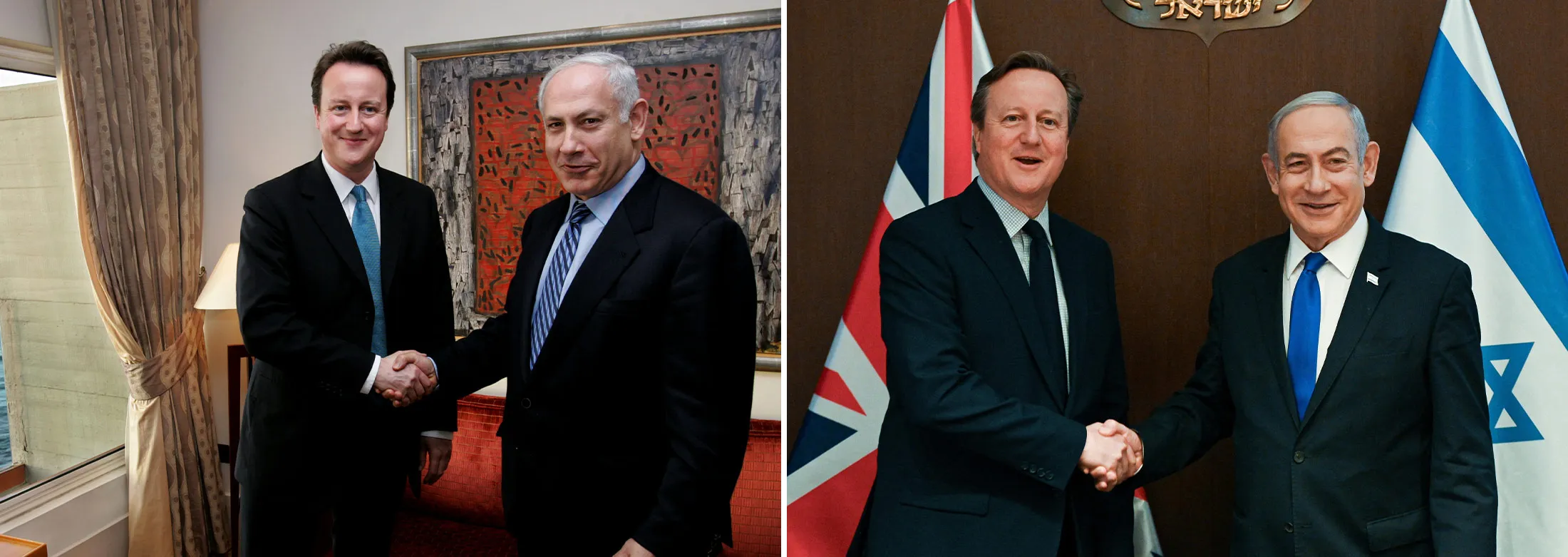
If my party or anyone else asked me to do something in public service, I would take that very seriously. I loved coming back as foreign secretary. I joked at the time that I’d do okay because I’d served an apprenticeship as prime minister for six years. That wasn’t entirely unserious. As foreign secretary, [I] could go to Israel and not just meet the foreign minister, but actually hammer [my] fist on the table with Netanyahu — which I did several times — because [I’ve] been dealing with him for 20 years.
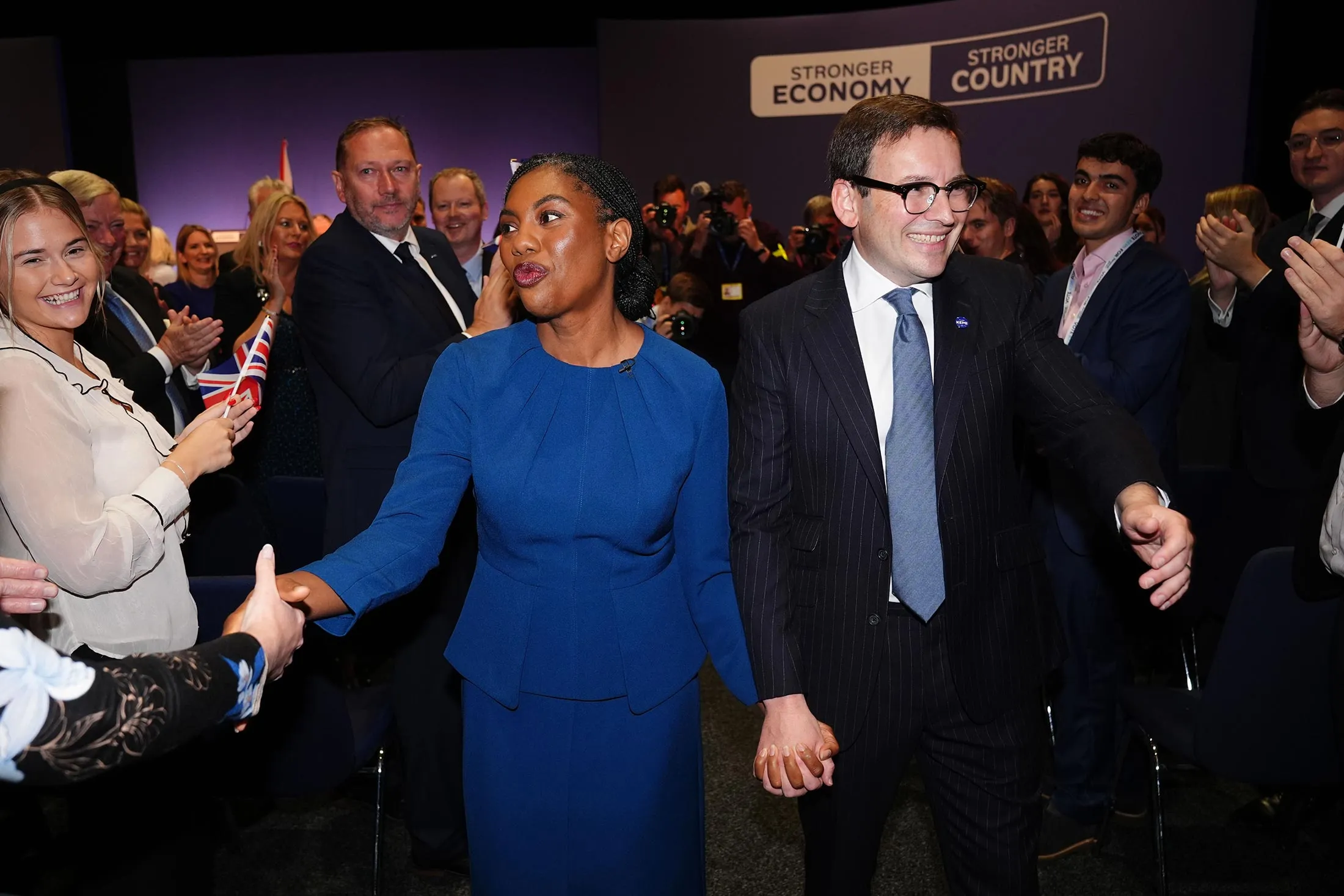
If [Conservative Party leader] Kemi Badenoch is elected prime minister, are you available?
I’m absolutely available. I haven’t said that to her, but I’m very happy to. I love public service, it’s the thing that motivates me more than anything. I don’t have to be the boss. I’m very happy being part of the team. 8
8 Support for the Conservatives collapsed after Labour’s election victory in 2024, and Reform UK’s rise to prominence. In recent months, though, Badenoch’s party has regained ground.
UK voting intention, 14-day moving average
How close are you ideologically to Badenoch? You were proud of having the “greenest ever” government; she wants to repeal the Climate Change Act. You were proud of overseas aid; she wants to reduce it by 90% from where it is now.
We do have some different outlooks, but I’m a team player. She is the leader of my team. I give my advice privately if it’s required. I want her to do well.
On the climate issue, I’m very proud that we were a very green government, but some of the targets that were subsequently setwere done without enough attention to how they were going to impact the cost of living. Conservatives do care about the environment — what we pass on to our children — but we’re pragmatic.
The thing that might surprise you is on the ECHR [European Convention on Human Rights], I think [Badenoch’s] absolutely right. One of the reasons we’ve got such a problem with populism is politicians of the center-right and center-left have not done enough to tackle illegal migration. 9
9 Britain was a founding member of the ECHR, a 1950 regional framework on human rights overseen by a court based in Strasbourg. Cameron’s backing of Badenoch’s pledge to leave it is significant: In office he expressed frustration with some of the court’s judgments but remained committed to the convention, including as foreign secretary in 2023.
You’d be comfortable leaving the ECHR?
Yes, if that’s what it takes.
Being with Russia and Belarus, that are outside it?
I put it a different way. We have to do whatever it takes to stop the small boats and stop illegal migration that is making it impossible to have a sensible conversation about migration more broadly. Arguably, it’s stopping us having a sensible conversation about lots of things in politics. Ordinary people look at this situation — [a] clear day in the [English] channel, 1,000 people getting into boats, breaking into our country — and think, This is outrageous.
Are you sure it would stop the boats?
Not on its own, but we have to do everything it takes.
I have many, many disagreements with [President] Donald Trump, but when he shut the [Southern] border at the beginning of his term — he probably should have left it at that, rather than the ICE raids and everything else — he showed people, I understand your concern. That’s the situation we’re in.
Mishal Husain is Editor at Large for Bloomberg Weekend
With assistance from
and