

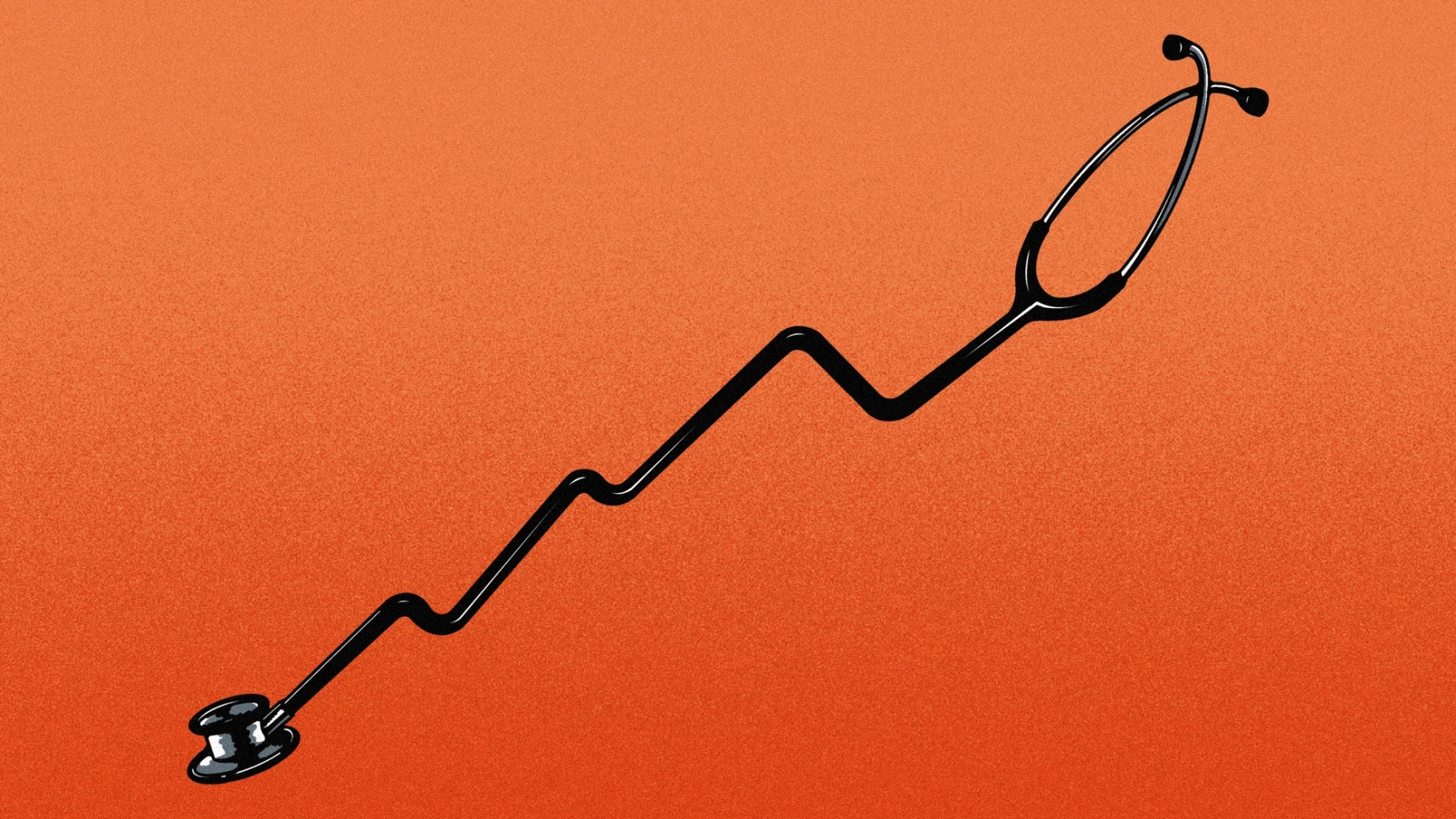
A law designed to end surprise billing has turned into a tool for squeezing even more money out of insurers—and raising costs for everyone else.
By Rogé Karma
If 2026 was the year of gas prices, 2027 will be the year of health-insurance premiums. The cost of employer-provided health coverage—the kind that 160 million Americans get—is expected to rise by as much as 11 percent, roughly double the average annual increase over the past decade. “These are the highest numbers we’ve ever seen,” Ellen Kelsay, the president and CEO of the Business Group on Health, an organization that lobbies on behalf of large employers, told me. “
Much of the increase will be passed on to employees—either directly, in the form of higher premiums, co-pays, and deductibles, or indirectly, in the form of reduced benefits, smaller raises, and slower hiring. The biggest reason this is all happening is deeply perverse: A law designed to end surprise medical billing has turned into a tool for squeezing even more money out of insurers and raising the cost of care for everyone else.