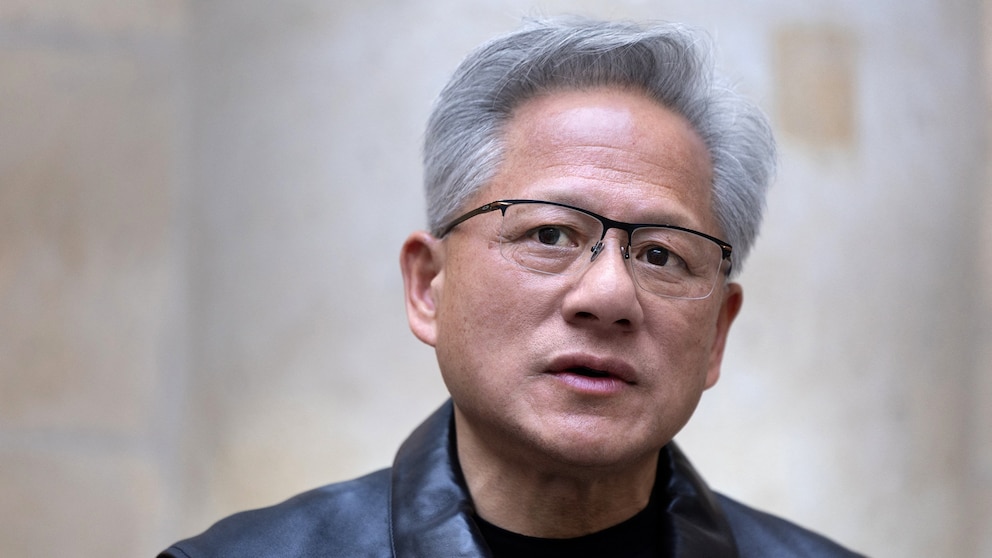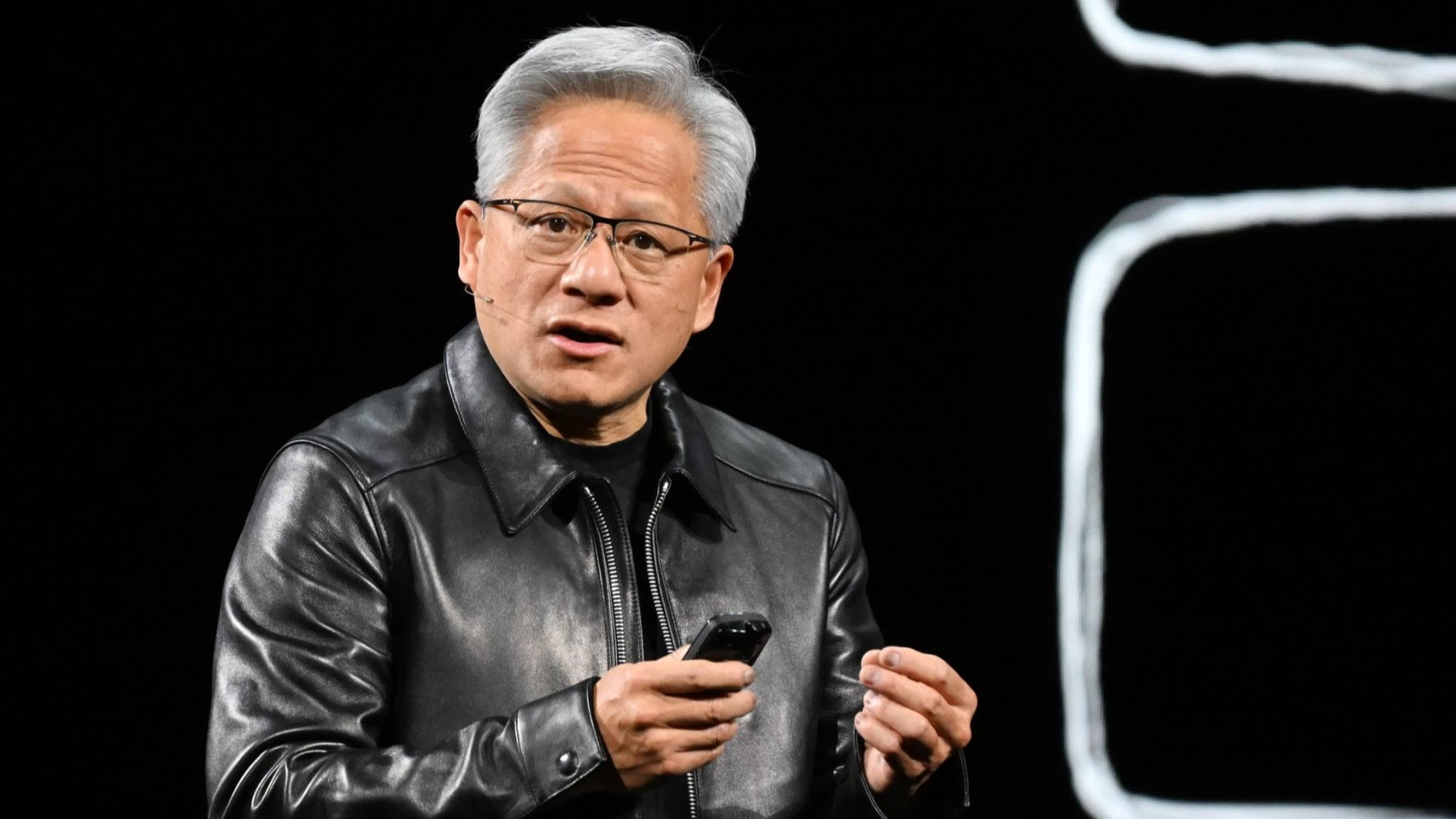
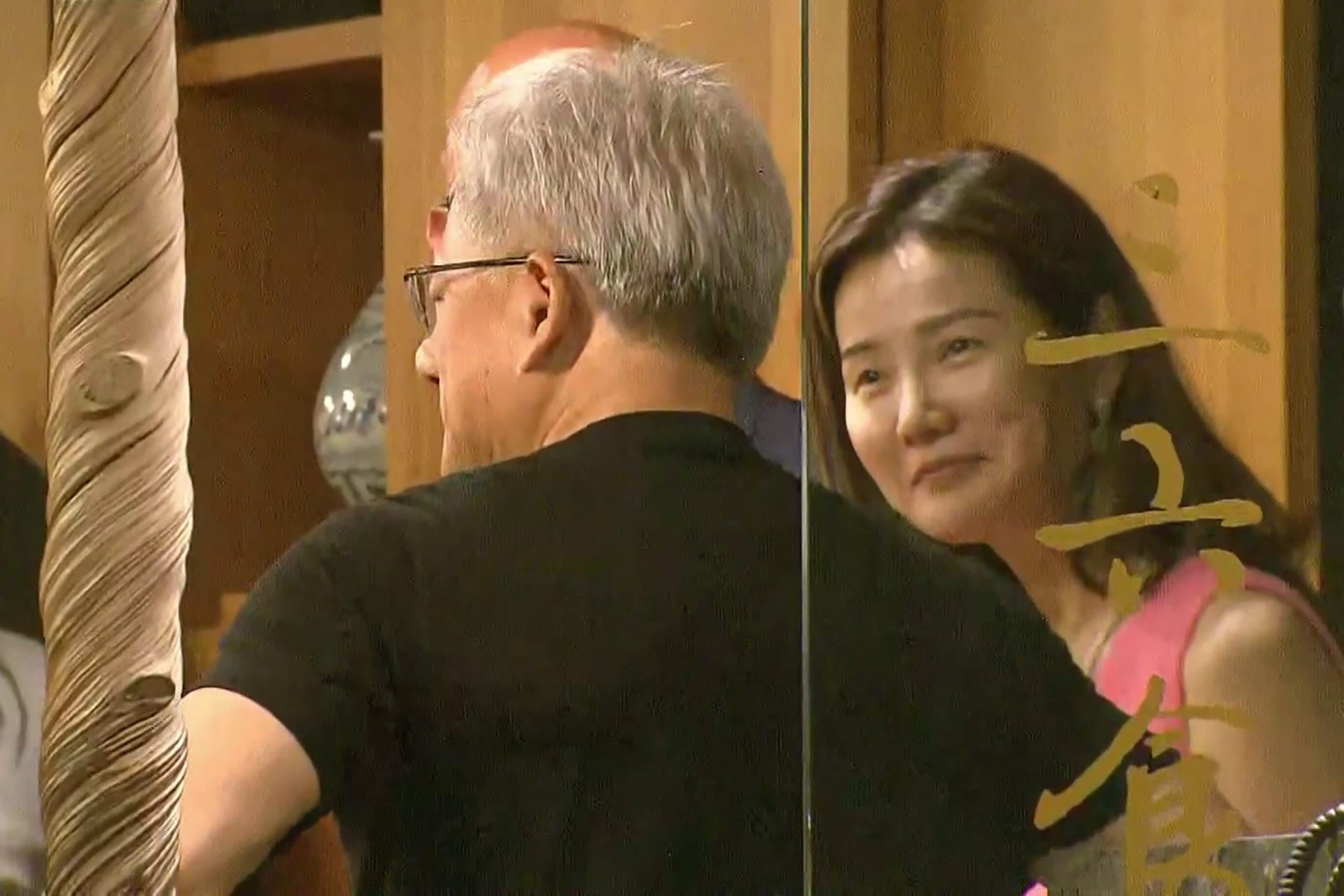
Nvidia and its CEO Jensen Huang have reportedly been sued in a proposed class action accusing them of defrauding shareholders by concealing the chip giant CEO’s ties with a suspected Chinese spy.
Nvidia shares plummeted by 4.3 per cent on Monday after the chip giant opened an investigation into reports Mr Huang was the “target of a foreign intelligence effort”.
Want more finance news? Download our new app for even more coverage
Shares slid as much as 8.8 per cent on Monday, at one point erasing nearly $US400 billion in market valuation after Mr Huang disclosed the romantic relationship in a memo to employees.
The chip giant ended the day losing about $US230 billion ($332 billion) in market value, making it the worst performer in the Dow Jones Industrial Average and second weakest in the S&P 500.

Rival chip companies have emerged as the big winners of the Nvidia spy scandal, which has plunged the stock of what was once the world’s biggest company into free fall.
“Other chipmakers though were up, with both Marvell Technology and Broadcom rising nearly 9 per cent, while Intel and Qualcomm gained 4 per cent and 6 per cent respectively,” CommSec equity market commentator James Gruber said.
“The Philadelphia Semiconductor Index added more than 6 per cent after suffering its worst week since March 2025 last week.”
Advanced Micro Devices surged 12 per cent, with Nvidia the only stock in the Philadelphia Semiconductor Index trading lower on the day.
Chipmakers and other companies linked to the AI boom took a hammering following the US midterms last week, where the Democrats swept Congress leading to speculation the government would seek to rein in tech firms.
But Wall Street rebounded on Monday, with the tech-heavy NASDAQ adding 2.7 per cent and the S&P 500 up 2.4 per cent.
Oil prices closed at their lowest level since August, after Donald Trump said on Sunday that further strikes on Iran were unlikely as long as negotiations to end the conflict continued.
The price of Brent crude dropped 5.9 per cent to $US92.57 a barrel.
Rivals likely to add ‘honeypot training’
Briefing.com analyst Patrick O’Hare said Nvidia was being treated as a one-off story by investors for the moment.
“In other words, the stock is being penalised for Jensen Huang’s personal transgression, which has invited a great deal of uncertainty into the mix, but the market isn’t caught up in the notion that this situation is going to have a systemic domino effect,” he said in a note to clients.
Seaport Research analyst Jay Goldberg told MarketWatch it was likely companies like AMD and Broadcom “are going to start adding honeypot training” as a measure of security beyond existing protocols governing electronics usage in China.
He added that “every company is at risk of this.”

Morningstar analyst Brian Colello told the website all US vendors and suppliers in the AI ecosystem would be under growing scrutiny in the coming months in the wake of the scandal, and would need to ramp up efforts to protect themselves against outside influence and maintain compliance with US laws.
“We can’t rule out any tactics against other companies, but Nvidia’s market dominance gives it the biggest bullseye,” he said.
deVere Group CEO Nigel Green said the scandal would hand investors a rare chance to buy into the chip giant at a discount.
“This is, for now at least, a personal scandal, and the market is pricing it like a corporate crisis,” he said.
“A fall of this size is likely to knock somewhere between $200bn and $250bn off Nvidia’s value, yet nothing about this weekend’s news changes how many chips it sells or how badly the world needs them.”
Nvidia is a global leader in producing the chips used to train and run AI models and is one of the world’s most valuable companies. It became the first company in history to reach a market cap of $US5 trillion last year.
Mr Huang, 63, acknowledged the affair in a memo to Nvidia employees on Sunday.
“I was unfaithful to my wife,” he wrote. “My actions hurt her and our children. There is no excuse for what I did. I am deeply sorry.”
Mr Huang has been married to his wife Lori since 1985.
His admission followed reports in The New York Times that US intelligence officials had concluded the woman, Alice Huang, was passing information to China. She is not related to the Nvidia chief.
Alice Huang is a former senior executive at Megaspeed, a Singapore-based data centre company which buys AI chips from Nvidia.
According to the Times, a memo circulated among senior US officials this spring cited intelligence that she was an asset of China’s Ministry of State Security.
The memo said she had been recruited to gather information on Huang and possibly to steer Nvidia toward pushing for its top chips to be sold in China.
Nvidia controls an estimated 90 per cent of the market for the chips used to train and run AI models. Washington has restricted the sales of the most advanced ones to China since 2022.
Nvidia’s board said it had opened an independent probe into the matter.
“While the board has no reason to believe that either national security or Nvidia secrets were compromised, the board’s inquiry will examine all available information,” it said.
This content was created in partnership with CommSec.