

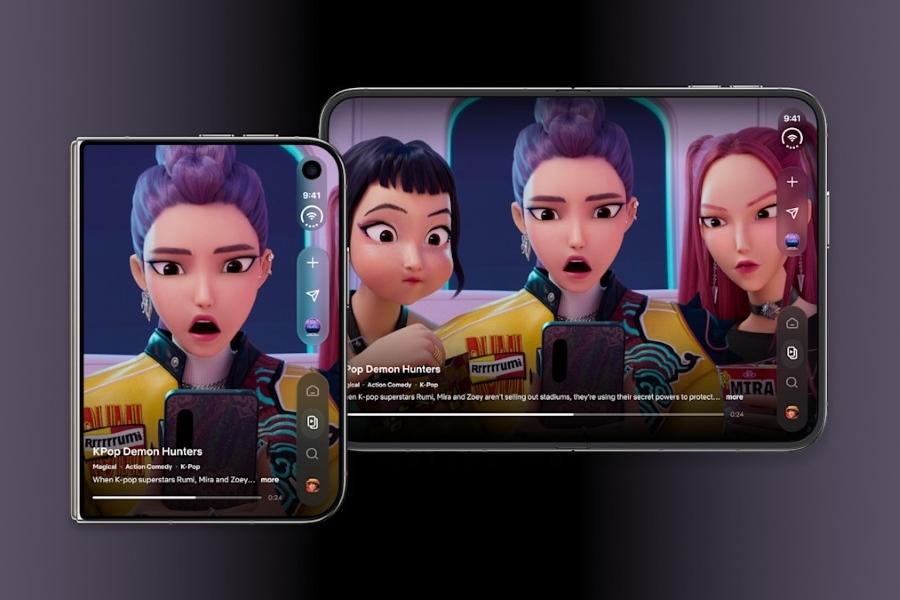
The streaming giant is adapting its interface for Apple’s new foldable iPhone while preparing to expand its personalized Clips video feed.
By Rick Ellis, Contributor
Netflix is giving its mobile experience a more prominent role in its streaming strategy, rolling out a redesigned iPhone app tailored to Apple’s new iPhone Duo while preparing another expansion of its short-form video discovery features next year.
The changes reflect a broader shift in how Netflix thinks about mobile viewing. Rather than treating smartphones as smaller versions of the television experience, the company is increasingly designing its app around the distinctive ways subscribers use their phones to discover, sample and consume entertainment.
The latest update takes advantage of the iPhone Duo’s foldable design, with a more flexible home screen and playback controls that adapt to different viewing configurations. Netflix also plans to introduce smoother transitions between vertically and horizontally oriented video clips, with additional personalization features scheduled for 2027.
For Netflix, however, the hardware-specific improvements are only part of the story. The company is also working to make its mobile app a more engaging destination between traditional viewing sessions, using short-form video to help subscribers discover programming and spend more time exploring its catalog.
The iPhone Duo redesign addresses one of the challenges presented by foldable smartphones: A device that can function as a conventional handset, an expanded viewing screen or a hands-free entertainment platform needs an interface that can accommodate all three.
Netflix’s updated app features a more dynamic home screen intended to take advantage of the device’s larger display. Its playback controls adapt to different configurations, including fully opened, book-style, tent and tabletop positions, keeping essential functions accessible as the device changes shape.
The interface also incorporates a reflective visual effect on its controls that responds to the angle of the phone’s hinge.
Netflix is developing another improvement that will allow users to move between vertical and horizontal video clips without disrupting playback. The company has not announced a specific release date for that feature.
The work illustrates how device design can influence the evolution of streaming interfaces. For years, the industry’s primary objective was to bring television programming to increasingly smaller screens. Foldable devices introduce a different consideration: making the transition between screen sizes and viewing positions feel natural rather than forcing users to adjust their behavior to accommodate the software.
Netflix has been developing its mobile experience for more than 15 years. The service arrived in Apple’s ecosystem in 2010, initially extending the familiar television experience to mobile devices. The introduction of downloads in 2016 helped establish a more distinct role for smartphones, allowing subscribers to take programming with them and watch without an internet connection.
The company’s current approach builds on that evolution, with interfaces and discovery features designed specifically for the mobile environment.
The more consequential development may be Netflix’s continued investment in short-form video.
Earlier this year, the company introduced Clips, a personalized vertical-video feed featuring excerpts from its series, films and specials. The feature allows subscribers to sample programming, add titles to their watchlists and share clips with friends without navigating away from the feed.
The concept addresses a familiar challenge for streaming services: helping subscribers decide what to watch when faced with an extensive library of choices.
Traditional streaming interfaces rely heavily on rows of recommendations, promotional artwork and descriptions. Clips introduces a more immediate way to evaluate programming, allowing viewers to encounter scenes and performances before committing to a full episode or film.
Netflix plans to expand the feature in 2027 with themed categories and more specialized feeds organized around genres, moods and interests.
The strategy could make content discovery more efficient, particularly for subscribers who primarily access the service through their phones. It also gives Netflix another way to keep its programming visible to members who might not have time for a full-length viewing session.
The distinction is important. Clips is not simply a promotional tool designed to advertise Netflix’s longer programs. The company is developing a mobile experience in which short-form video becomes a more substantial part of how subscribers interact with its entertainment library.
That creates opportunities to connect viewers with programming they might otherwise overlook, while giving Netflix another format through which to present its content.
Netflix’s mobile ambitions are unfolding in a market where short-form video has become a central feature of digital entertainment.
Services such as TikTok, Instagram and YouTube have conditioned audiences to browse personalized video feeds in short bursts. Streaming companies have increasingly explored similar approaches as they look for ways to make discovery easier and encourage more frequent engagement.
Netflix has experimented with mobile-specific formats before, including its earlier Fast Laughs feature. Clips represents a more integrated approach, placing short videos within a redesigned navigation experience that also connects users to the company’s broader entertainment offering.
The opportunity extends beyond helping subscribers choose a series for their next evening of viewing. A compelling clip can attract attention during a commute, a lunch break or another brief window when watching an entire episode is impractical.
If that interaction leads to a longer viewing session later, the feature has served its discovery purpose. If subscribers return to the app repeatedly for short bursts of entertainment, it could also establish a more frequent relationship between the service and its audience.
Netflix has additional opportunities to expand the format as its programming mix evolves, including through video podcasts and other content categories. Its mobile strategy is increasingly tied to the question of how different types of entertainment can coexist within a single service.
That does not mean Netflix needs to become a social network. Its advantage remains its extensive library of professionally produced entertainment and its ability to connect subscribers with that programming. The challenge is to make those assets easier to discover in an environment where audiences have more entertainment options than ever.
The iPhone Duo provides Netflix with a specific opportunity to rethink its interface around a new form factor, but the company’s broader mobile ambitions are not limited to Apple’s latest hardware.
The redesigned navigation and Clips feed are part of a wider effort to make the app more intuitive and visually oriented. Netflix has already expanded the redesigned mobile experience globally, giving the company a foundation for further changes to content discovery and presentation.
The planned 2027 expansion of Clips suggests that Netflix views the feature as an ongoing product initiative rather than a temporary experiment.
More specialized feeds could help subscribers navigate the catalog according to their immediate interests, whether they are looking for a particular genre, a specific mood or a quick sampling of available entertainment. Such an approach could also provide Netflix with additional ways to connect its recommendations to individual viewing habits.
The longer-term question is whether these changes can improve the relationship between discovery and consumption. A more engaging interface is valuable, but its effectiveness ultimately depends on whether subscribers find programming they want to watch and continue to see value in their memberships.
Netflix has not disclosed specific performance targets for the new mobile features, and the announcement does not establish how widely the iPhone Duo-specific interface might extend to other devices.
For now, the company is pursuing two related objectives: making its app better suited to emerging mobile hardware and making its entertainment catalog easier to explore through short-form video.
Both reflect a streaming business that increasingly needs to compete for attention before a viewer even decides what to watch.
Netflix built its reputation on delivering television series and films on demand. Its next phase of mobile development is about ensuring that finding those programs can be as compelling and convenient as watching them.

