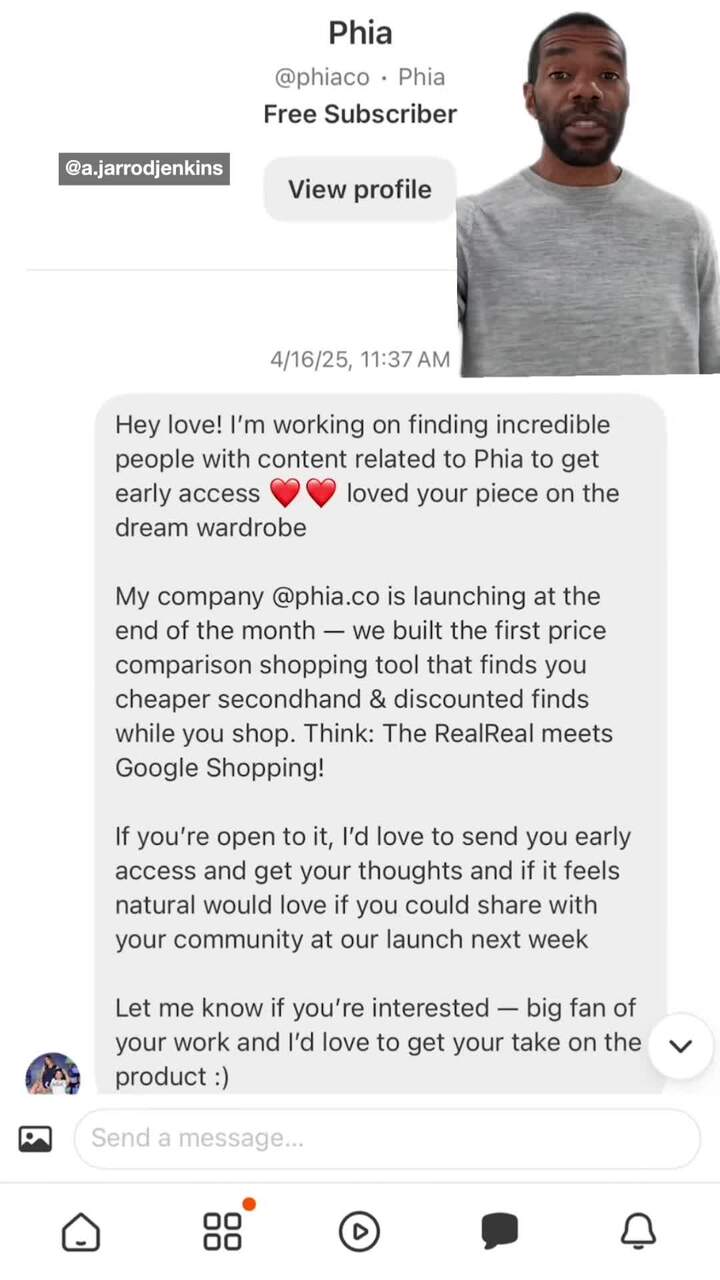
TikToker calls out Bill Gates' daughter for 'disrespect'

The firm of Bill Gates’ “nepo baby” daughter has been accused of an illicit practice that comes with a maximum penalty of 20 years.
Taylor Herzlich — New York Post
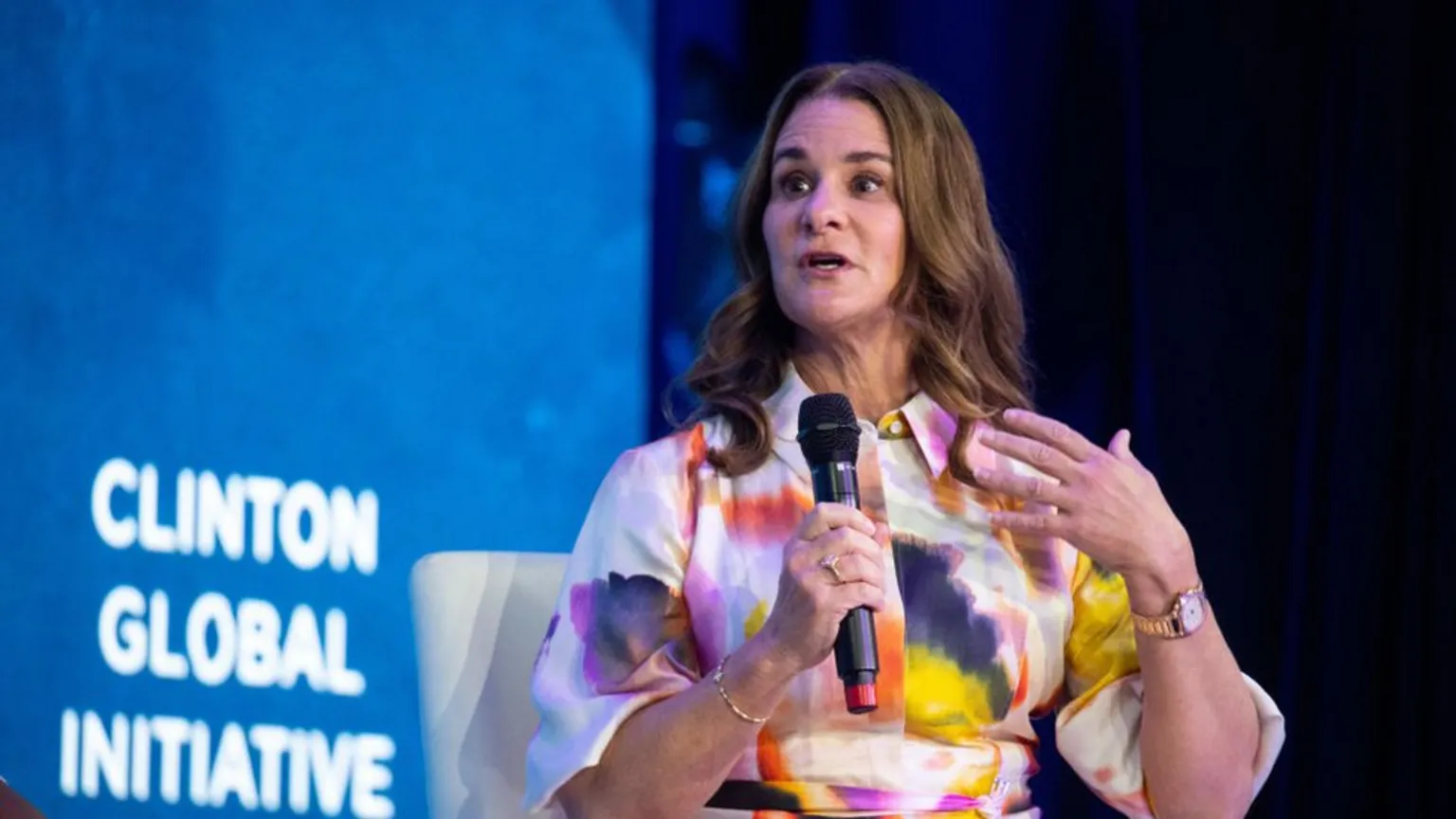
The company of Bill Gates’ “nepo baby” daughter Phoebe Gates has been accused of alleged “cookie stuffing” — a practice that comes with a maximum penalty of 20 years in prison in the US, according to reports.
Phia — a digital personal shopping assistant co-founded by Ms Gates with fellow Stanford University graduate Sophia Kianni — reacted with shock in July following reports that the firm was dropping more web “cookies” than it should, taking undue credit for online sales at retail partners, reports The New York Post.
The company originally released a statement that it had only learned of the issue “within the last 24 hours”, pledging to fix the glitch — but according to a new Bloomberg report, the young entrepreneurs had known for at least seven months that their start-up was overcounting its sales commissions.
If cookie stuffing is proved, under US federal law it could constitute wire fraud with a maximum penalty of 20 years in prison plus fines.
Neither Ms Gates nor Ms Kianni have been charged with any crimes.
A Phia spokesman told The New York Post, “Any features causing misattributions were immediately removed over a month ago on July 7”.
“We are reviewing every transaction, we are fully committed to and have already begun issuing all transaction reversals to brand partners as a result of any misattribution, and we are hiring a head of compliance to make sure something like this never happens again.
“We are now continuing to connect our users with items and offers from thousands of brand partners,” the spokesman added.
“We will learn from this and want to ensure our users have the best possible shopping experience, with features like our new digital closet and more to come.”

The start-up — which raised a jaw-dropping $US30 million ($43 million) in 2025 from backers including Hailey Bieber, Kris Jenner and Spanx founder Sara Blakely — operates as a browser extension, finding discount codes for customers across online retailers when they click on Phia at checkout.
When a shopper uses Phia by selecting one of its coupon codes, the software drops a “cookie” — which tracks activity across the web — to show that retailer it helped drive the sale and earn itself a commission.
Phia had originally insisted it was a short term glitch that dropped cookies into the checkout process even when customers did not use Phia.
But a new Bloomberg report has alleged Ms Kianni and Ms Gates — whose father Bill Gates is worth $US108.4 billion ($153.8 billion), according to Forbes — had been aware of the “cookie stuffing” for months, according to people familiar with the matter and claimed internal Slack messages reviewed by Bloomberg.
It’s alleged the illicit cookie stuffing traced back to at least December across sales at several major retailers, including Nike, Gap and US department store Nordstrom, and seemingly made up the bulk of Phia’s revenue, according to the news outlet.
After Phia disabled the features in July, average daily revenue at the company allegedly plummeted from around $US80,000 ($114,000) to between $US10,000 ($14,000) and $US28,000 ($40,000), according to Bloomberg.
In June, cookie stuffing accounted for about 51 per cent of the merchandise value that Phia claimed credit for selling, the report said.
A Phia spokesman said part of the steep revenue decline in July was caused by the company disabling most of its monetisation efforts at the time, not just the cookie stuffing, and that Bloomberg’s analysis of the data was overstated.
According to an internal dashboard viewed by Bloomberg, what Phia initially called a software bug in July was actually a feature called “enable coupon auto drop”, which the company was able to switch on and off.

At one point, Ms Gates — who insisted that she wanted to succeed without her billionaire parents’ help, saying she has “such a desire to prove myself” — allegedly grew concerned that Phia wasn’t generating as much commission from website Etsy as she had expected.
It’s claimed she messaged developers to make sure that Phia was dropping a cookie each time its browser extension popped up, even if the shopper didn’t click a coupon, which would allow it to earn commission for the total gross merchandise value, the report said.
In a Slack channel on December 18, she allegedly wrote, “worried this is an issue across the board … can u confirm auto pop for cookie drop is live on ALL sites w a coupon to confirm we are monetising on all gmv”.
In a separate incident, it’s claimed Ms Kianni suggested a feature that would drop a cookie each time a user simply tried to close out a Phia pop-up, according toBloomberg.
A colleague told Ms Kianni that Google Chrome prohibits extensions from dropping affiliate cookies on “dismiss events”, or when a customer simply tries to close out a notification, and Ms Kianni conceded.
But she allegedly added, “I guess we could say that the user is trying to open us and roll it back if they complain,” according to the report.
A Phia spokesman told Bloomberg that this feature was never implemented. The company has not commented on the alleged internal messages from Ms Gates or Ms Kianni.
Impact.com, one of Phia’s affiliates, had already suspended the network and reallocated commissions that it had set aside to pay the company, according to the report.
Though Phia said it has already started looking into transfer reversals, if the allegations prove true it might have to issue extra refunds if the policy was in place from December to July, a much longer time period than initially thought.
This article originally appeared on NY Post and was reproduced with permission