Français English
Europe 16 min read

A migrant crisis and tensions within Nato leave Pedro Sánchez increasingly isolated on the world stage

Source: The Daily Telegraph::
Spain’s socialist pariah pushes Europe to the edge

A migrant crisis and tensions within Nato leave Pedro Sánchez increasingly isolated on the world stage

It is a nickname many men would not mind having, but Pedro Sánchez has never liked being called “El Guapo” – the good-looking one.

Nevertheless, he has got himself noticed recently for far more than his looks.

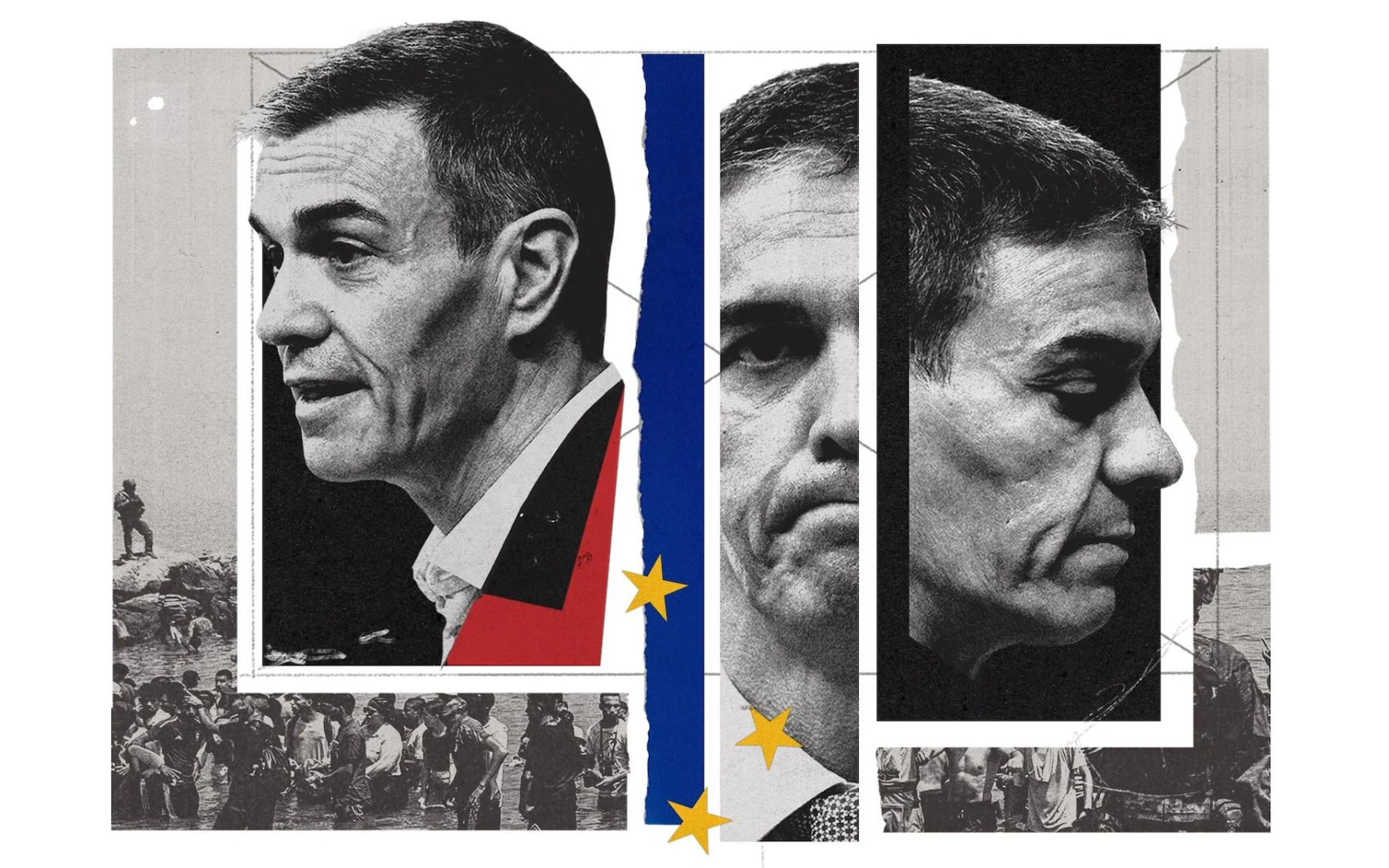
The Spanish prime minister recently made headlines around the world after about 72,000 migrants swam or burst into Spain’s north African enclave Ceuta, with at least 80 people dying in the process. By Aug 4, Spain estimated 70,000 of 72,000 who had crossed had returned to Morocco.

But the sight of tens of thousands of people streaming across Europe’s only land border with Africa prompted an extraordinary, critical response from 22 of the 27 European Union bloc members, who blamed Sánchez’s migration policy.

Migrants in Ceuta
The sight of tens of thousands of people streaming across Europe’s only land border with Africa prompted criticism from Spain’s EU allies Credit: Violeta Santos Moura/Reuters


It was just the latest controversy for the socialist Spanish leader, who finds himself increasingly isolated on the world stage.

Sánchez’s opposition to Donald Trump’s war against Iran and his condemnation of Israel over the conflict in Gaza have alienated him from his counterparts in Berlin, Rome and other European capitals.

The Spanish prime minister has also created divisions within the 32-nation Nato military alliance by refusing to raise defence spending beyond 2.1pc of GDP, well short of the 5pc demanded by Trump by 2035.

Germany and many Nordic countries, conscious of the Russian threat closer to their borders, have promised to find the cash. Others have paid lip service to pledges to raise defence spending, concerned that angering Trump might prompt further US tariffs against the EU.

Sánchez’s response to perhaps the biggest migration crisis to hit Europe in years speaks volumes about his inability to read the room.

Instead of staying in the red-brick Moncloa Palace, the prime ministerial residence in Madrid, to deal with Ceuta and its aftermath, Sánchez jetted off on holiday.

To the astonishment of many Spaniards, Sánchez even took the time to share his summer playlist of hits that he would listen to on the beach, including the likes of Charli XCX and Madonna.


Since coming to power eight years ago, Sánchez has notched up considerable gains for Spain.

The economy is on a roll and the Socialist leader can claim credit for defusing the Catalan independence crisis that caused the worst political division since the failed 1981 military coup.

He has also become a darling of the European Left, both at home and abroad.

As well as taking on Trump and Israel, he has announced windfall taxes on banks and energy companies, introduced rent controls and passed legislation allowing anyone over 16 to change their gender.

Though he plays basketball, not football, he is riding high on the wave of popularity over Spain’s World Cup Final victory over Argentina.

However, opponents of Sánchez are scathing.

Criticism has escalated after Spain’s border was breached, with some claiming the incident was encouraged by Sanchez’s amnesty for illegal immigrants.

Even former Socialist party supporters accuse him of selling out to Basque and Catalan separatists over a series of concessions to keep his minority coalition administration clinging on to power.

Opponents from the Right-wing People’s Party and the far-Right Vox have demanded he step down, as corruption scandals involving his wife, brother and close aides have embroiled his government. They have all denied wrongdoing.

So as Sánchez grabs international attention, who is the man behind the film star good looks? And should the West sit up and take notice of him or dismiss him as another Left-wing outcast who will disappear when, as polls predict, he loses next year’s Spanish general election?

Outsider on the inside

In many ways, Sánchez is the insider who has become the outsider.

He studied for a master’s degree at the Free University in Brussels, then worked in the European Parliament. In 1999, he served as chief of staff to the UN high representative to Bosnia during the Kosovo conflict. It was here that he mastered English, which has helped him shine on the international stage, say friends.

He is a true believer in the European project. Ode to Joy, the EU official anthem, might sit well on Sánchez’s summer playlist.

Yet he has steadily found himself alienated from Spain’s European partners in recent years as the global political landscape has changed.

During the pandemic, Sánchez was among five Left-wing leaders in Europe.

Today he is the only social democrat remaining on the Continent, apart from the leaders of Malta and Denmark.

Sanchez’s first major split from European allies came in the wake of Hamas’s attack on Israel in 2023, which prompted Benjamin Netanyahu, the Israeli prime minister, to launch a ground war in Gaza.

Though Sánchez condemned Hamas, Spain later became one of the first European nations to recognise the Palestinian state.

He later condemned Israeli actions in Gaza as genocide – something Britain and France have shied away from.

Relations between Spain and Israel have never been good.

Madrid was the last European nation apart from the Vatican City to recognise Israel in 1986, a condition of it joining the EU.

This was largely owing to the close ties between Spain and the Arab world during the dictatorship of General Francisco Franco, who died in 1975 after nearly 40 years in power.

When Trump returned to the White House after a second victory in 2024, the US president’s support for the Israeli land invasion of Gaza and the later war in Iran presented Sánchez with a new target for his ire.

In March, Sánchez summed up Spain’s attitude to the Iran war in a televised address by saying the Spanish government’s position was “no to war”.

Trump subsequently threatened to impose a full trade embargo on Spain in response to its refusal to allow the US to use the jointly run bases at Morón and Rota to strike at Iran, though the trade ban failed to materialise.

The Spanish leader has been careful not to mention Trump by name in any criticism of US policy, but did not restrain himself when he said Spain would not back an “illegal war” on Iran that was not supported by the United Nations.

Conspiracy theorists have even suggested that Mossad was behind the huge incursion into Ceuta, according to reports in El Mundo, a Spanish newspaper. Morocco is an ally of the US and Israel, and the Ceuta influx could help to destabilise Sánchez.

Migrants in Ceuta
Conspiracy theorists have suggested that Mossad was behind the huge incursion into Ceuta Credit: Adri Salido/Getty Images


The recent crisis comes after Sánchez’s government launched an immigration amnesty earlier this year, which attracted about 1.2 million irregular migrants, such as those who remained in the country after their visas expired.

This sparked the ire of some European leaders, who put their names to a letter to Ursula von der Leyen, the European Commission president, after the Ceuta incursion.

“We have a duty to effectively deter and relentlessly combat illegal migration, by coordinating our action, strengthening our external borders and addressing all policies that can serve as pull factors, such as the regularisation of [a] very large number of irregular migrants,” they wrote.

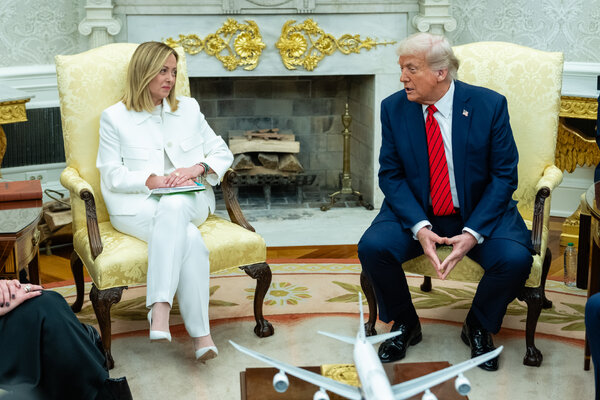
Giorgia Meloni’s Italy has since temporarily halted free border travel with Spain in response to the incident.

Stung by the criticism, Sánchez hit back in a separate letter to Brussels, accusing his opposite numbers of being “driven by prejudice, fake news, ignorance or political interest”.


Giorgia Meloni and Pedro Sanchez
Giorgia Meloni called for Pedro Sanchez’s Spain to be removed from the Schengen zone after the Ceuta incidentCredit: Alessia Pierdomenico/Bloomberg


William Chislett, a scholar who has published multiple books about Spain, says that with a failing birth rate and an ageing population, the country needs more migrants.

However, he says there have been seven migration amnesties in the past 40 years, but none have addressed the underlying problem of illegal immigration.

“There is no doubt Spain needs migrants, but Spain does not have a migration policy,” he says, adding that only two Latin American countries – where most migrants come from – need visas to get to Spain.

“Most come as tourists and overstay their time,” he says.

A report published earlier this year estimated that 91pc of irregular migrants in 2025 came from the Americas, including 290,000 Colombians, 110,000 Peruvians and 90,000 Hondurans.

The research by Madrid think tank Funcas estimated that about 50,000 came from Africa, 15,000 from Asia and 14,000 from Europe.


Falling foul of Nato

Sánchez’s policy towards Nato has proved equally divisive.

The Spanish leader, under pressure from the far-Left Sumar party, the junior party in the Socialist-led minority coalition, has refused to raise defence spending beyond 2.1pc of GDP.

At a Nato conference in Turkey last month, Trump reacted by saying he wanted to cut all trade relations with Spain and condemned his European ally as a “wasted cause” and a “terrible partner in Nato”.

Sánchez’s policy on Nato has earned him another nickname – Red Orbán – thanks to the Danish MEP Henrik Dahl, who said the Spanish leader was a Left-wing version of the former Hungarian president Victor Orbán.

“Like Orbán, he is seen as a spoiler,” says Dahl, of the European People’s Party, a Right-wing party. “Sánchez is not on the same page as everyone else and he’s seen as free-riding and really negligent on security issues.”

Carlos Miranda, a former Spanish ambassador to the UK and the United Nations, believes Sánchez’s policy towards Nato is mistaken.

“His attitude towards Nato is not correct,” he says.

“The Americans have been asking for more support not only during Trump’s time but for 20 years.

“If Europe does not support Nato then the Americans will get fed up and it will collapse. It is not a matter of being nice towards Trump, it is a matter of being prudent.”

However, Ignacio Molina, an analyst at the Real Elcano Institute, a Madrid think tank, says the Red Orbán nickname is unfair.

He says Spain has supported Ukraine with military aid to Kyiv, welcomed thousands of Ukrainian refugees and is involved with Nato exercises in Europe.

A former minister who knows Sánchez well but who did not want to be named, defended the Spanish leader over his stance on Nato.

“He did this because he wants the money to be spent on healthcare and social benefits,” she insists. “Sánchez is progressive.”

On a personal level, she says Sánchez got on fine when he met Trump at the World Cup Final last month in New York.

“Pedro is a very polite guy. They shook hands. It is a respectful relationship.”

She describes the Spanish leader as a “serious, principled politician who is a bit of a workaholic”.


Donald Trump, Fifa president Gianni Infantino, King Felipe VI and Queen Letizia of Spain and Pedro Sanchez attend the World Cup Final match between Spain and Argentina in New York
Pedro Sanchez sat near Donald Trump during the World Cup Final. Apparently they share a ‘respectful relationship’ Credit: Eva Marie Uzcategui/Fifa via Getty Images


Away from the West, Sánchez travelled to China this year on his fourth trip in as many years as Spain seeks to build closer trade ties to the Far East.

This has irked other EU countries, who have considered adopting tougher economic sanctions against Beijing over a flood of Chinese imports.

Analysts say Spain’s “pragmatic engagement” policy of seeking closer ties to China will draw dividends for its own economy and Europe.

However, it comes with political risk.


Road-trip comeback

Sánchez might have become an academic instead of a politician dominating headlines around the world.

He was not even an MP when, in 2018, he made history by becoming the first Spanish politician to unseat a government through a motion of no-confidence. Spanish law only requires a person to be over 18 and a citizen of Spain to lead a political party.

Only two years earlier he had been ousted in an internal party feud. Even then Sánchez demonstrated the kind of conviction – or perhaps stubbornness – which would later surface when he came to lead the country.

“On Monday, I’ll get in my car and travel all round Spain to listen to those who haven’t been listened to, to the grassroots members and Left-wing voters,” he said.

His road trip in a beaten-up Peugeot 407 around Spain became a symbol of his comeback.

Born in Madrid in 1972, he joined the Socialist party in 1993 and worked his way up the party ladder.

Away from politics, he met his wife Begoña Gomez at a party in Madrid and later told a television programme in 2015 that it was “love at first sight”.


Begona Gomez, wife of Spain's Prime minister Pedro Sanchez
Begona Gomez casts her vote in Madrid alongside her husband in 2023 Credit: JAVIER SORIANO/AFP via Getty Images


The couple have two daughters, Ainhoa, who studied at the University of Bristol, and Carlota, who did her degree in Madrid.

Fast forward to 2026 and Sánchez finds his wife, his brother David and close former aides battling a series of corruption scandals.

When Gomez first faced legal problems in 2024, Sánchez stunned the country by taking time out from his job to consider his future.

Sánchez said he wanted to “stop and reflect” and urgently decide “whether I should continue to lead the government or renounce this honour”.

In the end, the Socialist leader carried on.

Now more than a dozen people, including Sánchez’s wife, his brother, high-ranking officials and an influential former prime minister, are under investigation for alleged graft, influence-peddling and other crimes.

The 54-year-old prime minister has not been named in any cases and says the allegations are politically motivated and driven by far-Right groups.

Spain’s supreme court jailed Jose Luis Abalos, a former transport minister who had been a close aide to Sánchez, for 24 years for corruption in June. He is seeking to overturn his sentence.

As for Gomez, she faces allegations that she used her position as the prime minister’s wife to secure sponsors for a university master’s degree that she directed, allegedly by bypassing a public bidding process. A judge has ruled that she must stand trial.


A protestor wrapped in a Spain's flag gestures next to an effigy of Begona Gomez, wife of Spain's Prime Minister Pedro Sanchez, as she is expected to arrive to appear before magistrate in graft probe at Madrid Court on July 4, 2024
A protester with a cutout of Begona Gomez outside court in 2024. Her legal case has caused uproar in SpainCredit: OSCAR DEL POZO / AFP


David Sánchez was last month banned from public life for nine years after being convicted of administrative misconduct relating to his hiring by a socialist-led council in south-west Spain nine years ago.

The case, brought by the far-Right group Manos Limpias in a private criminal prosecution, has led to calls from the opposition for a snap election – something the Spanish prime minister has so far refused.

Former Socialist prime minister José María Rodriguez Zapatero, a key Sánchez ally, is under investigation for allegedly leading a money-laundering and influence peddling network. He denies wrongdoing.

The scandals have hit Sánchez’s Socialist party in the polls as Spaniards prepare to vote in general elections next year.

Polls have consistently found the conservative People’s Party (PP) leading, ahead of the Socialists, with the far-Right Vox trailing in third place. A survey for Sigma Dos in July, before the Ceuta crisis, gave the PP 33.8pc of votes, the Socialists with 26.1pc and Vox with 17.3pc.


Growth miracle

Despite its recent migration crisis, and the fact that Sánchez is ruffling feathers on the Continent and in America, many rivals may still look at Spain with envy.

Its economy grew twice as fast as the wider euro area last year and more than six times as rapidly as Germany’s, at 2.6pc.

Unemployment may be high compared with Western European countries, but it has recently fallen to its lowest level since 2008, at 10pc.

Meanwhile, Spain’s benchmark stock market index IBEX 35 has grown by 128pc in the last five years, vastly outpacing the S&P 500 at 74pc and the FTSE 100 at 53pc.

Andrew Kenningham, of Capital Economics, says: “Immigration has been a very big part of the growth in the last few years because actually their productivity performance is not especially good.”


Other research has also found that roles in high-value sectors such as finance, IT and professional services have also grown twice as fast as wider employment since 2019, rising by over a fifth. This is double the increase in France and Italy.

Much suggests Spain’s growth miracle is still going strong. The private sector’s output grew at the strongest pace in more than a year and a half in July, according to a closely watched survey of purchasing managers by S&P Global, which noted that Spain’s performance stood out in the eurozone.

It marks a stunning reversal of fortunes from the late 2000s and early 2010s, when Europe’s fourth-largest economy was brought to its knees by the eurozone crisis.

In fact, Spain’s traumatic experience of the credit crunch has paved the way for its current success, suggests Kenningham.

“It went bust very badly. Then they had this pretty extreme adjustment period after that in which they did push through quite a lot of reforms, particularly on the fiscal side, getting their budget into a much better place,” he says.

“Now they’ve been able to benefit from that. In contrast to France, Britain or Italy, they haven’t had a really big fiscal constraint on what they can do for quite a while. They over-adjusted, and that’s given them a clean run.”


Ruthless dealmaker?

If the economy is doing well, then Sánchez can also claim credit for calming the political waters in Catalonia since he took office in 2018.

At that time, Spain was facing the aftermath of a failed Catalan illegal independence declaration, which had plunged the nation into the biggest political crisis since an unsuccessful military coup in 1981.

Spanish national police officers wearing riot gear confront pro Catalan referendum supporters gather in Sabadell, Spain, on Sunday, Oct. 1, 2017
The Catalan independence movement led to riots in the streets in 2017 Credit: Angel Garcia/Bloomberg


Sánchez’s current government depends on the support of Catalan separatist party Together for Catalonia, whose leader Carlos Puigdemont went on the run nine years ago after fleeing Spain in the wake of the 2017 illegal independence declaration.

His administration has also been backed by Bildú, a separatist party in the Basque Country.

Bildú has ties to Eta, another Basque separatist organisation behind the deaths of over 800 people during a 40-year independence conflict with Spain.

Though Eta declared a permanent ceasefire in 2011, the scars run deep.

Notably, Sánchez has made a series of concessions to Catalan separatists, pardoning those who were jailed over their roles in the illegal independence declaration.

The Socialist-led government has also introduced an amnesty lawthat could mean Puigdemont will finally return to Spain later this year.

Though Sánchez’s policies have helped to reduce support for identity politics in Catalonia and the Socialists run the regional government in the north-eastern province, the controversy angers many Spaniards.

Carlos Miranda, a former Socialist party member, is infuriated by Sánchez’s deals with Basques and Catalan separatists.

“I think Sánchez is divisive,” he says. “I think a good statesman does not do that. The Catalans and Eta never said sorry.”

Looking to the future, after making agreements with Catalans and Basques, Sánchez is regarded in Spain by some as a ruthless political operator who will cut any deal to survive.

Molina believes Sánchez will lose in next year’s general election but the Socialist leader may leave Spain more attuned to the changing world.

“Now Sánchez has lost centrality in Europe. But if you think about a world in which Europe and the West and the United States is going to be less important,” he says.

“And the global south and relations with China are going to be more important, so perhaps Spain is going to be best prepared for this world.

“It has a presence in the Arab world, Latin America and even China.”

However, if Sánchez has moved Spain to a better position on the world stage than it occupied five years ago, this has come at a price for a committed Europhile who now stands accused of turning his country into a Left-wing pariah.

Advertisement
Keywords
You did not use the site, Click here to remain logged. Timeout: 60 second